Spain Stadiums Architecture History Where to Stay FAQ Newsletter
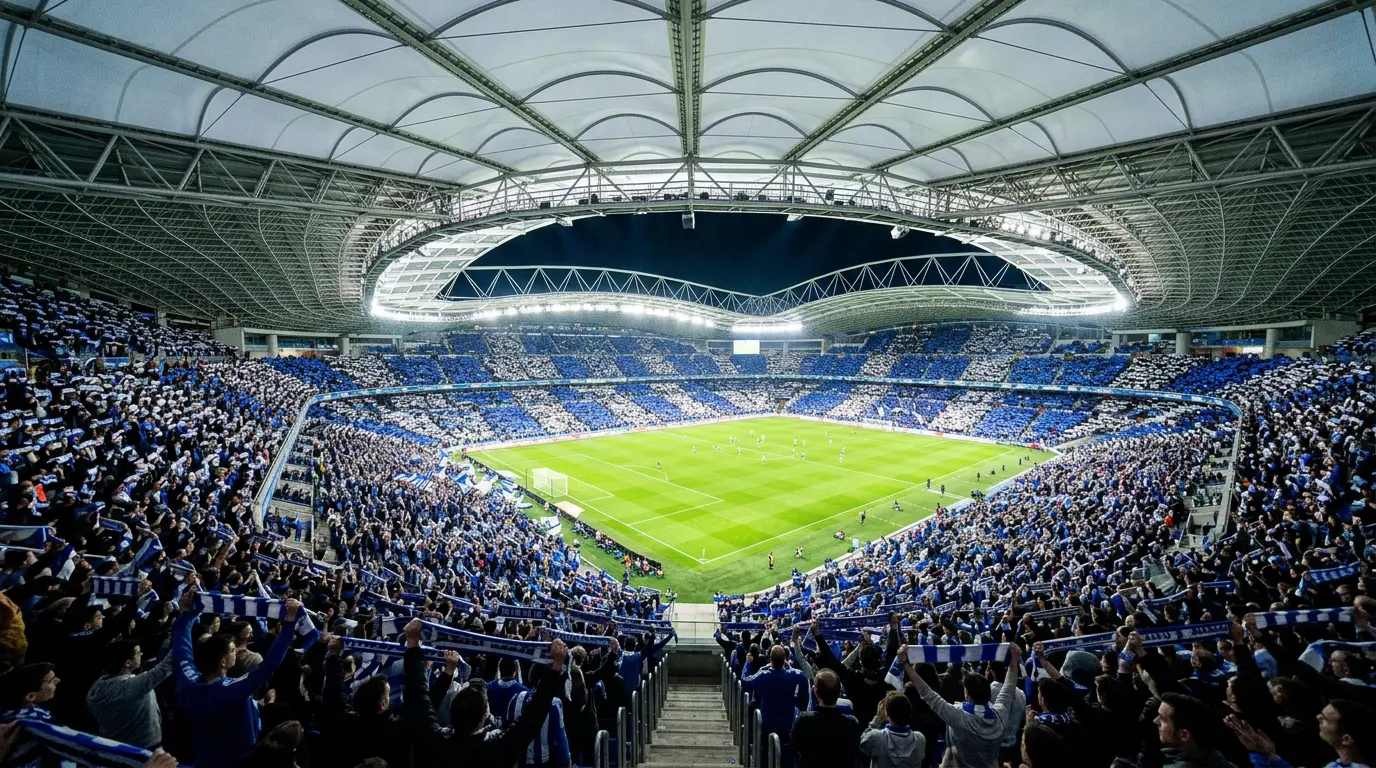
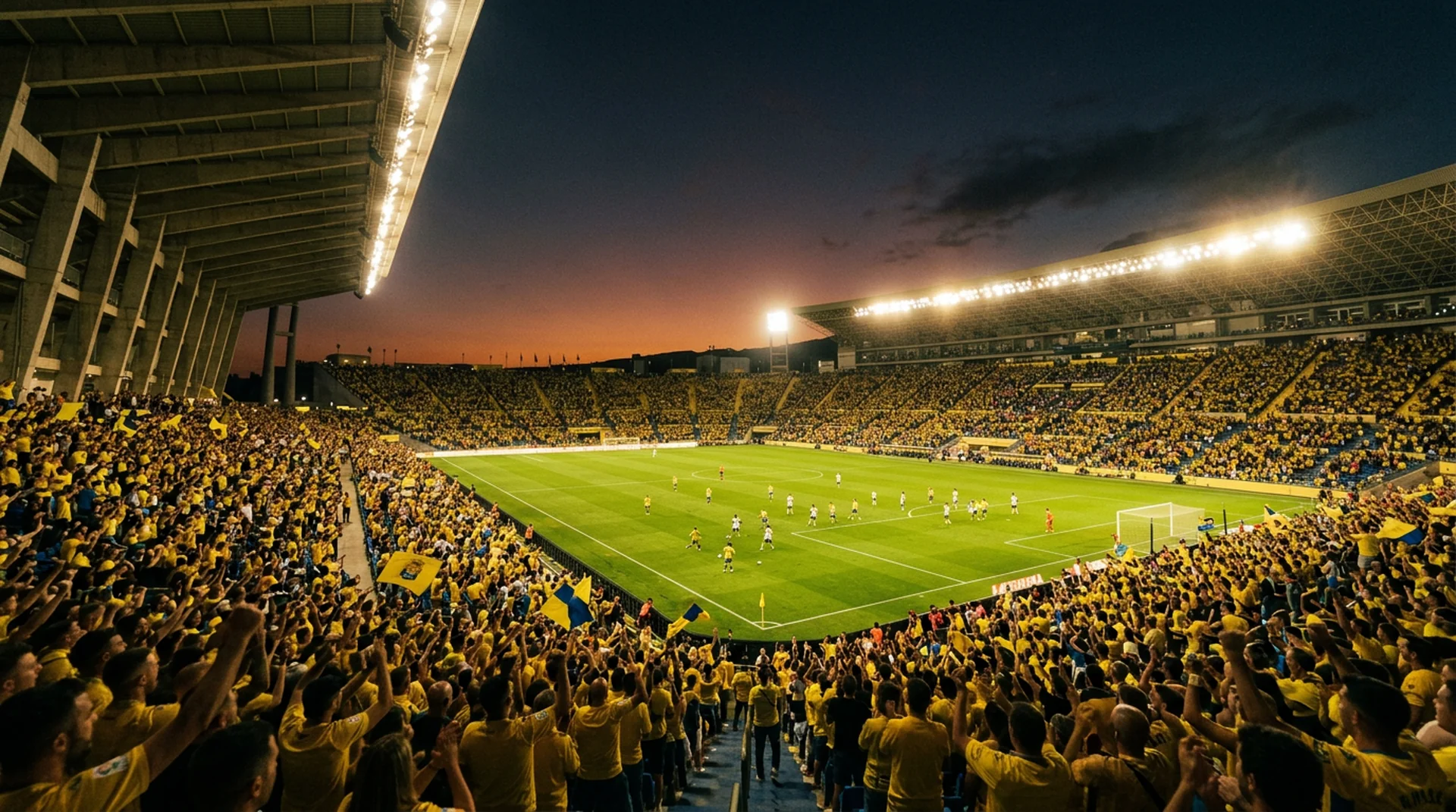
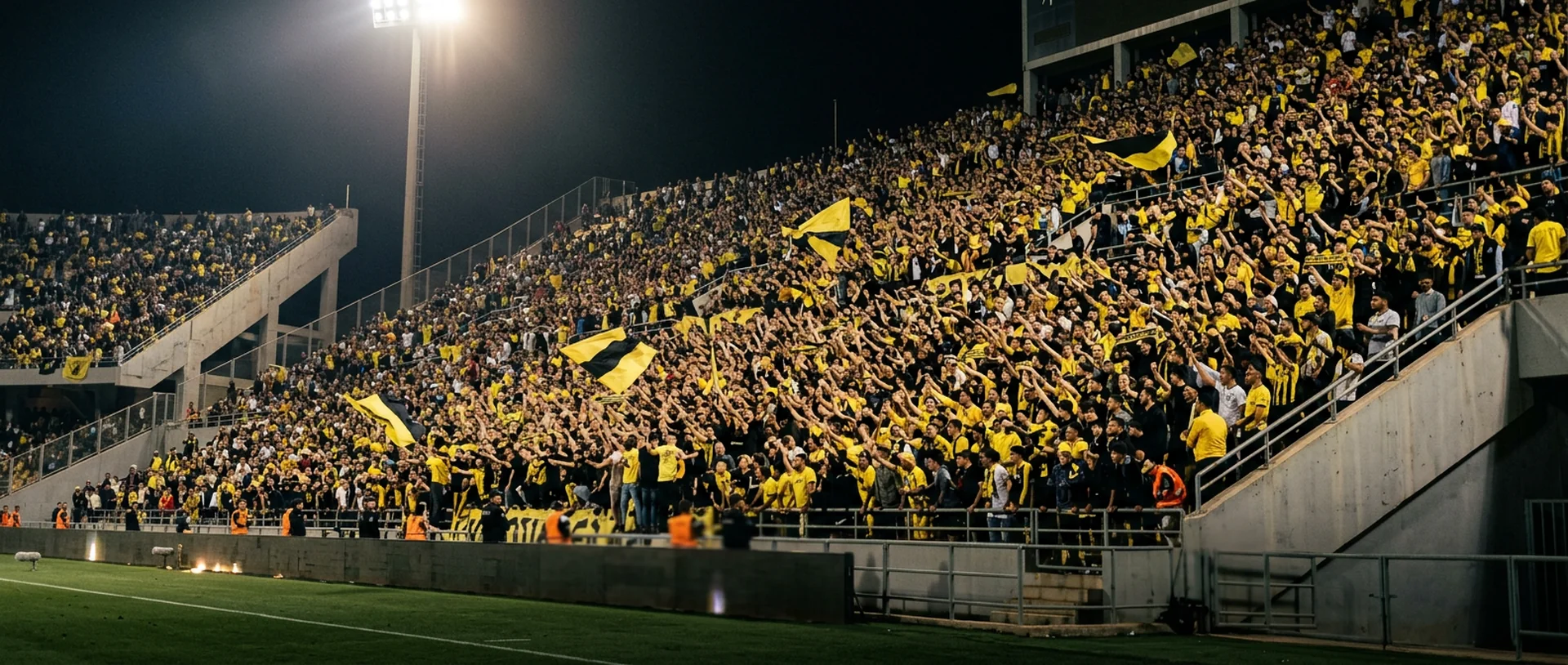
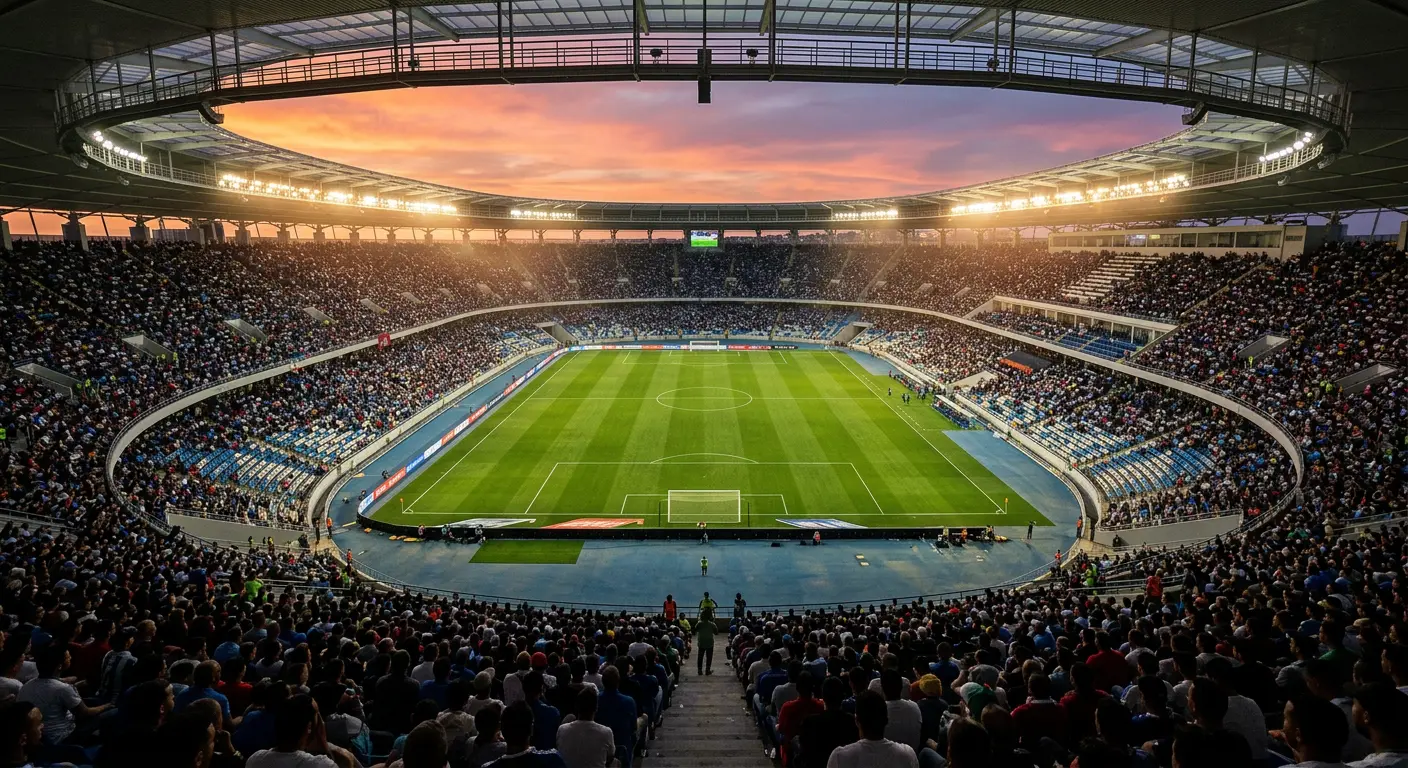
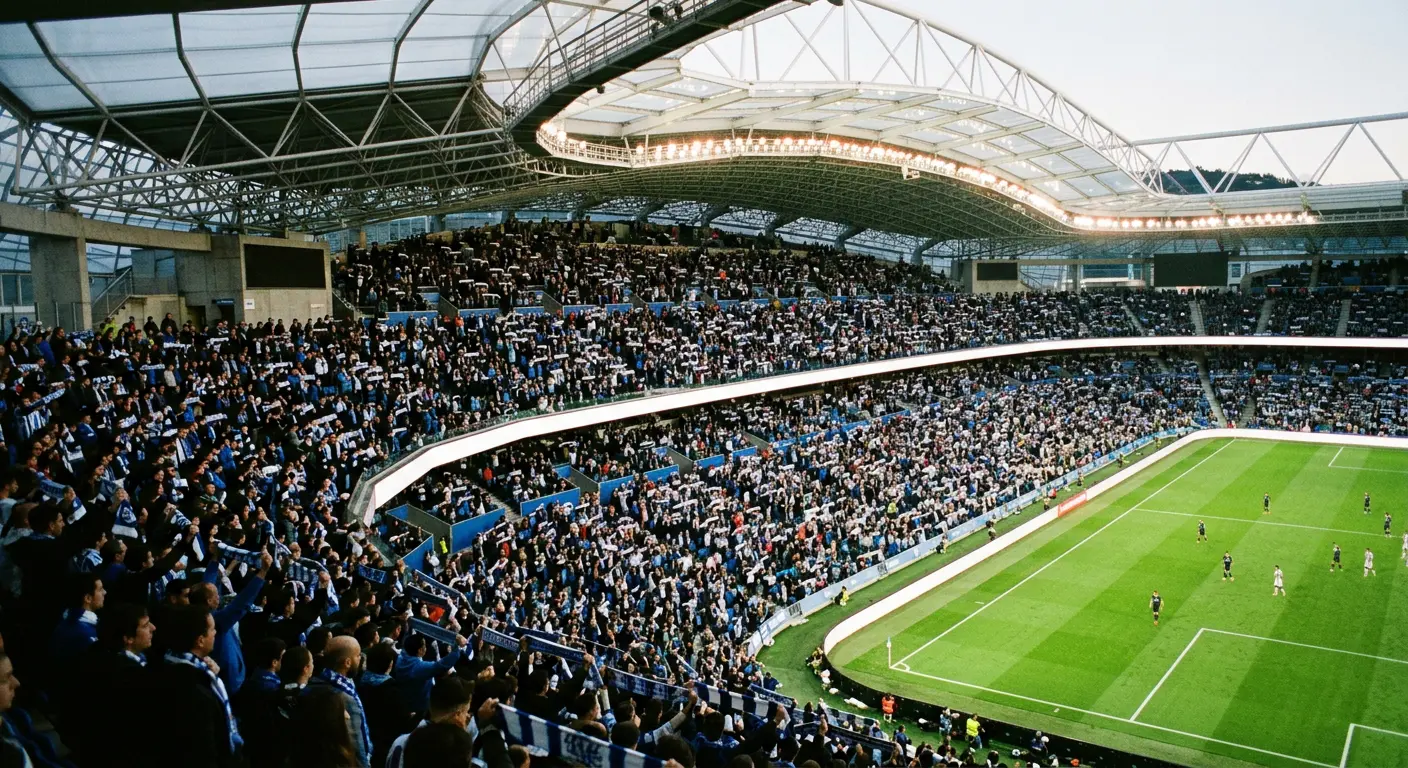
Reale Arena's packed single-tier bowl on matchday, Real Sociedad's home in San Sebastian for the 2030 FIFA World Cup
Spain · World Cup 2030 Stadium Guide

Reale Arena

A 2017-2019 rebuild stripped away Anoeta's athletics track and distant stands, transforming Real Sociedad's home into an intimate, single-tier bowl, and a further expansion is now racing to clear FIFA's minimum capacity for 2030.

40,177Current Capacity
42,247Planned Capacity
Izaskun LarzabalRenovation Architect
1993Originally Opened
📍Amara district, San Sebastián
Home: Real Sociedad
🏗Status: Expansion Beginning May 2026
🌅Hybrid natural-synthetic pitch
👩Design led by Izaskun Larzabal
Architecture Expansion Atmosphere History World Cup Role Getting There Where to Stay All Stadiums FAQ

Architecture & Design

From Athletics Bowl to Intimate Arena

The stadium originally known as Anoeta opened on 13 August 1993, designed by architects Ambite-Arrese-Cendoya as a multi-purpose athletics venue seating around 32,000, replacing Real Sociedad's previous home, Atotxa. For over two decades, fans complained that the surrounding running track kept them too far from the pitch, dulling the atmosphere despite passionate Basque support.

A comprehensive renovation, led by local architect Izaskun Larzabal (who also designed much of Real Sociedad's Zubieta training complex), finally addressed that problem between 2017 and 2019: the athletics track was removed entirely, the pitch lowered by 240cm, and both side stands rebuilt as a single tier just 8 metres from the pitch at its closest point, first-ever rectangular ends replacing the old rounded corners.

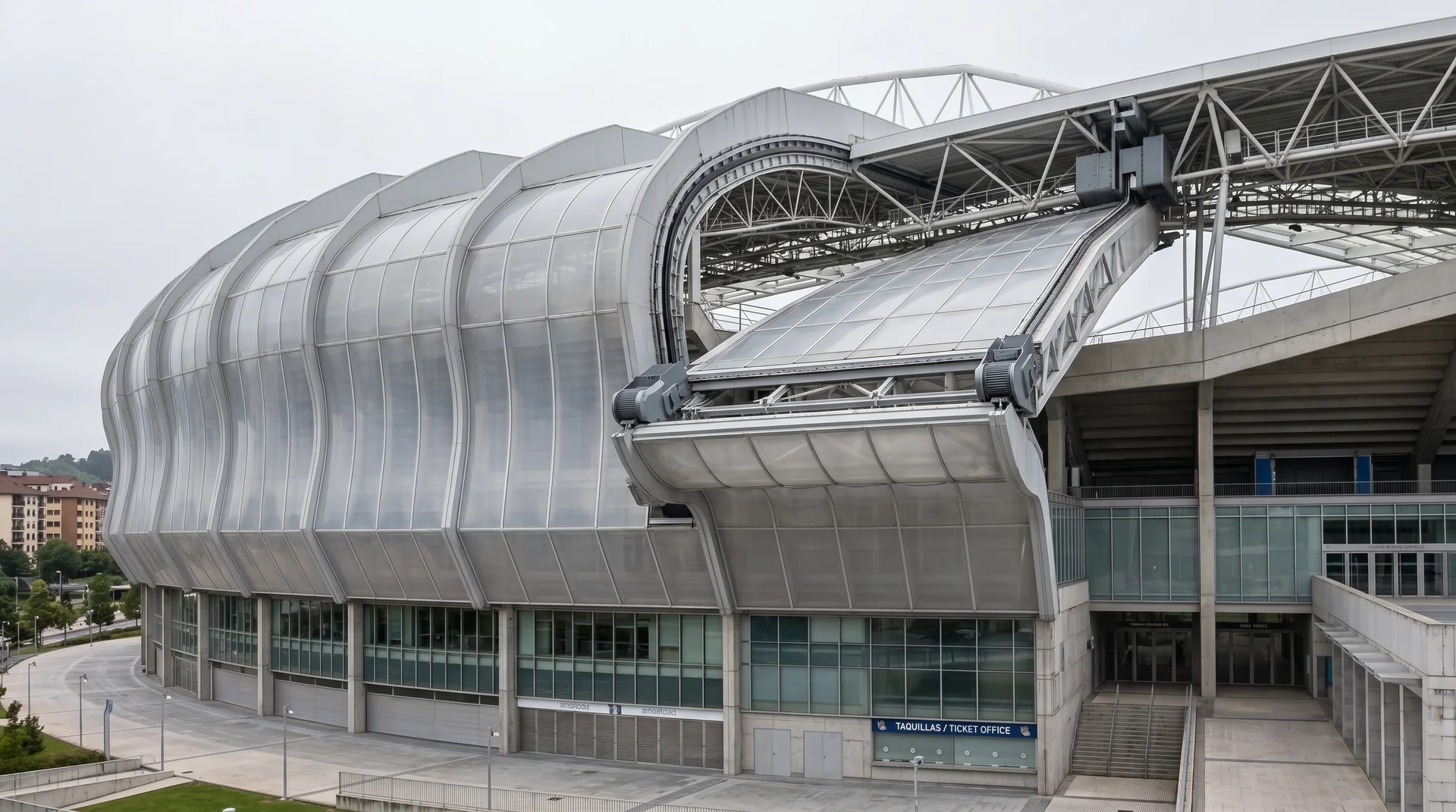
A translucent inner roof, supported by self-sustaining steel trusses mounted atop the existing structure, lets 25% of daylight through to keep public areas naturally lit while sheltering fans from San Sebastián's frequent rain. The renovation was originally budgeted at €47 million, split between Real Sociedad (€33m), the Basque Government (€10m) and the Gipuzkoa Provincial Council (€4m), though more recent reporting puts the final completed cost closer to €78 million once overruns are included, a very different funding model from San Mamés's ground-up rebuild in nearby Bilbao.

Work began in May 2017 with the demolition of the south end's external staircases and curve, followed by a new grandstand that moved the front row 35 metres closer to the pitch, opened early in the 2018-19 season. From May 2018, the lower east and west sides were reconfigured to bring fans a further 15 metres nearer the action, with capacity temporarily dropping to around 25,000-26,800 mid-project before the full renovation was completed in October 2019.

The overhaul also introduced a hospitality tier that simply didn't exist before: 2,300 hospitality seats across 82 executive boxes, alongside a broader shift in who attends matches, the club has reported the share of women in the crowd rising from roughly 18% to 26% since the rebuild, alongside a noticeably younger season-ticket base.
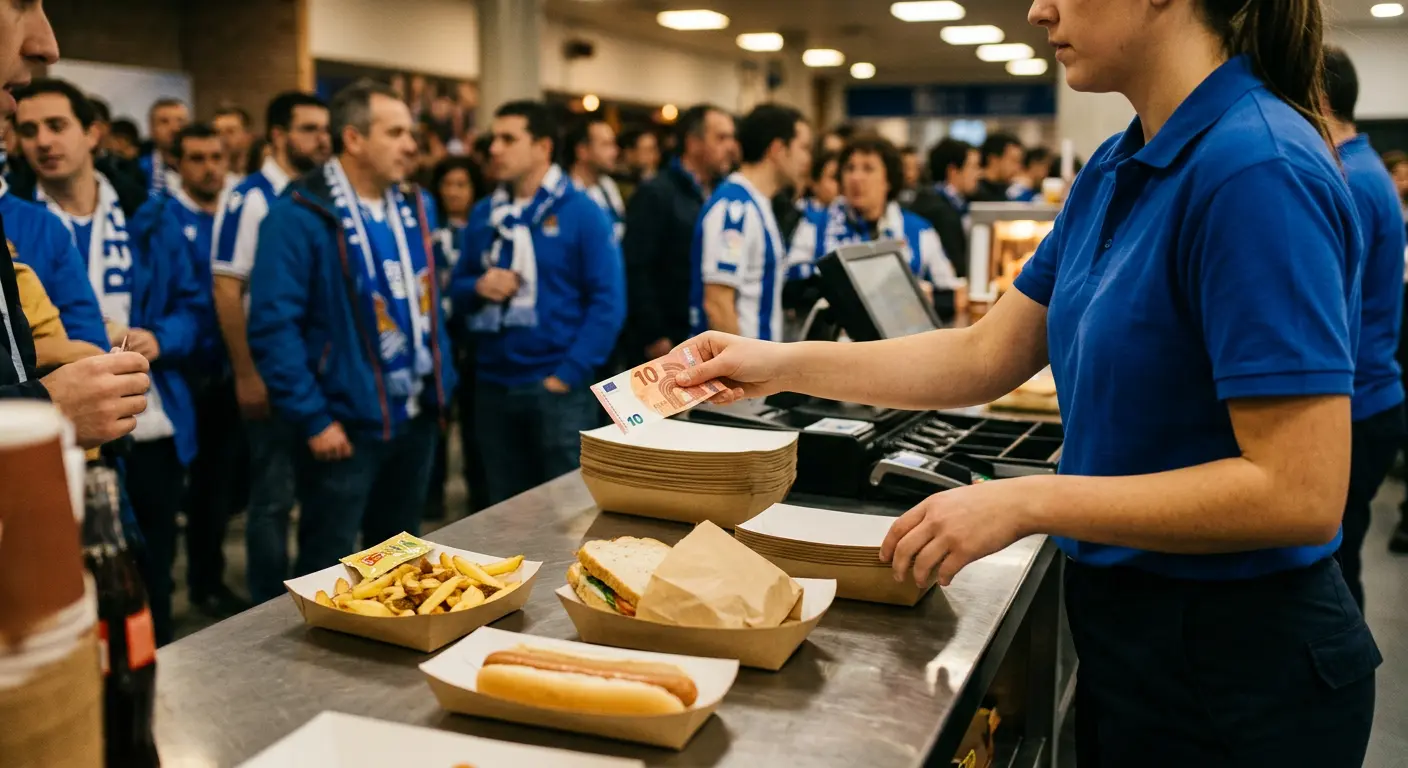
A fan buying food and drink at a Reale Arena concession stand on matchday

Racing to Clear FIFA's Bar

Reale Arena's 2019 renovation left it at roughly 39,500-40,177 seats, comfortable for La Liga but short of FIFA's expectation of a solid surplus above 40,000 for World Cup venues.

Search San Sebastián Hotels Get Stadium Updates

Real Sociedad president Jokin Aperribay has been working with San Sebastián's city council, which owns the stadium, on a further expansion specifically to secure the club's World Cup ambitions. Major construction is scheduled to begin in May 2026, once the 2025-26 season ends, focused on the upper ring above the east and west stands and the currently empty corners, though some pitch-adjacent modifications may start earlier depending on permits.

🎫
Planned Capacity
42,247 Seats
Up from 40,177, including 580 new main-stand seats
💰
Expansion Cost
€10.6 Million
Announced by Real Sociedad in December 2024
🌅
Pitch
Hybrid Grass
95% natural turf reinforced with 5% synthetic fibre for durability
📰
Press Seats
+170 Seats
Additional media capacity as part of the expansion

"Up to 42,000 we can keep it very simple."

- Izaskun Larzabal, stadium architect, 2020

Even reaching 44,000 seats, Larzabal has said, would be achievable without major structural work, just modest changes to the east stand and filling in the corners where stands are currently absent. The expansion is also intended to chip away at a season-ticket waiting list that has topped 3,000 fans.

What We Don't Know Yet

A notable, unusual proposal has surfaced: the Basque Country has floated having San Mamés and Reale Arena operate as a single combined World Cup host venue to reduce costs and community impact. This remains an unconfirmed idea rather than a formal decision, and separately, some San Sebastián neighbourhood groups have formally asked FIFA to withdraw the city as a host, citing overtourism concerns. We'll update this page as either situation develops.

Real Sociedad supporters filling the stands at Reale Arena on matchday

Closer to the Pitch, Louder for It

Removing the athletics track didn't just change sightlines, it transformed the atmosphere, bringing fans as close as 8 metres from the pitch and turning a once-distant bowl into one of Spain's more intimate top-flight grounds.

Compare Flights to San Sebastián See All Stadiums

The stadium's official singing section carries the name of Aitor Zabaleta, a young Real Sociedad supporter murdered by a rival hooligan outside Atlético Madrid's stadium in 1998, a tragedy that helped spur Spanish football's anti-violence reforms. Renaming a stand in his memory turned a painful chapter into a lasting, peaceful fixture of matchday culture rather than a flashpoint, and the section remains one of the loudest parts of the ground today.

The Basque derby against Athletic Bilbao, hosts of San Mamés, remains the standout fixture on the calendar, and the 2019-20 Copa del Rey win, Real Sociedad's first trophy in 34 years, arrived just months after the renovation transformed both the sightlines and the noise inside the ground.

Full San Sebastián Guide
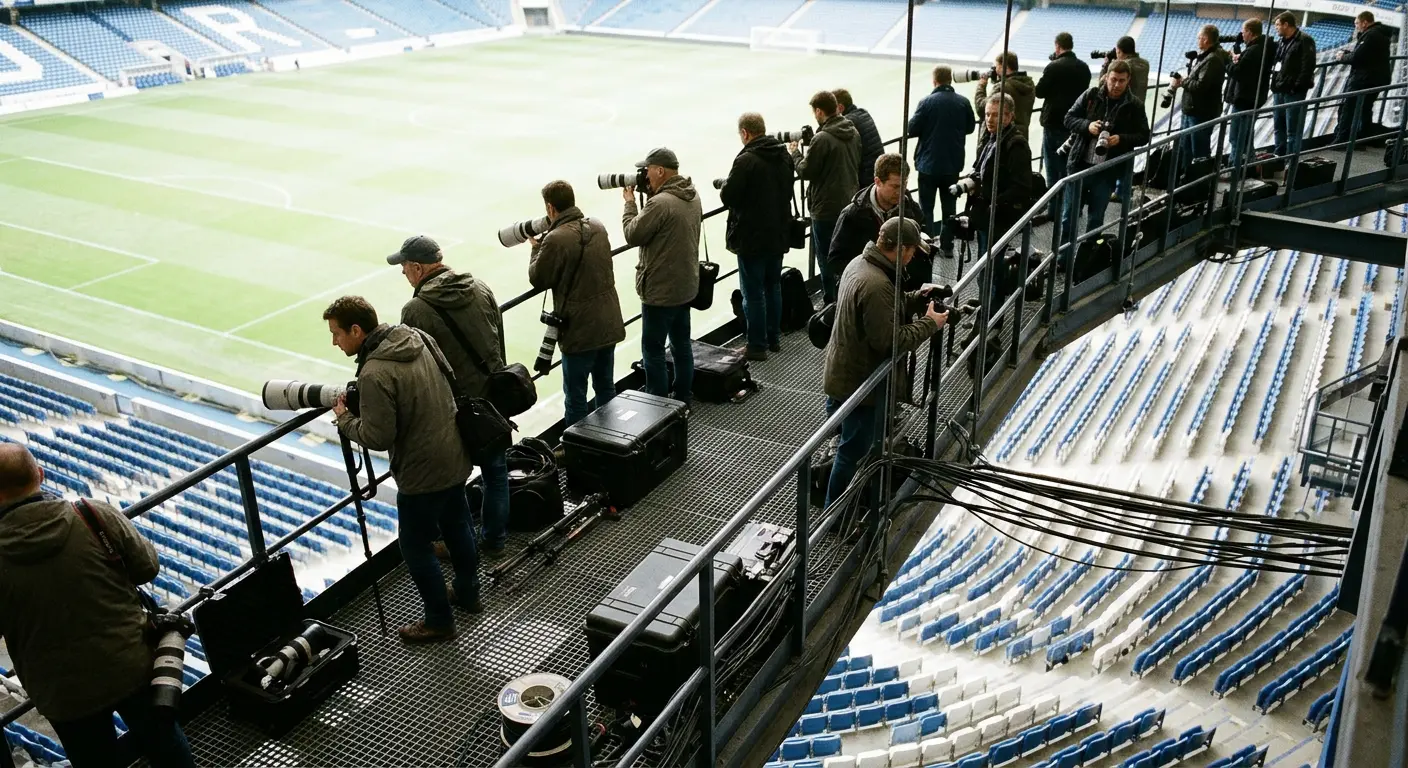
Press and photographer gantry overlooking the pitch at Reale Arena

Real Sociedad's Third Home

Reale Arena is Real Sociedad's third stadium, following Ondarreta (1909-1913) and Atotxa (1913-1993), and remains one of nine confirmed Spanish venues for the 2030 World Cup.

Book Your San Sebastián Stay Explore Spain

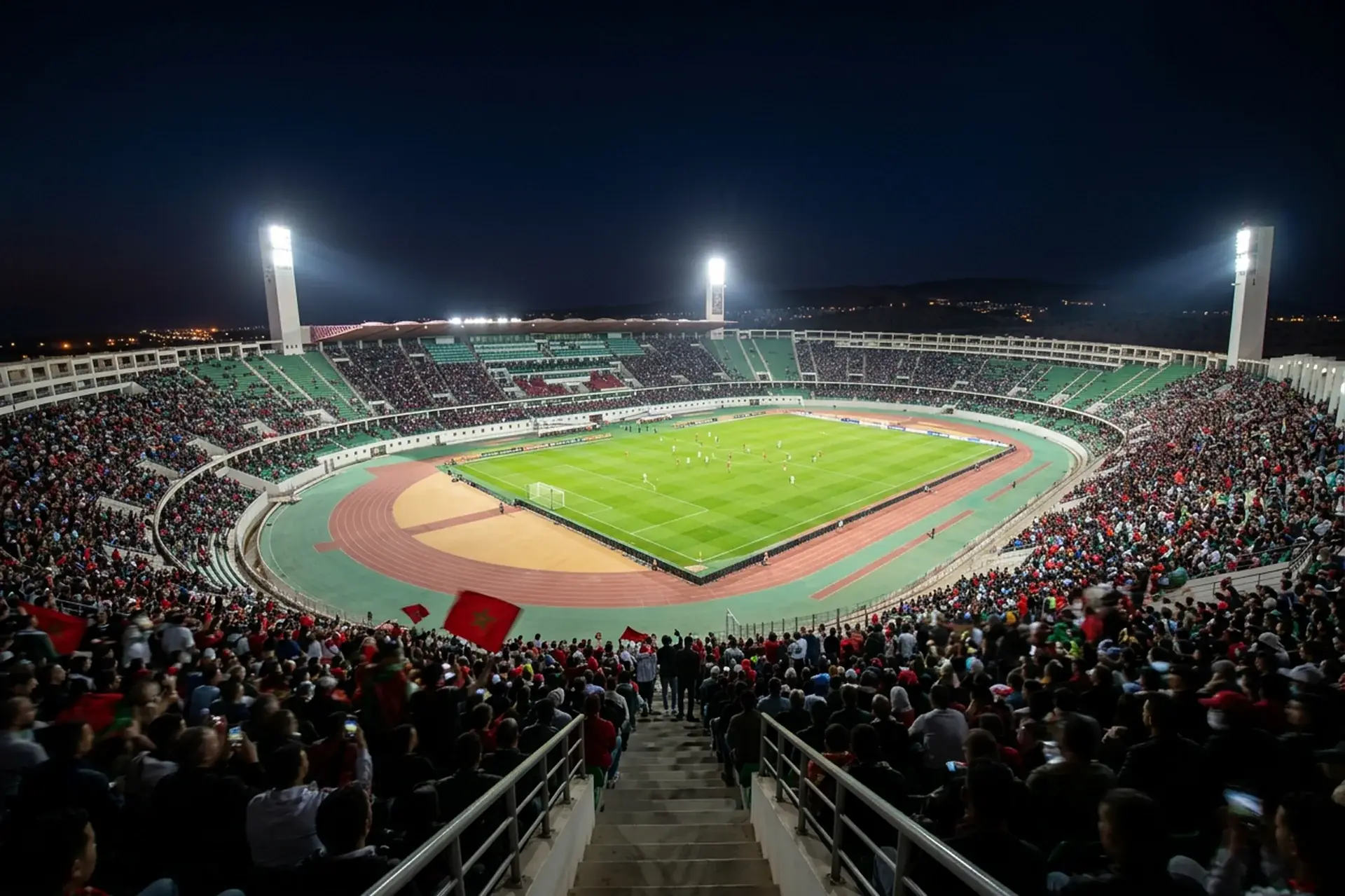
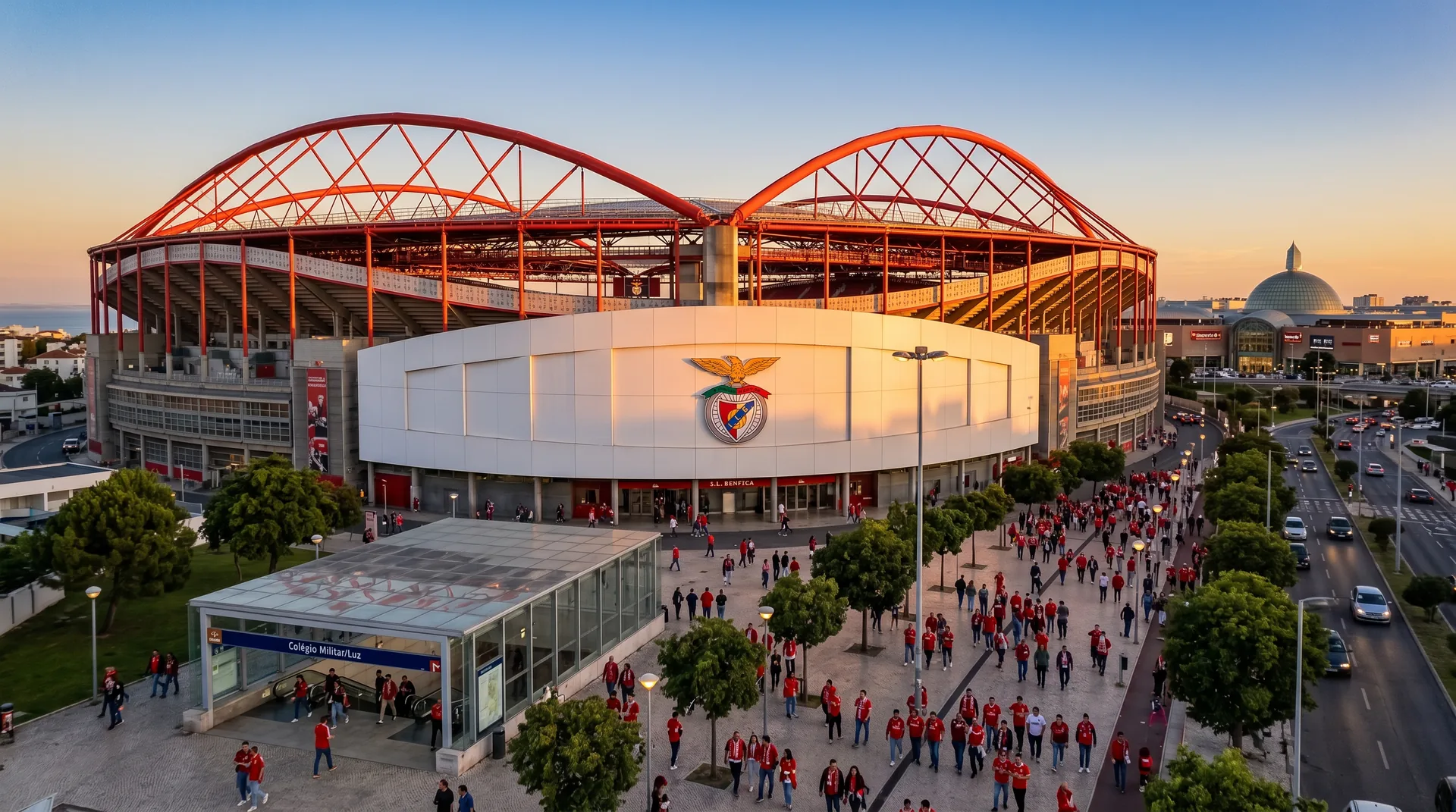
Athletic Bilbao even briefly used the ground for a 2013-14 season fixture while San Mamés was under construction, and the Basque unofficial regional team has played friendlies there in 1993, 1998, 2004 and 2012. Reale Arena sits alongside San Mamés in nearby Bilbao and Camp Nou in Barcelona on Spain's 21-venue World Cup list, which also includes Morocco's Prince Moulay Abdellah Stadium in Rabat and Portugal's Estádio José Alvalade in Lisbon.

1993
Opens as Anoeta, a multi-purpose athletics and football venue seating around 32,000.
2015
Renovation announced, including capacity increase and athletics track removal, inspired partly by Juventus's earlier stadium rebuild.
May 2017
Construction begins, demolition of the first stand, while Real Sociedad continues playing at the stadium throughout.
2019-20
Real Sociedad wins the Copa del Rey, ending a 34-year trophy drought shortly after the stadium's transformation.
Oct 2019
Renovation completes at around 39,500-40,177 seats, first named Reale Arena under a new sponsorship deal.
Dec 2024
Further expansion announced, targeting 42,247 seats specifically to meet FIFA's 2030 World Cup requirements.
May 2026
Major construction begins on the expansion, once the 2025-26 season concludes.
Fans photographing the entrance plaza at Reale Arena with their phones

A Basque Pairing with San Mamés

Reale Arena's path to 2030 hosting has been more contested than most Spanish venues: its capacity fell short of FIFA's practical minimum, prompting the current expansion push.

Find San Sebastián Hotels Explore Spain

Separately, some local neighbourhood associations have formally written to FIFA asking San Sebastián to withdraw as a host city over overtourism concerns. Neither issue has derailed the bid so far, but both are worth watching as 2030 approaches.

Alongside San Mamés in Bilbao, Reale Arena gives the Basque Country two 2030 venues within roughly an hour of each other, and the unusual proposal to potentially combine both bids into a single joint host arrangement reflects just how closely linked the two cities' World Cup ambitions have become.

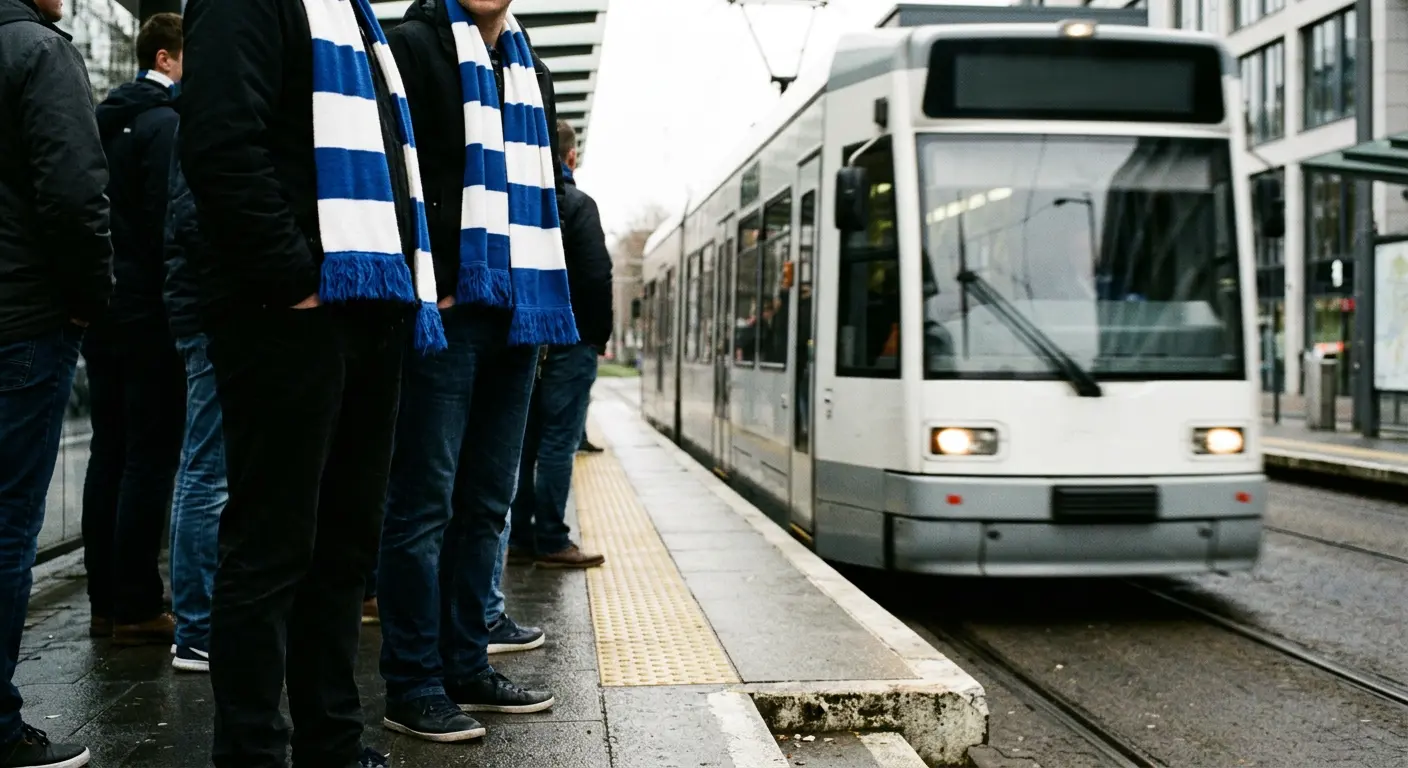
Fans waiting on a tram platform on the way to Reale Arena

A Short Hop from the Bay

Reale Arena sits in San Sebastián's Amara district, served by the Anoeta station on the E2 line of Euskotren Trena and multiple bus routes, a short ride from La Concha beach.

All Stadiums Compare Flights to San Sebastián

From Central San Sebastián

Parte Vieja / La Concha
Old Town & beach
~15 min
Reale Arena
Anoeta station, E2 line
42,247 seats (target)

Exact matchday shuttle and transport plans will be confirmed by FIFA and Spanish authorities closer to 2030. Check back here for updates.

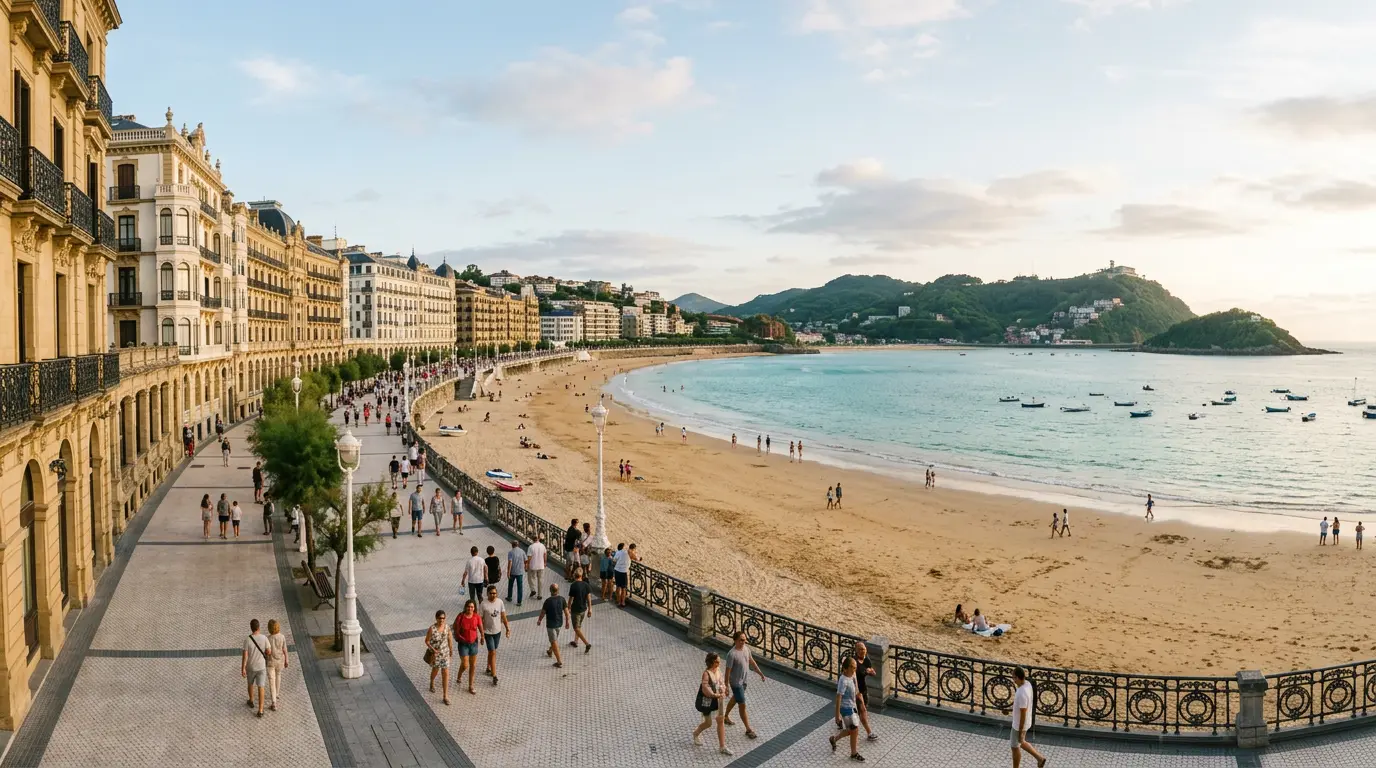
La Concha beachfront promenade lined with Belle Époque hotels in San Sebastián

Where to Stay for Reale Arena

Staying in the Parte Vieja (Old Town) or near La Concha beach gives you the best of San Sebastián's culture and food scene, with easy bus access or a scenic 30-minute walk to the stadium.

Book San Sebastián Hotels Full San Sebastián Guide
Flying to San Sebastián
San Sebastián Airport (EAS) is small; most fans fly into Bilbao Airport (BIO), roughly 1 hour away by road, which has far more international connections.
Compare flights
World Cup Tickets
FIFA has not opened ticket sales for 2030 yet. We'll post the official ballot dates and links here the moment they're announced.
Planning Multiple Cities
Following matches across Spain? Start with our full Spain travel guide covering all nine host cities.
See Spain Guide
Reale Arena facade detail, San Sebastián

Every Host Stadium

Reale Arena is one of 21 confirmed venues across Morocco, Portugal, Spain and the three centenary host nations. Explore the others below.

See Spain Guide

🇪🇸 Spain

🇲🇦 Morocco

🇵🇹 Portugal

🏆 Centenary Matches

Frequently Asked

Reale Arena Questions

Who designed Reale Arena?
The original 1993 stadium was designed by architects Ambite-Arrese-Cendoya. The 2017-2019 transformation into a football-specific venue was led by local architect Izaskun Larzabal.
Why did Reale Arena have an athletics track?
The stadium, originally called Anoeta, was built in 1993 as a multi-purpose venue combining athletics and football, a common approach at the time that later frustrated fans wanting a more intimate football experience.
How was the athletics track removed?
The pitch was lowered by 240cm and the lower tier of the existing stands demolished, bringing fans as close as 8 metres from the pitch, with both ends rebuilt in rectangular form for the first time.
What is distinctive about the roof?
A translucent inner roof supported by self-sustaining steel trusses, with 25% translucency, keeping concourses naturally lit during the day while sheltering fans from San Sebastián's frequent rain.
What is the current capacity of Reale Arena?
40,177 seats following the 2019 renovation, up from an original 32,076.
Why is Reale Arena expanding further?
To meet FIFA's practical expectation of a solid surplus above 40,000 seats for World Cup venues, leaving room for press, broadcasters and hospitality. The expansion, announced in December 2024, targets 42,247 seats at a cost of €10.6 million, with major construction beginning in May 2026.
Could the stadium expand even further?
The renovation architect has said reaching 42,000-44,000 seats would not require major structural work, just modest changes to the east stand and filling in the currently empty corners.
What kind of pitch does Reale Arena have?
A hybrid grass system installed during the 2019 renovation, combining around 95% natural turf with 5% reinforcing synthetic fibres for improved durability and faster recovery between matches.
When did Reale Arena open?
13 August 1993, originally named Anoeta, replacing Real Sociedad's previous home, Atotxa Stadium.
What club plays at Reale Arena?
Real Sociedad, founded in 1909, San Sebastián's leading club and one of Spain's most storied Basque teams.
Did Real Sociedad win anything after the renovation?
Yes, the club won the 2019-20 Copa del Rey, ending a 34-year trophy drought shortly after the stadium's transformation improved the matchday atmosphere and revenue.
Has Reale Arena hosted major finals before?
Yes, the 2019-20 UEFA Women's Champions League final, plus Top 14 rugby fixtures for French clubs Biarritz Olympique and Aviron Bayonnais.
How do I get to Reale Arena?
The Anoeta station on the E2 line of Euskotren Trena serves the stadium directly, roughly 15 minutes from the Parte Vieja or La Concha beach, alongside several bus routes.
What's the nearest airport to Reale Arena?
San Sebastián Airport (EAS) is small with limited connections. Most fans fly into Bilbao Airport (BIO) instead, roughly an hour away by road.
Where should I stay for a match at Reale Arena?
The Parte Vieja (Old Town) or near La Concha beach offer the best combination of culture, food and easy access, roughly 15 minutes by bus or a scenic 30-minute walk. See our full San Sebastián guide for more.
Is San Sebastián's World Cup hosting confirmed?
The city remains on Spain's official venue list, but some local neighbourhood groups have formally asked FIFA to withdraw San Sebastián as a host over overtourism concerns. Nothing has changed the official status as of this writing.

Continue Exploring

See every World Cup 2030 stadium, or the full San Sebastián travel guide.

All StadiumsSan Sebastián Guide

Get Reale Arena Updates

Expansion progress, FIFA venue confirmations, ticket ballot dates and San Sebastián travel tips - straight to your inbox.