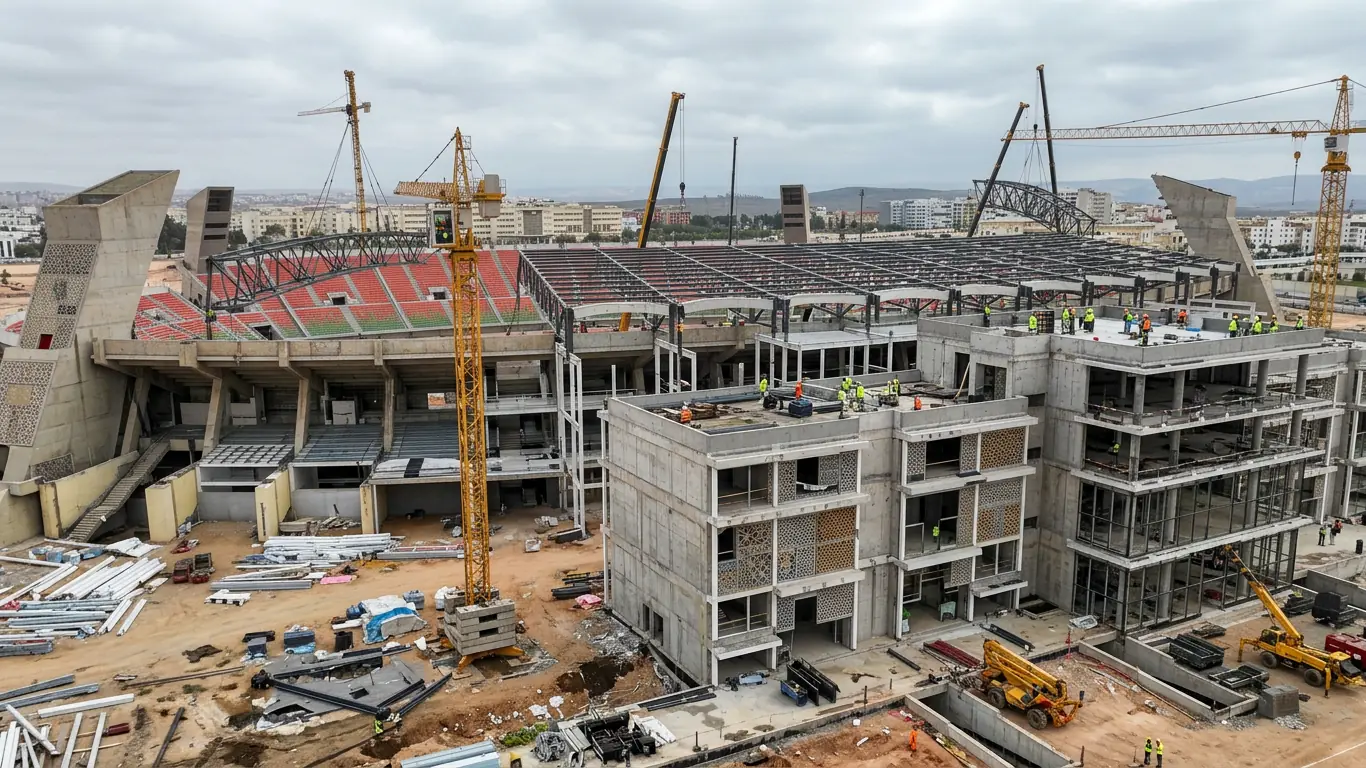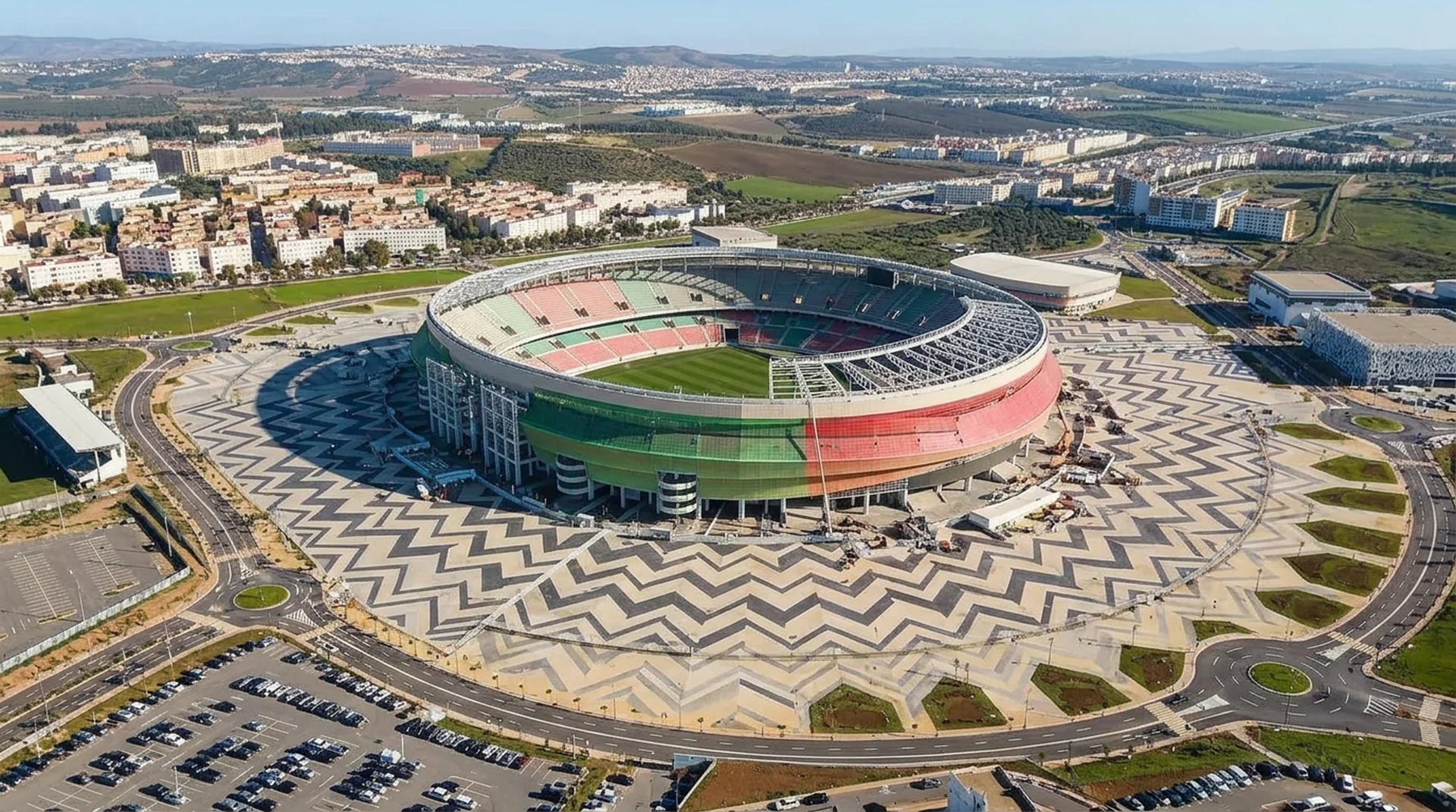
A stadium reborn in thirteen weeks: Fez's home ground reopened in June 2025 with its athletics track already removed, and now enters a second, more ambitious phase that will nearly double its capacity to 55,800 by 2028, blending Fassi craftsmanship into a fully modern football venue.
Architecture & Design
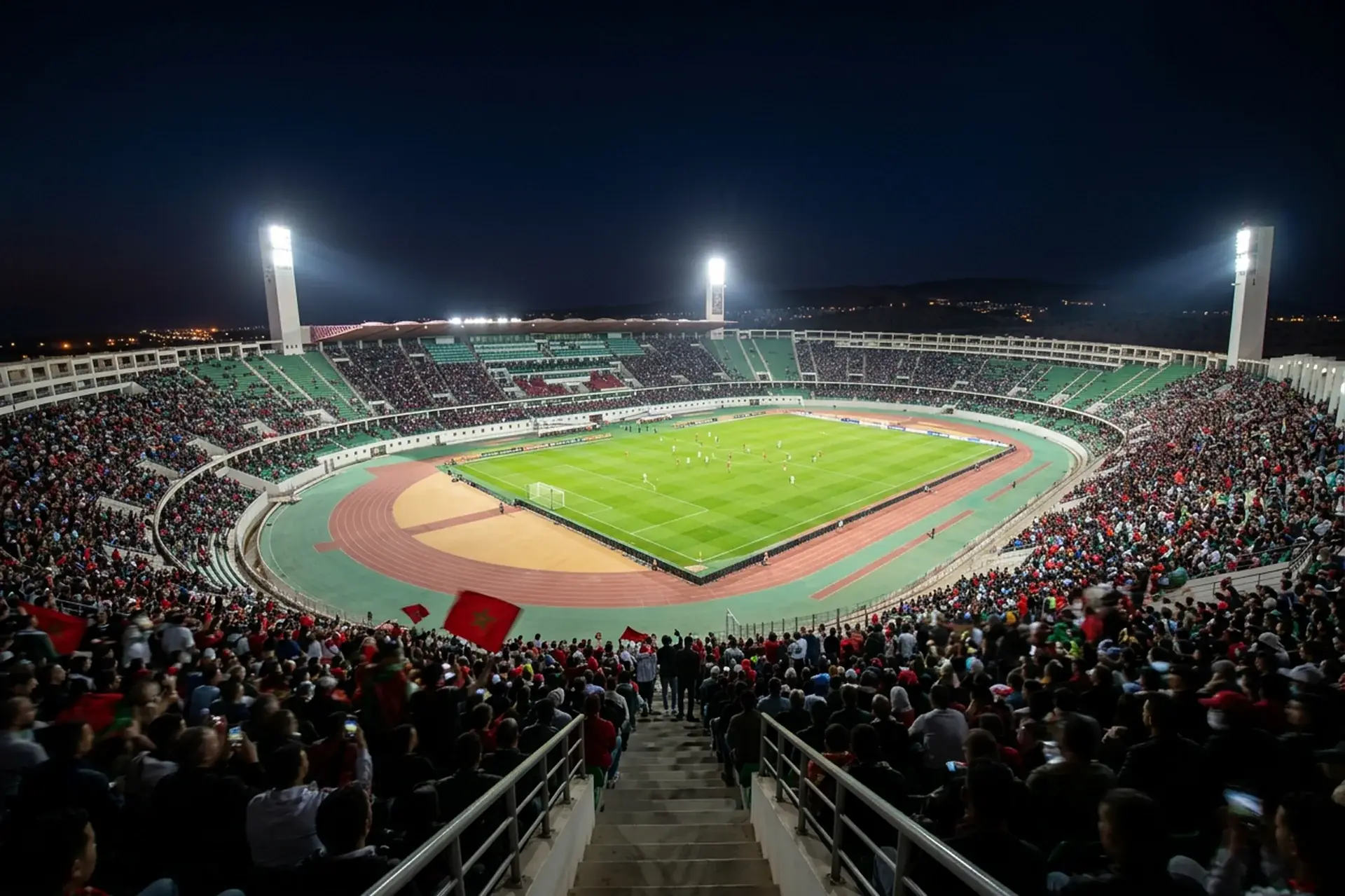
Fez Grand Stadium was designed by Moroccan architects and engineers, with planning launched in 1992 and construction beginning in earnest in 1994. Technical delays pushed completion to 2003, and the stadium was formally inaugurated on 25 November 2007 with a Throne Cup final between FAR Rabat and Rachad Bernoussi, watched by a free-entry crowd of around 40,000 fans from across Morocco.
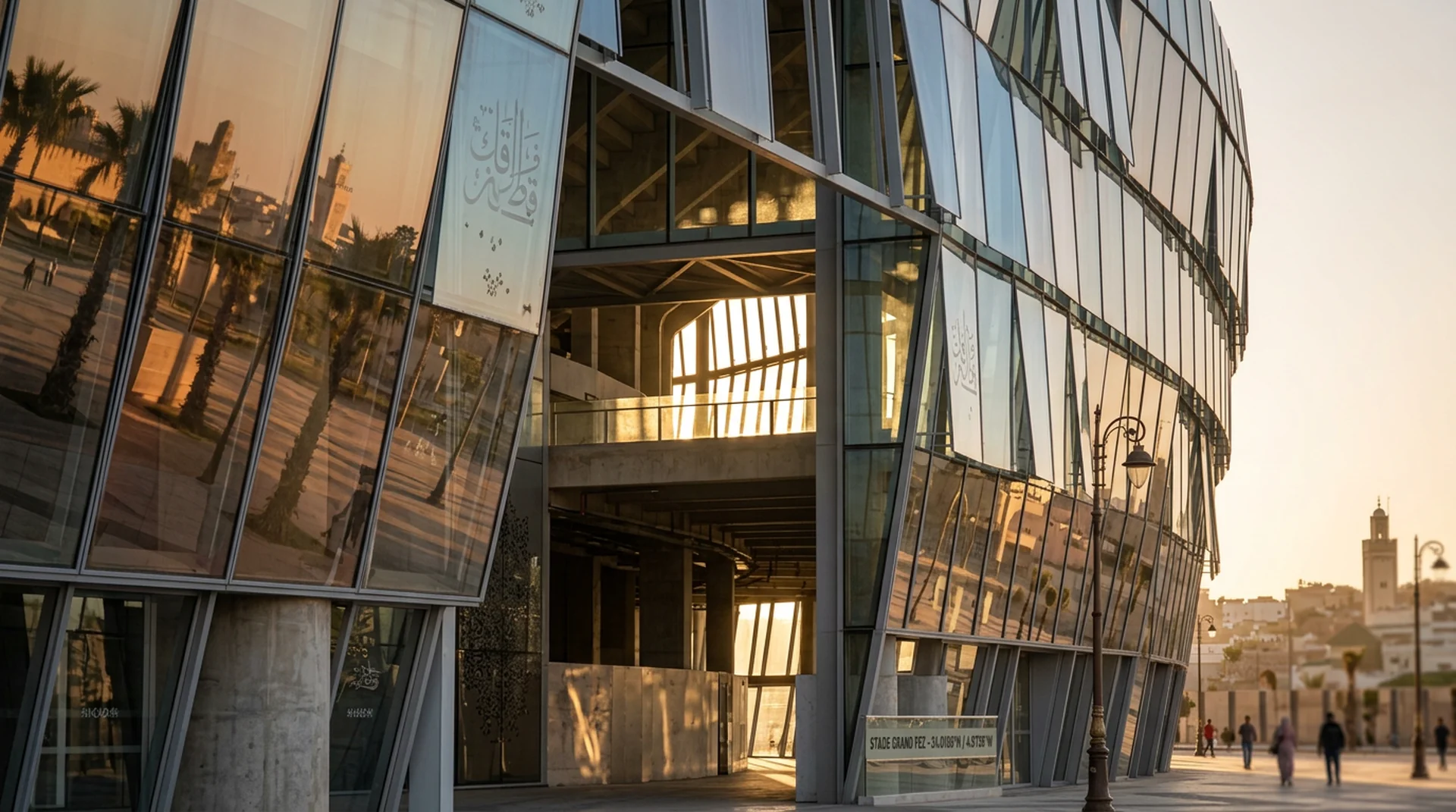
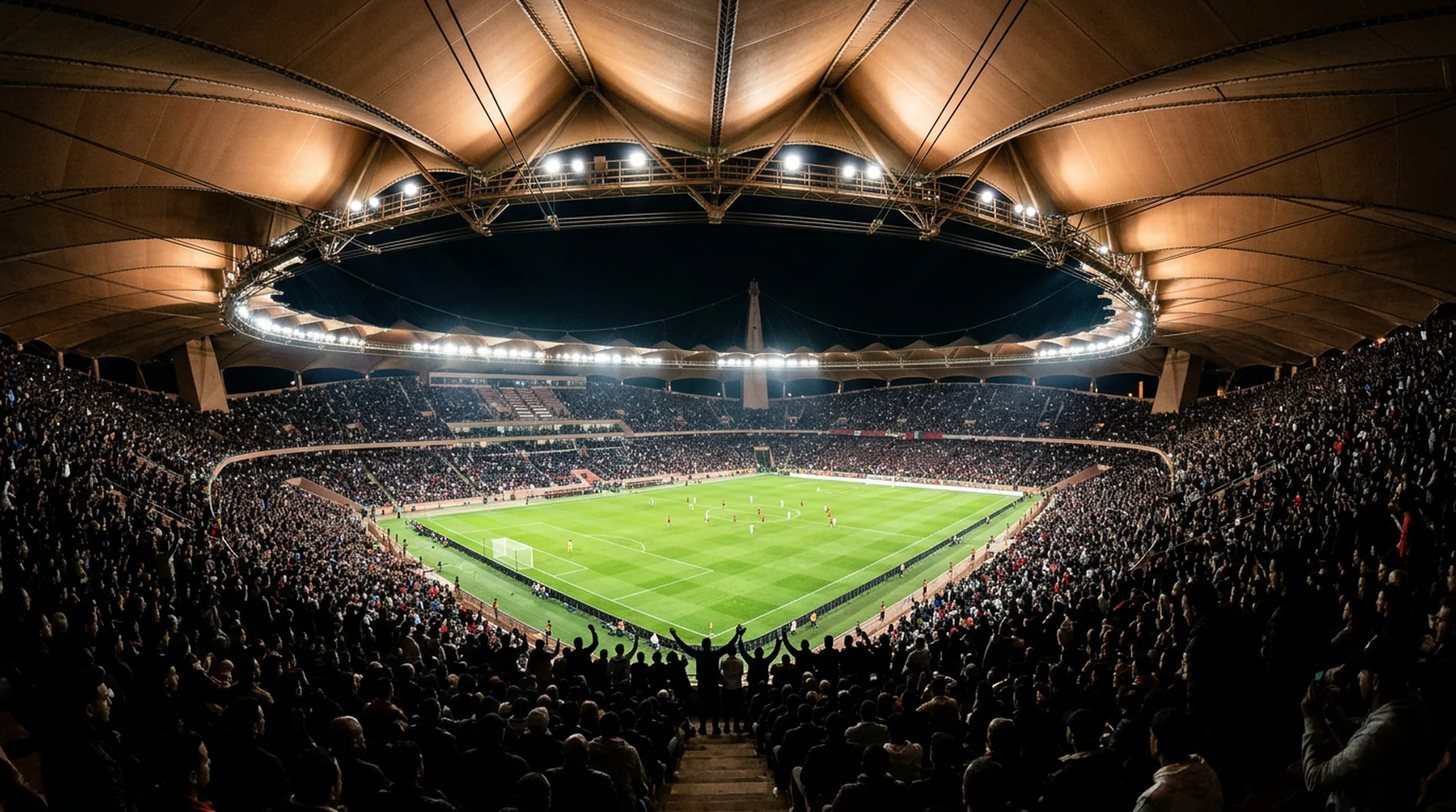
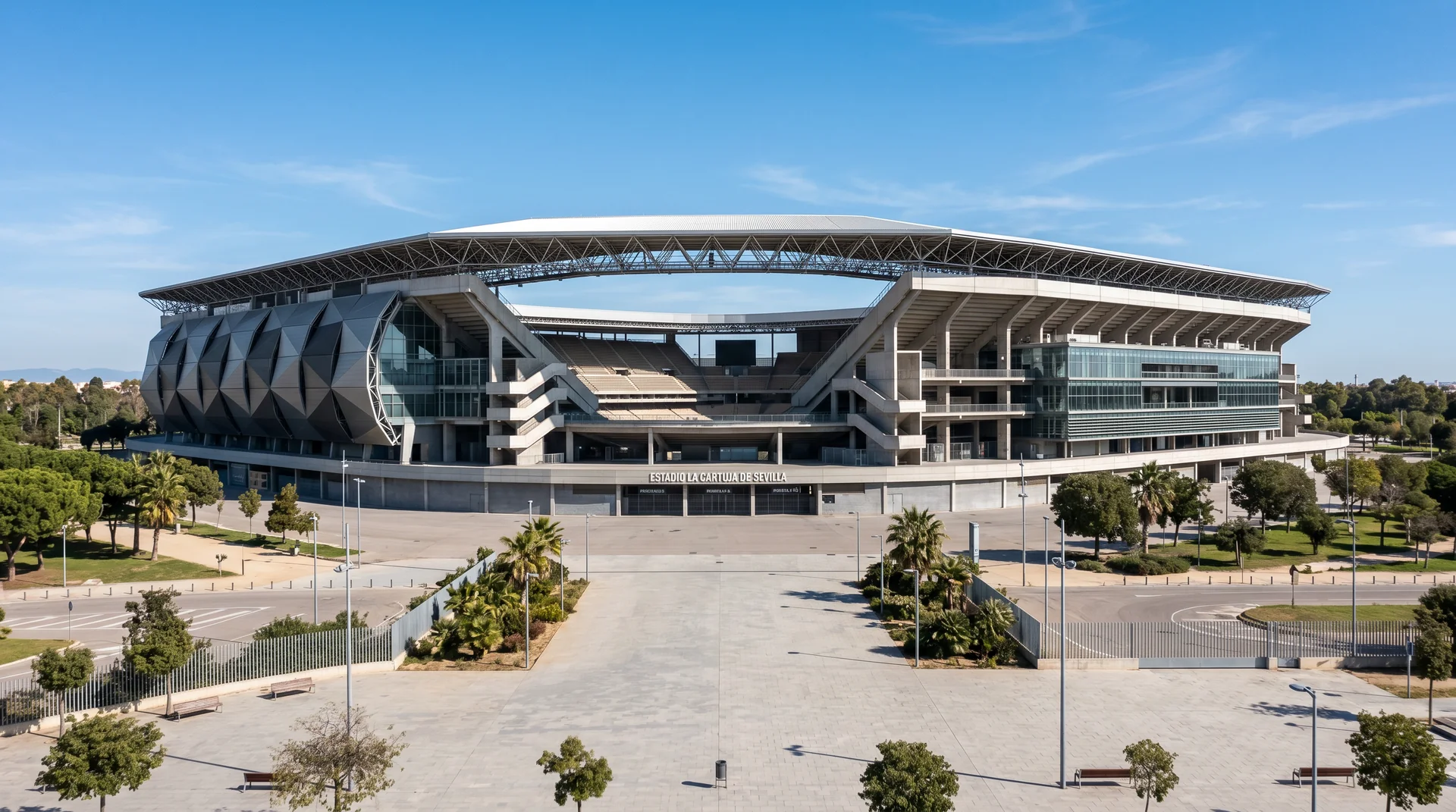
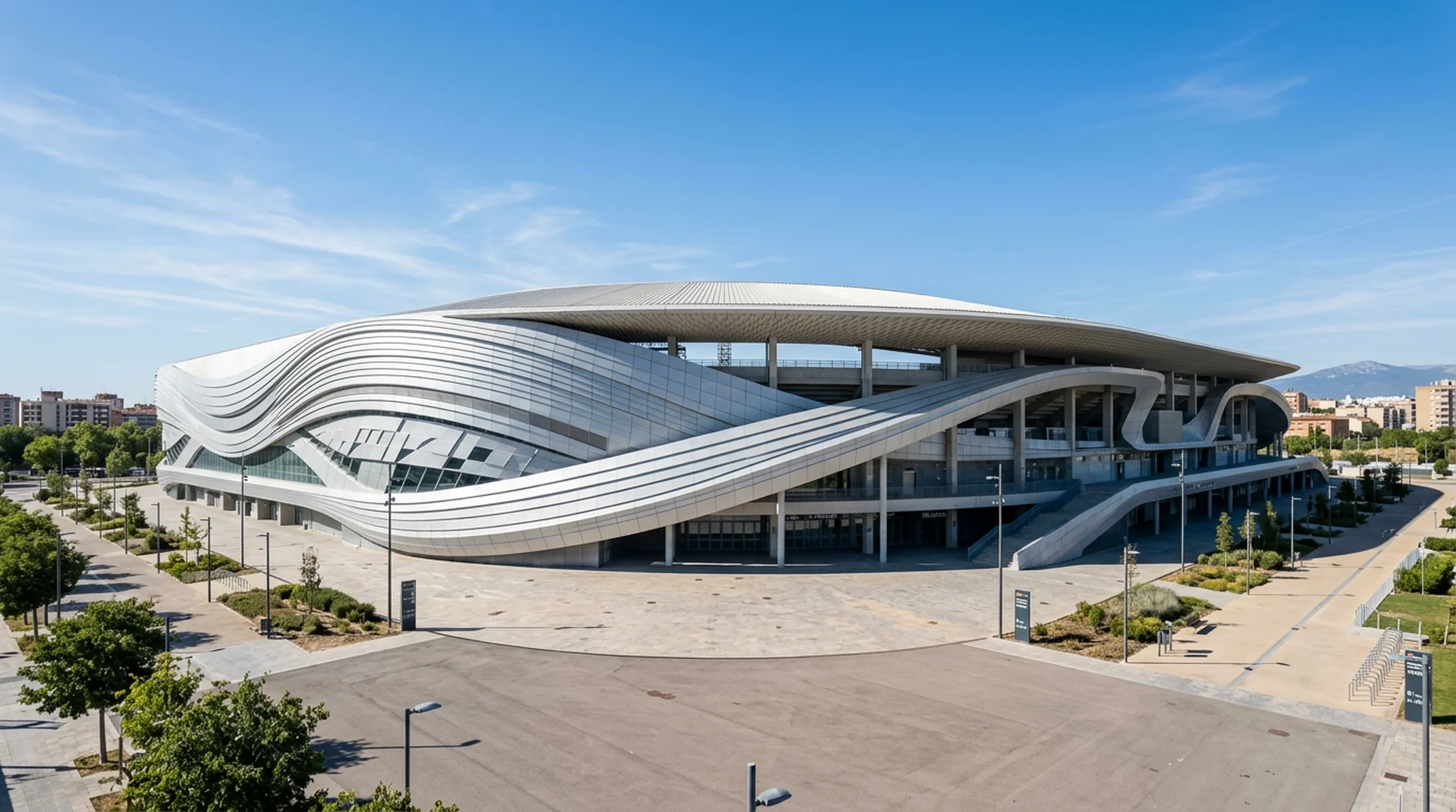
The stadium's architecture blends Morocco's cultural heritage with modern design, featuring a glass facade and integration with surrounding green spaces. The current renovation, running in two phases from late 2023 through 2028, explicitly builds on that identity: reporting on the project describes plans to incorporate geometric patterns and cultural elements that reflect traditional Fassi heritage, celebrating Fez's centuries-old reputation for craftsmanship.
The complex also includes a media room, first aid centre, infirmary and doping control room, plus parking for up to 7,500 cars and 350 coaches, infrastructure originally built for continental competition that gives the venue a head start on 2030's more demanding logistics.
That renovation timeline mirrors what's happening across Morocco's 2030 venues. Adrar Stadium in Agadir is following a similar two-phase approach but waiting until Phase 2 to remove its athletics track, while Ibn Batouta Stadium in Tangier opted for one continuous rebuild instead. Fez's decision to clear its track in Phase 1 reflects the stadium's head start, having already hosted continental competition with much of the required infrastructure in place.
Planning a trip around this stadium? See the full Fez guide →
Search Fez HotelsThat phase alone cost around 600 million Moroccan dirhams and included a new pitch, removal of the athletics track, 500 new surveillance cameras, and fully renovated locker rooms and press facilities.
Phase 2, launching immediately after AFCON 2025, is the more transformative stage: additional stands, improved lighting and sound systems, better surrounding transport links, and design details reflecting traditional Fassi heritage, all part of pushing capacity from today's 35,468 up to a targeted 55,800 by 2028.
What We Don't Know Yet
Some reporting has flagged uncertainty over Fez Grand Stadium's place on the final official 2030 World Cup venue list, alongside broader questions about which Moroccan stadiums make the tournament's confirmed slate. We'll update this page the moment FIFA publishes its final venue confirmations.
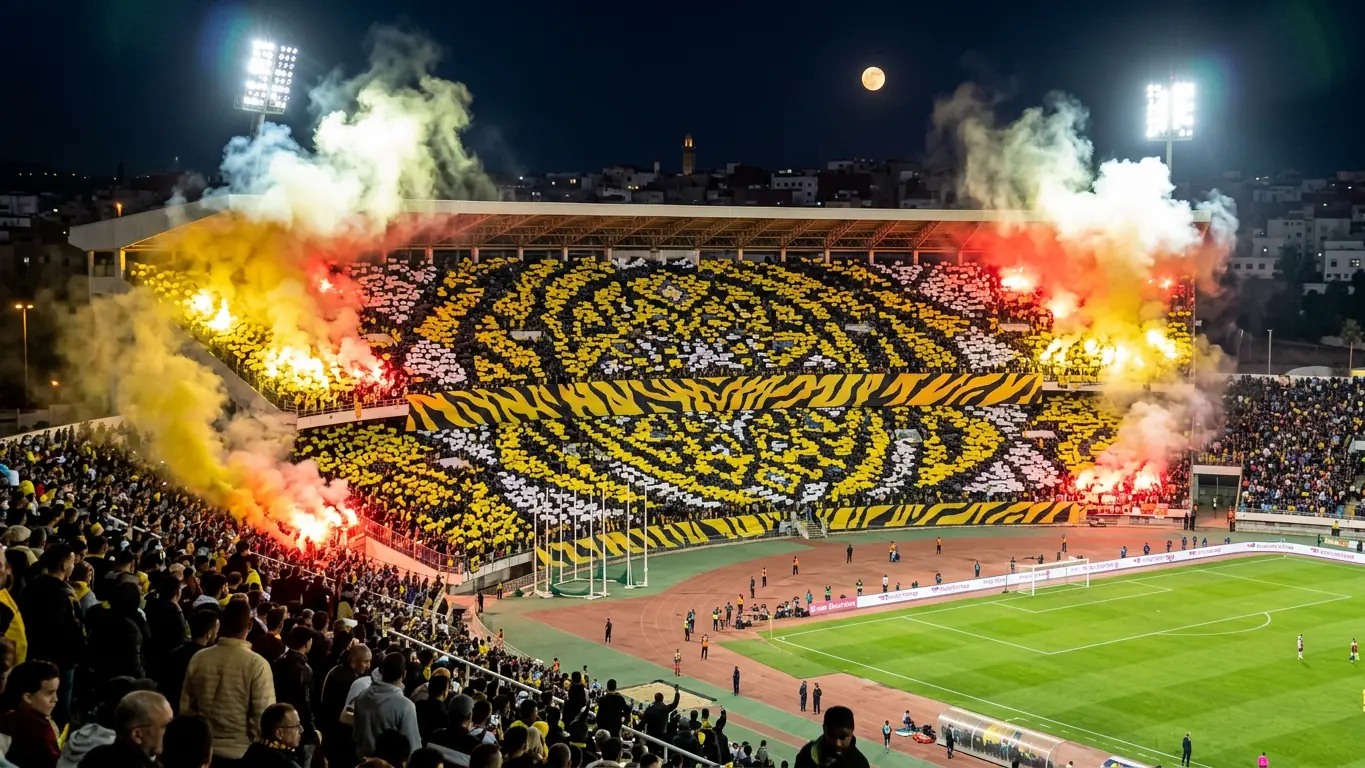
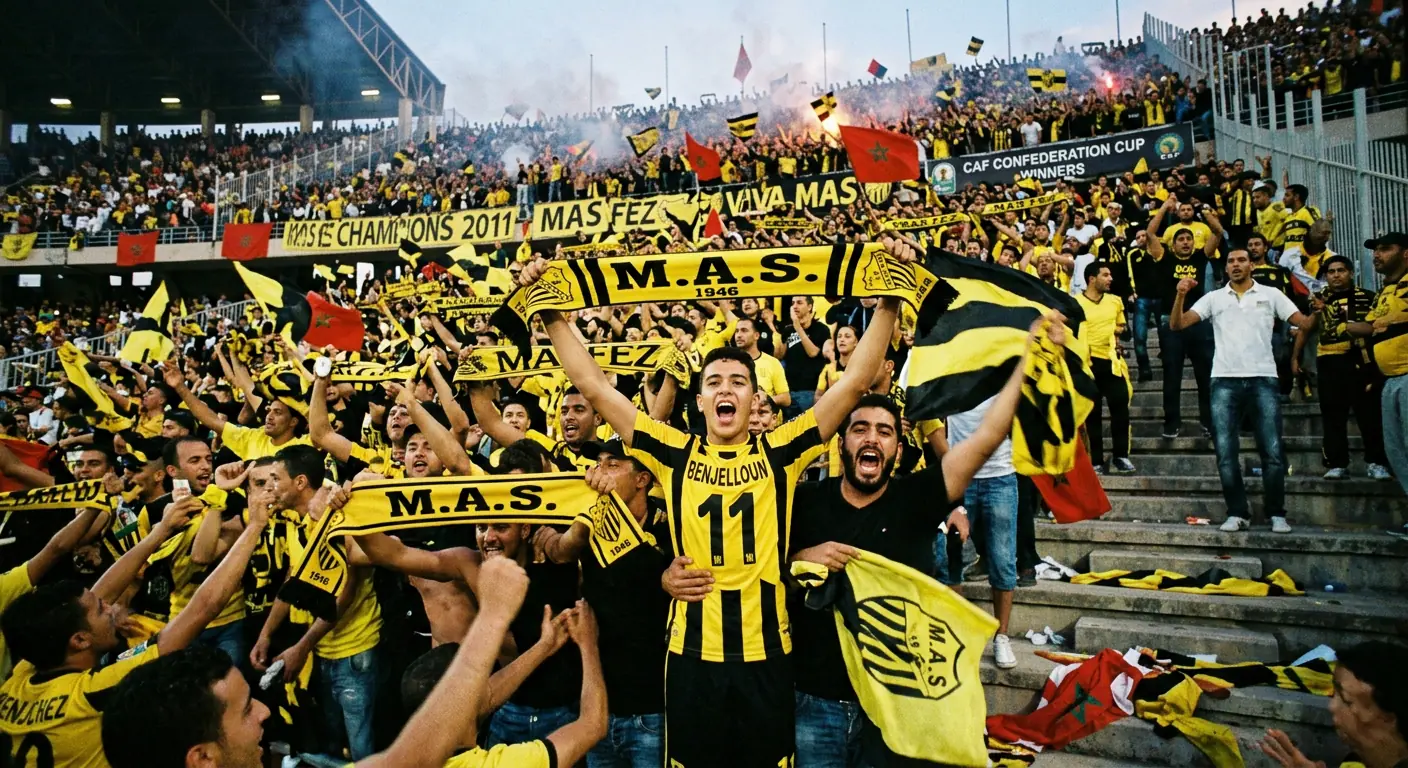
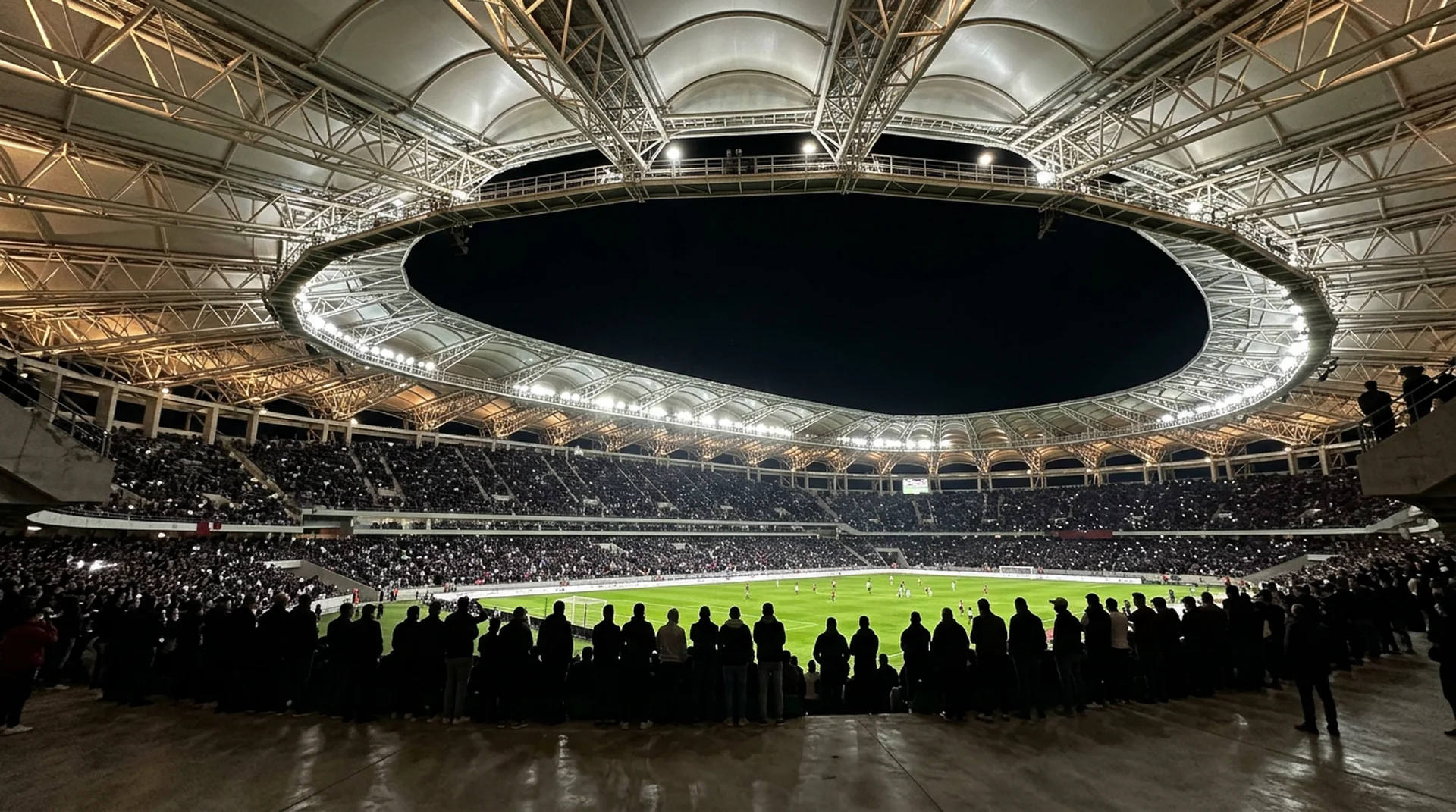
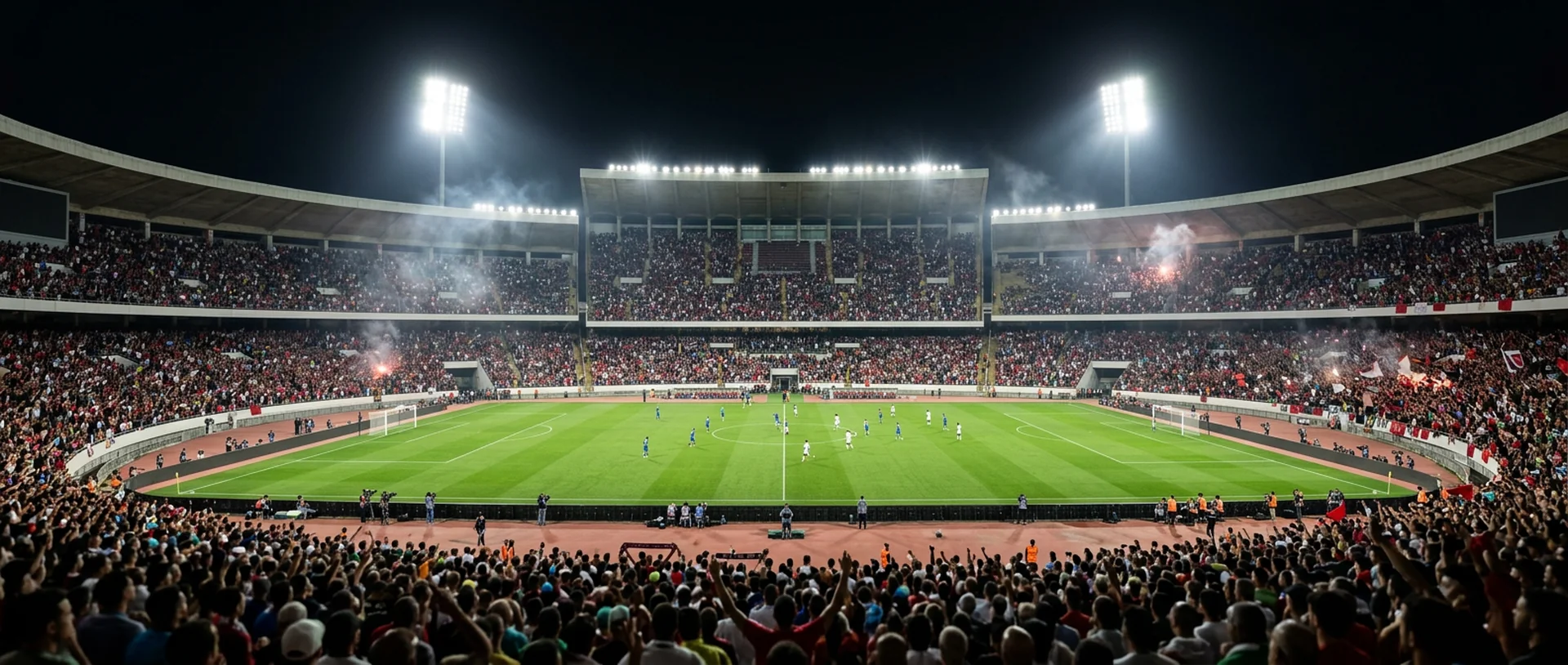
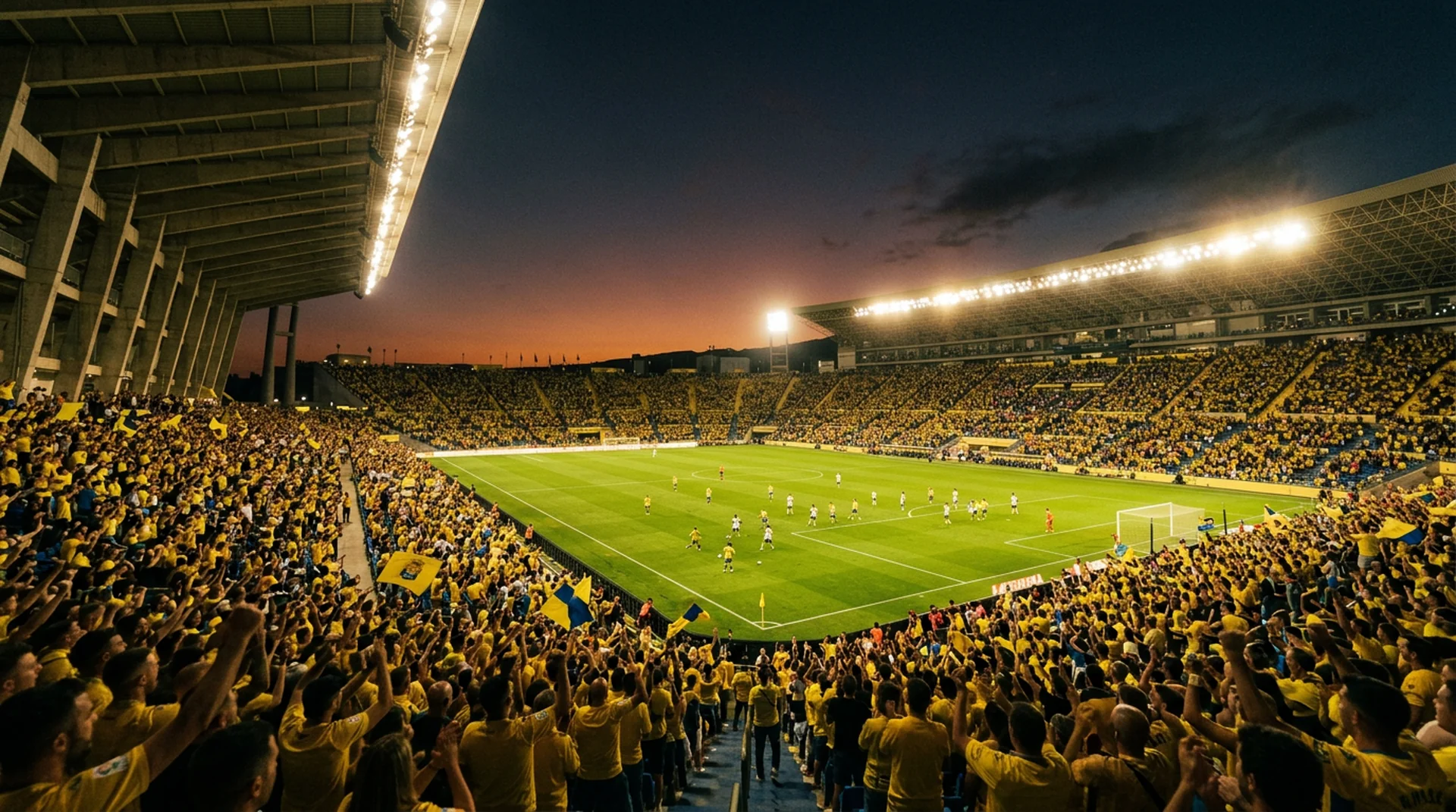
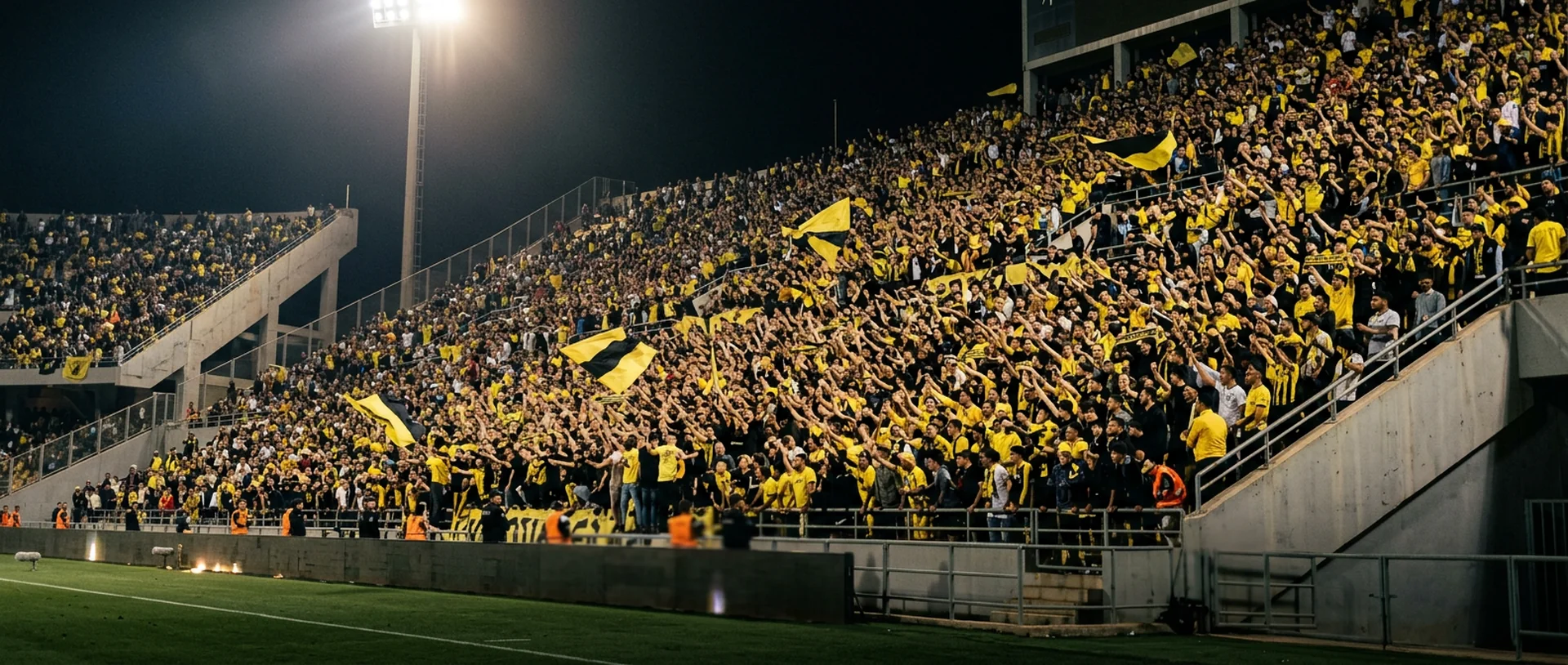
The Fatal Tigers are known across Morocco for elaborate pre-match tifos, large-scale choreographed displays using coloured cards, flags and smoke that typically honour club legends or Fassi cultural motifs. Chants delivered in rhythmic Darija fill the stands from well before kickoff, part of a matchday atmosphere widely regarded as one of the most intense in Moroccan football.
MAS Fez's history as one of Morocco's oldest clubs, founded in 1946 during a period when local sports clubs carried real social and political weight, still shapes how fans relate to the team today. That sense of civic pride shows up clearly on matchday, when the walk from the Medina or Ville Nouvelle out to the stadium becomes its own pre-match ritual for supporters making their way to the Fez Sports Complex.
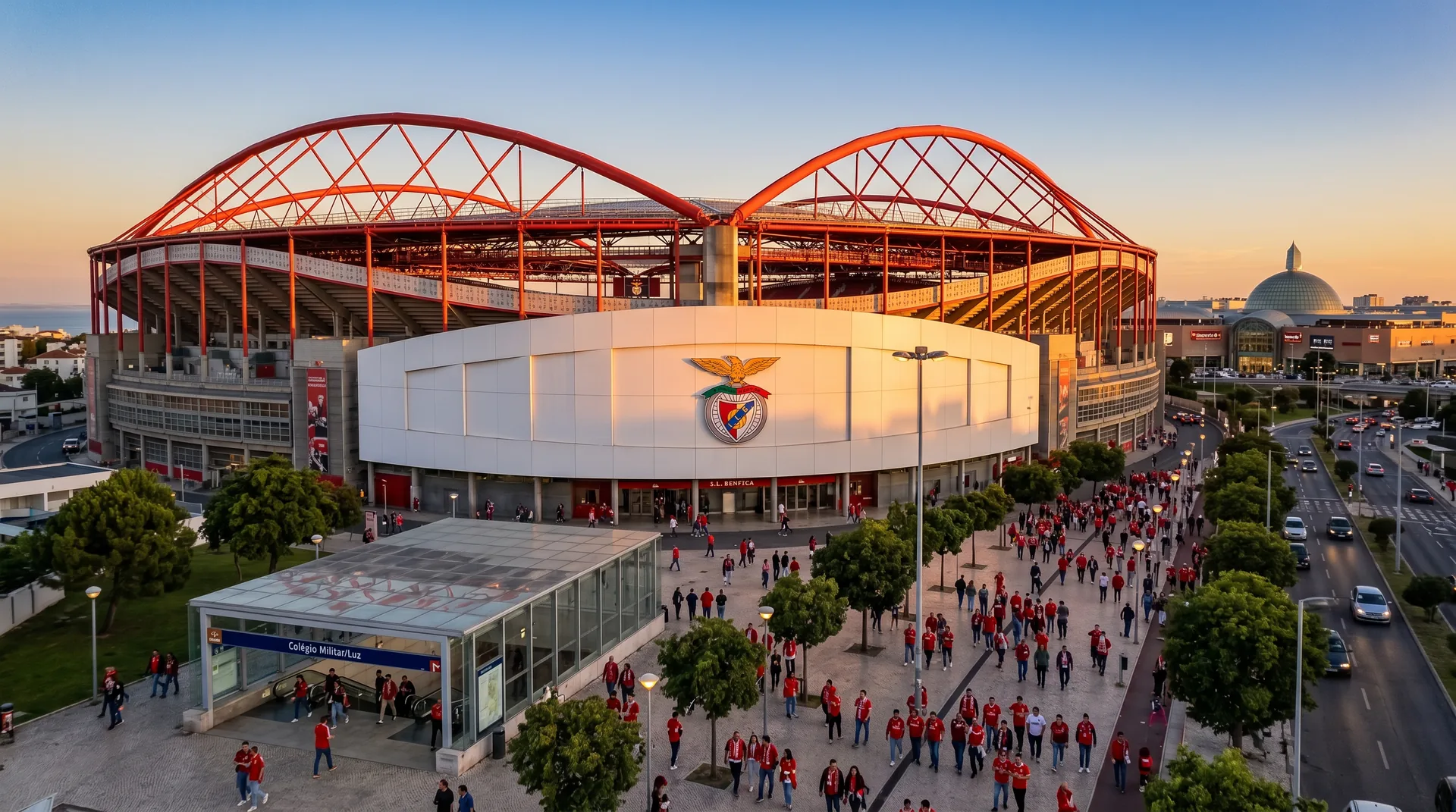
As with other Moroccan grounds, expect street vendors selling scarves and merchandise near the entrance gates, along with the usual pre-match spread of grilled sandwiches and mint tea sold by vendors along the approach roads, a fixture of matchday across the country's stadiums.
Since opening, the stadium has been home to Maghreb Association Sportive de Fes (MAS Fez), one of the oldest and most storied clubs in Moroccan football. Fez Grand Stadium is one of six Moroccan venues being built or renovated for 2030, alongside Hassan II Stadium in Casablanca and Ibn Batouta Stadium in Tangier.
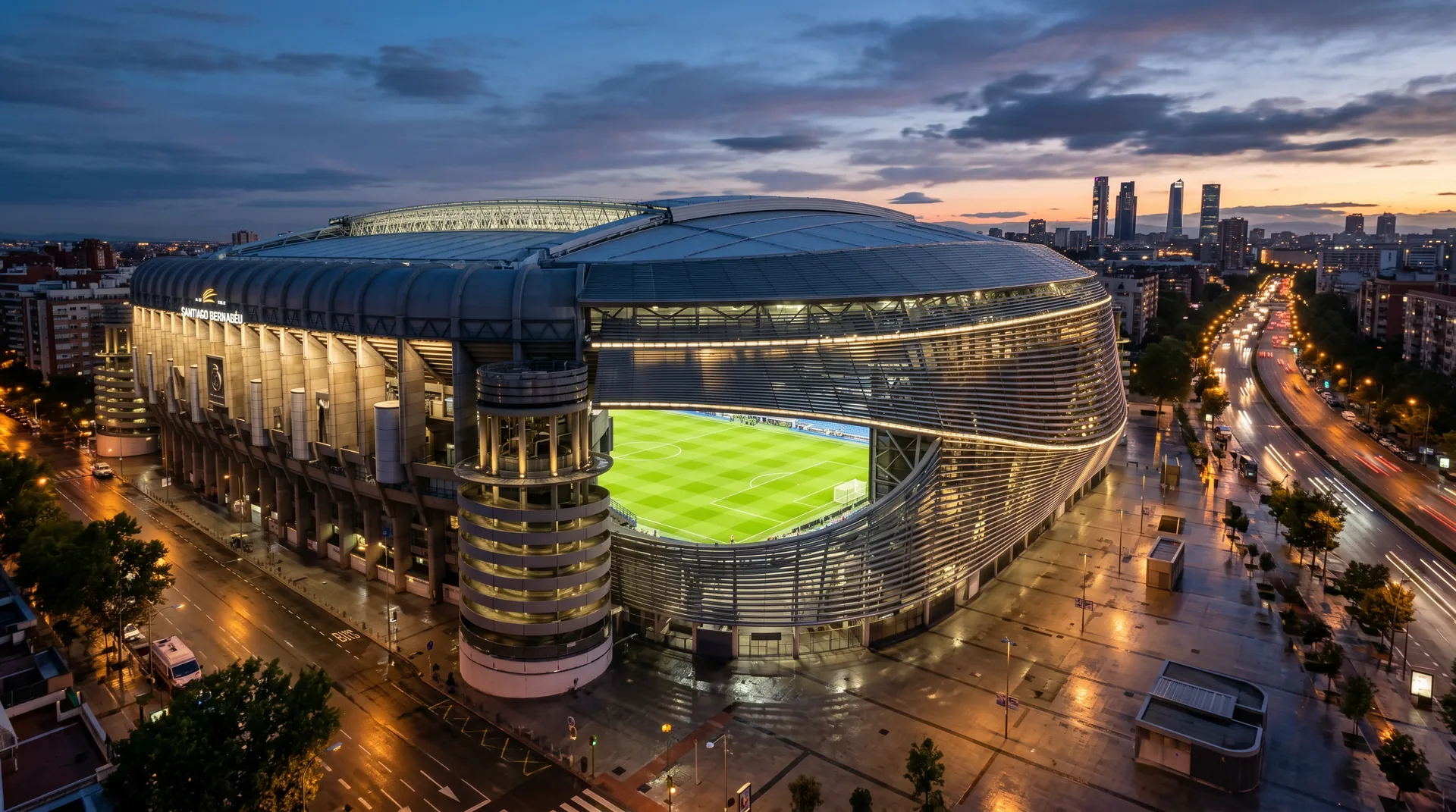
Once its Phase 2 renovation completes in 2028, its capacity of 55,800 will place it comfortably within FIFA's requirements for group-stage and early knockout matches. The venue's proven international pedigree, including a CAF Confederation Cup final that drew 50,000 fans, gives organisers confidence the stadium can handle a major tournament atmosphere, even as construction continues on its final capacity expansion. Its capacity still trails the tournament's largest venues, Spain's Santiago Bernabéu and Camp Nou, but that gap is typical for a venue set to host earlier-round fixtures.
From Fez City Centre
Exact matchday shuttle and transport plans will be confirmed by FIFA and Moroccan authorities closer to 2030. Check back here for updates.
🇲🇦 Morocco


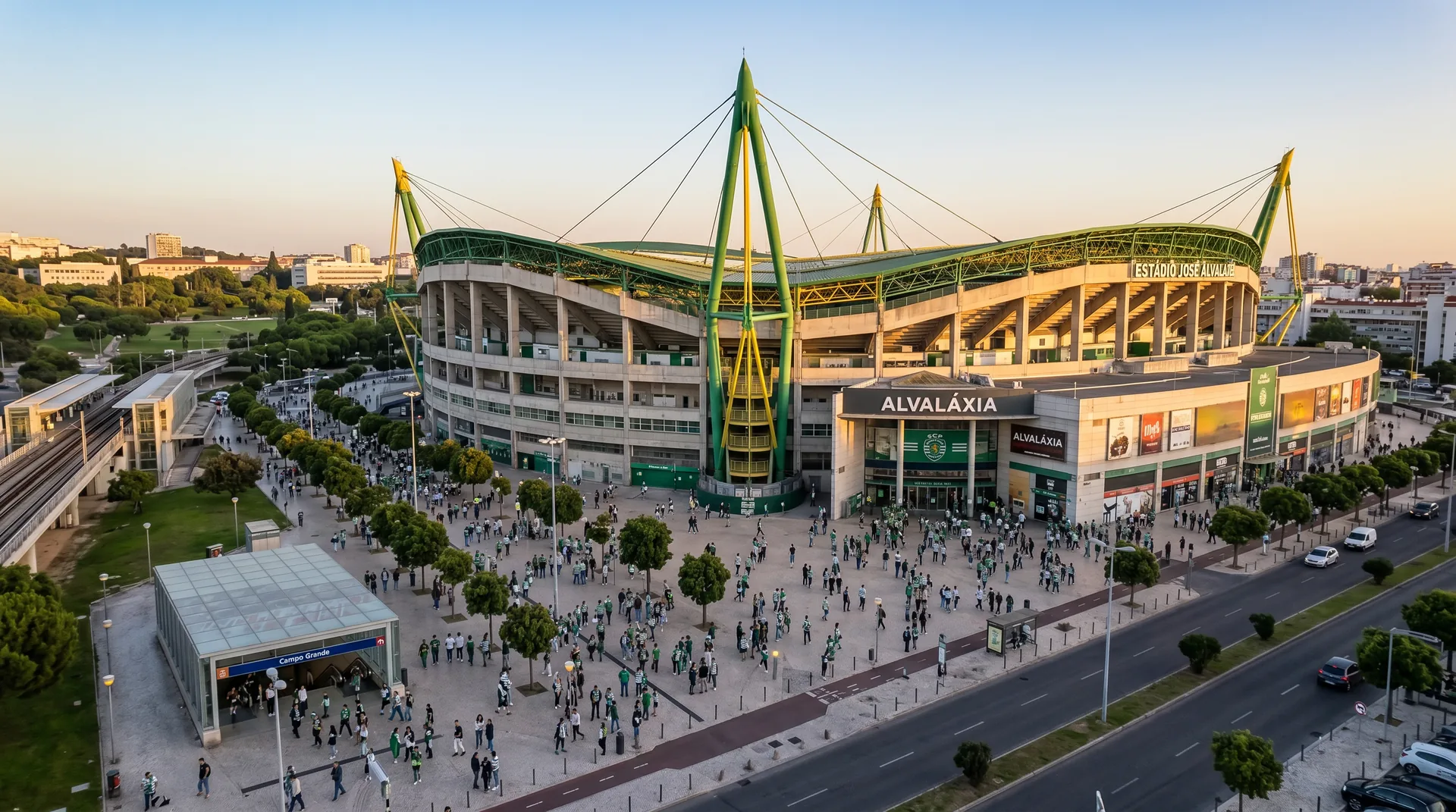
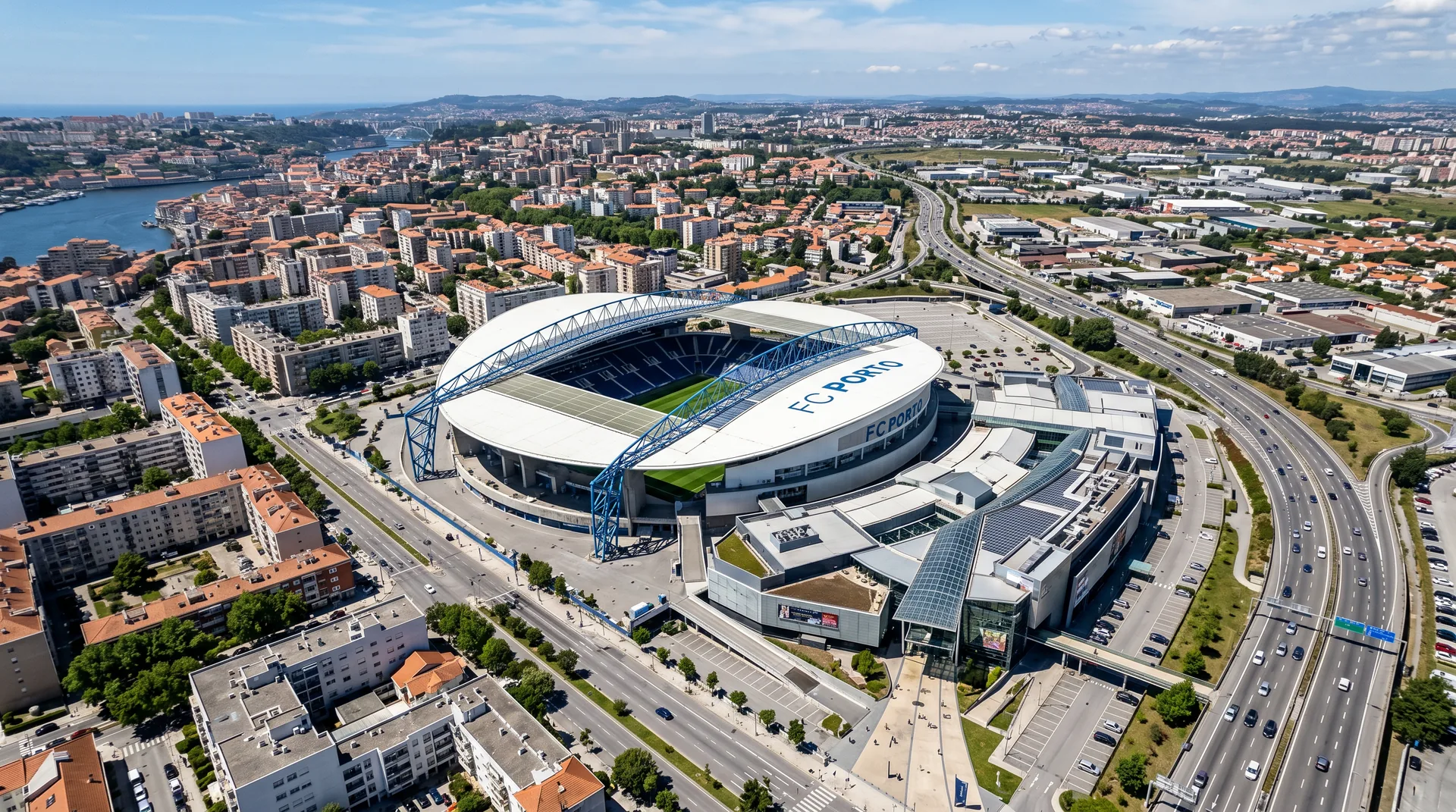
🇵🇹 Portugal
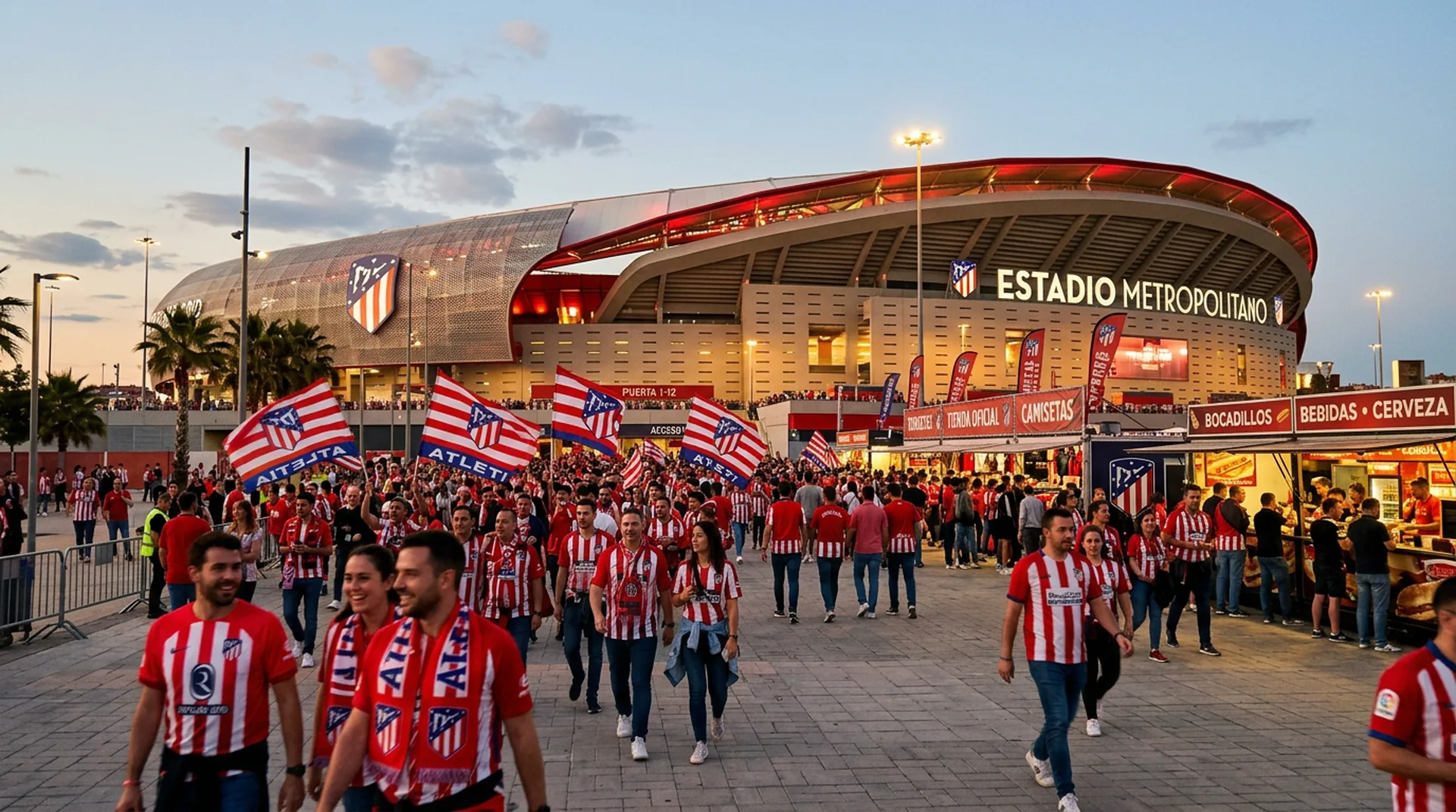
🇪🇸 Spain


🏆 Centenary Matches
Frequently Asked
Continue Exploring
See every World Cup 2030 stadium, or the full Fez travel guide.
Stay Informed
Phase 2 renovation milestones, FIFA venue confirmations, ticket ballot dates and Fez travel tips - straight to your inbox.