Morocco Stadiums Architecture History Where to Stay FAQ Newsletter
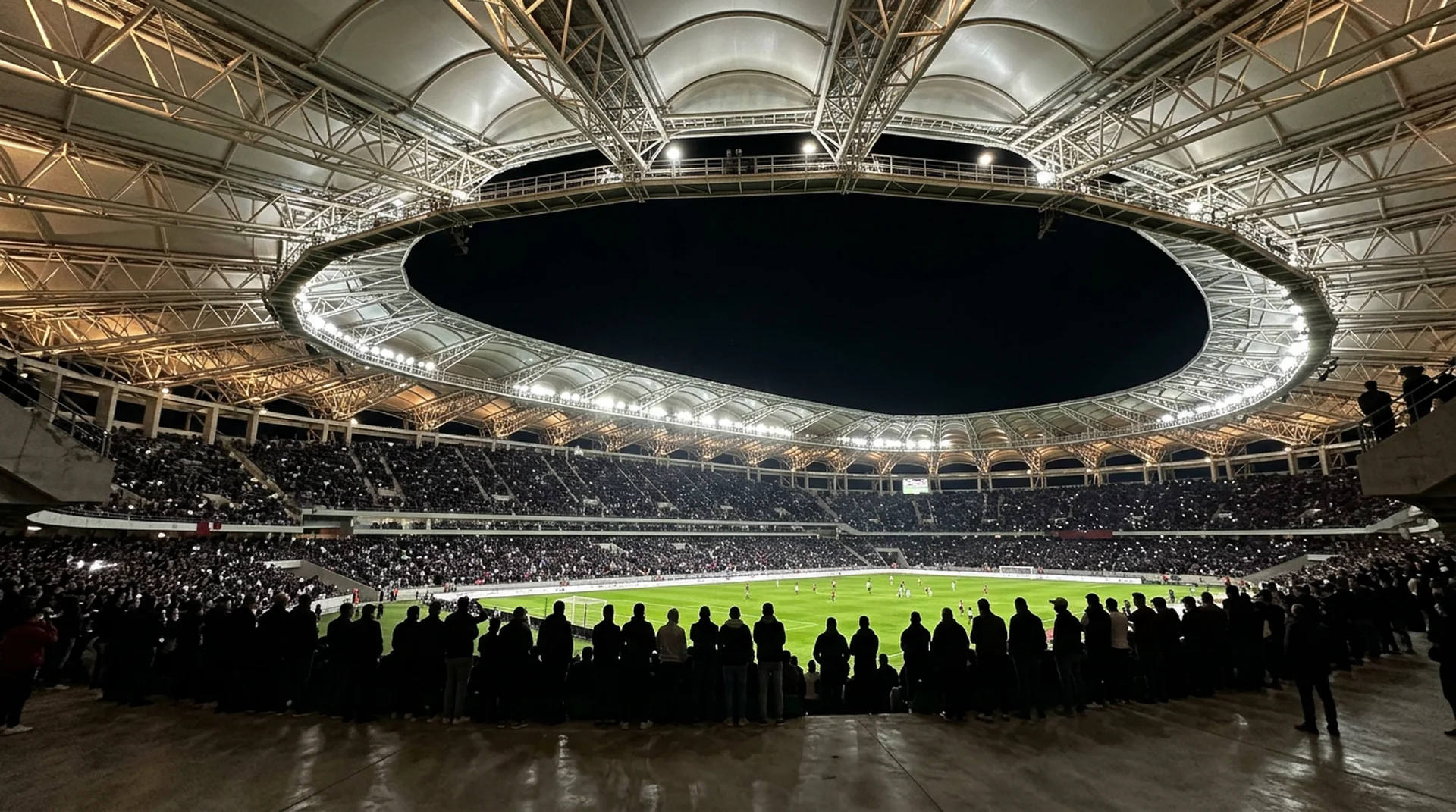
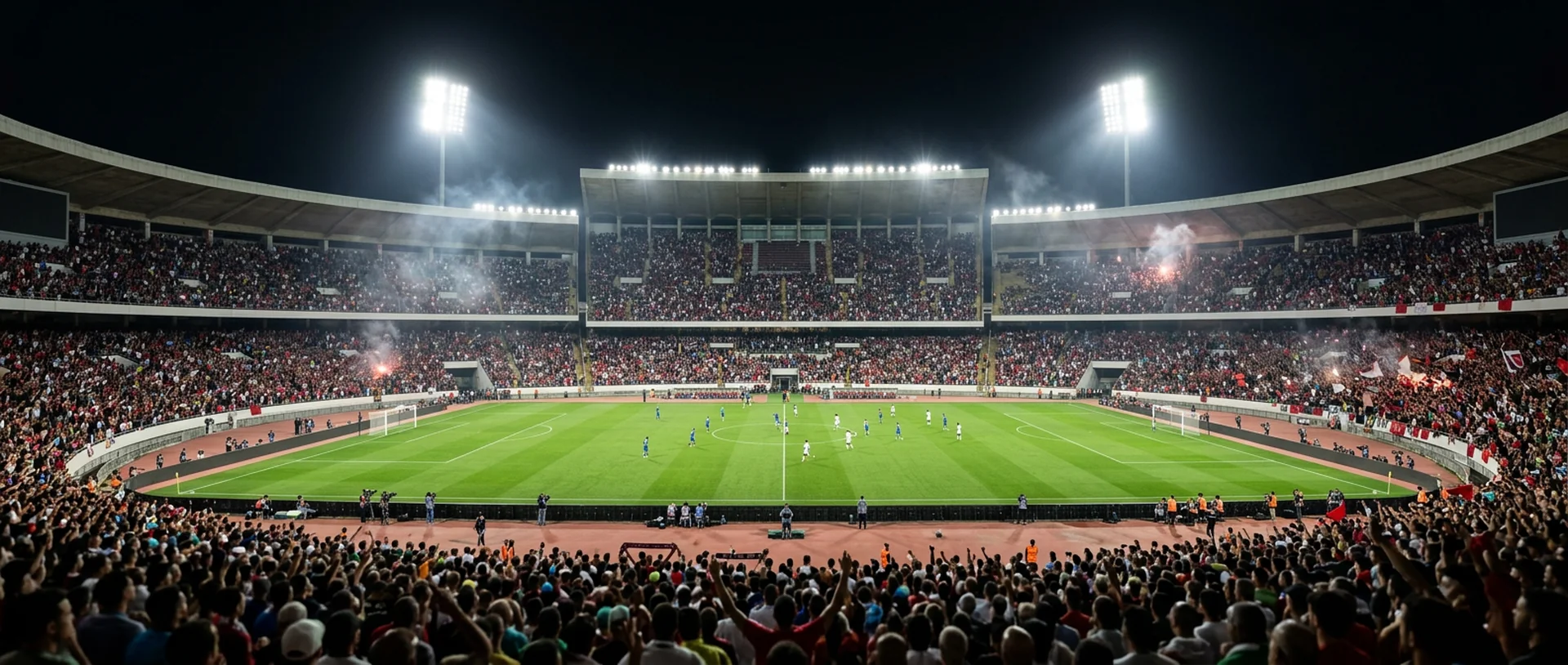
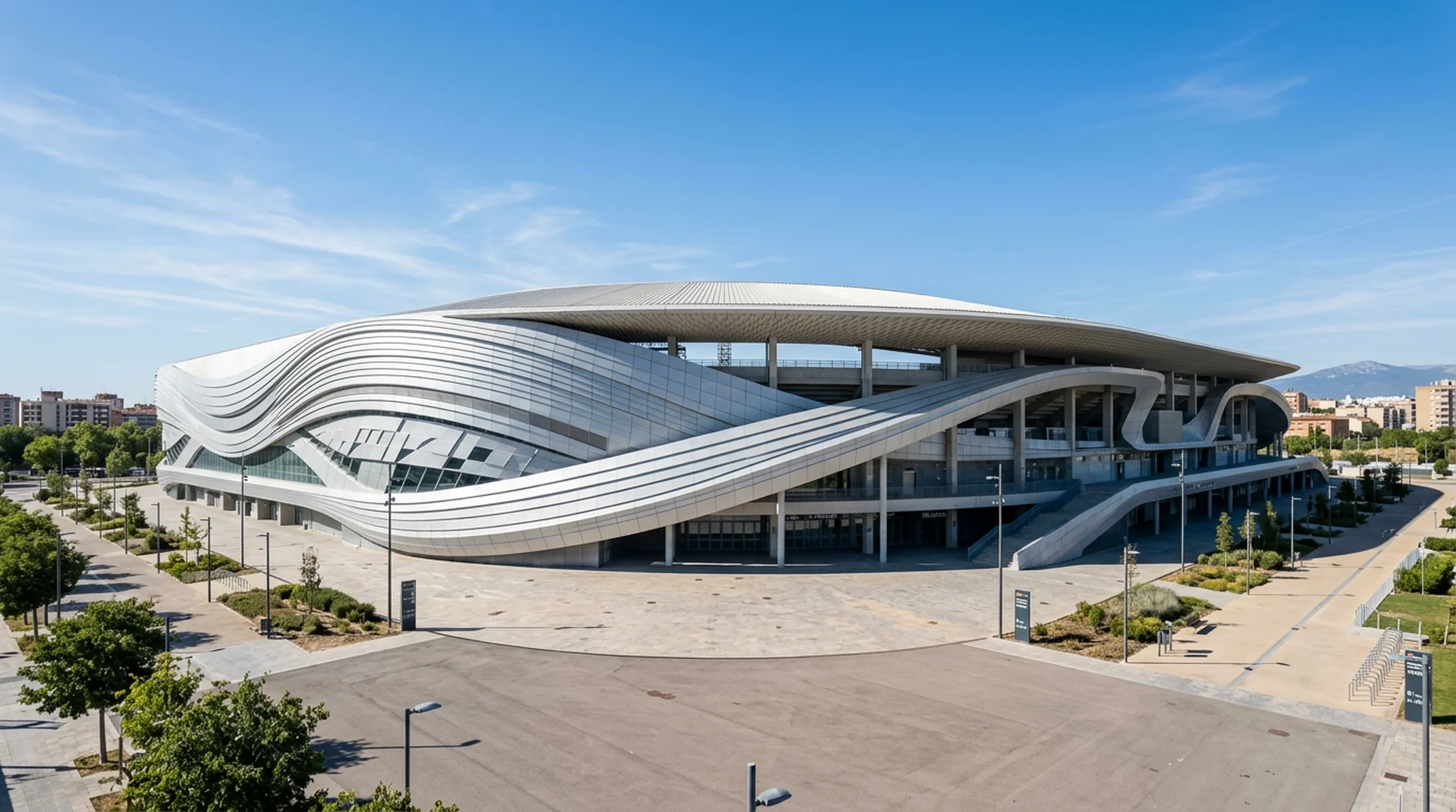
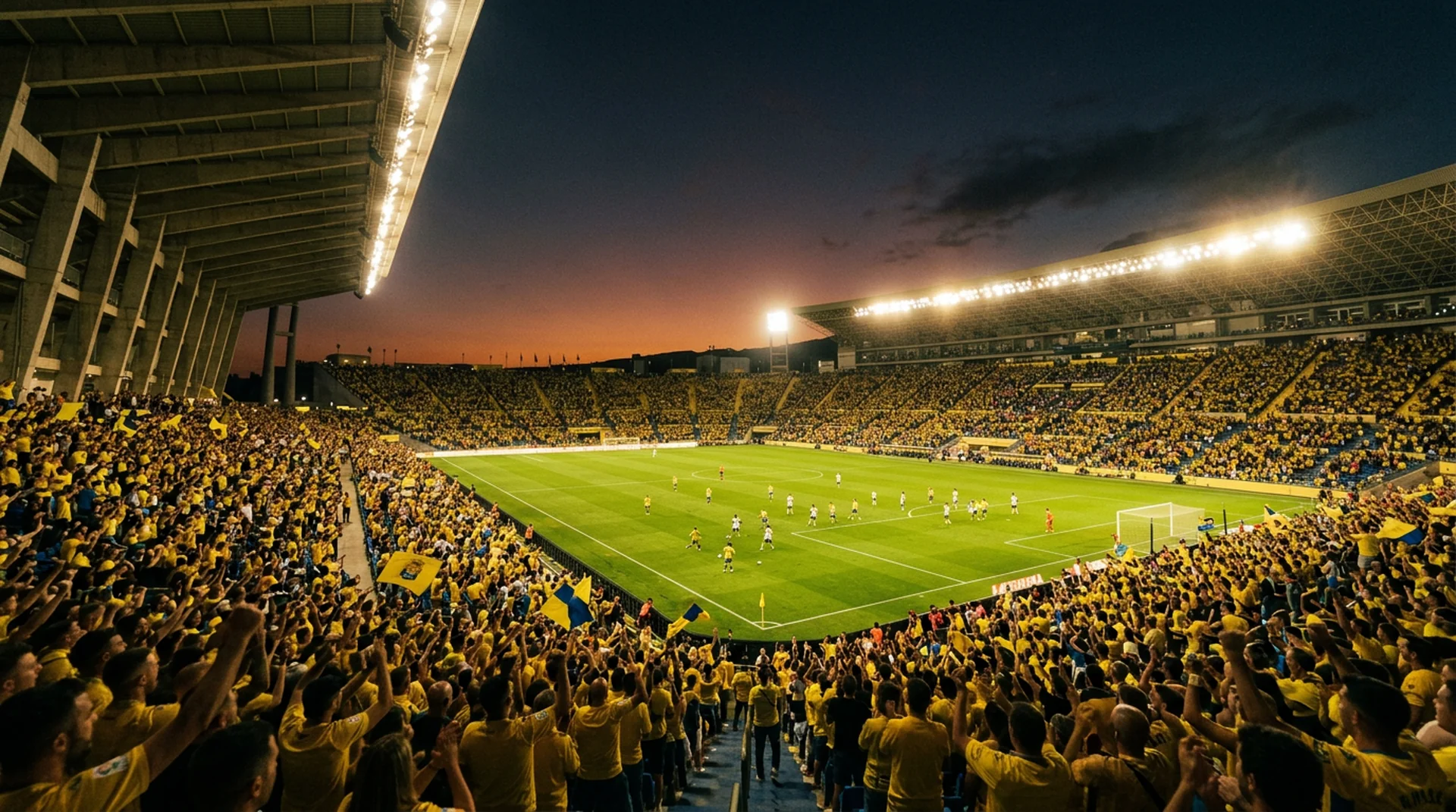
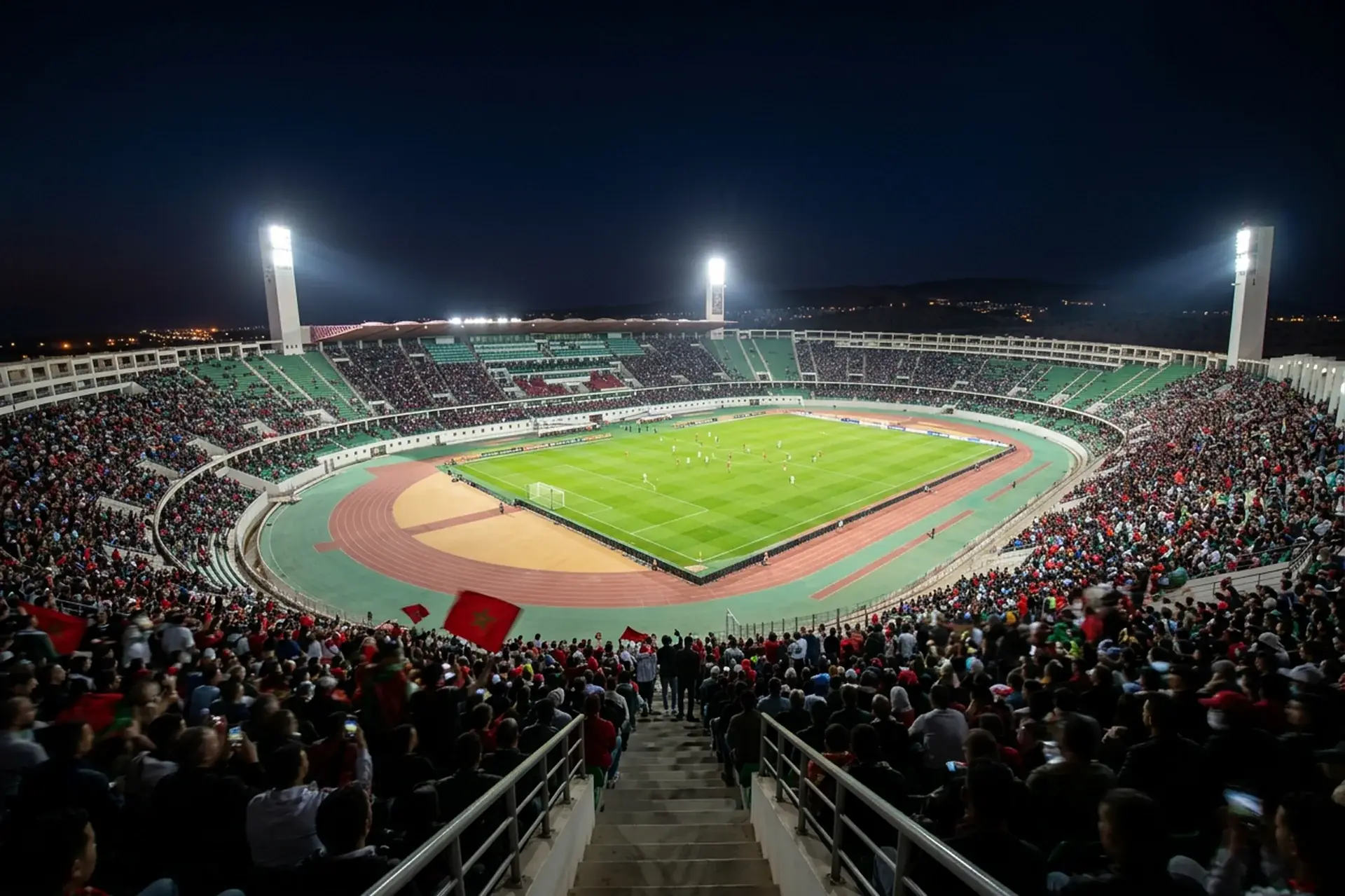
Adrar Stadium packed crowd during a night match, Agadir's coastal stadium ahead of its 2030 FIFA World Cup renovation
Morocco · World Cup 2030 Stadium Guide

Adrar Stadium

A coastal stadium at the foot of the Atlas foothills, already open and hosting AFCON 2025 matches, now entering a second renovation phase that adds a full 360-degree roof and pushes capacity toward 46,000 ahead of the 2030 World Cup.

46,000Gross Capacity
2030Roof Target
2013Originally Opened
6kmEast of Agadir
📍6km east of Agadir
Home: Hassania Agadir
🏗Status: Phase 2 Under Way
💰Phase 1: ~€34M invested
👥~42,000-45,000 seats
Architecture Renovation Atmosphere History World Cup Role Getting There Where to Stay All Stadiums FAQ

Architecture & Design

A Coastal Bowl,
Named for the Mountains Behind It

Adrar Stadium, also known as the Grand Stade d'Agadir, opened on 11 October 2013 on a 32-hectare site a few kilometres from Agadir's Atlantic coastline. Its name comes from Tashelhit, the Amazigh (Berber) language spoken across the Souss-Massa region, in which "adrar" simply means "mountain," a nod to the nearby Atlas foothills that give the stadium its backdrop.

Since replacing Hassania Agadir's older Stade Al Inbiaat as the club's home ground, the stadium has functioned as a genuine multi-purpose venue, hosting football alongside continental competition and civic events, reflecting Agadir's status as Morocco's leading Atlantic resort city and a major fishing port.

The current renovation, part of the same national programme reshaping Tangier, Marrakech, Rabat and Fez, is being carried out in two phases: the first, completed for AFCON 2025, focused on pitch, security and exterior upgrades, while the second and more ambitious phase will add a full panoramic roof and remove the stadium's athletics track entirely.

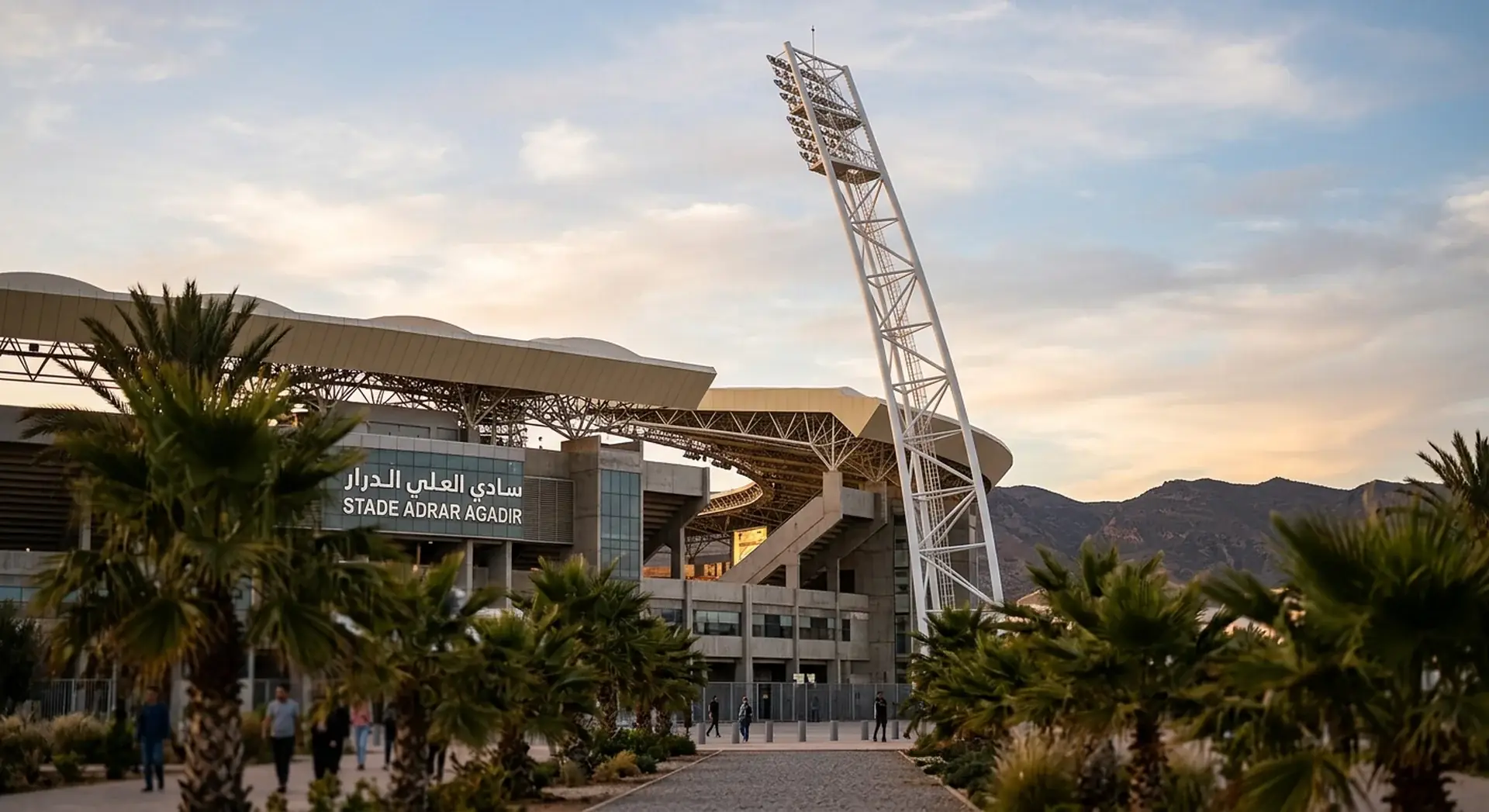
Adrar Stadium sits within a wider sports complex on Agadir's eastern edge, sharing its site with training pitches and supporting facilities used by Hassania Agadir's academy sides. The stadium's original design kept the running track in place around the pitch, a common approach for Moroccan venues built with an eye toward hosting athletics meets and continental multi-sport events alongside football, though it's the very feature Phase 2 will finally remove to bring fans closer to the action.

That two-phase approach, quick security and comfort upgrades first, structural transformation second, mirrors what's happening at several of Morocco's other 2030 venues. Fez Grand Stadium followed a similar rhythm, though it removed its own athletics track in Phase 1 rather than waiting for Phase 2, while Ibn Batouta Stadium in Tangier took the more ambitious route of a single, comprehensive rebuild that added a hybrid pitch and a full roof in one continuous project. Each city's choice reflects a different balance between AFCON 2025's tighter deadline and the longer runway available before 2030.

The "Sports City" model, a single large complex combining the main stadium with training pitches, academy facilities and supporting infrastructure, has become something of a template across Morocco's renovated venues, also visible at Ibn Batouta's own 74-hectare site in Tangier. For Adrar, that means visitors arriving on matchday will find more than just a stadium: youth pitches, administrative buildings and open plazas designed to keep the site active well beyond the 90 minutes of a football match, part of the broader civic ambition behind Morocco's World Cup infrastructure push.
Planning a trip around this stadium? See the full Agadir guide →

Search Agadir Hotels
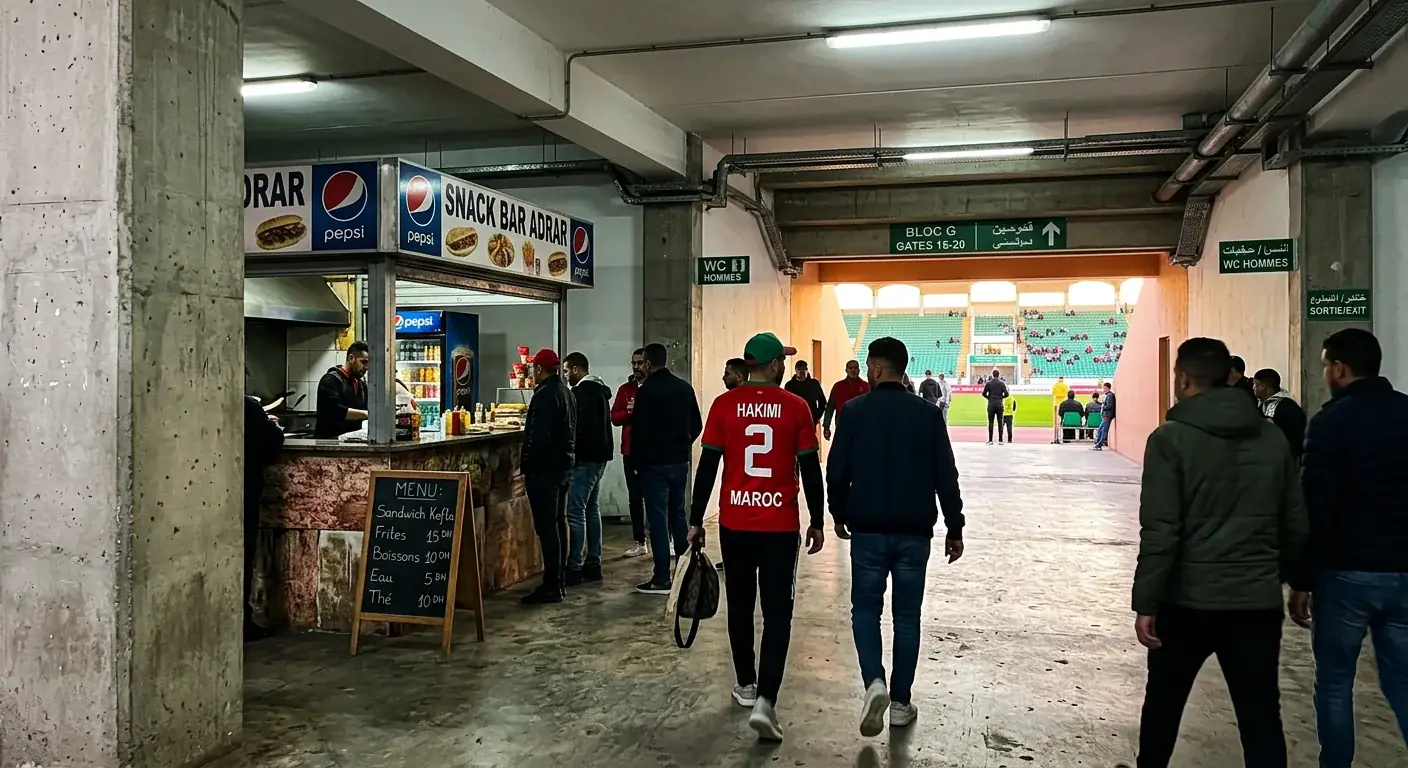
Fans walking through the concourse at Adrar Stadium, Agadir, on their way to the seating bowl on matchday

A Roof, Then a Football-Only Bowl

Adrar Stadium's first renovation phase focused on the essentials needed to host AFCON 2025: pitch replacement, dressing room upgrades, improved security, and exterior works, all completed on schedule with roughly €34 million (about $39.5 million) invested.

Get Renovation Updates

That phase left the stadium's athletics track in place and its capacity largely unchanged. Behind the scenes, though, the upgrade also touched the fan-facing side of the stadium: renovated concourses, refreshed food and drink kiosks, and improved signage throughout the tunnels connecting the gates to the seating bowl, small changes that make a real difference on a packed matchday but rarely make headlines the way a new roof does.

Roof
360° Planned
Phase 2 adds a full panoramic roof covering all stands
🌅
Athletics Track
To Be Removed
Phase 2 converts the venue into a football-only bowl
🎫
Capacity
Gross 46,000
FIFA-confirmed target, net 42,800, once Phase 2 completes
💰
Phase 1 Cost
€34 Million
Already invested, with further spending planned for Phase 2

Adrar Stadium hosted matches at both the 2013 FIFA Club World Cup and the 2025 Africa Cup of Nations, giving it international tournament experience on both ends of its current renovation cycle, from its opening year through to its final World Cup preparation phase.

What We Don't Know Yet

A precise timeline and full cost for the Phase 2 roof and track-removal work haven't been published as of this writing. We'll update this page once SONARGES or FIFA confirm further details.

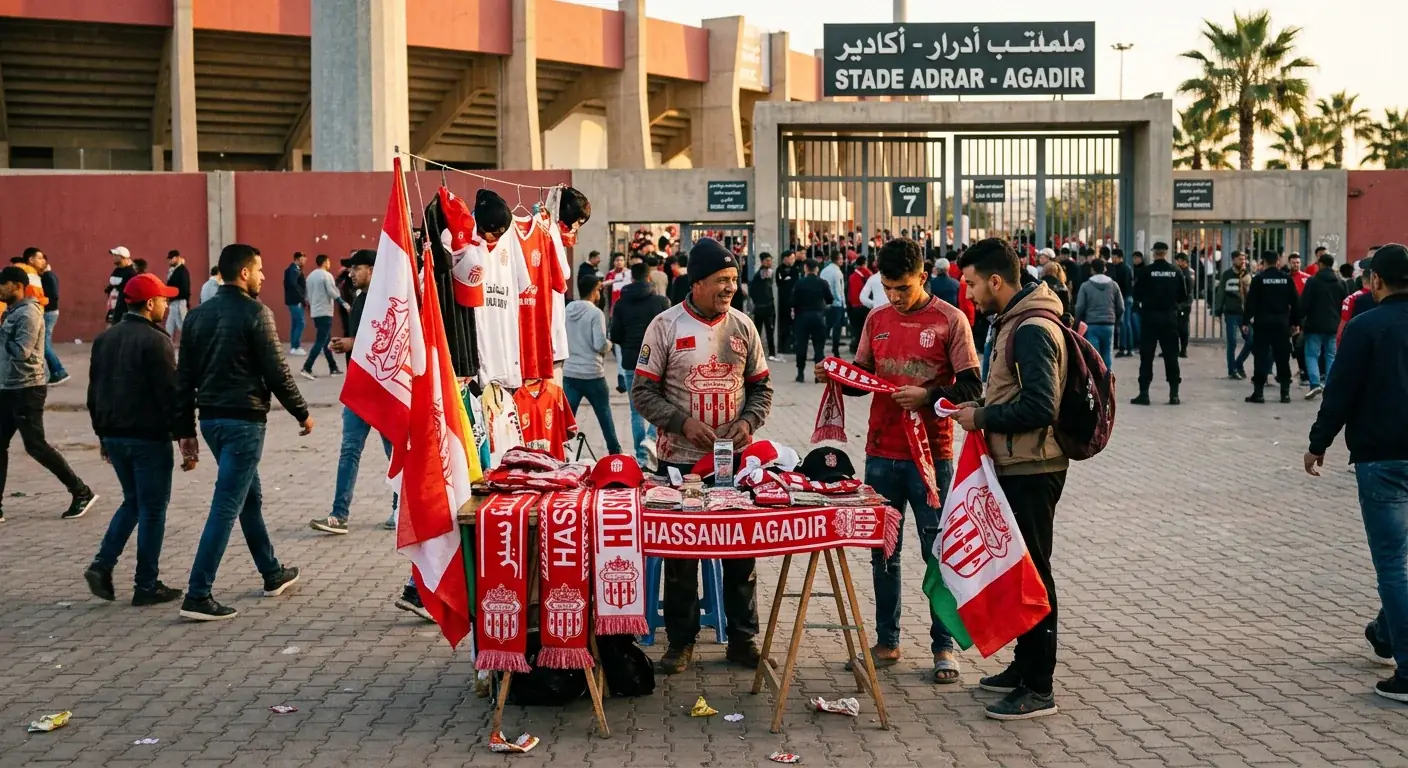
Street vendor selling Hassania Agadir scarves and flags outside Adrar Stadium on matchday

Red, White and Amazigh Pride

Hassania Agadir plays in red and white, chosen by the club's 1946 founders specifically to express Moroccan identity during the French protectorate era.

Search Agadir Hotels

That identity runs deeper than the kit: Agadir sits in the heart of Morocco's Amazigh (Berber) region, and the club's two main ultras groups, Ultras Imazighen (founded 2006) and Red Rebels (founded 2011), channel that heritage directly into matchday, staging tifos and choreography built around Amazigh symbolism rather than generic football imagery.

The result is a rally cry heard often around Adrar Stadium: "Dima Hassania, Dima Imazighen", roughly "Forever Hassania, forever Amazigh." Arrive an hour or two before kickoff and the streets around the ground fill with scarf and flag vendors, tea stalls, and fans making the walk in from Agadir's surrounding neighbourhoods, a pre-match ritual as much a part of the experience as the game itself.

Street food follows the same rhythm: grilled sandwiches, msemen (Moroccan flatbread) folded and sold hot off portable griddles, and glasses of sweet mint tea poured from tall kettles held high above the cup, a small piece of Moroccan hospitality that shows up outside stadiums the same way it does everywhere else in the country. Inside, the concourse snack bars sell the same fare at fixed prices, so there's no need to rush a purchase outside if you'd rather get to your seat early.

Full Agadir Guide
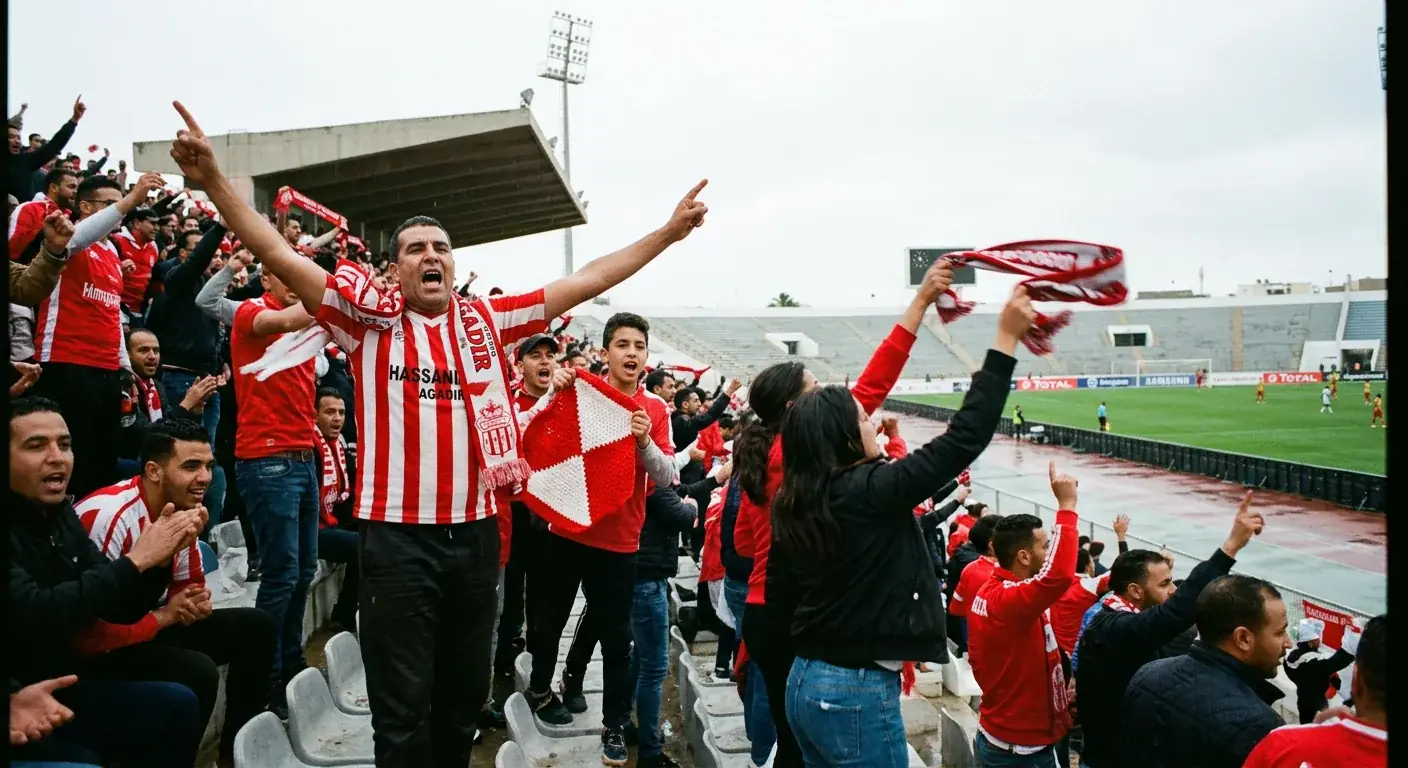
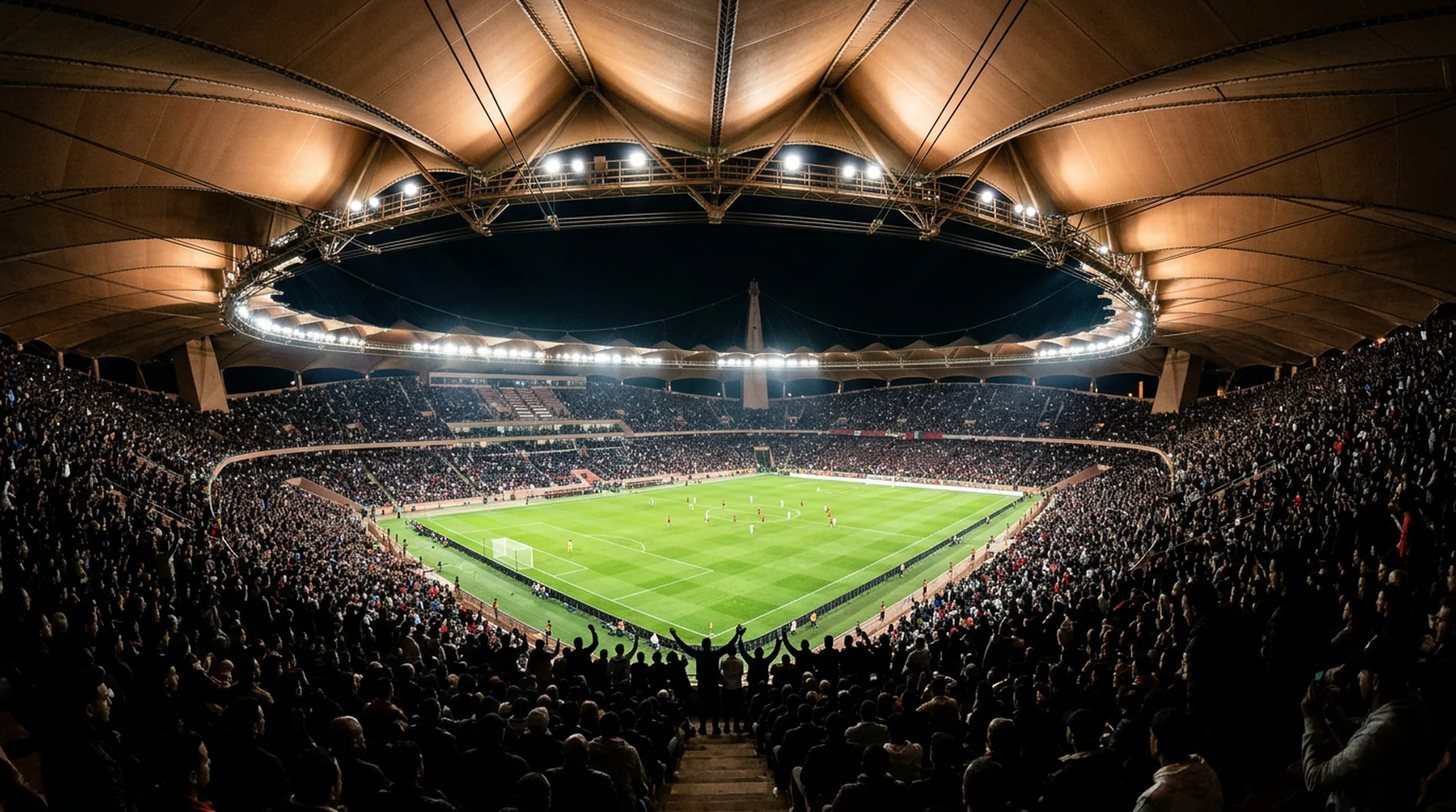
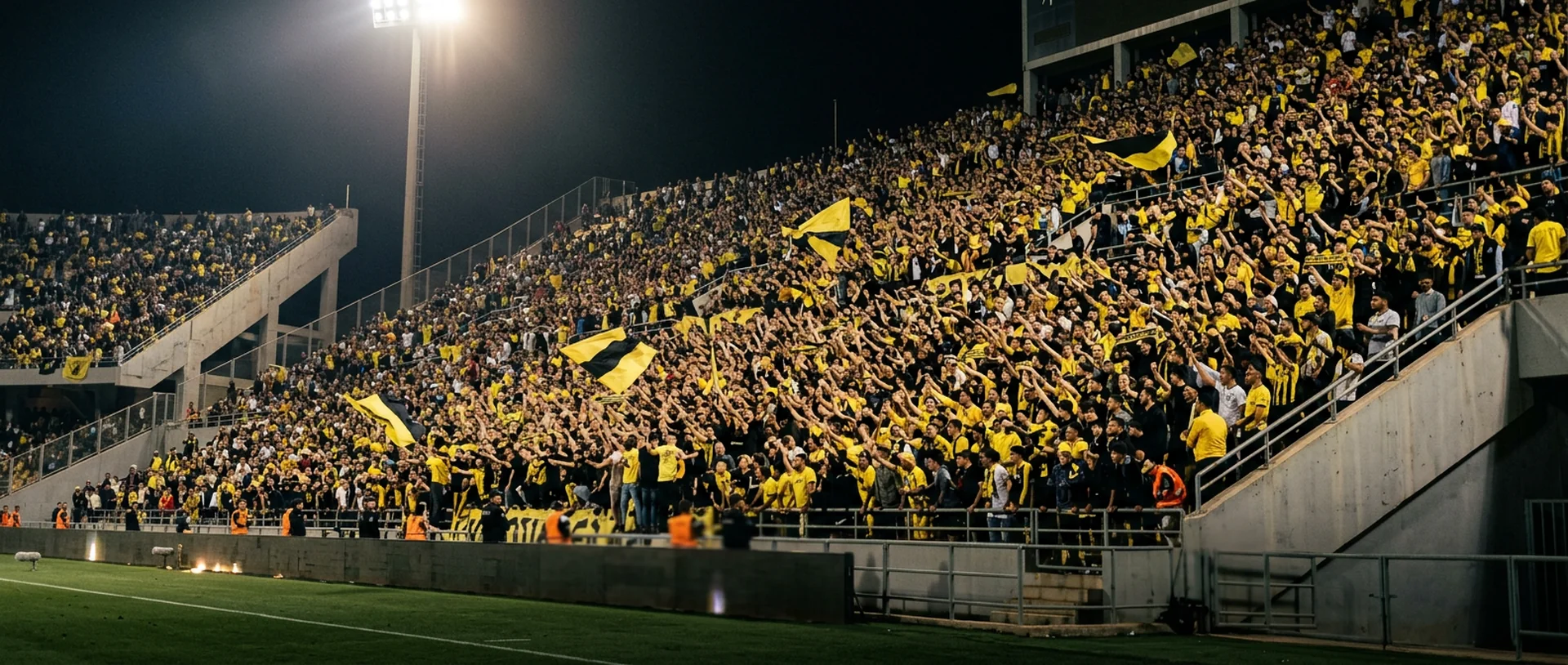
Hassania Agadir fans celebrating at Adrar Stadium during the club's 2018-19 CAF Confederation Cup run

A Decade of Hassania Agadir

Adrar Stadium opened on 11 October 2013 with a friendly between Hassania Agadir and Algeria's JS Kabylie, immediately becoming the home of HUSA in place of the club's older ground, Stade Al Inbiaat.

Full Agadir Guide

Within its first year, the stadium was hosting continental and global fixtures, including matches at the 2013 FIFA Club World Cup. Adrar Stadium is one of six Moroccan venues being built or renovated for 2030, alongside Hassan II Stadium in Casablanca and Grand Stade de Marrakech. Outside major tournaments, it remains Hassania Agadir's regular home for Botola Pro fixtures throughout the domestic season.

The stadium is the home of Agadir's Hassania Union Sport d'Agadir (HUSA). The club has not yet won a major domestic trophy but reached the 2019 Moroccan Throne Cup final and advanced to the quarter-finals of the 2018-19 CAF Confederation Cup, before reaching the semi-finals of the 2019-20 edition the following season. HUSA's biggest fixtures come against Morocco's Casablanca giants, Raja and Wydad, both of which reliably fill the stadium to capacity on matchday.

11 Oct 2013
Opens with a friendly between Hassania Agadir and JS Kabylie of Algeria.
2013
Hosts FIFA Club World Cup matches in its opening year.
2018-19
Hassania Agadir reaches the CAF Confederation Cup quarter-finals, hosted at Adrar Stadium.
2023
Renovation begins as part of Morocco's national stadium upgrade programme.
2025
Phase 1 completes ahead of AFCON 2025, €34M invested in pitch and security.
2026-30
Phase 2 renovation adds a full roof, removes the track, targets 46,000 seats.
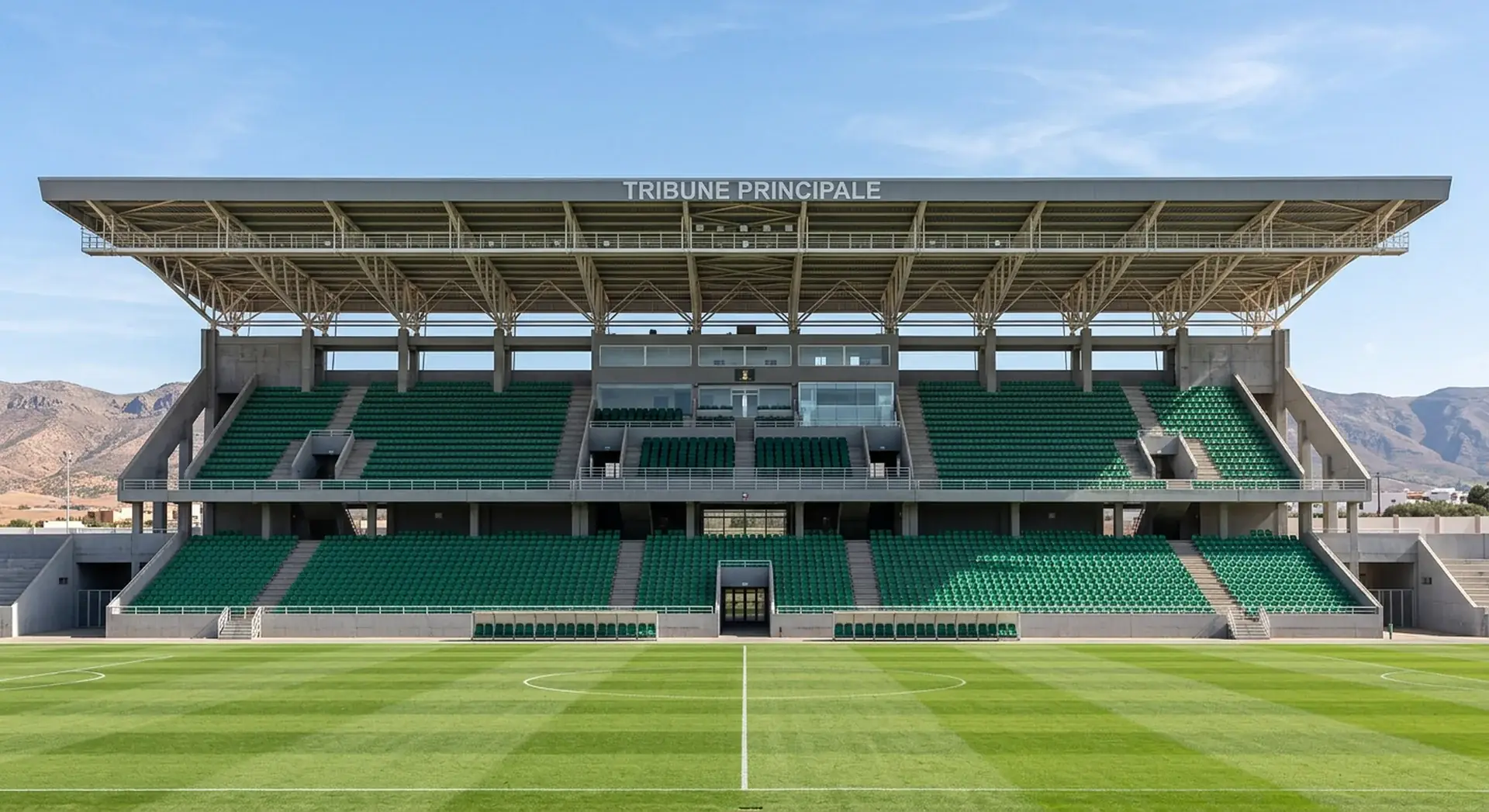
Adrar Stadium Tribune Principale covered stand, Agadir's coastal stadium ahead of World Cup 2030

Morocco's Sunniest Venue

Agadir's Atlantic coastal climate is widely considered the mildest and most consistent of any Morocco 2030 host city, an asset the tournament's organisers will lean on for a stadium at the southern end of Morocco's six-city footprint, roughly 1,200km from Tangier in the north.

That distance also makes Agadir a logistically distinct venue, more isolated from Morocco's other host cities than any other, a genuine consideration for fans planning multi-city trips. Road trips to Marrakech take roughly three hours, while reaching Tangier in the north involves a full day of driving or a domestic flight, options worth weighing carefully against overland travel when following the tournament across multiple cities.

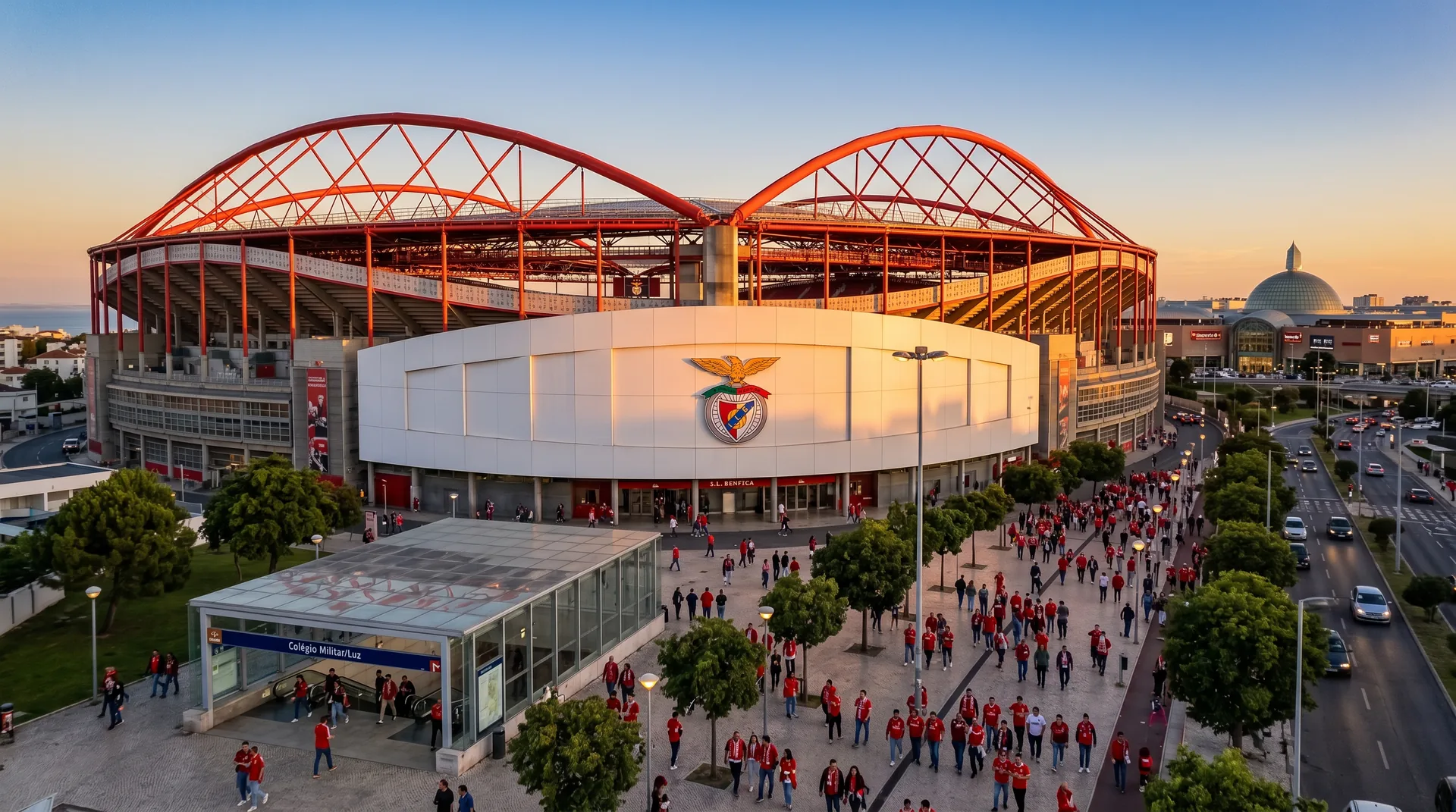
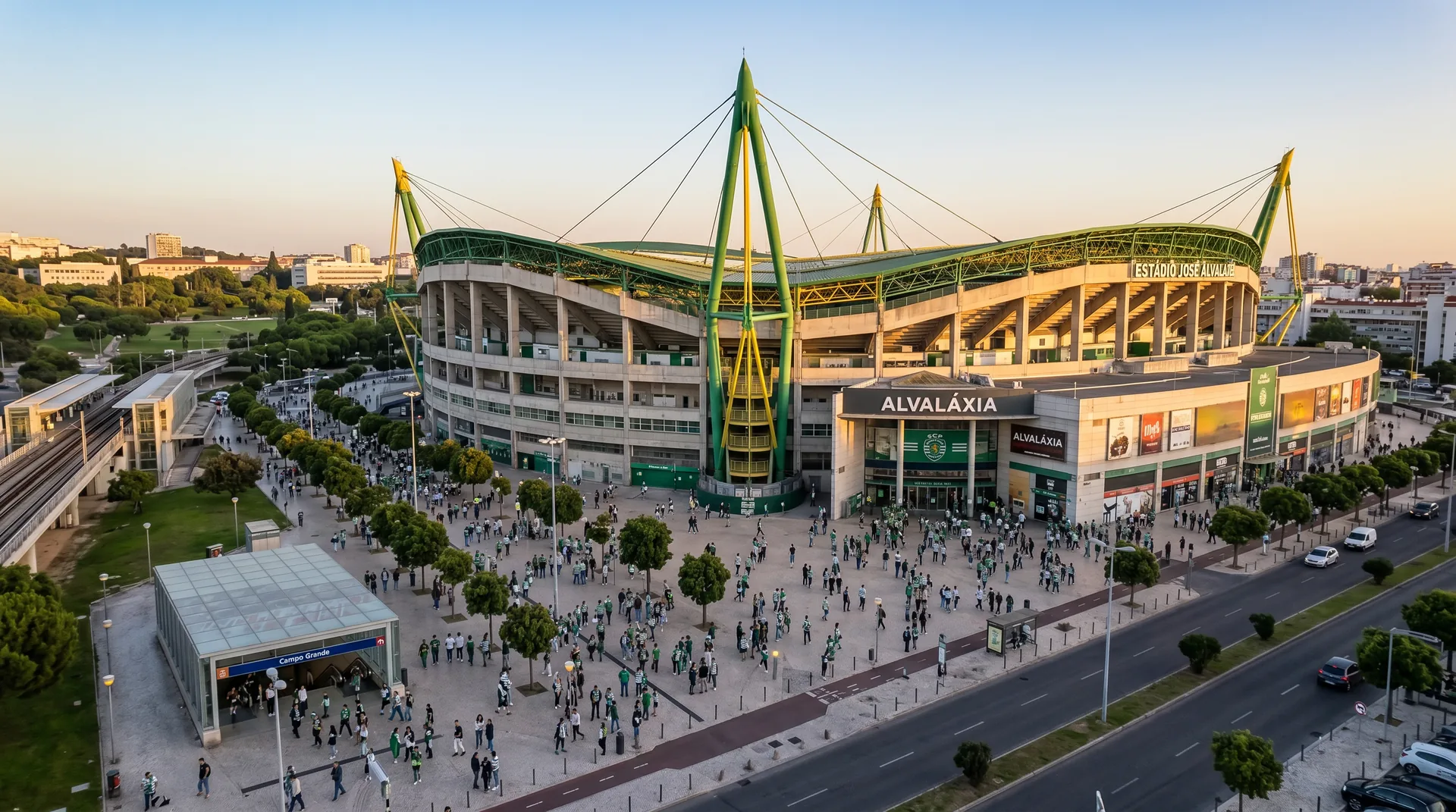
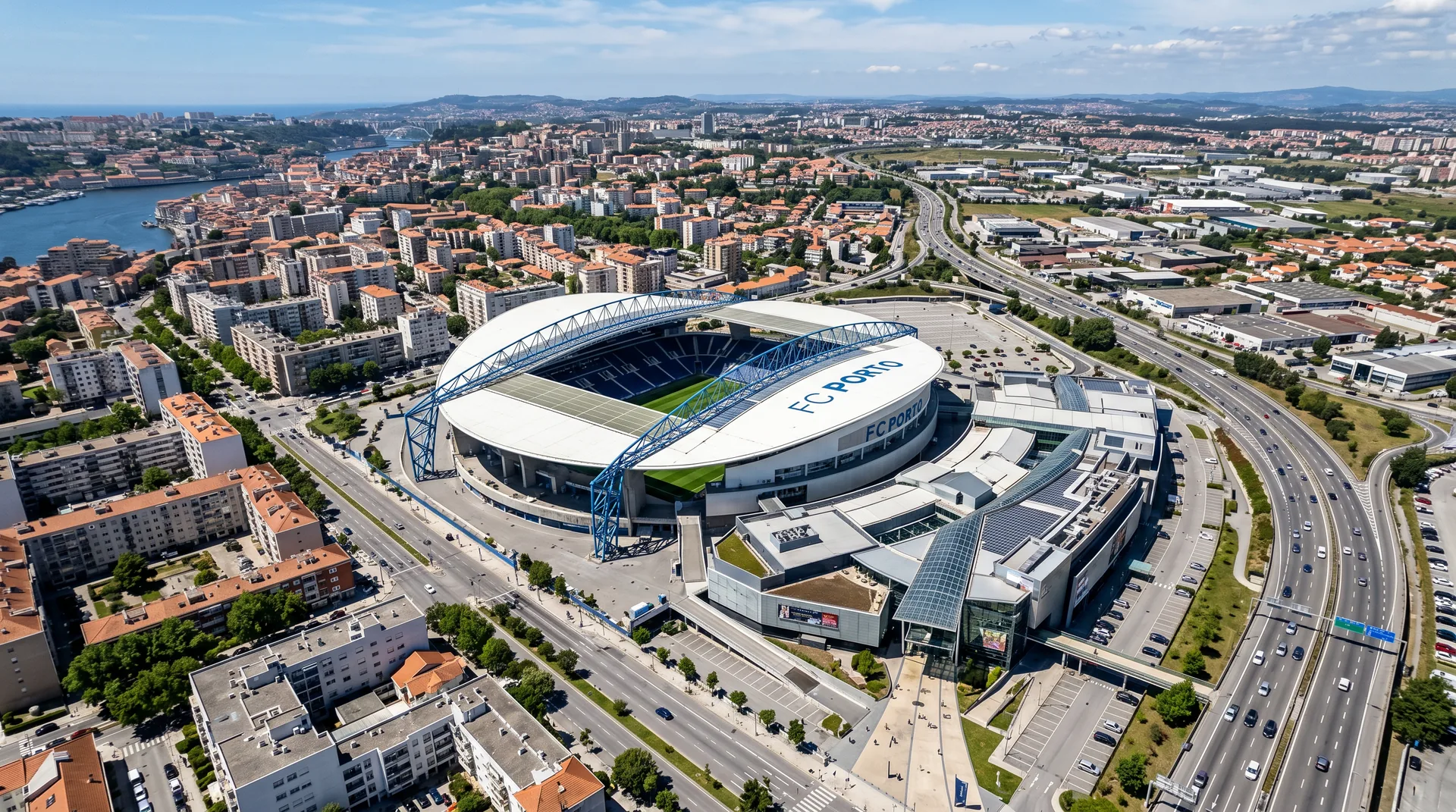
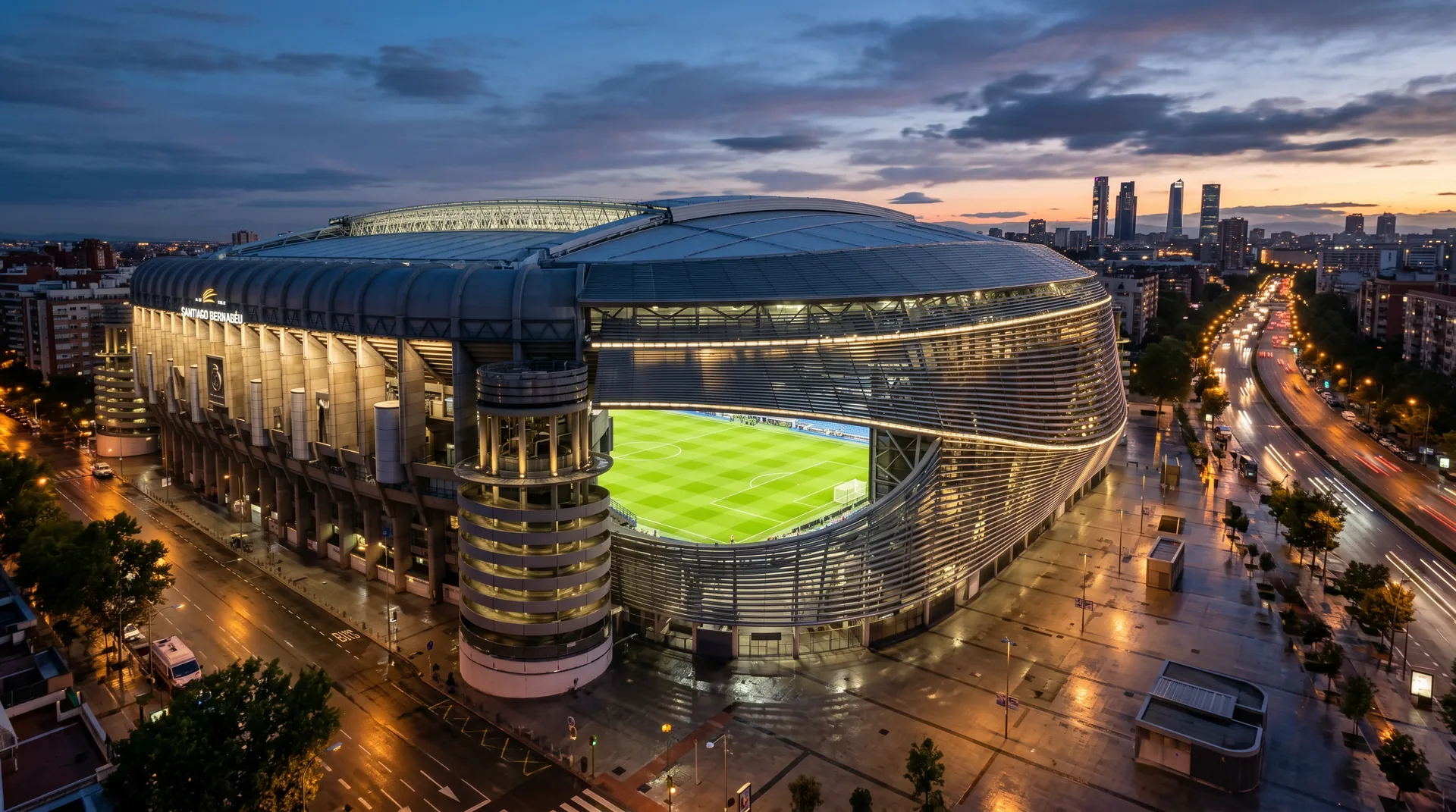
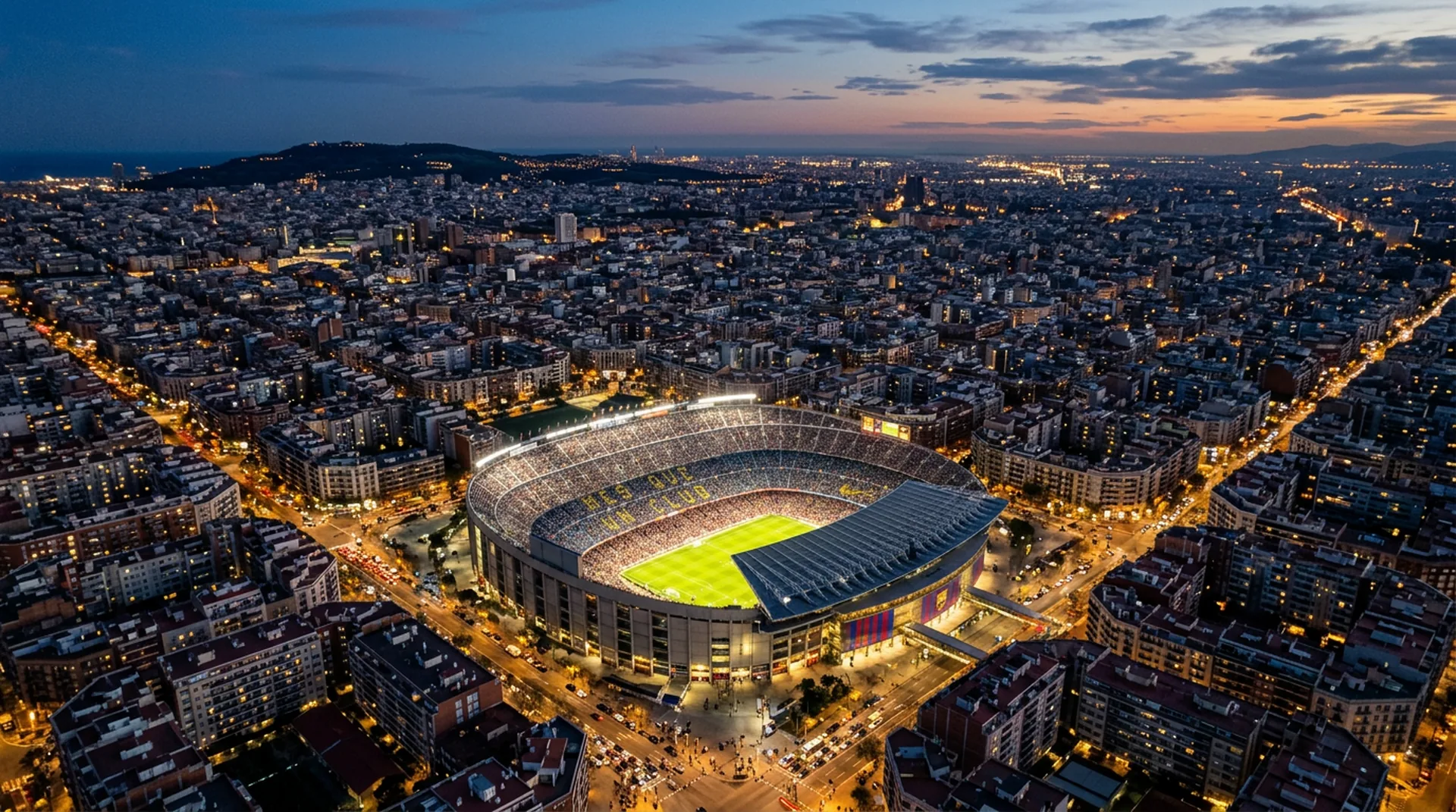
Once its Phase 2 renovation completes, Adrar Stadium's gross capacity of 46,000 (FIFA-confirmed, net 42,800) places it comfortably within FIFA's requirements for group-stage and knockout matches, continuing the stadium's run of hosting major tournament football that began with the 2013 FIFA Club World Cup, a track record that should reassure fans planning a trip built around this specific venue. Its capacity is modest next to the tournament's largest venues, Spain's Santiago Bernabéu and Camp Nou, both leading candidates to host the final, but that's typical for a venue expected to handle earlier-round matches rather than marquee occasions. It's closer in scale to Portugal's Estádio José Alvalade and Estádio do Dragão, both similarly positioned as solid mid-tier venues rather than marquee showpieces, a useful benchmark for fans planning a trip that spans all three host nations.

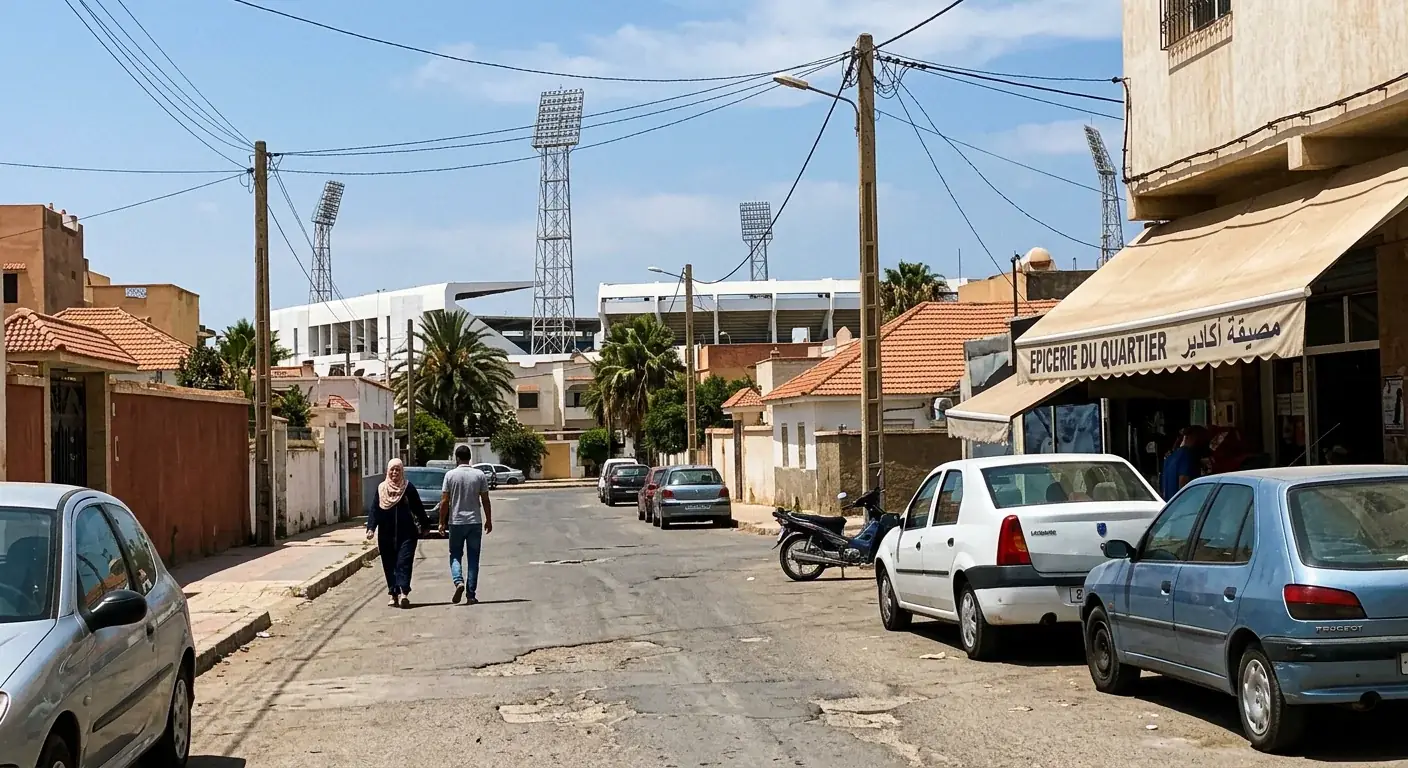
Residential street in Agadir with Adrar Stadium's floodlight towers visible in the background

From La Corniche to the Stadium

Adrar Stadium sits about 6km east of Agadir's city centre and roughly 8-10km from the main beach hotel zone along La Corniche, at the foot of the Atlas foothills. Taxis are the most straightforward way to reach the ground, widely available and inexpensive by international standards, while local bus routes also connect the stadium area to central Agadir for a fraction of the cost.

Compare Flights to Agadir

From Agadir City Centre

La Corniche / Talborjt
Beach & city centre
~15-20 min
Adrar Stadium
6km east of centre
46,000 seats (2030 target)

Exact matchday shuttle and transport plans will be confirmed by FIFA and Moroccan authorities closer to 2030. Check back here for updates.

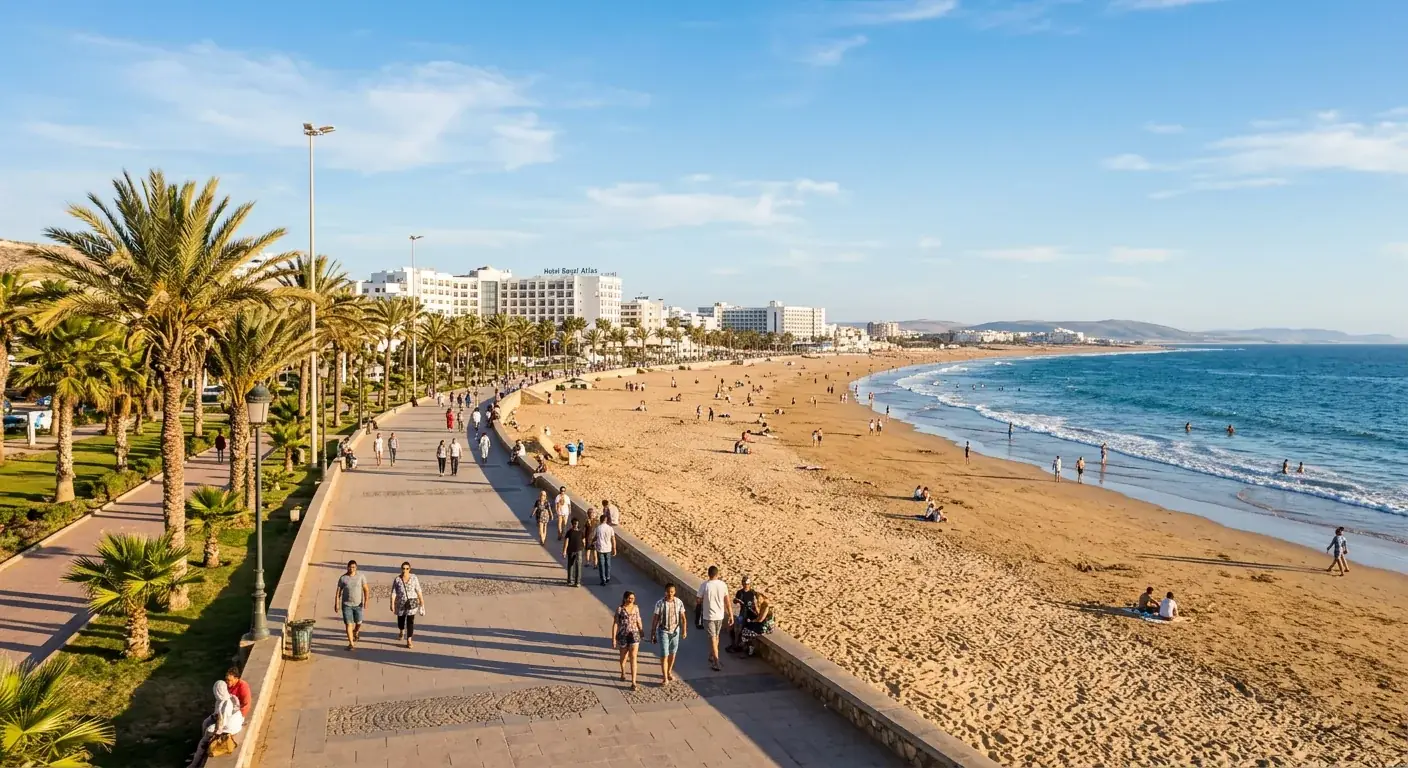
Agadir beachfront along La Corniche, the recommended area to stay for Adrar Stadium visitors

Where to Stay for Adrar Stadium

We recommend basing yourself along the beach or in central Agadir rather than near the stadium itself, since the area around Adrar Stadium is a sports complex rather than a neighbourhood with hotels or restaurants. The beachfront La Corniche strip and central Talborjt both put you within easy taxi reach of the ground while keeping you close to the city's best dining and nightlife. Our full Agadir guide covers neighbourhoods and matchday logistics in detail.

Search Agadir Hotels Full Agadir Guide
Flying to Agadir
Al Massira Airport (AGA) is about 20km southeast of the city, roughly 25-30 minutes from the beach zone by taxi.
Compare flights
World Cup Tickets
FIFA has not opened ticket sales for 2030 yet. We'll post the official ballot dates and links here the moment they're announced.
Planning Multiple Cities
Following matches across Morocco? Start with our full Morocco travel guide covering all six host cities.
See Morocco Guide
Adrar Stadium exterior near the Atlantic coast, Agadir

Every Host Stadium

Adrar Stadium is one of 21 confirmed venues across Morocco, Portugal, Spain and the three centenary host nations. Explore the others below.

See Morocco Guide

🇲🇦 Morocco

🇵🇹 Portugal

🇪🇸 Spain

🏆 Centenary Matches

Frequently Asked

Adrar Stadium Questions

What does "Adrar" mean?
"Adrar" means "mountain" in Tashelhit, the Amazigh (Berber) language spoken across Agadir's Souss-Massa region, a reference to the nearby Atlas foothills visible from the stadium.
What is the stadium's official name?
Officially the Grand Stade d'Agadir, though it's commonly known as Adrar Stadium.
Where is Adrar Stadium located?
On a 32-hectare site about 6km east of central Agadir, a few kilometres from the Atlantic coastline, at the foot of the Atlas foothills.
What stadium did Adrar Stadium replace?
Stade Al Inbiaat, Hassania Agadir's previous home ground, before the club moved to Adrar Stadium when it opened in October 2013.
What is the capacity of Adrar Stadium?
Around 42,000-45,000 seats currently, with FIFA's confirmed figure for the 2030 World Cup set at a gross capacity of 46,000 (net 42,800) once the second renovation phase, including the new roof, is complete.
Is Adrar Stadium ready for the World Cup?
Partly. Phase 1, covering pitch, security and exterior works, is complete and was used for AFCON 2025. Phase 2, adding a 360-degree roof and removing the athletics track, is still to come, targeted for completion before 2030.
How much has the renovation cost so far?
Around €34 million (about $39.5 million) invested in the completed first phase, with further spending planned for the second phase's roof and capacity expansion.
What makes Adrar Stadium's renovation different from Marrakech's?
Both are removing their athletics tracks, but Adrar Stadium is also adding a full 360-degree panoramic roof, a more extensive weather-protection upgrade than several of Morocco's other renovated venues.
When did Adrar Stadium open?
11 October 2013, with a friendly between Hassania Agadir and Algeria's JS Kabylie.
What club plays at Adrar Stadium?
Hassania Union Sport d'Agadir (HUSA), commonly known as Hassania Agadir, competing in Morocco's top division, the Botola Pro.
Has Hassania Agadir won any major trophies?
Not yet, but the club reached the 2019 Moroccan Throne Cup final and the CAF Confederation Cup quarter-finals in 2018-19, following up with a semi-final run in 2019-20.
Has Adrar Stadium hosted international tournaments before?
Yes, matches at the 2013 FIFA Club World Cup in its opening year, and matches at the 2025 Africa Cup of Nations following its first renovation phase.
How do I get to Adrar Stadium from central Agadir?
The stadium sits about 6km east of the city centre and 8-10km from the main beach hotel zone, roughly 15-20 minutes by taxi.
What's the nearest airport to Adrar Stadium?
Al Massira Airport (AGA) is about 20km southeast of the city, roughly 25-30 minutes from the beach zone by taxi.
Is Agadir far from Morocco's other host cities?
Yes, Agadir is Morocco's most geographically remote 2030 host city, roughly 1,200km from Tangier in the north and about 3 hours by road from Marrakech, worth factoring into multi-city travel plans.
Where should I stay for a match at Adrar Stadium?
Stay near the beach along La Corniche or in central Agadir rather than near the stadium itself. See our full Agadir guide for specific neighbourhood recommendations.

Continue Exploring

See every World Cup 2030 stadium, or the full Agadir travel guide.

All StadiumsAgadir Guide

Get Adrar Stadium Updates

Phase 2 renovation milestones, FIFA venue confirmations, ticket ballot dates and Agadir travel tips - straight to your inbox.