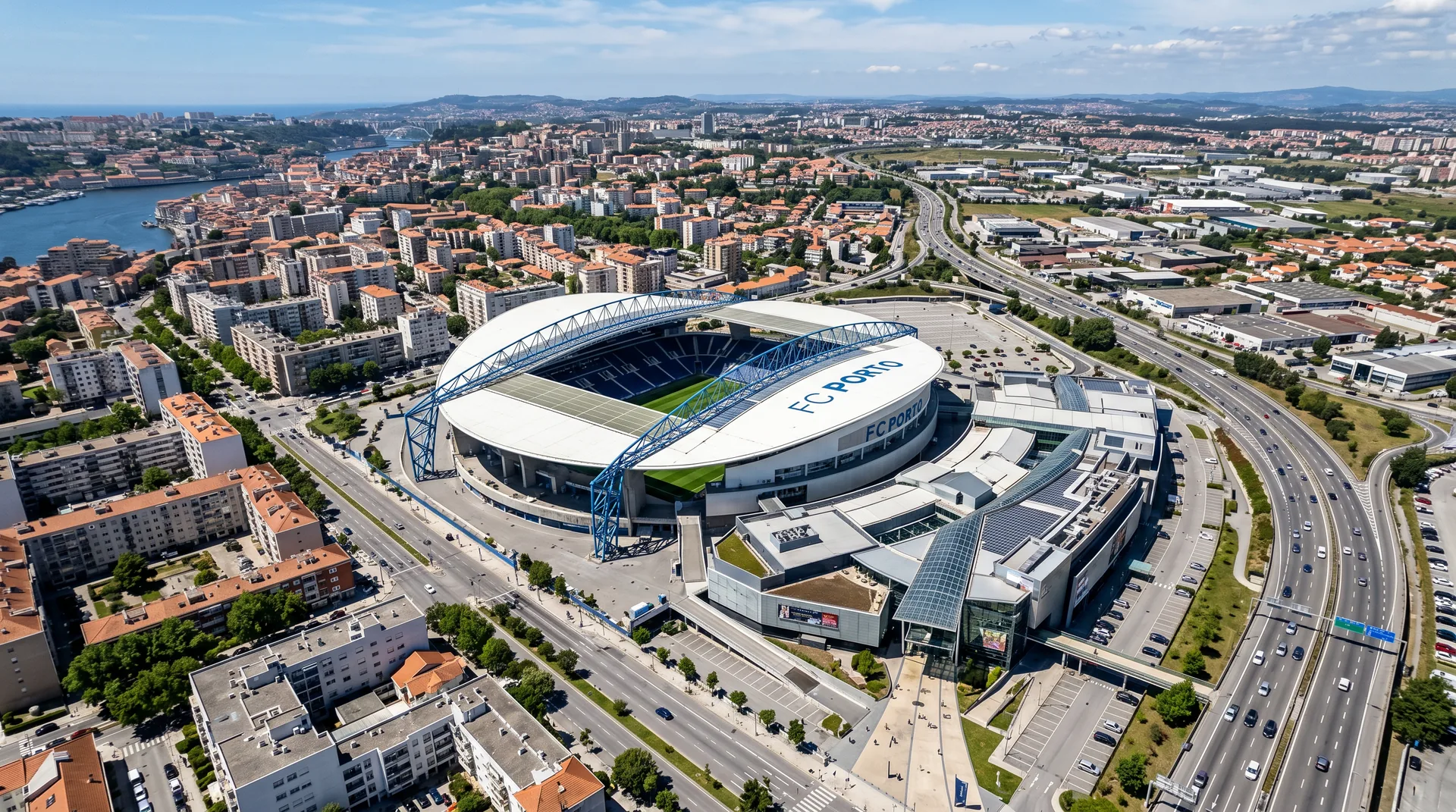
📍Campanha, Porto
⚽Home: FC Porto
🏗Status: First Major Modernization Under Way
🎭2021 Champions League Final host
🏷️21,000m² of azulejo tilework
Modernization & Fan Experience
The First Overhaul Since 2003
FC Porto announced a comprehensive modernization programme in June 2025, the stadium's first major overhaul since opening, with work beginning on 20 June 2025. The project focuses on new hospitality areas, advanced lighting systems, expanded kitchen facilities, and broader operational upgrades, phased carefully across the 2025-26 and 2026-27 pre-seasons to minimise disruption to matches.
🏘︙Hospitality
New VIP Areas
Modernised boxes, bars, toilets and lighting already under way
🍳Kitchens
Central Kitchen
A single central kitchen to serve the whole stadium, plus AI-powered self-service bars
💳Ticketing
Fully Digital
A complete move away from physical tickets
☔Roof
Under Study
Never replaced since 2003; the club is studying its condition and possible replacement
The timing places the modernization squarely ahead of the 2030 World Cup, aligning with Portugal's coordinated national preparations across all three of its proposed venues, and follows FC Porto's broader push toward centralised digital services through a planned "Super App" for fan engagement.
What We Don't Know Yet
A total project budget and any change to the stadium's 50,033-seat capacity haven't been officially confirmed, and the roof replacement remains only under study rather than committed. We'll update this page once further details are announced.
History & Significance
A Teenage Messi's First Bow
Estadio do Dragao's inauguration on 16 November 2003, a friendly against Barcelona, is remembered for more than Porto's 2-0 win: it marked the competitive debut of a 16-year-old Lionel Messi for the visiting Catalan side. The match drew a then-record attendance of 52,004, though turf problems soon after forced Porto to temporarily return to the old Estadio das Antas until the pitch was replanted by mid-February 2004.
Estadio do Dragao is one of three confirmed Portuguese venues for the 2030 World Cup, alongside Estadio da Luz and Estadio Jose Alvalade, both in Lisbon.
Late 2001
Construction begins, briefly halted in early 2002 over a dispute with Porto's mayor before resuming.
16 Nov 2003
Stadium opens against Barcelona, featuring a 16-year-old Lionel Messi's debut for the Catalans.
2004
Hosts the Euro 2004 opening match, Portugal against eventual champions Greece.
2019
Hosts the first UEFA Nations League Final, Portugal beating the Netherlands.
2021
Hosts the UEFA Champions League final, one of European football's biggest annual occasions.
Jun 2025
First major modernization begins since the stadium's 2003 opening.
The stadium is home to Porto's FC Porto, one of Portugal's "Big Three" clubs. Its name, chosen in May 2003 after internal debate over alternatives including club legends' names, honours the dragon on both FC Porto's crest and the city's own coat of arms, symbolising strength and vitality. Beyond football, the stadium has hosted concerts by the Rolling Stones, Coldplay, Muse and One Direction.
Getting There
Its Own Metro Station
Estadio do Dragao has its own dedicated Metro station, Estadio do Dragao, served by Lines A, B, E and F, connecting directly to Porto's city centre and Francisco Sa Carneiro Airport.
From Central Porto
Aliados / Ribeira
City centre
Estadio do Dragao
Metro Lines A, B, E, F
50,033 seats
Exact matchday shuttle and transport plans will be confirmed by FIFA and Portuguese authorities closer to 2030. Check back here for updates.