Morocco Stadiums Architecture History Where to Stay FAQ Newsletter
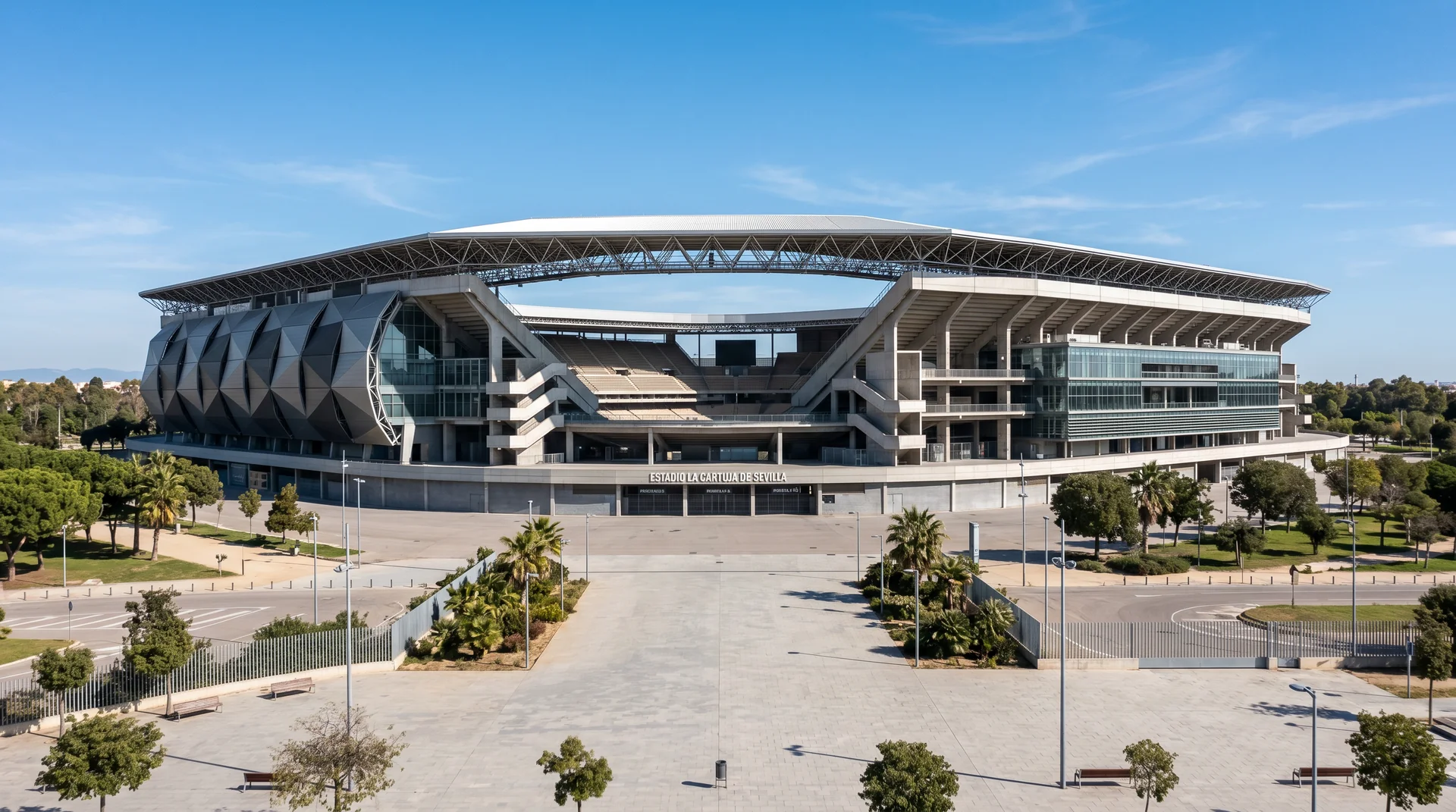
Grand Stade de Marrakech exterior at dusk, terracotta-toned walls and illuminated corner towers, ahead of its World Cup 2030 renovation
Morocco · World Cup 2030 Stadium Guide

Grand Stade de Marrakech

A terracotta fortress on Marrakech's northern edge, closed since spring 2026 for a transformation that removes its athletics track, reshapes the bowl from rectangular to octagonal, and expands capacity ahead of the 2030 World Cup.

41,245Current Capacity
2028Targeted Reopening
Gregotti& Benkirane, Architects
11kmNorth of City Centre
📍RN9, 11km north of Marrakech
🏎2 Club World Cup finals hosted
Home: KAC Marrakech
🏗Status: Closed for Renovation
👥41,245 seats (current)
Architecture Renovation Atmosphere History World Cup Role Getting There Where to Stay All Stadiums FAQ

Architecture & Design

A Fortress,
Now Becoming an Octagon

Grand Stade de Marrakech was designed by the Italian firm Gregotti Associati International working alongside Moroccan architect Saad Benkirane, with construction running from 2003 to its January 2011 opening. The design leans hard into Marrakech's identity as the Red City: sand-and-terracotta walls and four illuminated corner towers echo the historic ramparts and kasbahs of the medina rather than a generic modern bowl.

At its 2011 opening, the stadium combined a rectangular football pitch with a full surrounding athletics track, a layout that pushed fans unusually far from the pitch and became a recurring point of criticism, one that now directly shapes the World Cup renovation under way.

That renovation, part of the same national stadium upgrade programme reshaping Tangier, Rabat, Agadir and Fez, unfolds in two phases. Phase 1, completed in June 2025 ahead of AFCON 2025, focused on CAF-standard compliance: rebuilt locker rooms, a new mixed zone and media centre, a fully resurfaced pitch, a 180-seat panoramic restaurant, and turnstiles expanded from 36 to 77, cutting matchday entry queues to roughly a minute.

"The Grand Stade de Marrakech is set to be transformed during the second phase of upgrades ahead of the 2030 World Cup, with its current rectangular format becoming octagonal."

Abdelkerim Bouilli, development director, Grand Stade de Marrakech (ANEP), September 2025

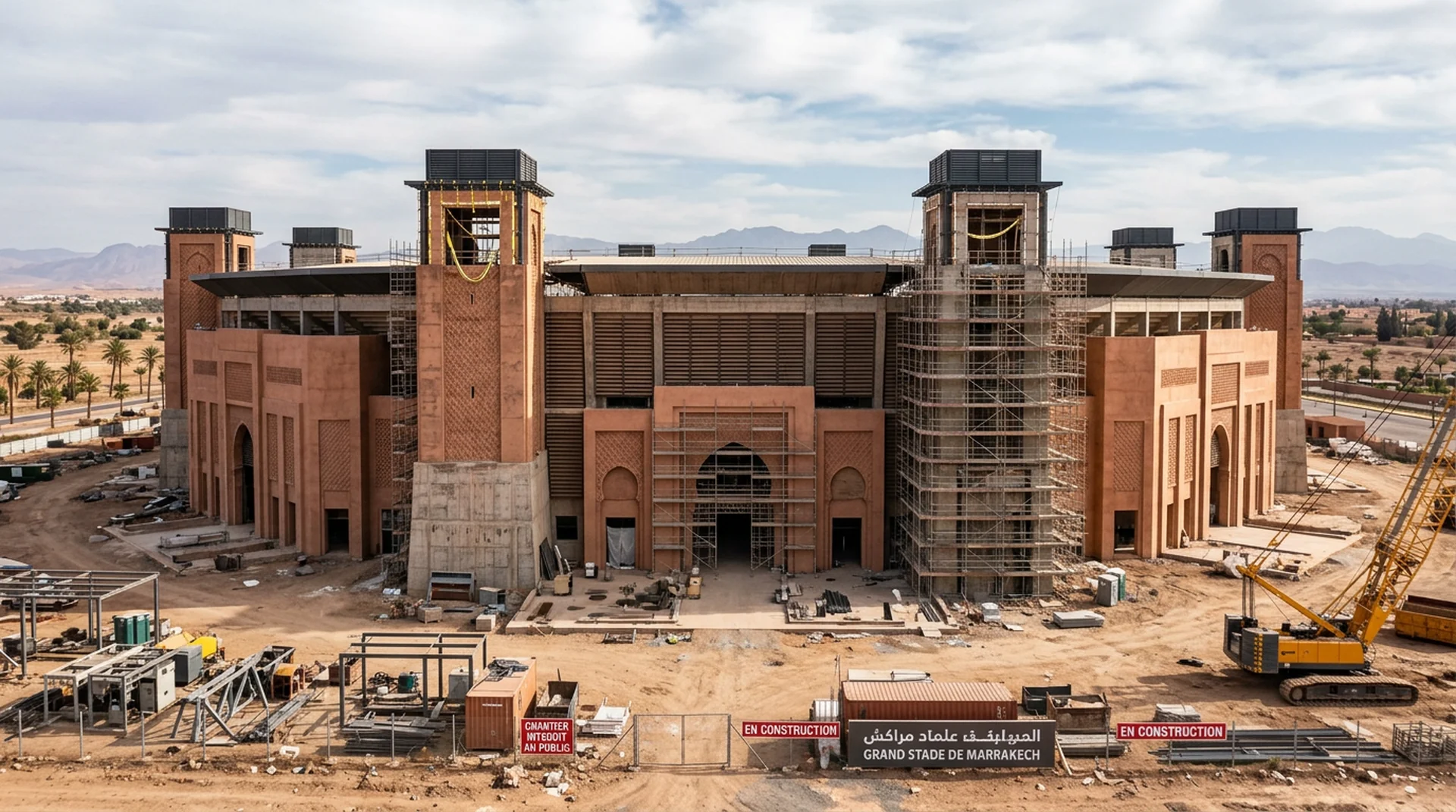
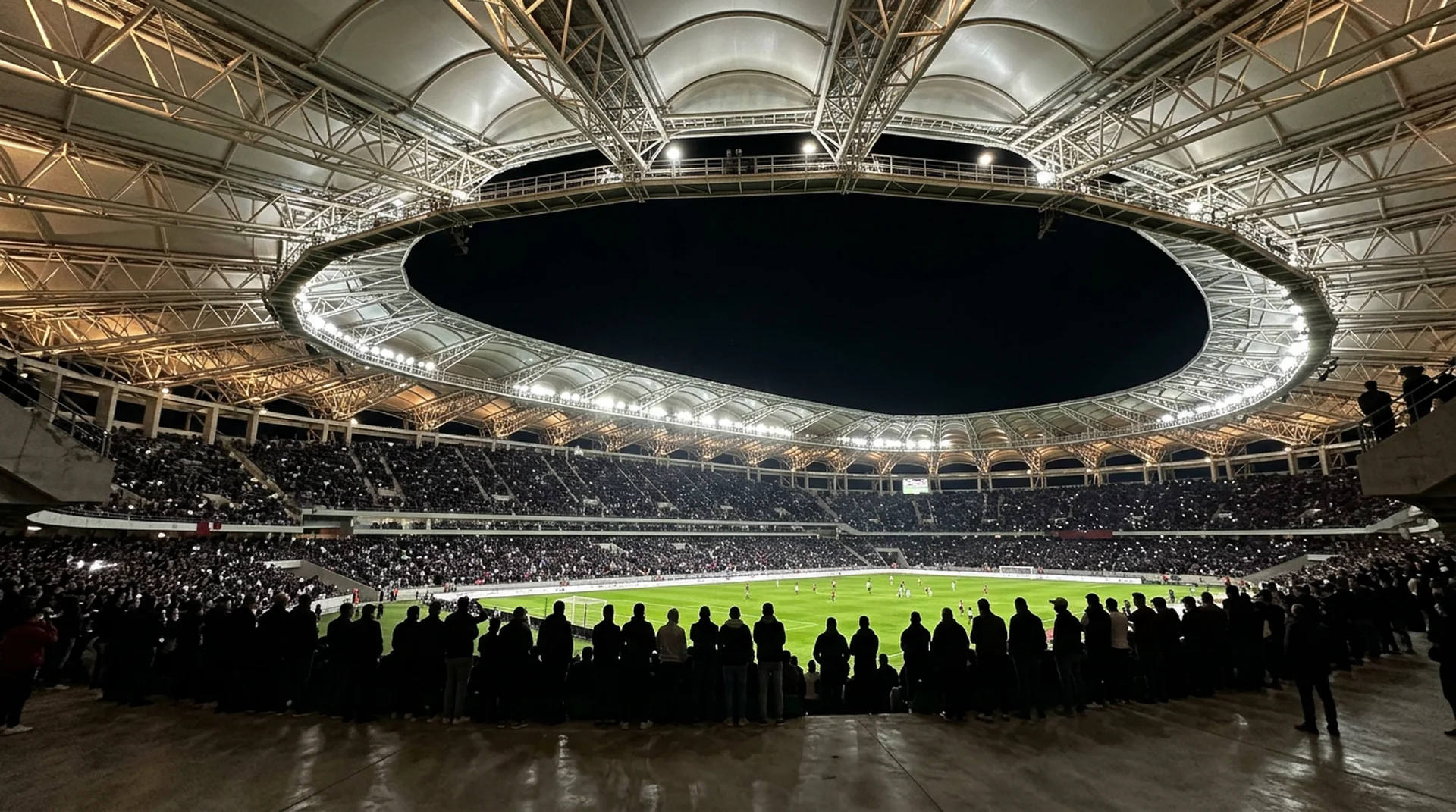
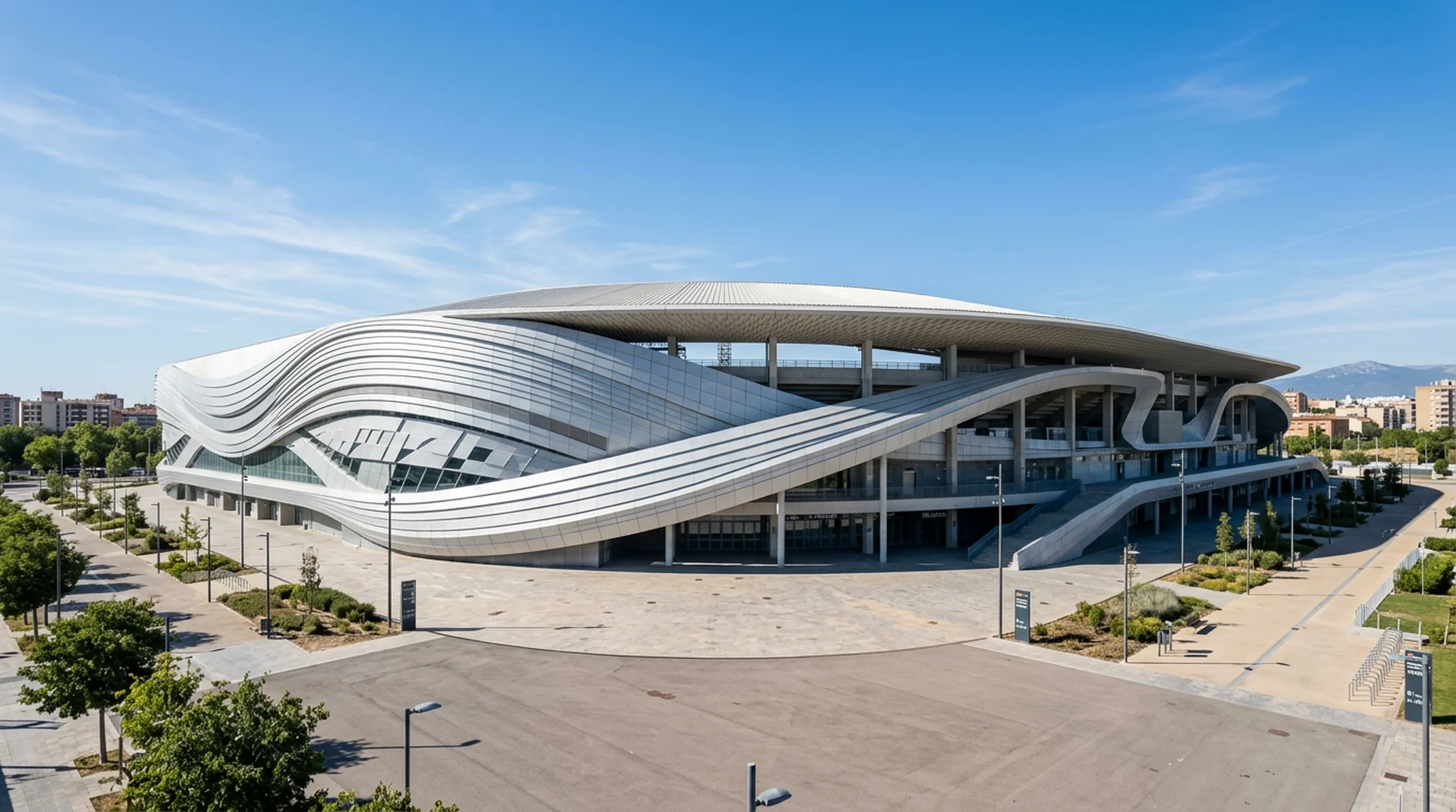
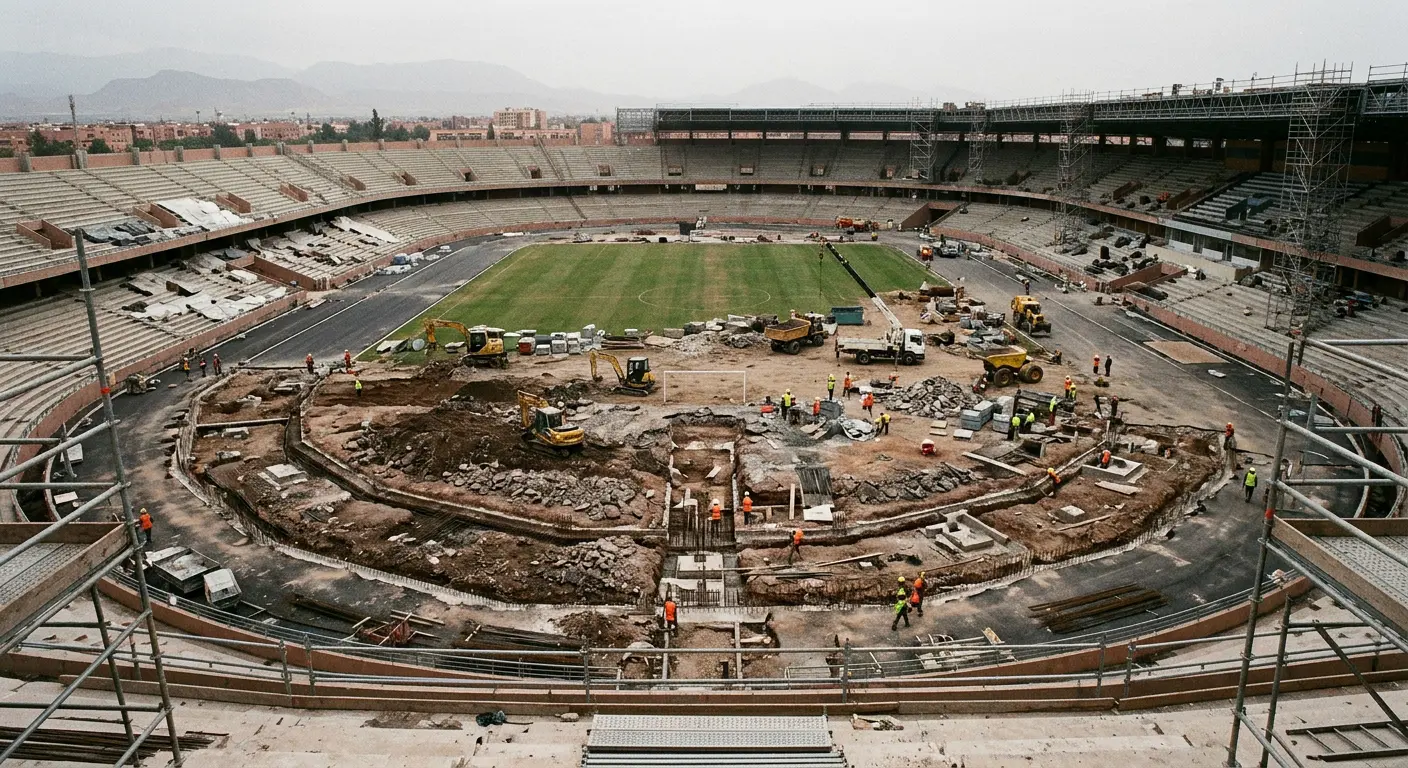
Phase 2 is the more radical step. Benkirane is again leading the design, with Egis Group and Luseo France handling engineering and the Socotec bureau overseeing quality control. The work removes the athletics track entirely, lowers the pitch by roughly six metres, and reshapes the stadium's footprint from rectangular to octagonal, a genuinely unusual move among Morocco's six World Cup venues, bringing new lower-tier seating and stands significantly closer to the pitch.

Grand Stade de Marrakech joins Hassan II Stadium, Prince Moulay Abdellah Stadium and Ibn Batouta Stadium as one of four Moroccan venues still mid-transformation for 2030, though the terracotta silhouette and corner towers Gregotti and Benkirane designed in 2011 are staying exactly as they are.
Planning a trip around this stadium? See the full Marrakech guide →

Search Marrakech Hotels
Phase 2 renovation construction work under way at Grand Stade de Marrakech, removing the athletics track ahead of the 2030 World Cup

From Rectangle to Octagon

The stadium closed to the public in spring 2026 to begin its second and more dramatic renovation phase, tendered out to contractors through June 2026, following a first phase that already delivered CAF-standard facilities in time for AFCON 2025.

Get Renovation Updates

Unlike Hassan II Stadium's new-build project, this is a renovation of an existing, well-loved venue, home to Kawkab Athletic Club Marrakech (KACM) since 2011, so the work is as much about preserving the ground's identity as changing its bowl. Phase 1 alone touched almost everything fans see on matchday: rebuilt dressing rooms, a new mixed zone and media centre, a resurfaced pitch, a 180-seat panoramic restaurant, and turnstiles nearly doubled from 36 to 77.

🔦
Stadium Shape
Rectangular → Octagonal
A footprint change unique among Morocco's six 2030 venues
🌅
Athletics Track
Removed
Ends the stadium's dual-use athletics/football configuration
⬇️
Pitch Level
Lowered ~6m
Brings the new lower-tier stands much closer to play
💰
Phase 1 Cost
~400M DH
About $40 million, already invested and complete

While the stadium is closed, KAC Marrakech, freshly promoted back to Morocco's top flight, the Botola Pro, for the 2025-26 season, is playing home matches at Stade El Harti, the club's former ground before the current stadium opened in 2011.

What We Don't Know Yet

Reported final capacity figures vary widely, from roughly 46,000 in earlier renovation plans to a 60,071-seat figure cited elsewhere as a requirement for potential semi-final hosting, and a confirmed number hasn't been published. The exact completion date within the 2026-2028 window also hasn't been finalised. We'll update this page once SONARGES, ANEP or FIFA confirm further details.

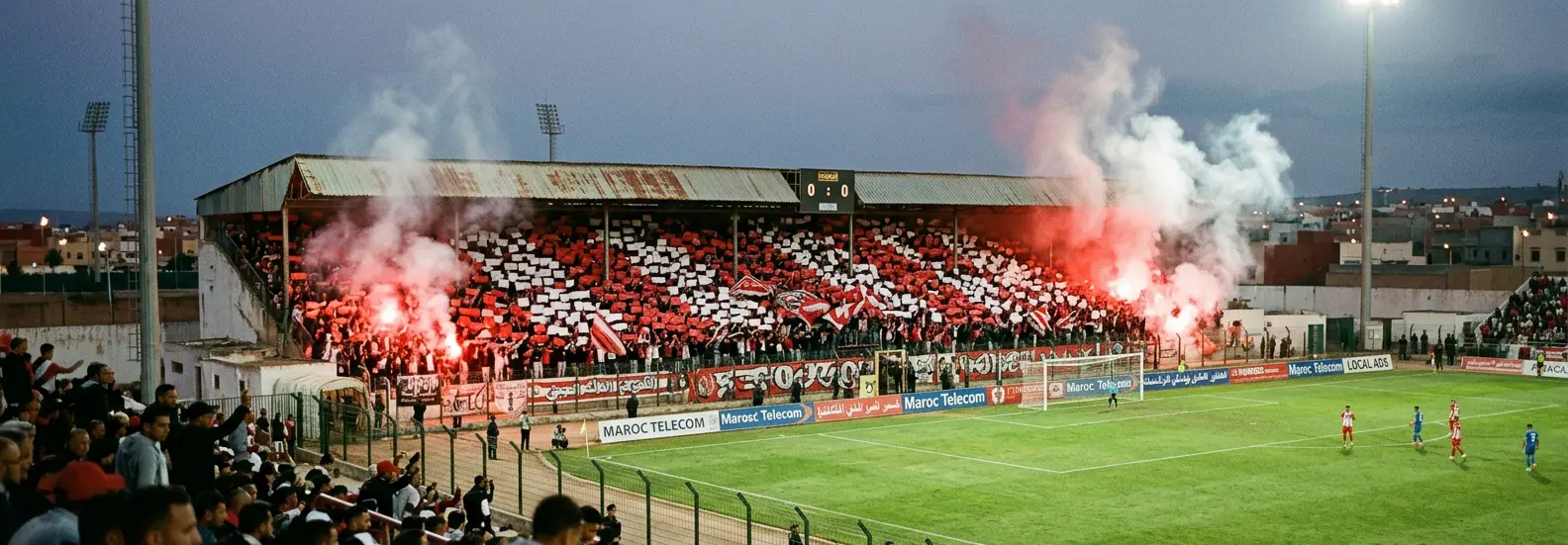
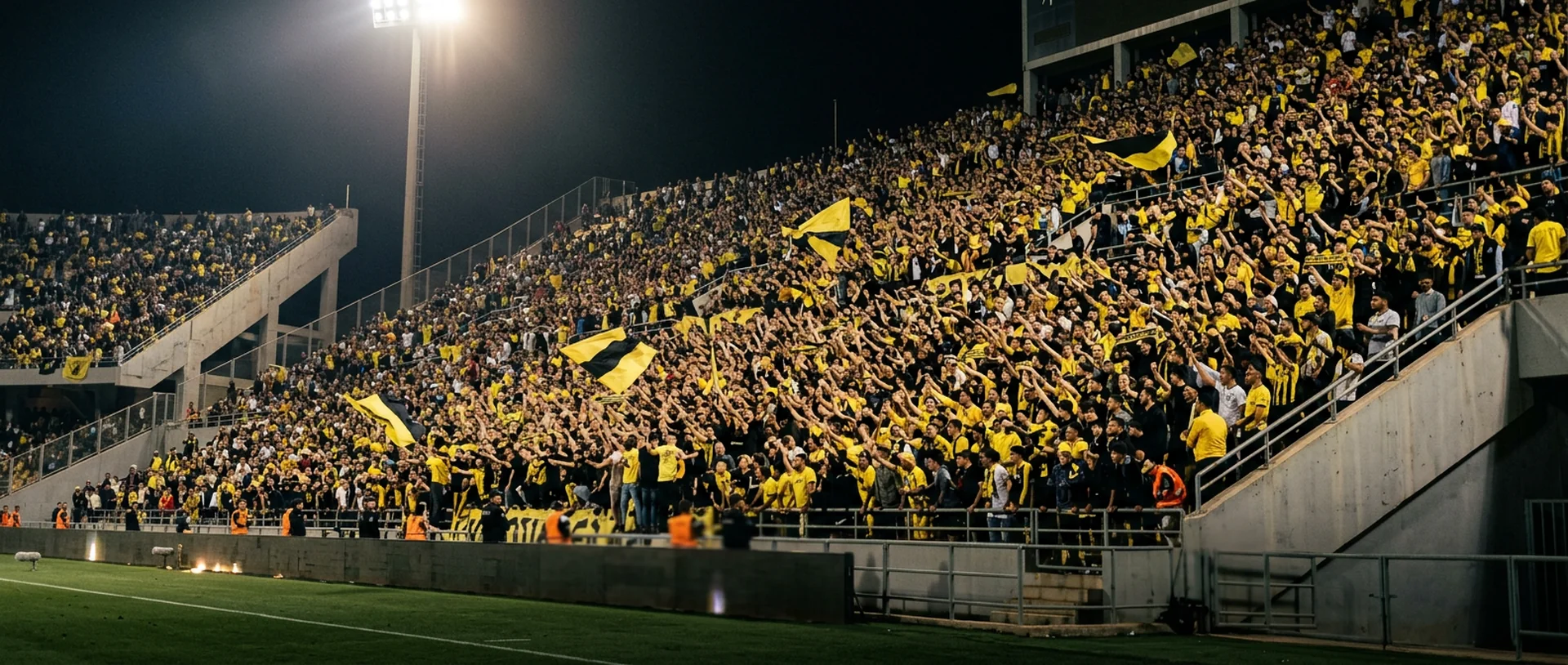
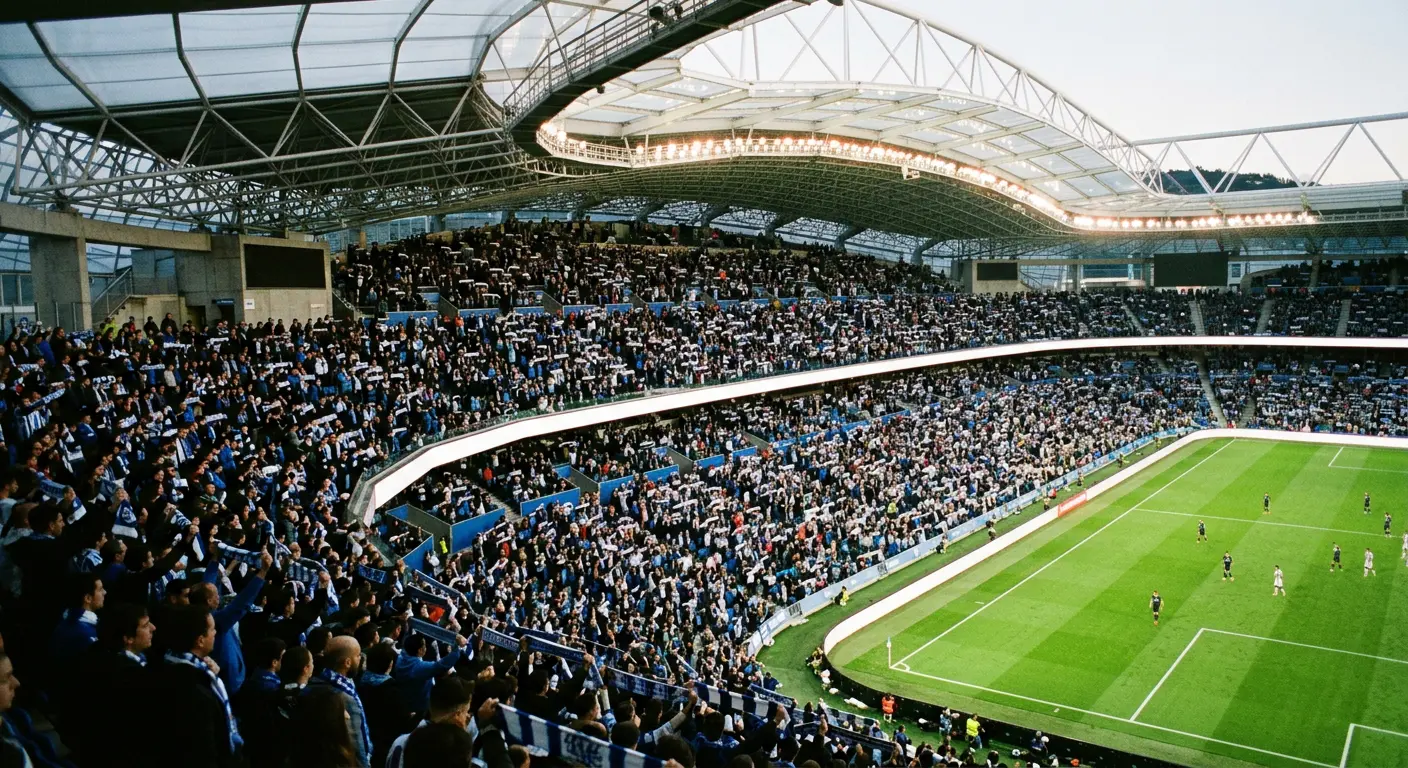
Ultras Crazy Boys tifo display in the Curva Sud, Kawkab Athletic Club Marrakech supporters

Red, White and Ultras Crazy Boys

Kawkab Athletic Club Marrakech plays in red and white, and its Curva Sud comes alive courtesy of Ultras Crazy Boys (UCB), founded 25 December 2006 as the club's first organised supporters' group.

Get Renovation Updates

Ultras Crazy Boys stage regular tifos, banners and flares at the club's temporary home, Stade El Harti's south curve, ahead of the eventual move back to a renovated Grand Stade de Marrakech. Moroccan football's ultras culture as a whole has faced periodic stadium restrictions and match boycotts in recent years over crowd safety, and UCB, like most of the country's supporters' groups, has publicly distanced itself from any violence associated with the wider movement.

Arrive early on matchday and the streets around whichever ground KACM is using fill with scarf and jersey vendors, tea stalls, and fans making their way in from across the city, a rhythm that will simply relocate back to Route de Casablanca once the renovated stadium reopens. Since the club's promotion back to the Botola Pro for 2025-26, home games have carried extra weight, with fans keen to see the team re-establish itself in Morocco's top flight.

Street food follows the pattern seen across Morocco's stadiums: grilled sandwiches, msemen flatbread folded hot off portable griddles, and sweet mint tea poured from height. Once the renovated stadium reopens, the same fare will be available at fixed prices from concourse kiosks, alongside the 180-seat panoramic restaurant added during Phase 1.

Full Marrakech Guide
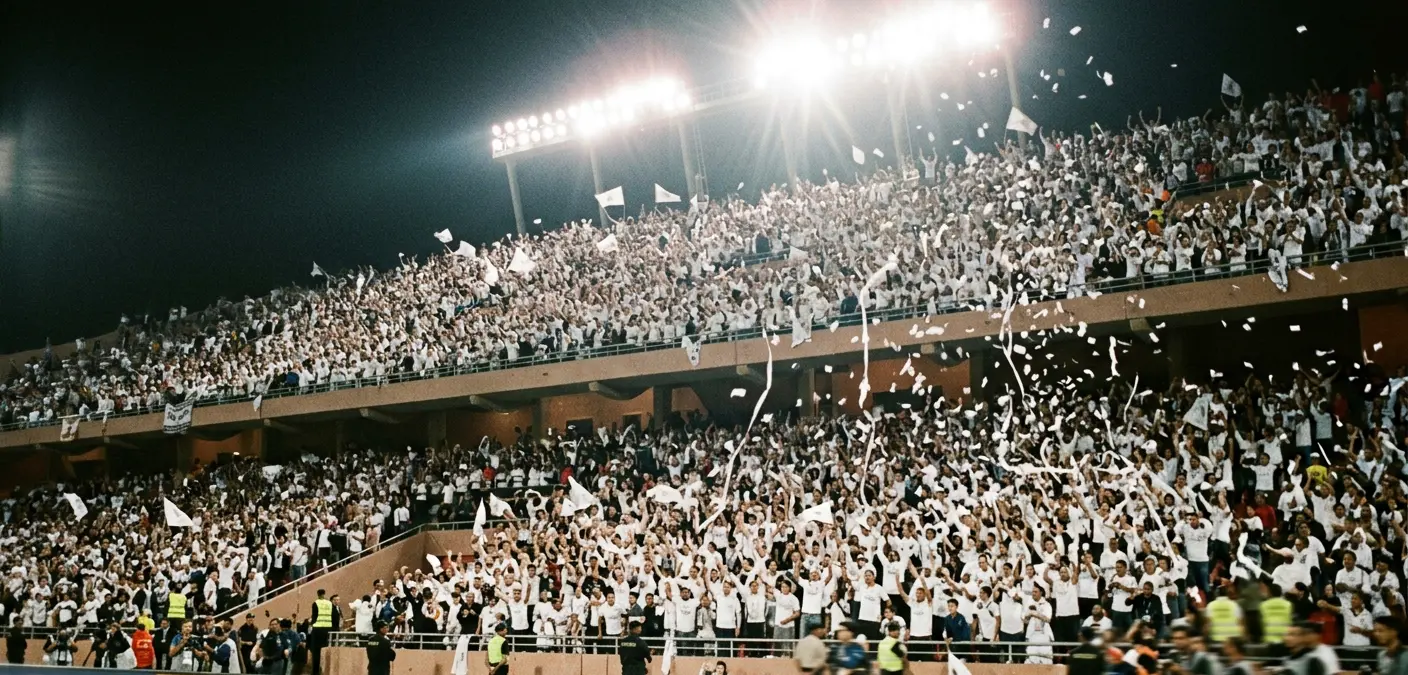
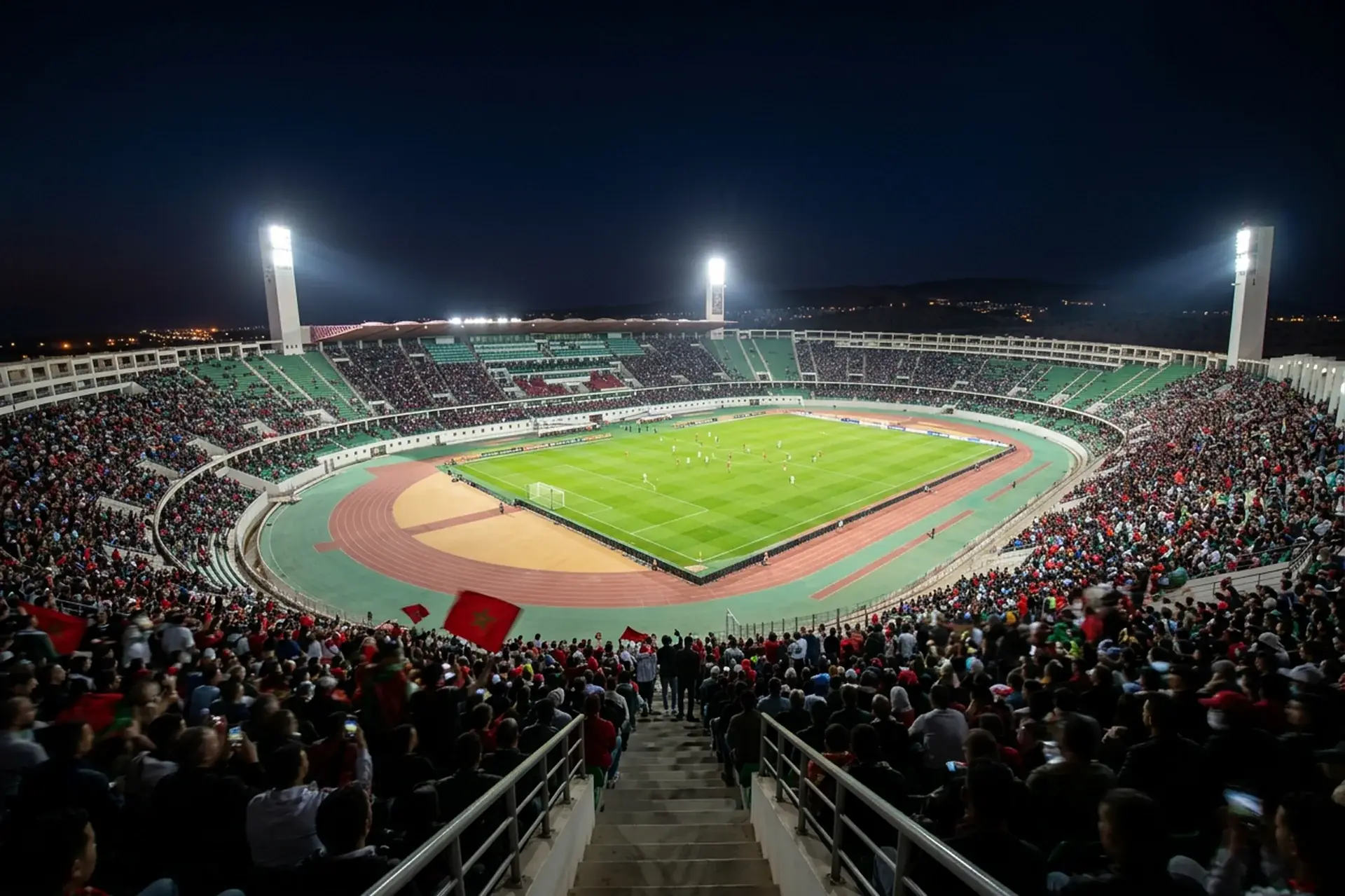
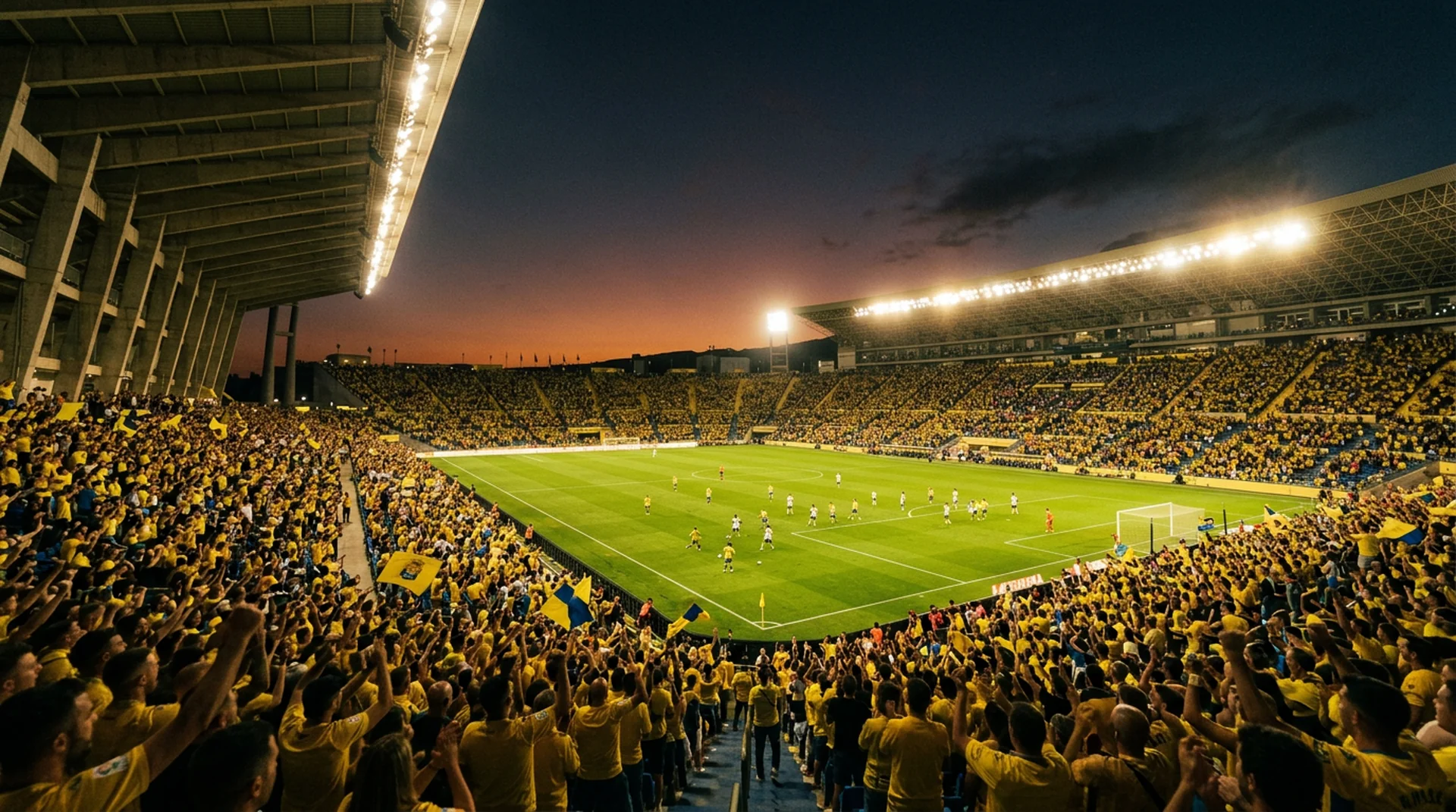
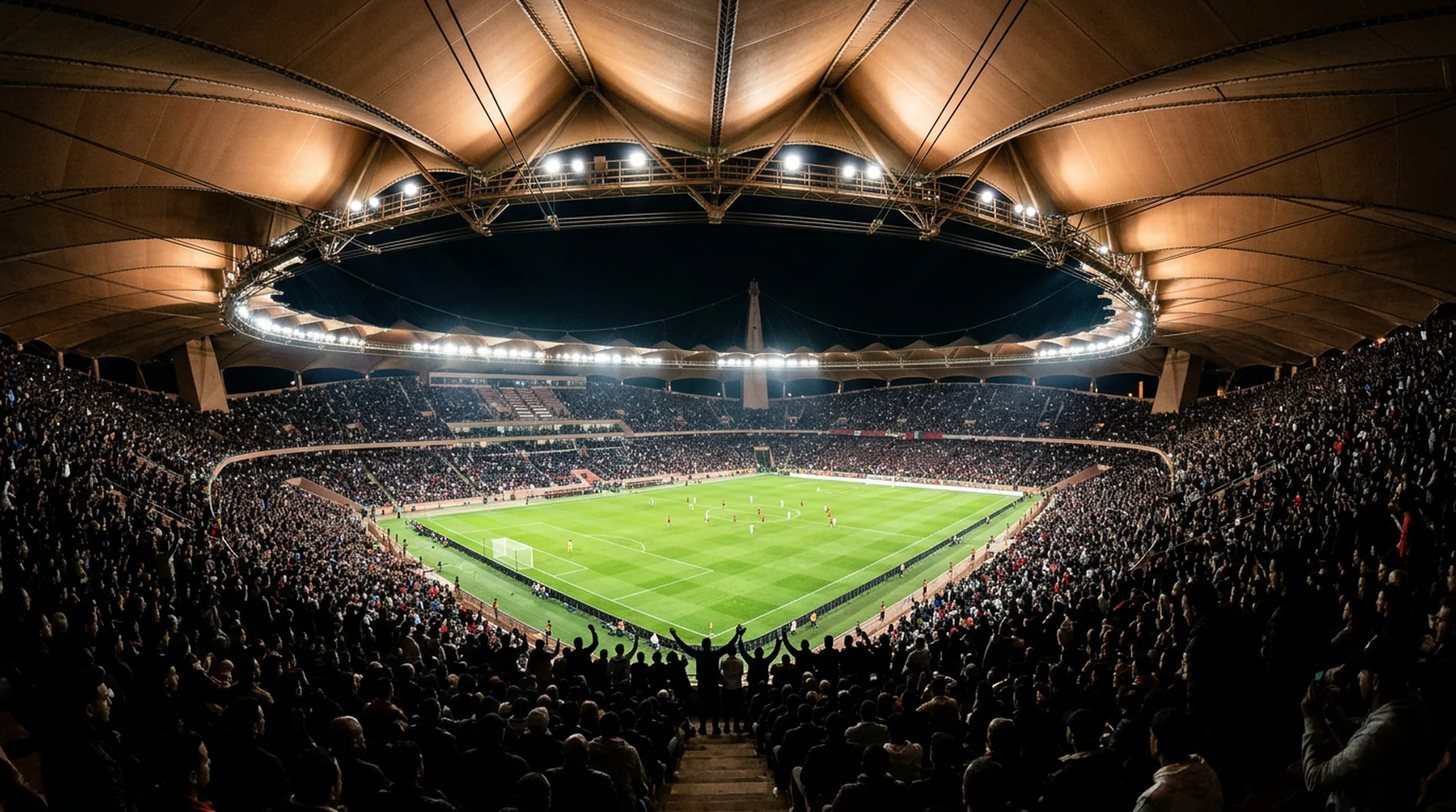
Crowd celebration at Grand Stade de Marrakech during the 2014 FIFA Club World Cup final

Two Club World Cup Finals in Two Years

Grand Stade de Marrakech opened on 5 January 2011 after seven years and three months of construction, and within three years was hosting back-to-back FIFA Club World Cup finals, a track record few Morocco venues can match.

All Morocco Stadiums

The inaugural friendlies paired Kawkab Marrakech and Wydad Casablanca against Olympique Lyonnais and Paris Saint-Germain, an early signal of the international profile the ground would go on to build. Grand Stade de Marrakech is one of six Moroccan venues being built or renovated for 2030, alongside Hassan II Stadium in Casablanca, Prince Moulay Abdellah Stadium in Rabat, and Ibn Batouta Stadium in Tangier.

The stadium remains the home of Marrakech's leading club, Kawkab Athletic Club (KAC Marrakech), founded in 1947, which won the Botola Pro title in 1957-58 and 1991-92 and the CAF Cup in 1996. More recently the club fell as far as the third-tier Amateur National Championship in 2022 amid financial constraints, before climbing back with a 2022-23 Amateur title and a 2024-25 Botola 2 title, returning to the Botola Pro for the 2025-26 season, just as its home stadium closed for its own transformation.

2003-11
Constructed over seven years and three months, designed by Gregotti Associati International with Saad Benkirane.
Jan 2011
Opens with friendlies pitting Kawkab Marrakech and Wydad Casablanca against Lyon and PSG.
2013-14
Hosts back-to-back FIFA Club World Cup finals: Bayern Munich 2-0 Raja Casablanca (2013), then Real Madrid 2-0 San Lorenzo (2014).
2022
KACM is relegated to the third-tier Amateur National Championship amid financial constraints.
2022-25
Climbs back via the 2022-23 Amateur National title and the 2024-25 Botola 2 title.
Jun 2025
Phase 1 completes ahead of AFCON 2025, ~400M DH invested in pitch, facilities and turnstiles.
Dec 2025-Jan 2026
Hosts AFCON 2025 matches, including a quarter-final, shortly before closing for Phase 2.
Spring 2026-28
Phase 2 renovation removes the track, reshapes the bowl to an octagon, targets 2028 reopening.
Grand Stade de Marrakech renovation concept render, octagonal football-specific bowl with athletics track removed

A Proven Tournament Venue

Unlike some of Morocco's newer or still-under-construction venues, Grand Stade de Marrakech arrives at 2030 with a genuine international track record: two FIFA Club World Cup finals, continental athletics championships, and a full slate of AFCON 2025 fixtures including a quarter-final.

That history, combined with Marrakech's status as Morocco's most visited city, makes the venue a near-certain host for meaningful group-stage and knockout matches, though FIFA has not yet published a confirmed match schedule for individual venues. At 41,245 seats currently, rising once the octagonal Phase 2 bowl is complete, the stadium sits in the middle tier of Morocco's six World Cup venues, smaller than Hassan II Stadium and Ibn Batouta Stadium but comparable to Prince Moulay Abdellah Stadium in Rabat.

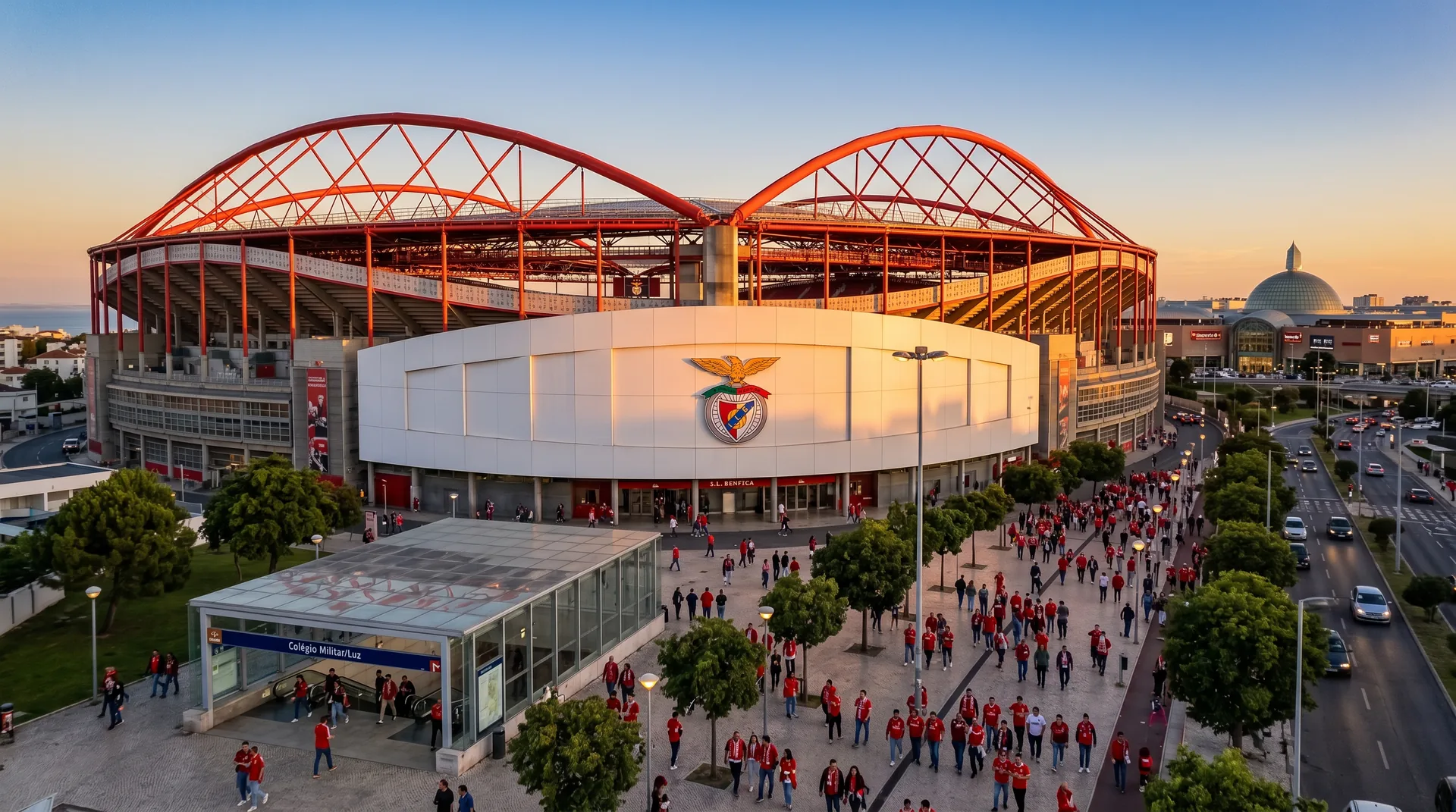
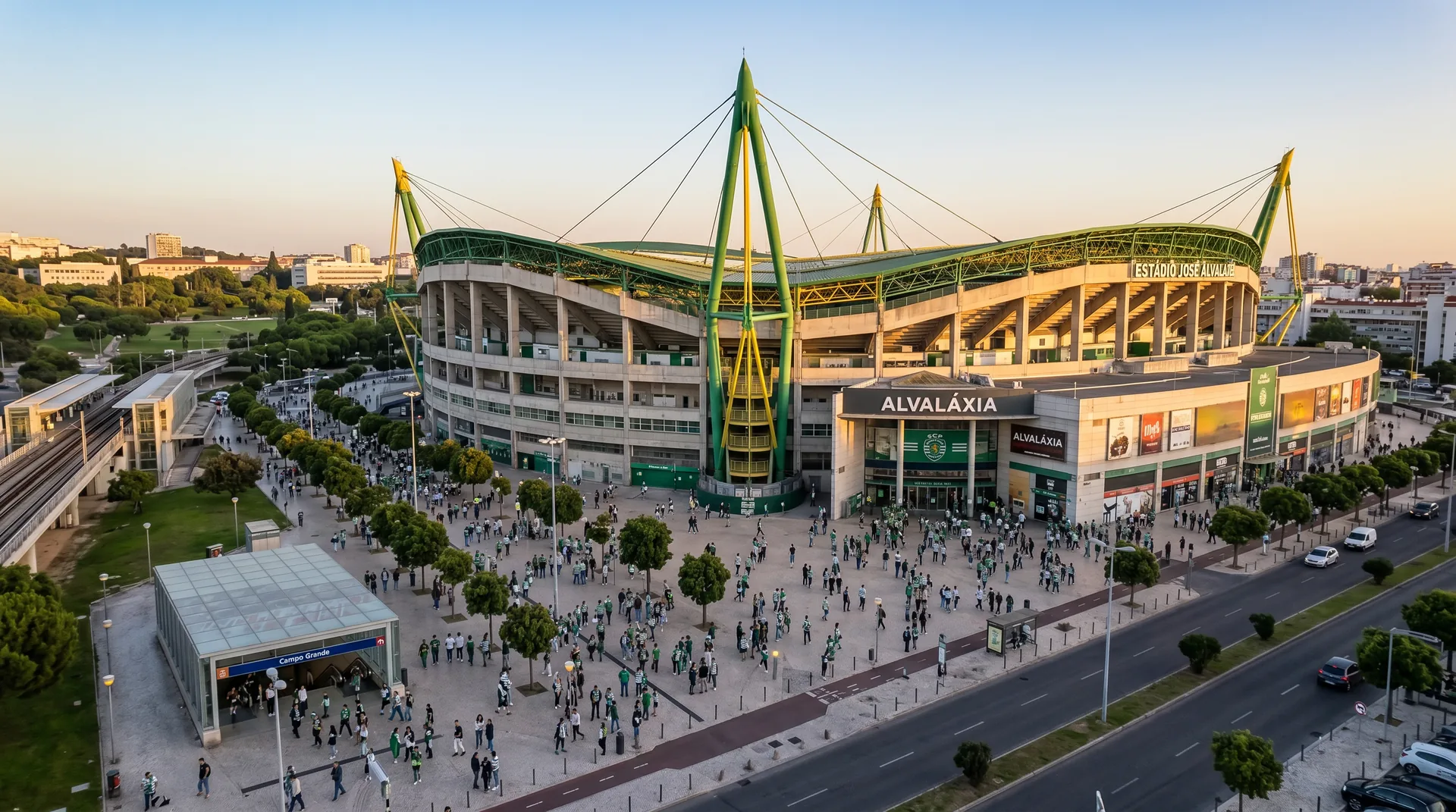
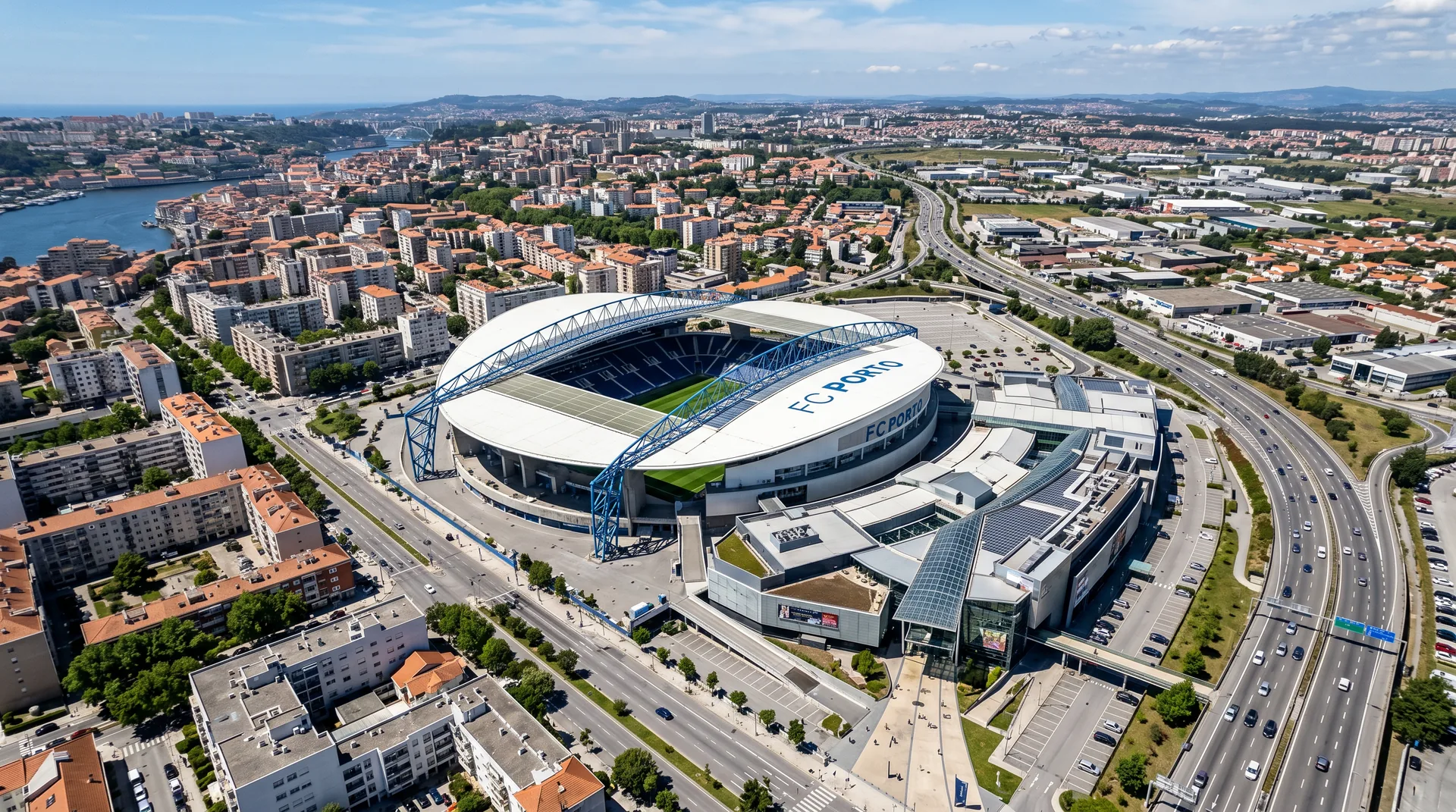
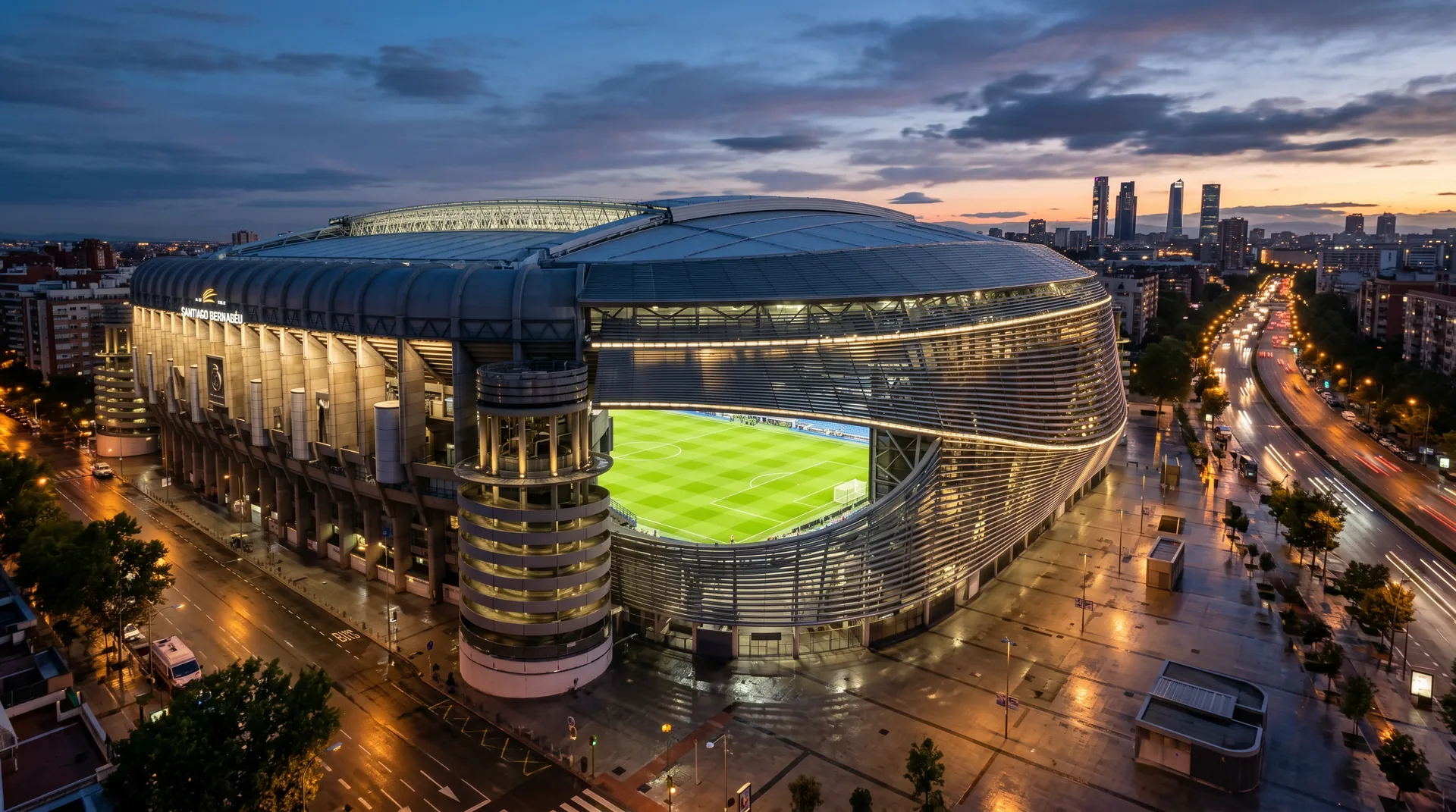
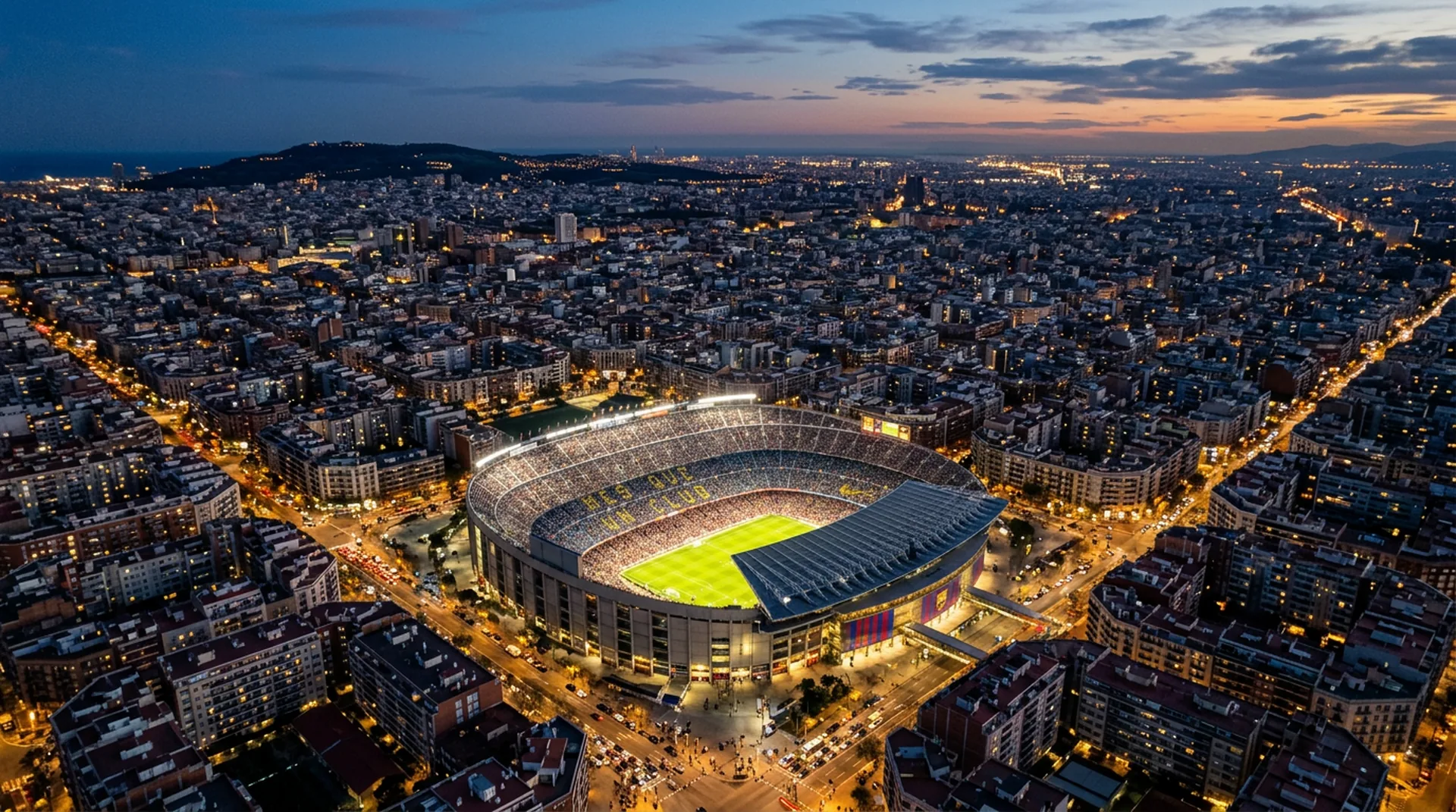
Its capacity is modest next to the tournament's largest venues, Spain's Santiago Bernabéu and Camp Nou, both leading candidates to host the final, but that's typical for a venue expected to handle earlier-round matches rather than marquee occasions. It sits closer in scale to Portugal's Estádio da Luz and Estádio do Dragão, a useful benchmark for fans planning a trip that spans all three host nations, and the unique octagonal reshaping should give Grand Stade de Marrakech one of the more distinctive atmospheres of the entire tournament.

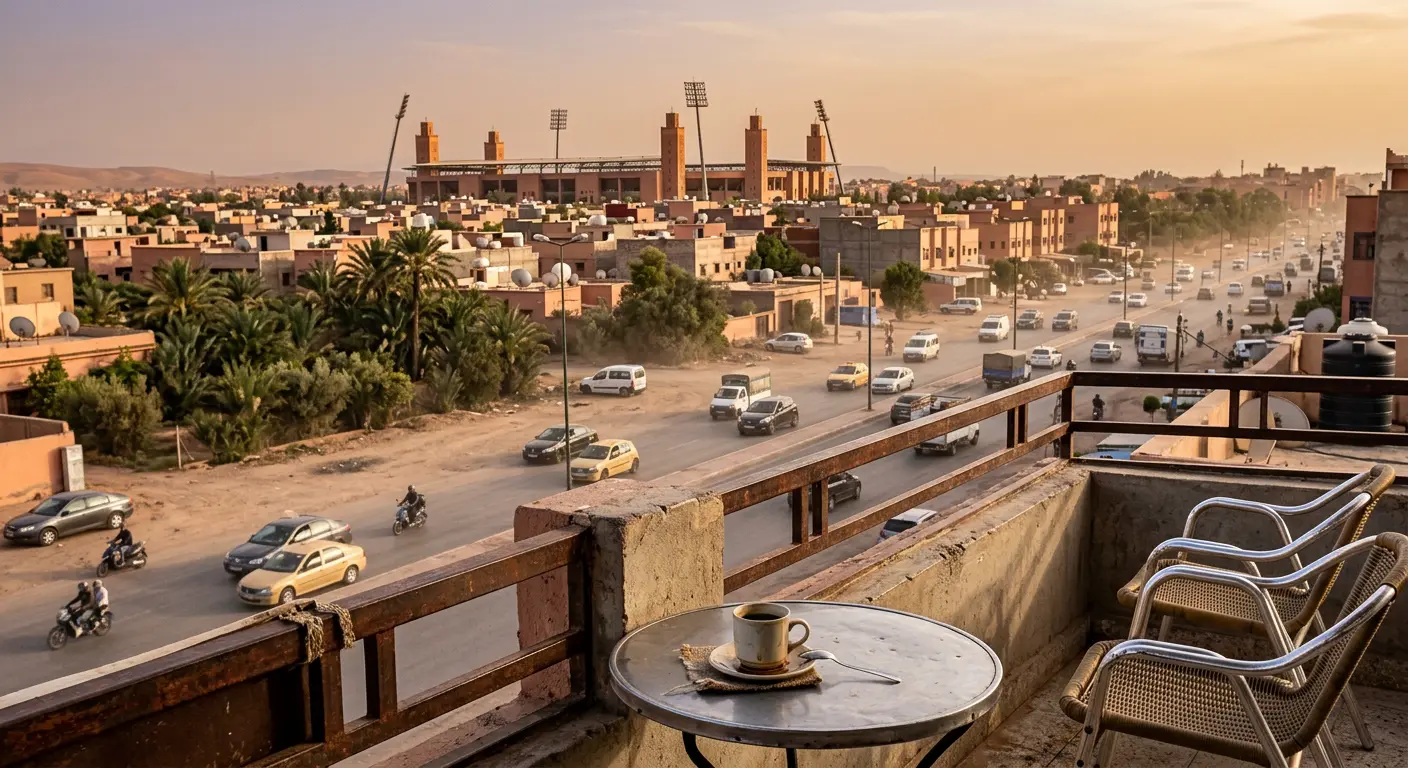
Street on the RN9 approach to Marrakech with Grand Stade de Marrakech visible in the background

From the Medina to Route de Casablanca

Grand Stade de Marrakech sits about 11km north of Marrakech's historic centre, along the RN9 road toward Casablanca. Marrakech Menara International Airport is roughly 14km from the stadium, and the city's main railway station, Gare de Marrakech, connects to Casablanca, Rabat and Fez, with a new station planned directly next to the stadium by 2028.

Compare Flights to Marrakech

From Marrakech City Centre

Medina / Gueliz
Historic centre
~20-25 min
Grand Stade de Marrakech
RN9, 11km north
41,245 seats (current)

Exact matchday shuttle and transport plans will be confirmed by FIFA and Moroccan authorities closer to 2030. Check back here for updates.

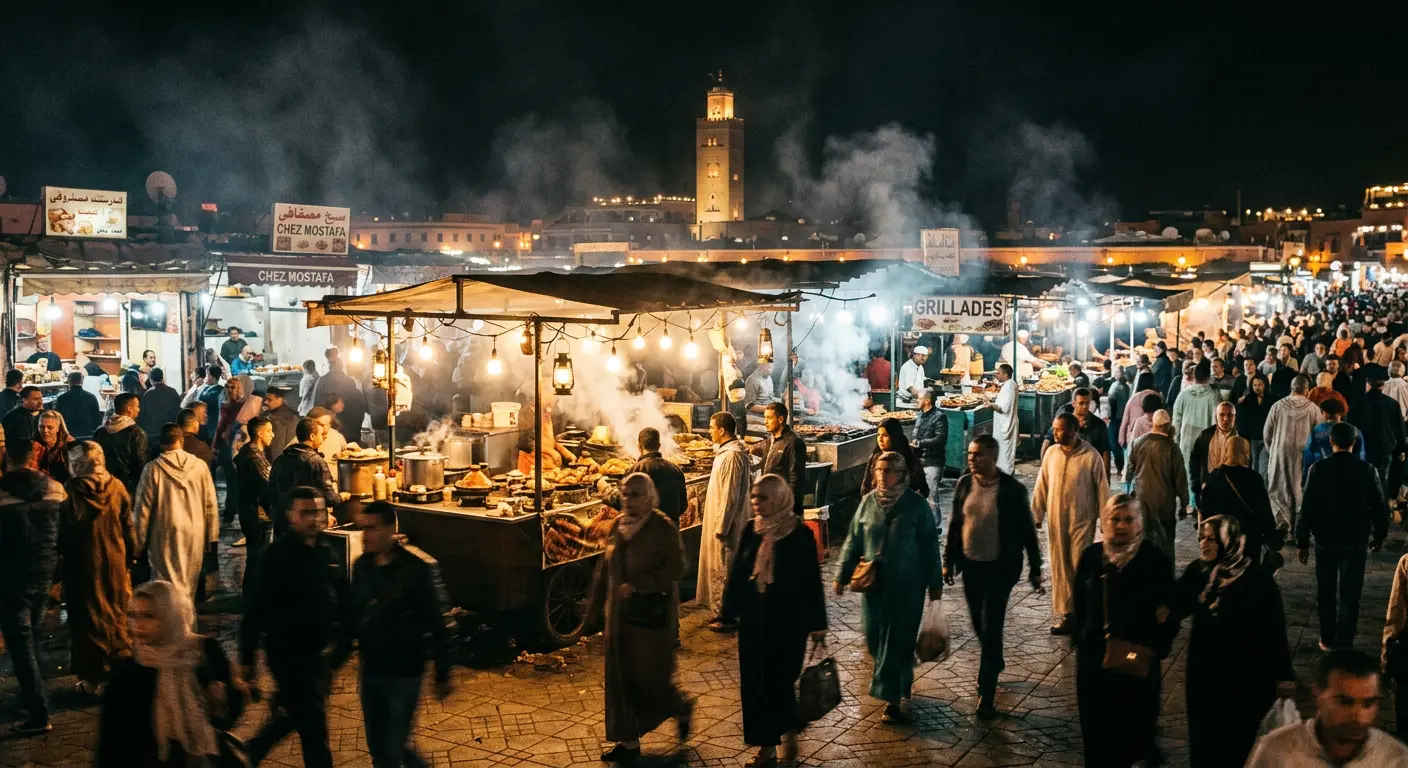
Jemaa el-Fna square in Marrakech's medina, the recommended area to stay for Grand Stade de Marrakech visitors

Where to Stay for Grand Stade de Marrakech

Since the stadium sits well outside the Medina and Gueliz, we recommend basing yourself centrally in Marrakech rather than near the ground itself. The Medina puts you inside Marrakech's historic walls near Jemaa el-Fna, while Gueliz offers a more modern base with easy taxi access to the stadium. Our full Marrakech guide covers neighbourhoods and matchday logistics in detail.

Search Marrakech Hotels Full Marrakech Guide
Flying to Marrakech
Marrakech Menara International (RAK) is about 14km from the stadium and roughly 6km from the city centre, one of Morocco's busiest airports for international arrivals.
Compare flights
World Cup Tickets
FIFA has not opened ticket sales for 2030 yet. We'll post the official ballot dates and links here the moment they're announced.
Planning Multiple Cities
Following matches across Morocco? Start with our full Morocco travel guide covering all six host cities.
See Morocco Guide
Grand Stade de Marrakech exterior at dusk, Marrakech

Every Host Stadium

Grand Stade de Marrakech is one of 21 confirmed venues across Morocco, Portugal, Spain and the three centenary host nations. Explore the others below.

See Morocco Guide

🇲🇦 Morocco

🇵🇹 Portugal

🇪🇸 Spain

🏆 Centenary Matches

Frequently Asked

Grand Stade de Marrakech Questions

Who designed Grand Stade de Marrakech?
The Italian firm Gregotti Associati International, working with Moroccan architect Saad Benkirane, designed the original stadium, constructed between 2003 and 2011. Benkirane is also leading the design of the Phase 2 football-only renovation.
Why does Grand Stade de Marrakech look like a fortress?
Its earthy sand and terracotta tones deliberately echo Marrakech's historic ramparts and the Red City's traditional architecture, while four illuminated corner towers add to the fortified, palace-like silhouette.
Did Grand Stade de Marrakech originally have a running track?
Yes. It opened in 2011 as one of the few stadiums in the world combining a rectangular football bowl with a full athletics track, a design later criticised for pushing fans too far from the pitch. The Phase 2 renovation removes the track entirely.
Is the stadium becoming octagonal?
Yes. Phase 2 converts the stadium's footprint from rectangular to octagonal as part of removing the athletics track and adding new lower-tier seating, a distinctive change among Morocco's six World Cup venues.
What is the capacity of Grand Stade de Marrakech?
41,245 seats currently, following Phase 1. Reports on the final Phase 2 target vary, from around 46,000 in earlier plans to a 60,071-seat figure cited elsewhere for potential semi-final hosting, with no confirmed final number published yet.
Why is the athletics track being removed?
Removing the track lets new stands be built much closer to the pitch, improving sightlines and atmosphere and bringing the venue in line with FIFA's preference for football-specific stadiums, similar to renovations already completed in Tangier and Rabat.
When will Grand Stade de Marrakech reopen?
The stadium closed for its Phase 2 renovation in spring 2026, with the contractor tender process running through June 2026 and work scheduled to continue through 2028, ahead of the World Cup beginning 8 June 2030.
Where is KAC Marrakech playing while the stadium is closed?
Kawkab Athletic Club Marrakech is playing home matches at Stade El Harti, the club's former ground before the current stadium opened in 2011, until the renovation is complete.
When did Grand Stade de Marrakech open?
5 January 2011, after seven years and three months of construction, with opening friendlies pitting Kawkab Marrakech and Wydad Casablanca against Olympique Lyonnais and Paris Saint-Germain.
Has Grand Stade de Marrakech hosted major finals before?
Yes, back-to-back FIFA Club World Cup finals: Bayern Munich beat Raja Casablanca 2-0 in 2013, and Real Madrid beat San Lorenzo 2-0 in 2014, with goals from Sergio Ramos and Gareth Bale.
What club plays at Grand Stade de Marrakech?
Kawkab Athletic Club Marrakech (KAC Marrakech), founded in 1947, has called the stadium home since it opened in 2011. The club won the Botola Pro title in 1957-58 and 1991-92 and the CAF Cup in 1996, and returned to the Botola Pro for 2025-26 after climbing back from the third tier.
Did Grand Stade de Marrakech host AFCON 2025?
Yes, the stadium hosted a full slate of group-stage matches plus a quarter-final at the 2025 Africa Cup of Nations in December 2025 and January 2026, shortly before closing for its World Cup renovation.
How do I get to Grand Stade de Marrakech from the city centre?
The stadium sits about 11km north of the Medina along the RN9 road toward Casablanca, roughly 20-25 minutes by taxi from central Marrakech.
Is there a train station at Grand Stade de Marrakech?
Not yet, but a new train station is planned directly next to the stadium by 2028 as part of the renovation project. Until then, Gare de Marrakech in the city centre is the nearest major station.
How far is Grand Stade de Marrakech from the airport?
Marrakech Menara International Airport is roughly 14km from the stadium, on the opposite side of the city from the historic centre.
Where should I stay for a match at Grand Stade de Marrakech?
Stay centrally in Marrakech, in the Medina or Gueliz, rather than near the stadium itself, since it sits well outside the city with no walkable neighbourhood nearby. See our full Marrakech guide for specific neighbourhood recommendations.

Continue Exploring

See every World Cup 2030 stadium, or the full Marrakech travel guide.

All StadiumsMarrakech Guide

Get Grand Stade de Marrakech Updates

Renovation milestones, confirmed capacity figures, ticket ballot dates and Marrakech travel tips - straight to your inbox.