Newsletter
Grand Stade de Marrakech electric matchday atmosphere
Morocco · World Cup 2030 Host City

Marrakech

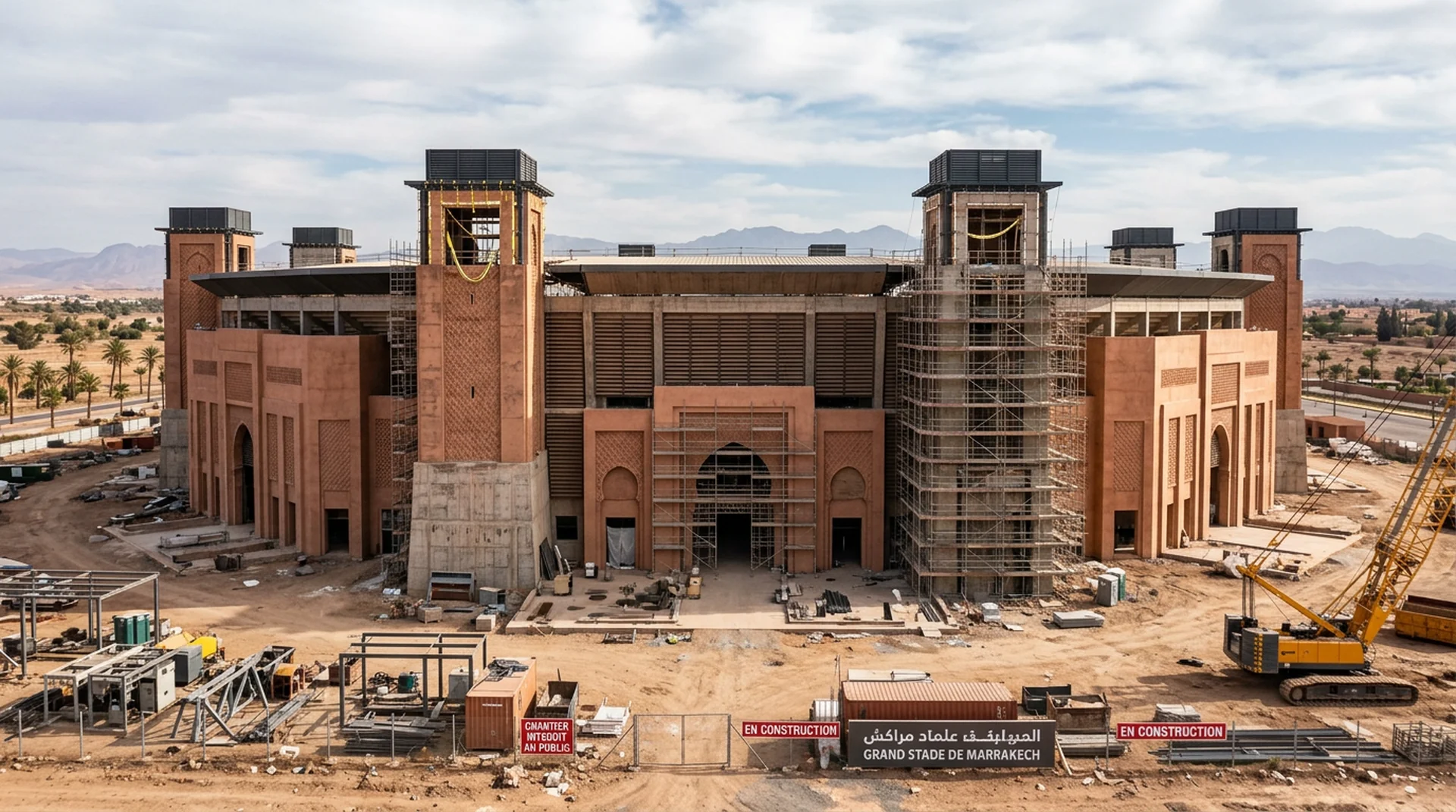
Morocco's most visited city is remaking its stadium for the World Cup: the Grand Stade de Marrakech has closed for a major renovation, ripping out its athletics track and rebuilding stands closer to the pitch. Off the field, expect Jemaa el-Fnaa, the Medina's souks and Atlas Mountain views to make Marrakech one of the tournament's most atmospheric host cities.

1Stadium
~46,000Post-Renovation Capacity
2028Renovation Target
38-40°CJune-July Avg High
Until kickoff · 8 June 2030
000Days
:
00Hours
:
00Mins
:
00Secs
StadiumFootball CultureMatchdayNeighbourhoods Getting AroundThings to DoFood & Drink Practical InfoFAQ
✈️Airport: RAK · Marrakech Menara
🚆ONCF train & taxi to the stadium
👥Population: ~930K (city) · 1.3M+ (metro)
💵Moroccan Dirham (MAD)
🗣Darija Arabic & French · English widely spoken

One Stadium, Mid-Renovation

Marrakech is putting forward a single World Cup venue, and it's currently closed for the most dramatic change of its life: the removal of its athletics track and a full conversion into a football-only stadium set against the Atlas Mountains.

Grand Stade de Marrakech exterior
Closed for Renovation
Grand Stade de Marrakech
Capacity rising from roughly 41,000 to around 46,000 · Designed originally by Gregotti Associati International, its earthy brown tones echo Marrakech's terracotta walls and four illuminated towers give it a citadel-like look at night. Closed since early 2026 for a phased renovation running through 2028: removing the athletics track, lowering the pitch, and rebuilding stands closer to play. Local club KAC Marrakech is playing home matches at El Harti Stadium in the meantime.
How to get there

KAC Marrakech, The Red City's Club

Founded 1947 2 Botola titles 6 Throne Cups 1996 CAF Cup winners

🔴 Kawkab Athletic Club

KAC Marrakech, founded in 1947 by Hadj Idriss Talbi, is the city's football institution, playing in red and white since its earliest seasons. The club won its first Botola title in 1957-58 and a second in 1991-92, and its six Moroccan Throne Cup victories put it among the country's most decorated clubs by trophy count, even though it has spent long stretches outside the top flight in the decades since.

The club's biggest continental moment came in 1996, when it won the CAF Cup, one of Africa's major club competitions at the time. KAC Marrakech has been relegated three times since (1999-2000, 2010-11, 2018-19), most recently rebuilding from the amateur ranks back to Botola Pro for the 2025-26 season, a genuine yo-yo story that keeps its fanbase invested through the lean years.

"A club that has been up and down Morocco's divisions, but never lost its home crowd."

- a common description of KAC Marrakech's supporter loyalty through relegations and promotions

🏗️ A Stadium Being Rebuilt Mid-Life

The Grand Stade de Marrakech has been KAC Marrakech's home since it opened, but it closed in early 2026 for the most significant change in its history: removing the athletics track that has long separated fans from the pitch, and lowering the playing surface to rebuild closer, steeper stands. While work continues, KAC Marrakech is playing home matches at El Harti Stadium elsewhere in the city.

The renovation, running in phases through 2028, will lift capacity from roughly 41,000 to around 46,000 while converting the venue into a football-specific stadium in line with FIFA's standards for 2030.

🏛️ A Design Rooted in the City

Designed by the Italian firm Gregotti Associati International, the stadium's earthy brown tones deliberately echo Marrakech's terracotta walls, and its four illuminated corner towers give it a fortified, citadel-like silhouette at night, an architectural identity the renovation is designed to preserve even as the interior is rebuilt.

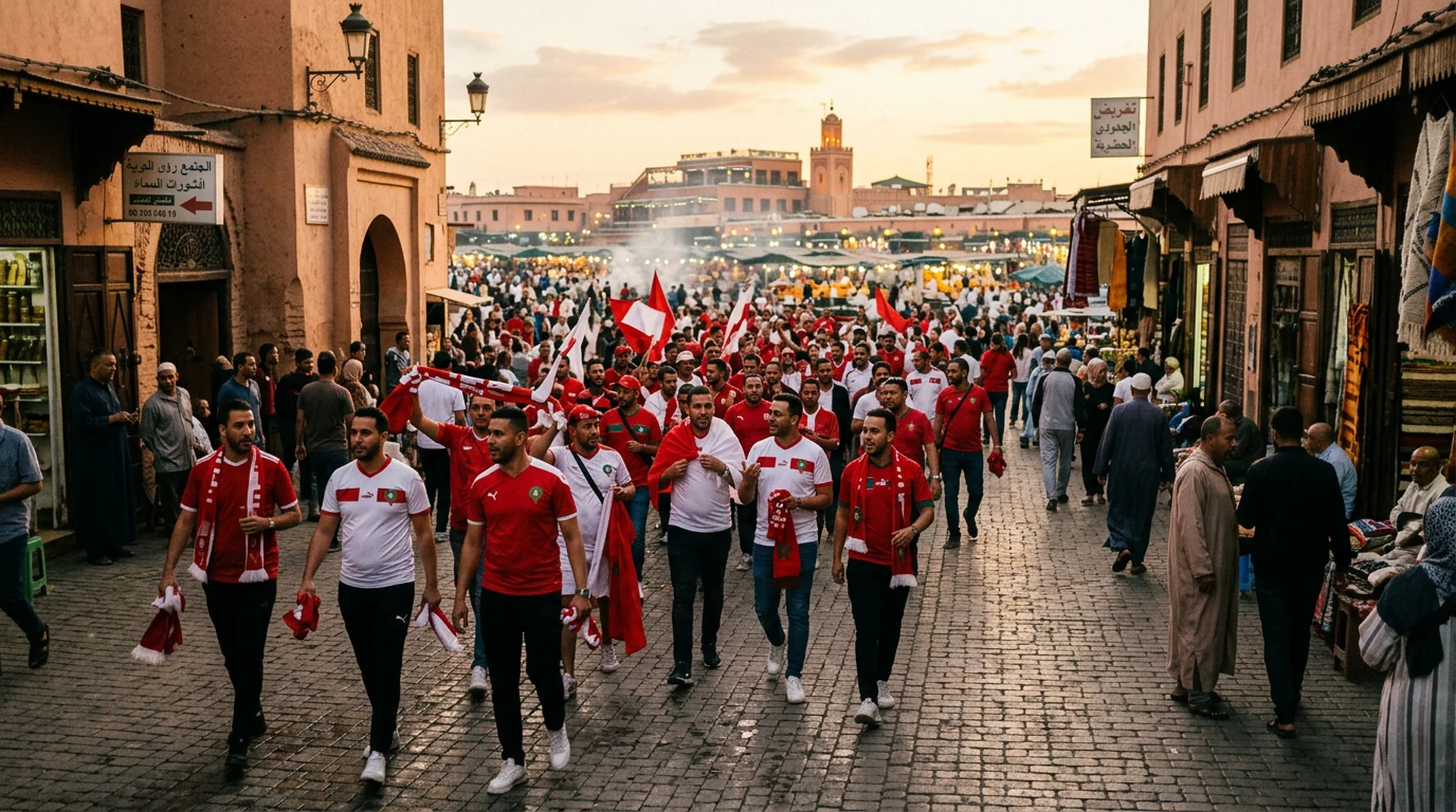
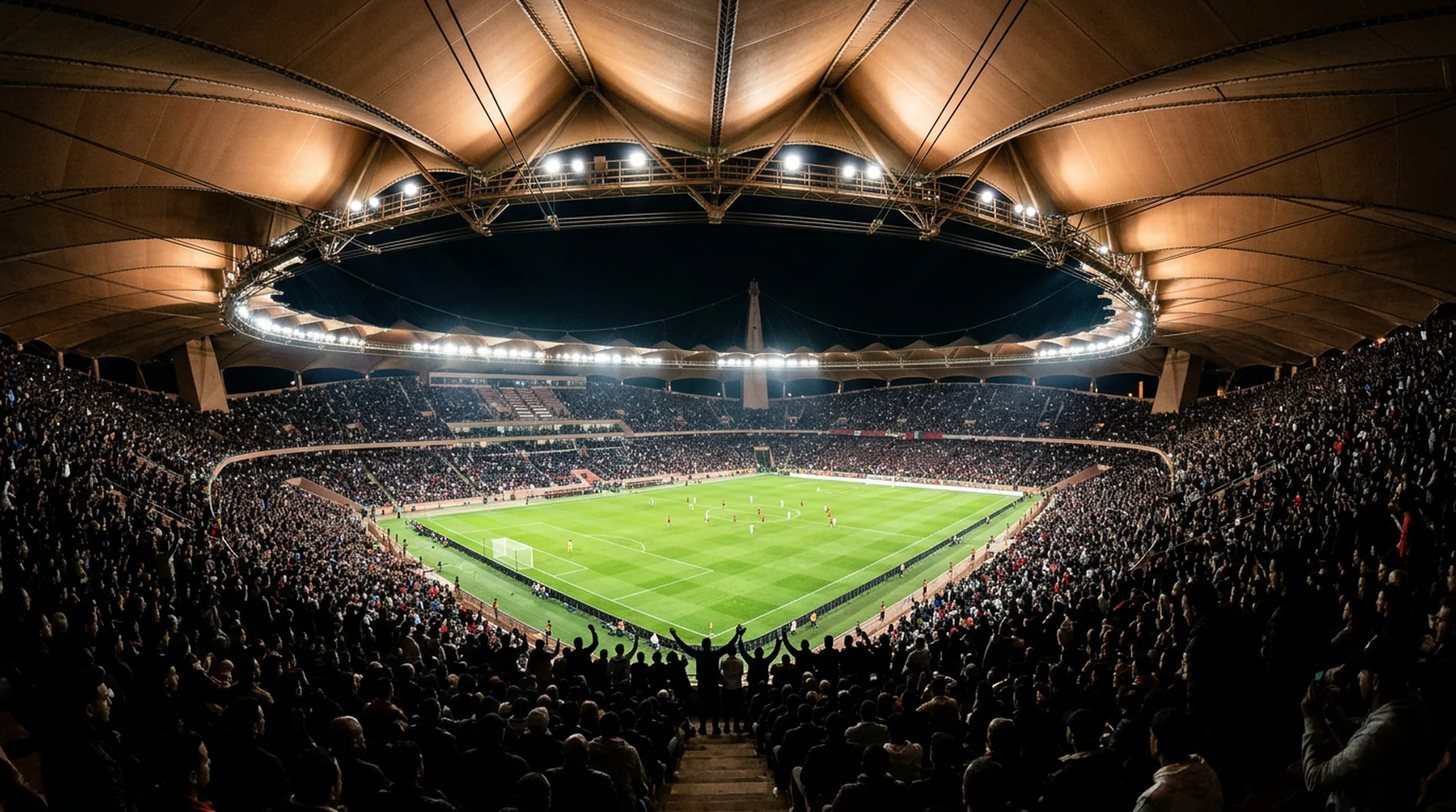
Marrakech World Cup fans matchday atmosphere

Where Marrakech Watches Football

Jemaa el-Fnaa has always been Marrakech's gathering point, and it's a near-certainty for World Cup nights too, with giant screens and packed cafés turning the square into an open-air fan zone even without a ticket. Expect the heat to shape the schedule as much as the football.

  • 🚕 Taxi & shuttle - the main route to the Grand Stade on the city's edge
  • 🎉 Jemaa el-Fnaa & Gueliz cafés - Marrakech's natural gathering points
  • 🌡️ Evening kickoffs preferred - daytime heat can exceed 40°C
🎪

Matchday in Marrakech

"Expect Marrakech to be one of the liveliest host cities of the entire tournament."

The Grand Stade sits on the northern edge of the city, away from the Medina and Gueliz, so most fans will gather centrally before heading out by taxi or shuttle. Jemaa el-Fnaa's food stalls and open-air atmosphere make it the obvious pre- and post-match hub, day or night.

With June-July daytime temperatures regularly topping 38-40°C, expect the city's own energy to build later in the day, with evening kickoffs likely to draw the biggest and liveliest crowds.

🍵
Pre-Match
Jemaa el-Fnaa's cafés and food stalls fill from late afternoon as the heat eases, with Gueliz offering a calmer, more modern pre-match option.
📺
Public Viewing
Jemaa el-Fnaa is Marrakech's obvious candidate for an official fan zone, with its huge open space and existing tradition of large-screen entertainment, to be confirmed by FIFA closer to 2030.
🚕
After the Final Whistle
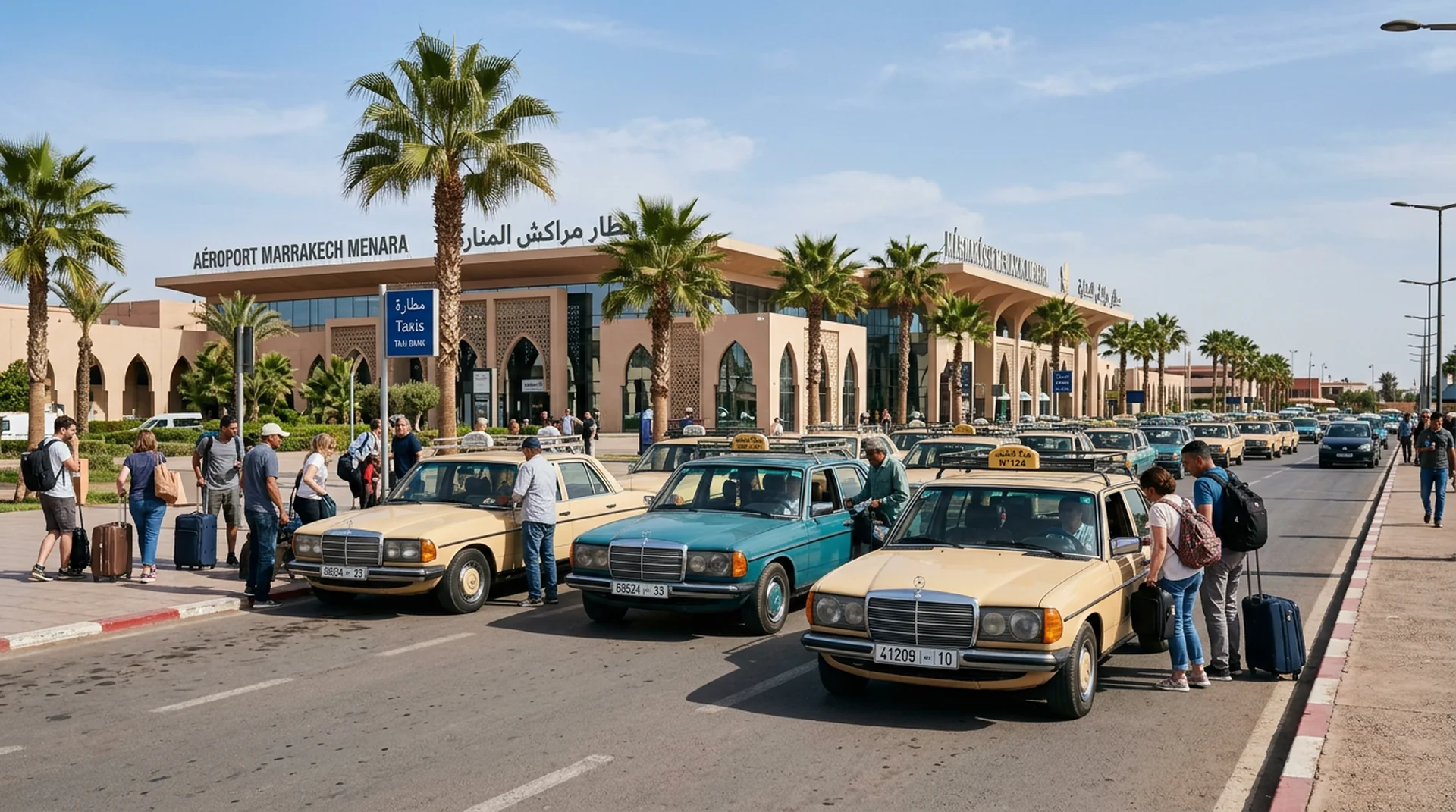
Expect taxi ranks near the stadium to be busy for a while after matches. Agree fares before you get in, and consider arranging return transport in advance for late finishes.
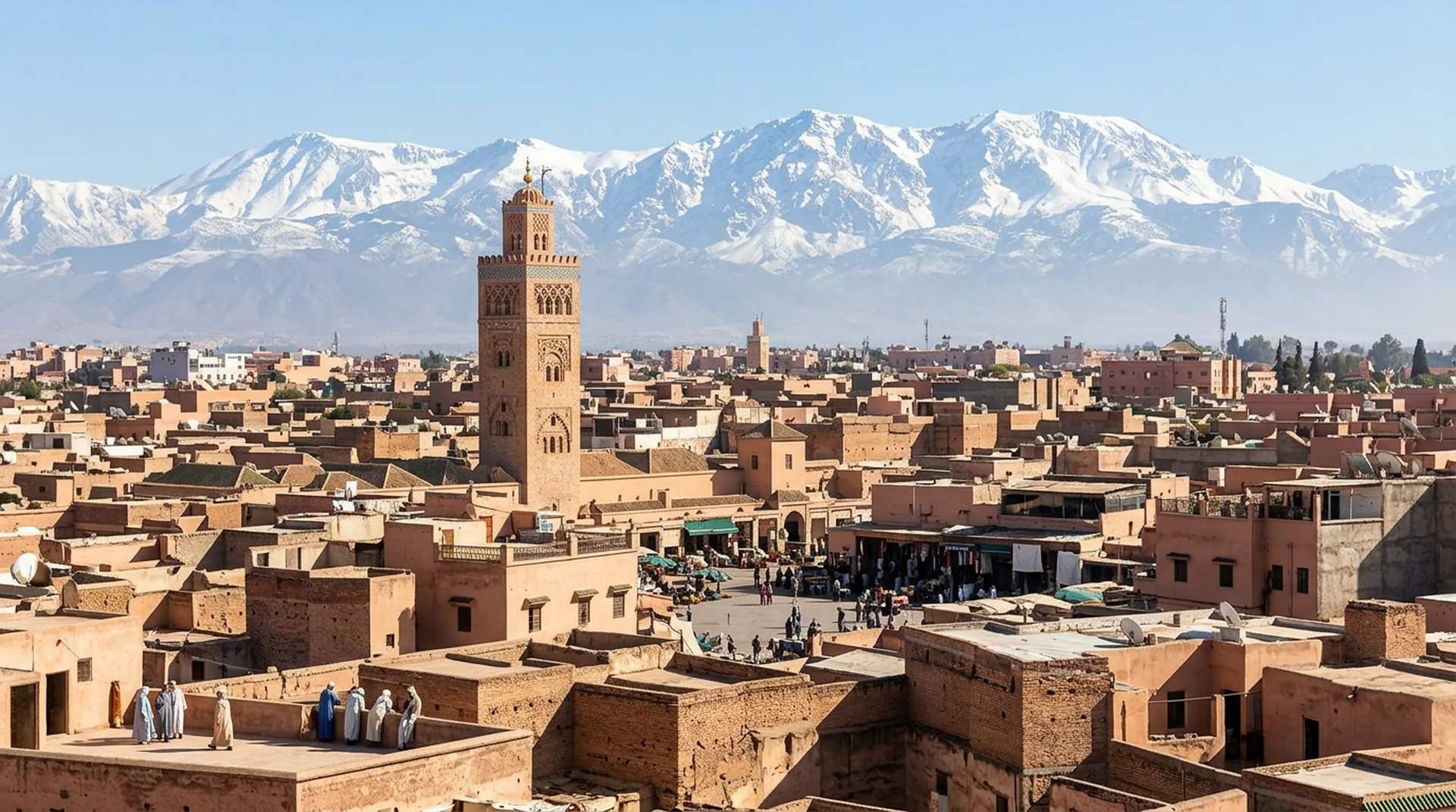
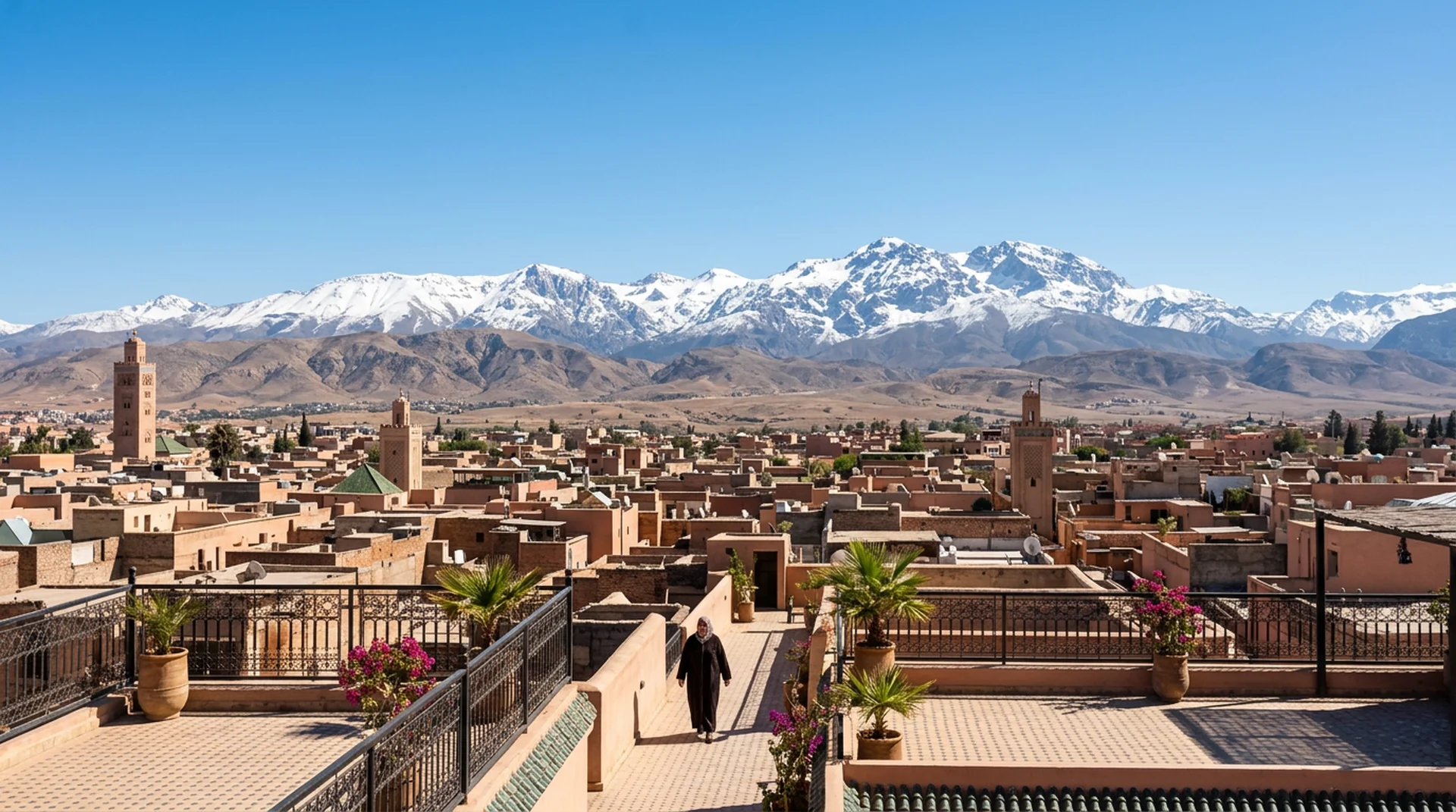
Marrakech Medina skyline with Atlas Mountains

Four Neighbourhoods, One Red City

The Grand Stade sits on Marrakech's northern edge, away from every tourist district, so where you stay comes down to atmosphere rather than stadium proximity. Here's how the main districts compare.

  • 🕌 The Medina - historic riads, Jemaa el-Fnaa, full immersion
  • 🏙 Gueliz - modern "new town", cafés, galleries, digital-nomad friendly
  • ✨ Hivernage - upscale hotels, nightlife, closest to the Medina's glamour
  • 🌴 Palmeraie - luxury resorts, quiet, 15-20 minutes from the centre
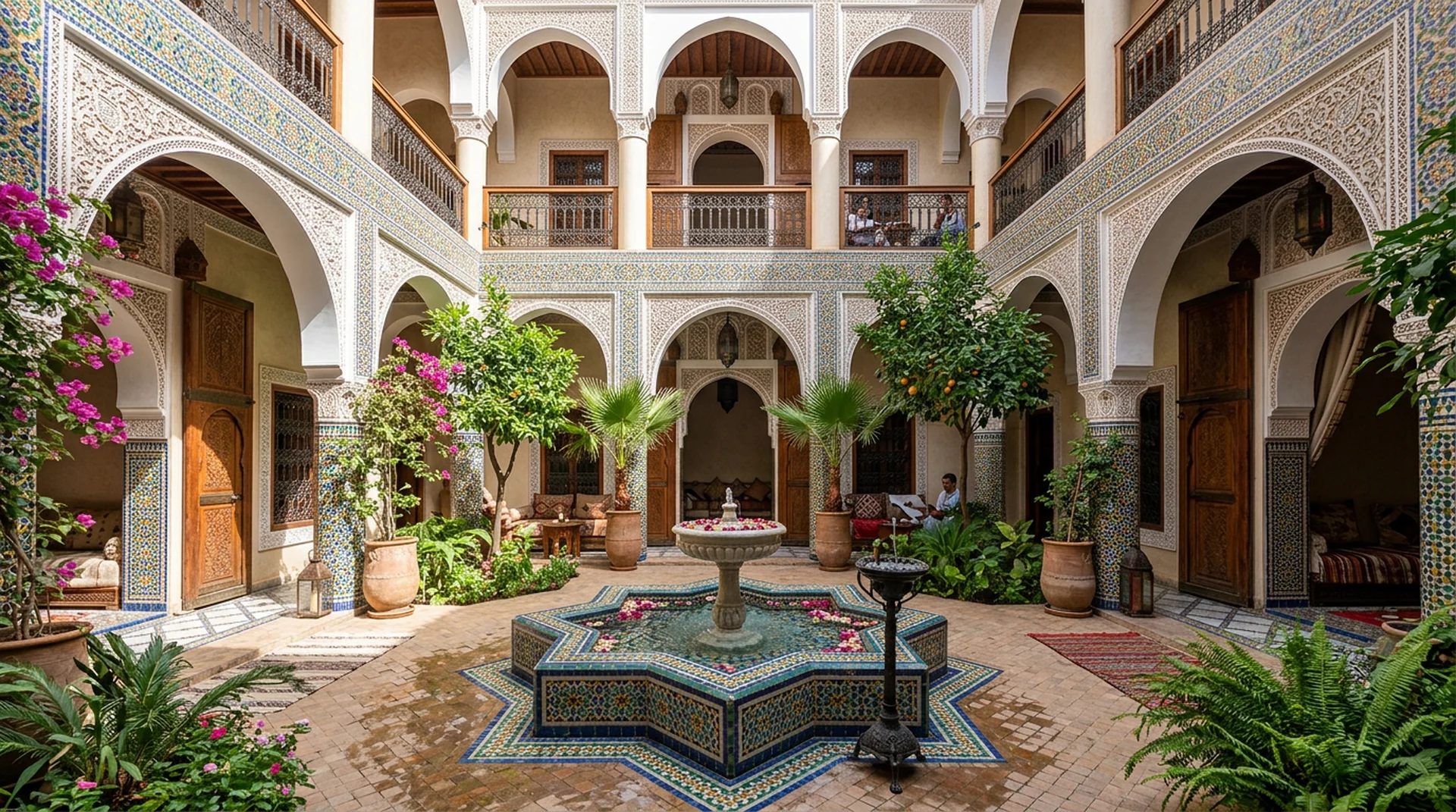
Medina riad courtyard Marrakech
🕌
The Medina - Historic Immersion
Marrakech's walled old town, home to Jemaa el-Fnaa, the souks and hundreds of traditional riads. The most atmospheric base, though narrow alleys mean more walking and less taxi access.
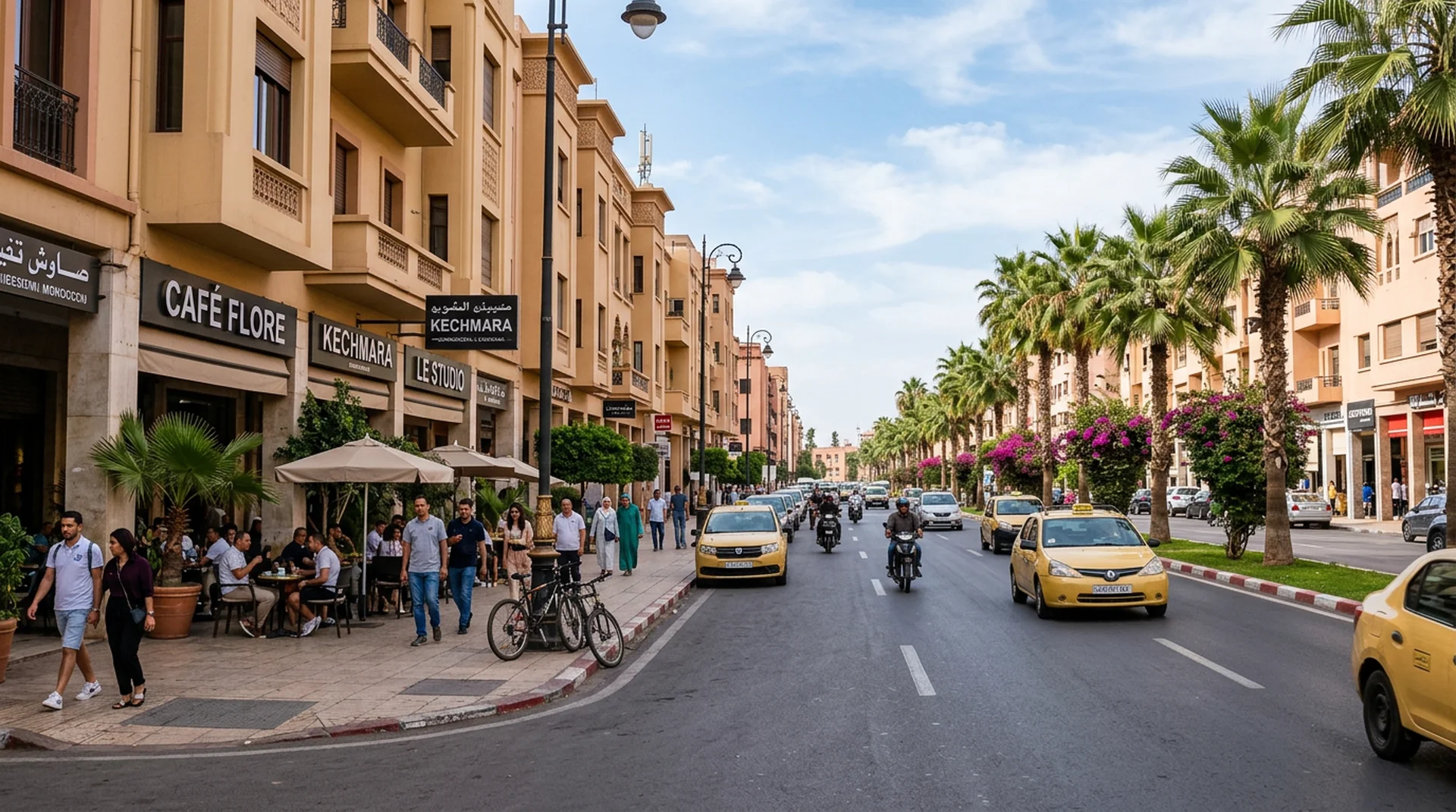
Gueliz new town Marrakech
🏙
Gueliz - Modern New Town
Wide European-style avenues, art galleries, cafés and the Jardin Majorelle. A good base for travellers wanting modern comforts a short taxi ride from the Medina.
Hivernage district hotels Marrakech
Hivernage - Upscale & Central
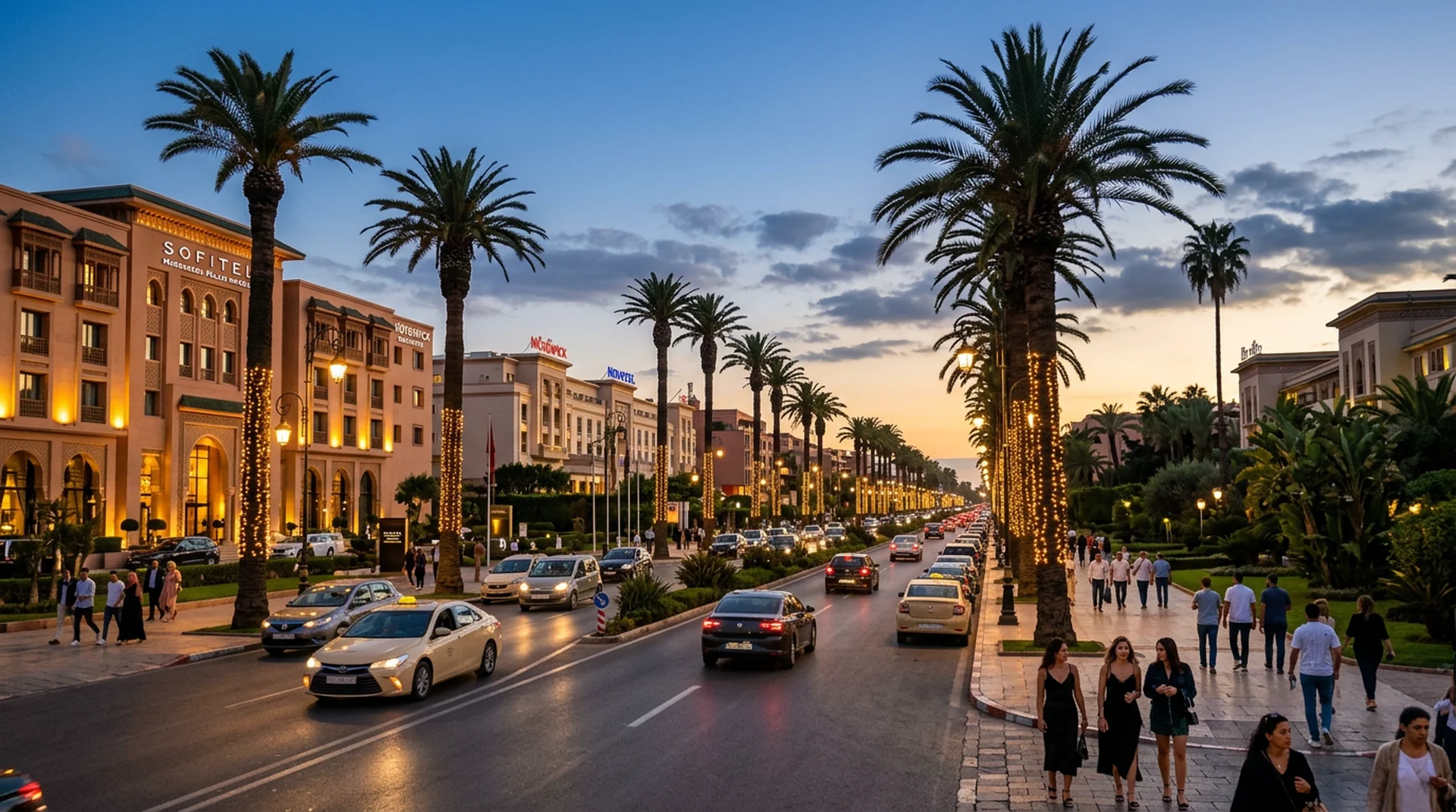
Palm-lined boulevards, high-end hotels and Marrakech's liveliest nightlife, sitting right next to the Medina. The default choice for travellers wanting comfort without losing proximity.
Palmeraie palm grove resort Marrakech
🌴
Palmeraie - Resort Quiet
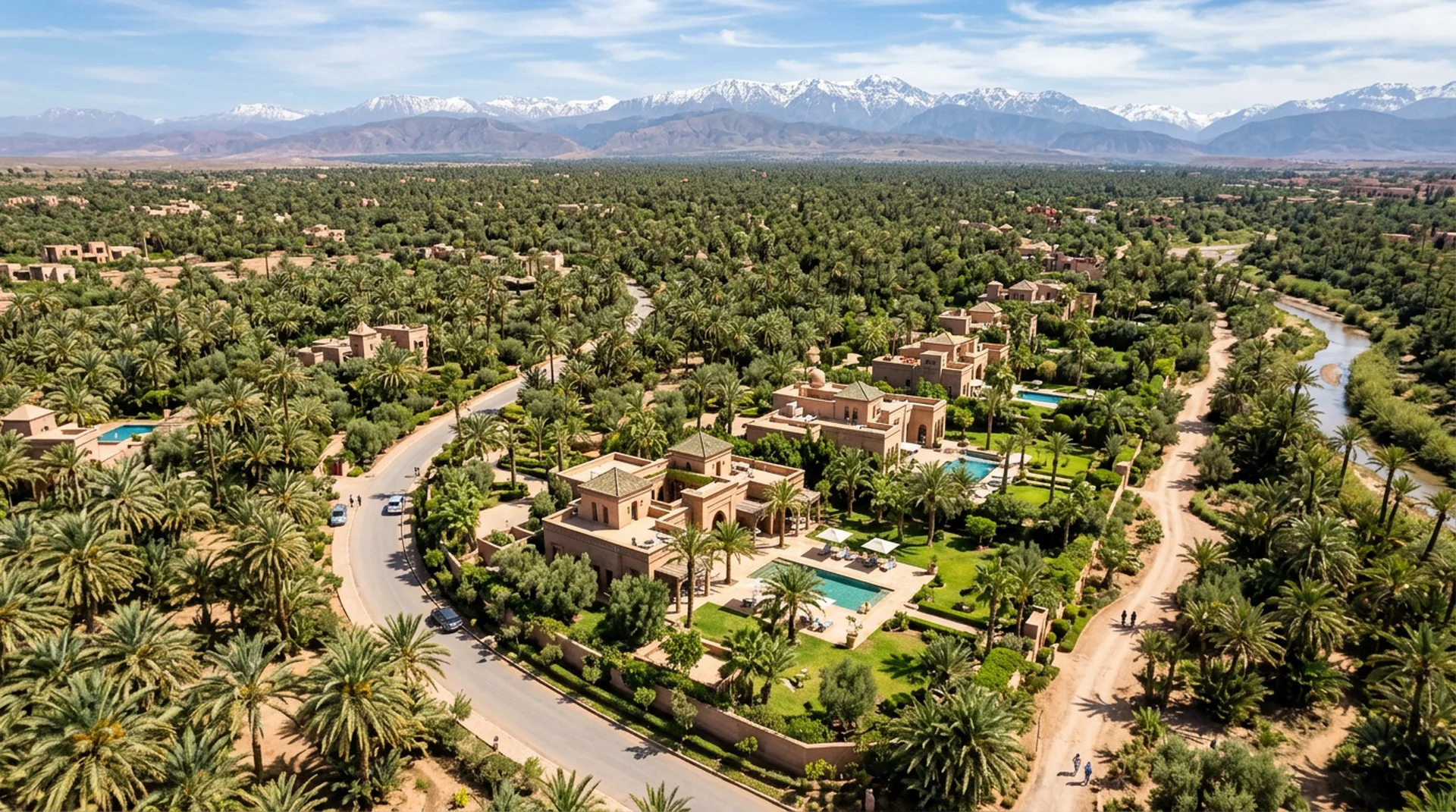
A sprawling palm grove turned luxury resort district, 15-20 minutes from the centre by car. Best for travellers prioritising pool time and quiet over walkability.
Marrakech Menara Airport taxi rank

Close to the Centre, Far from the Rest

Marrakech Menara Airport sits just a few kilometres from the Medina, one of the shortest airport-to-centre trips of any host city. The Grand Stade, however, is on the opposite edge of town, so plan stadium journeys separately from your city-centre stay.

From Marrakech Menara Airport to the City Centre

Airport (RAK)
Taxi or airport bus
~15-20 min
Medina / Jemaa el-Fnaa
City centre hub
~15-20 min
Grand Stade de Marrakech
Northern edge
~46,000 seats

Airport to Medina: ~15-20 min by taxi, 70-100 MAD · City centre to stadium: taxi or matchday shuttle, exact routes TBC by FIFA · Marrakech train station to Casablanca: ~2h45-3h, with a high-speed rail extension planned by 2028

Marrakech Menara Airport terminal
From the Airport
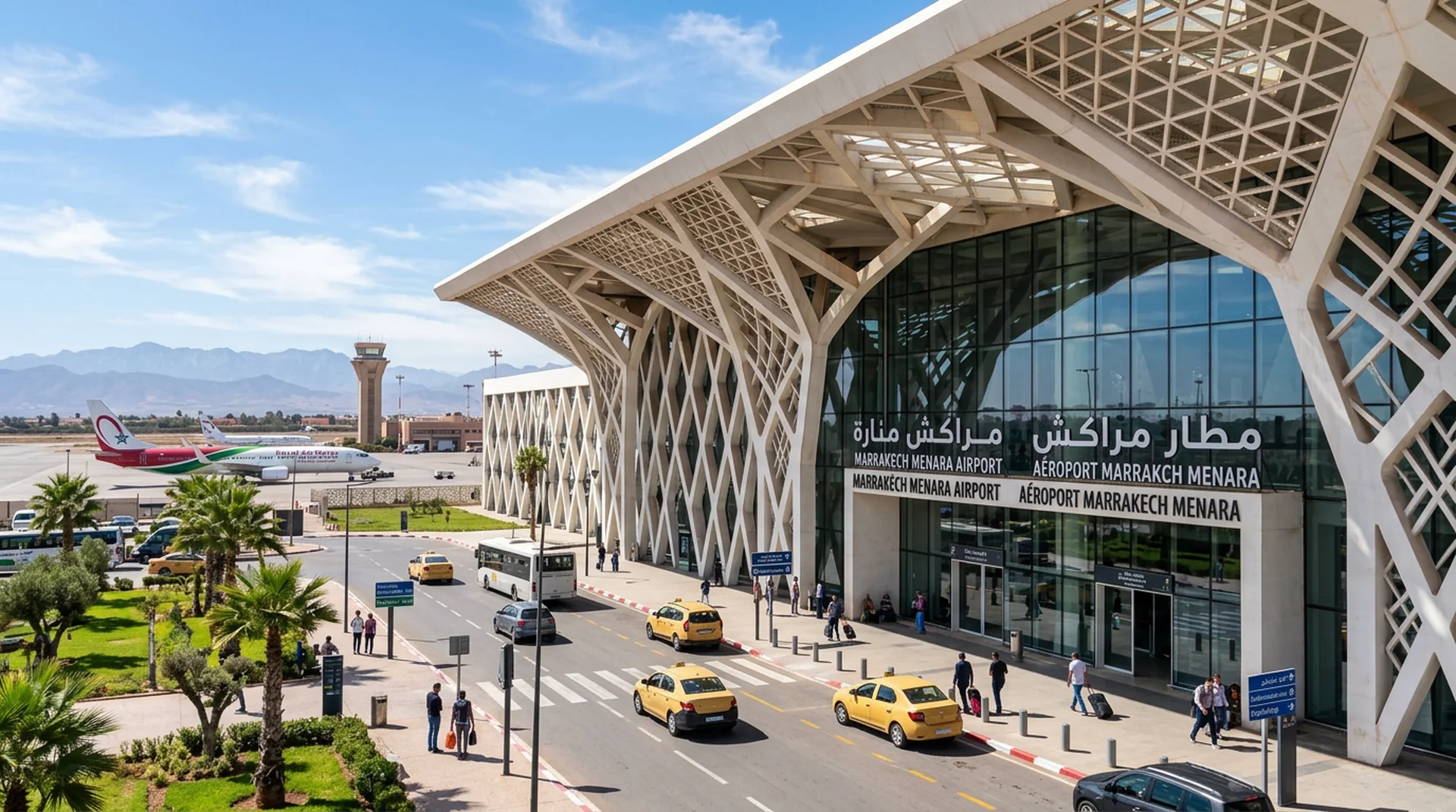
Marrakech Menara Airport (RAK) sits about 4.5km from the Medina, among the closest of any host city. Official taxis and the airport bus both reach the centre in around 15-20 minutes.
Compare flights
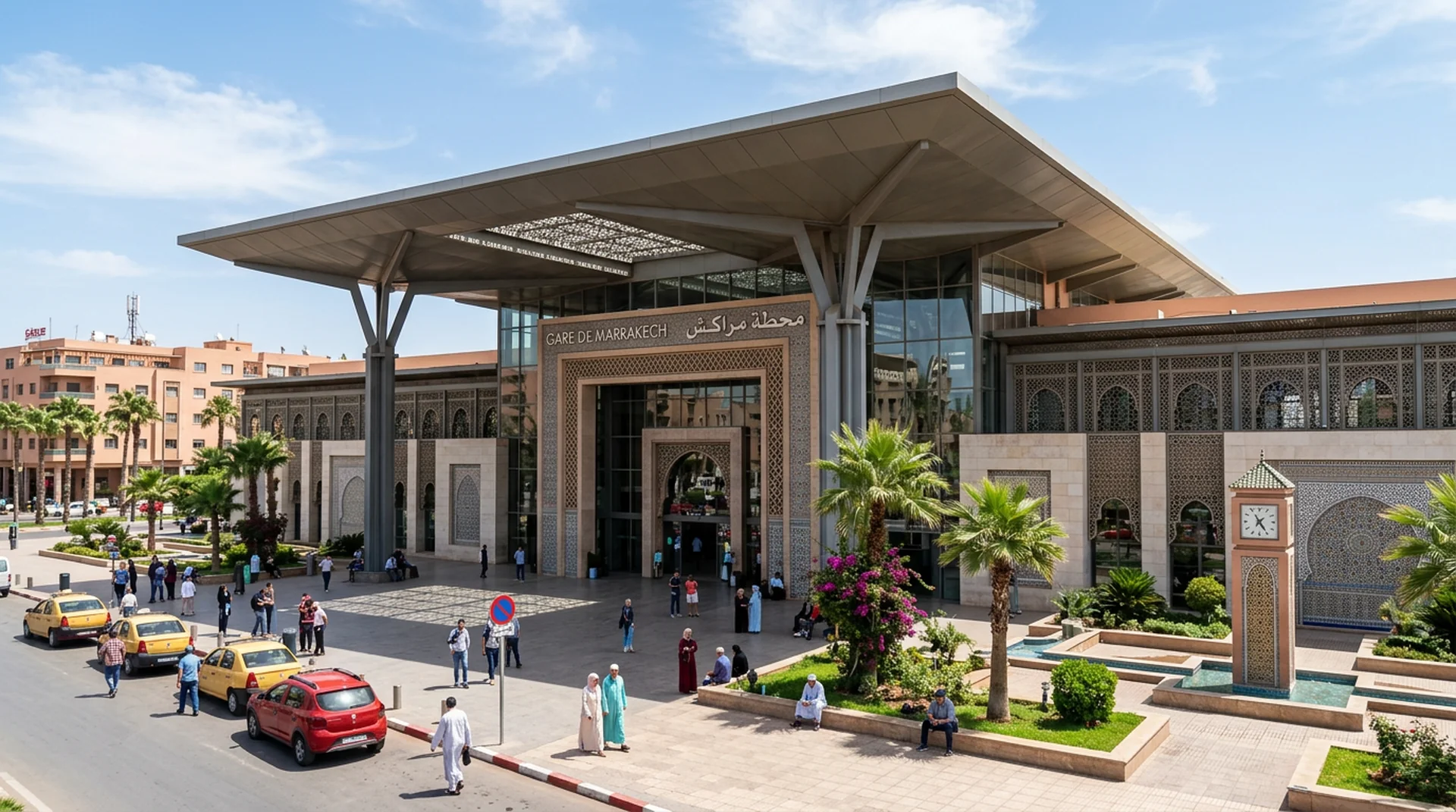
Marrakech train station exterior
Marrakech Train Station
ONCF trains connect Marrakech to Casablanca in around 2h45-3h, with onward connections to Rabat, Fes and Tangier. A new station is planned next to the Grand Stade, and a high-speed rail extension is targeted for 2028.
See the stadium
Marrakech taxis and streets
Taxis & Grand Taxis
Petit taxis handle short in-city trips at low fixed fares within Marrakech, while grand taxis (larger shared vehicles) cover longer or intercity routes. Agree fares upfront or insist on the meter.
Where to stay

Following matches in more than one city? Marrakech's train station connects directly to Casablanca and onward to Rabat, Fes and Tangier. See the Morocco transport guide for full routes across all host cities.

What to Do When There's No Match

Marrakech rewards early mornings before the heat sets in and slow evenings once it lifts. Give the souks their own half-day rather than squeezing them around a match schedule, and save the Atlas Mountains for a proper day trip.

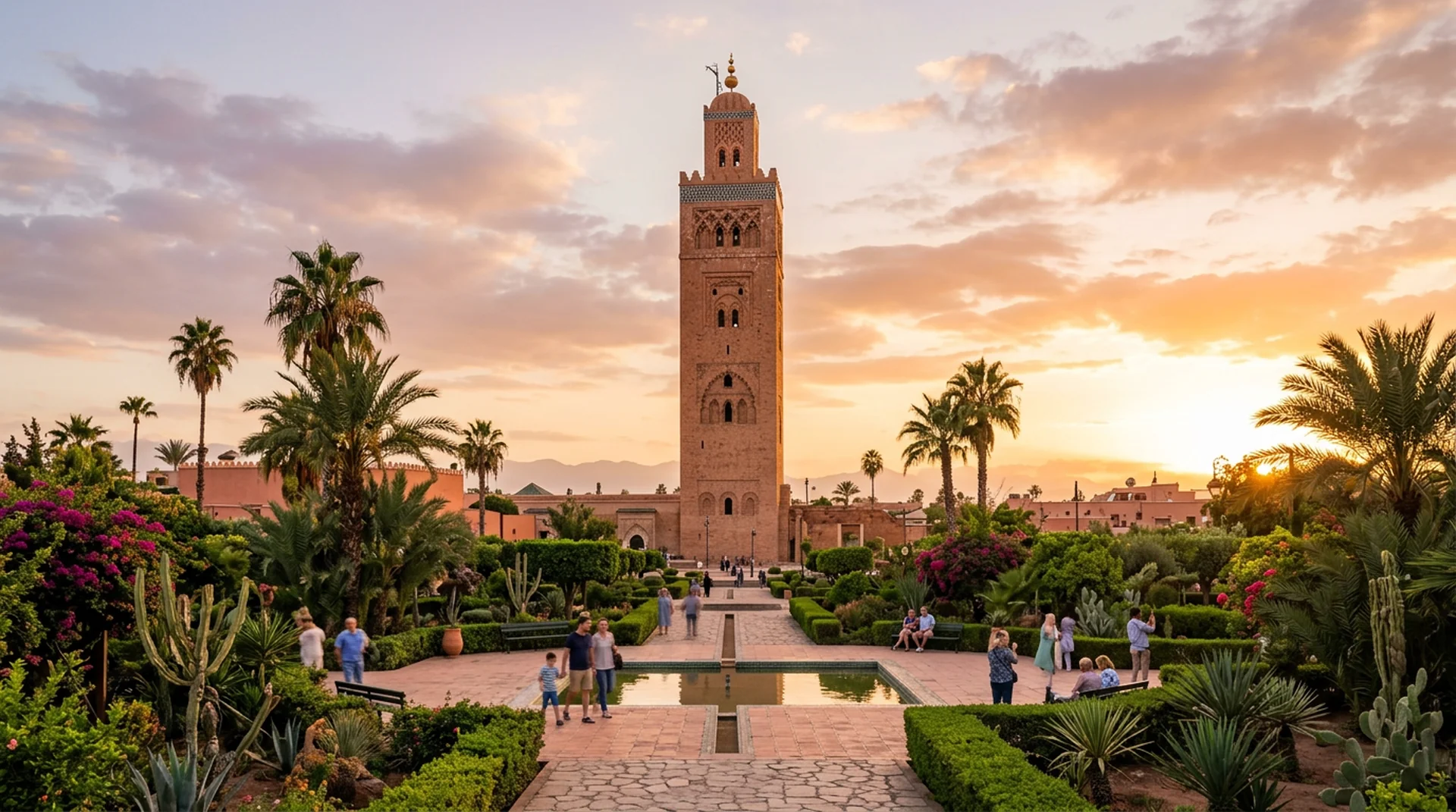
Koutoubia Mosque Marrakech
🕌
Koutoubia Mosque
Marrakech's tallest and most iconic landmark, its 12th-century minaret visible across the city. Non-Muslim visitors can't enter, but the surrounding gardens and exterior are a must-see, especially at sunset.
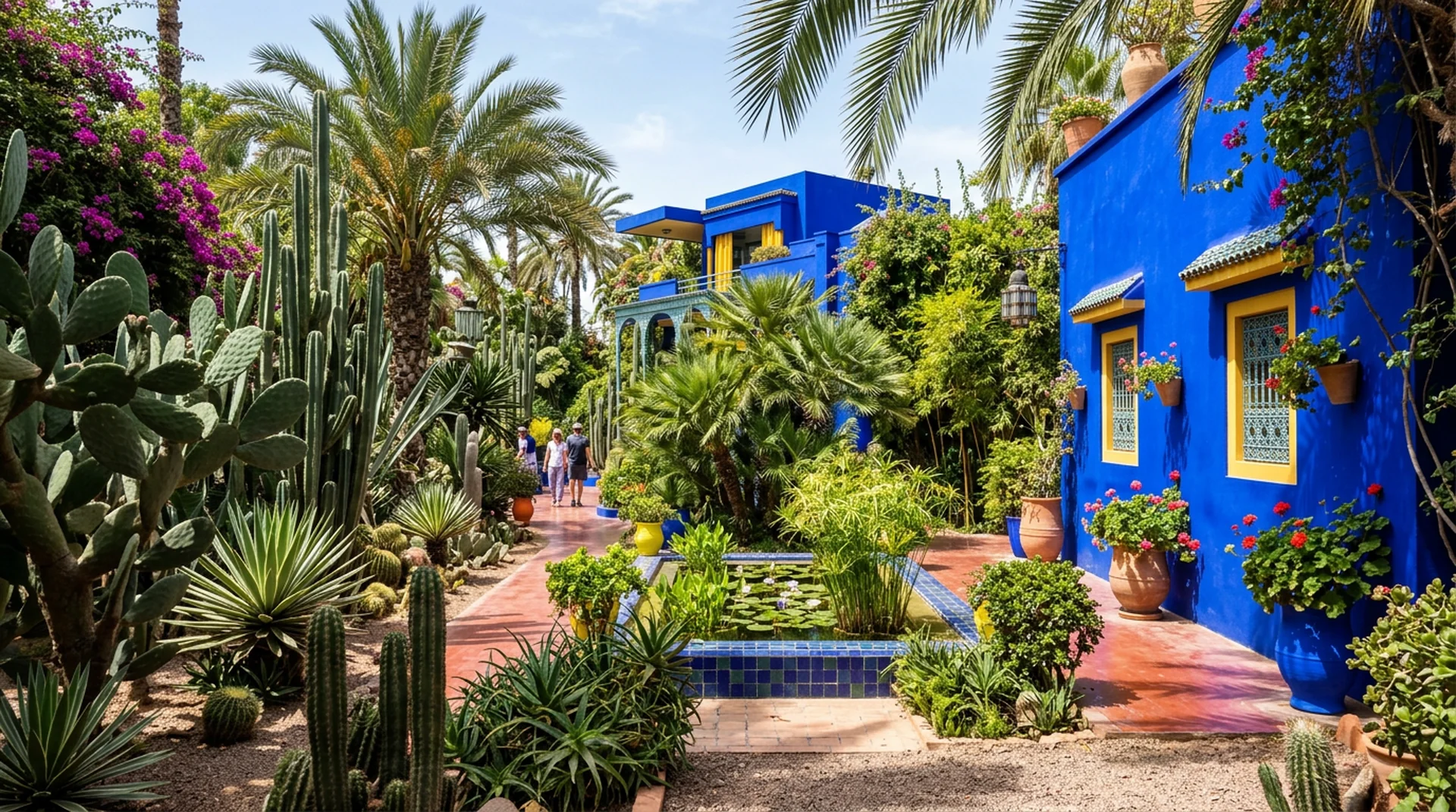
Jardin Majorelle blue garden Marrakech
🎨
Jardin Majorelle
A vivid cobalt-blue garden created by painter Jacques Majorelle and later owned by Yves Saint Laurent. Book timed entry online, as it sells out during peak season.
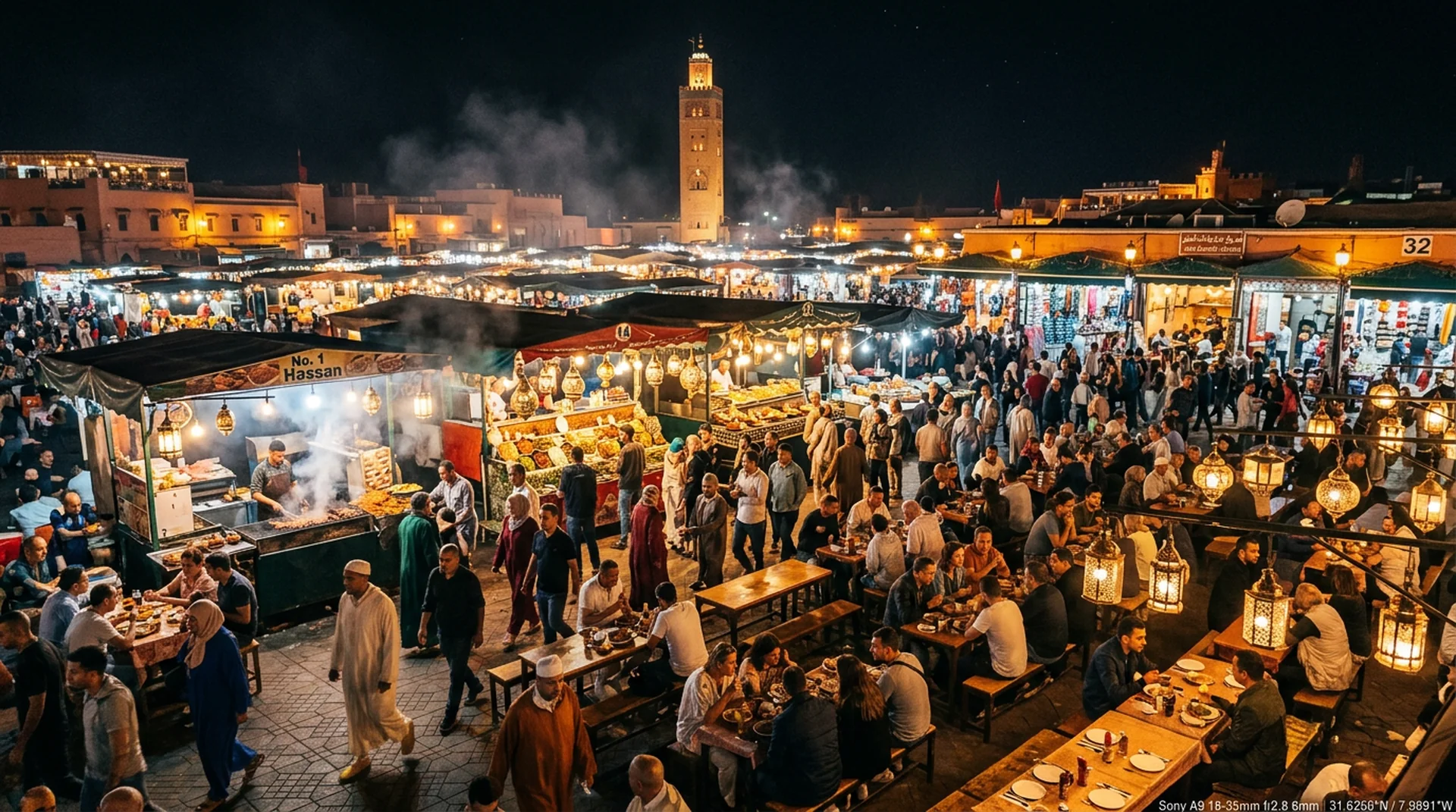
Jemaa el-Fnaa square at night Marrakech
🎪
Jemaa el-Fnaa
The beating heart of the Medina, a UNESCO-recognised square packed with food stalls, musicians and storytellers after dark. Come hungry and expect crowds.
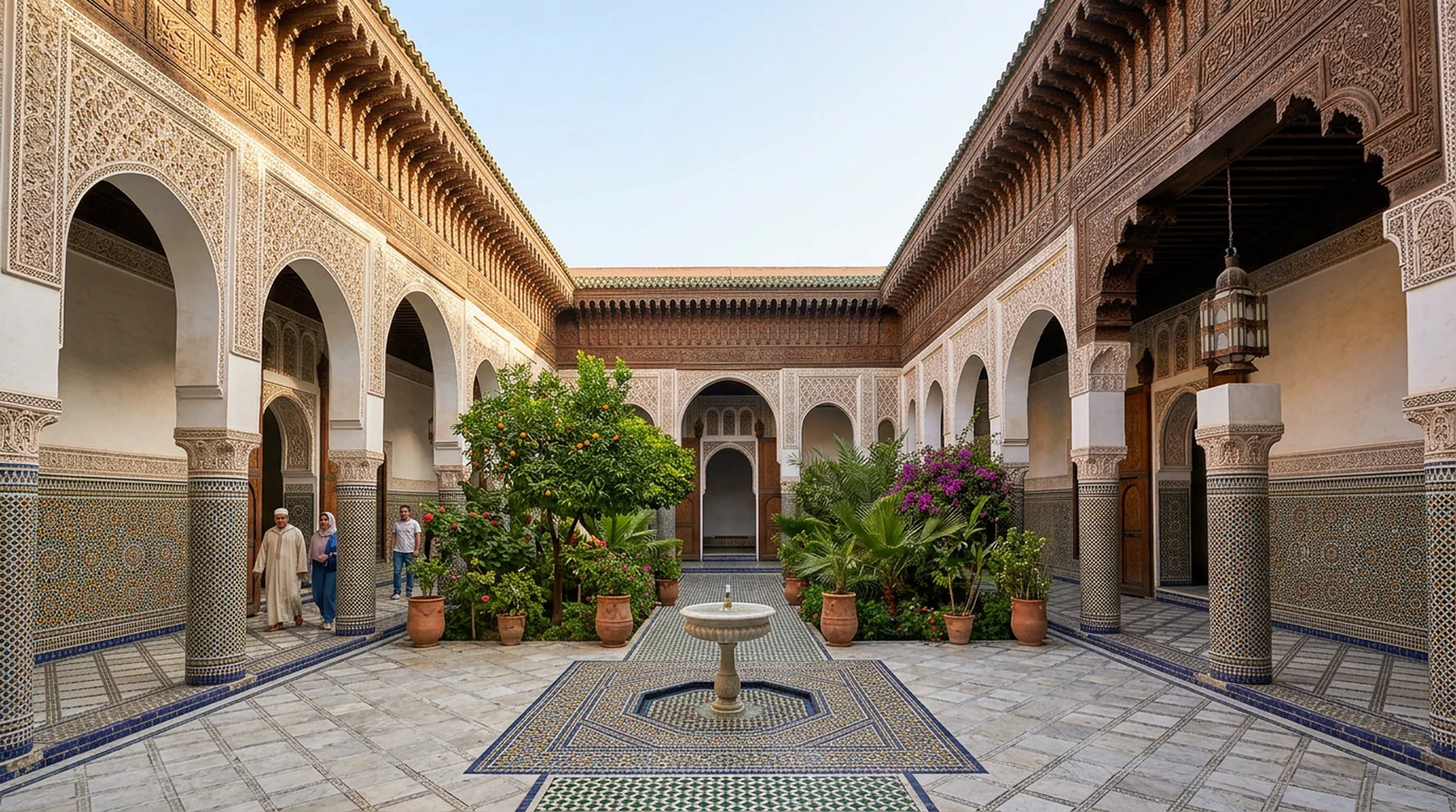
Bahia Palace courtyard Marrakech
🏛
Bahia Palace
A sprawling 19th-century palace with ornate courtyards, carved cedar ceilings and zellige tilework, showcasing Moroccan craftsmanship at its finest. Best visited in the cooler morning hours.
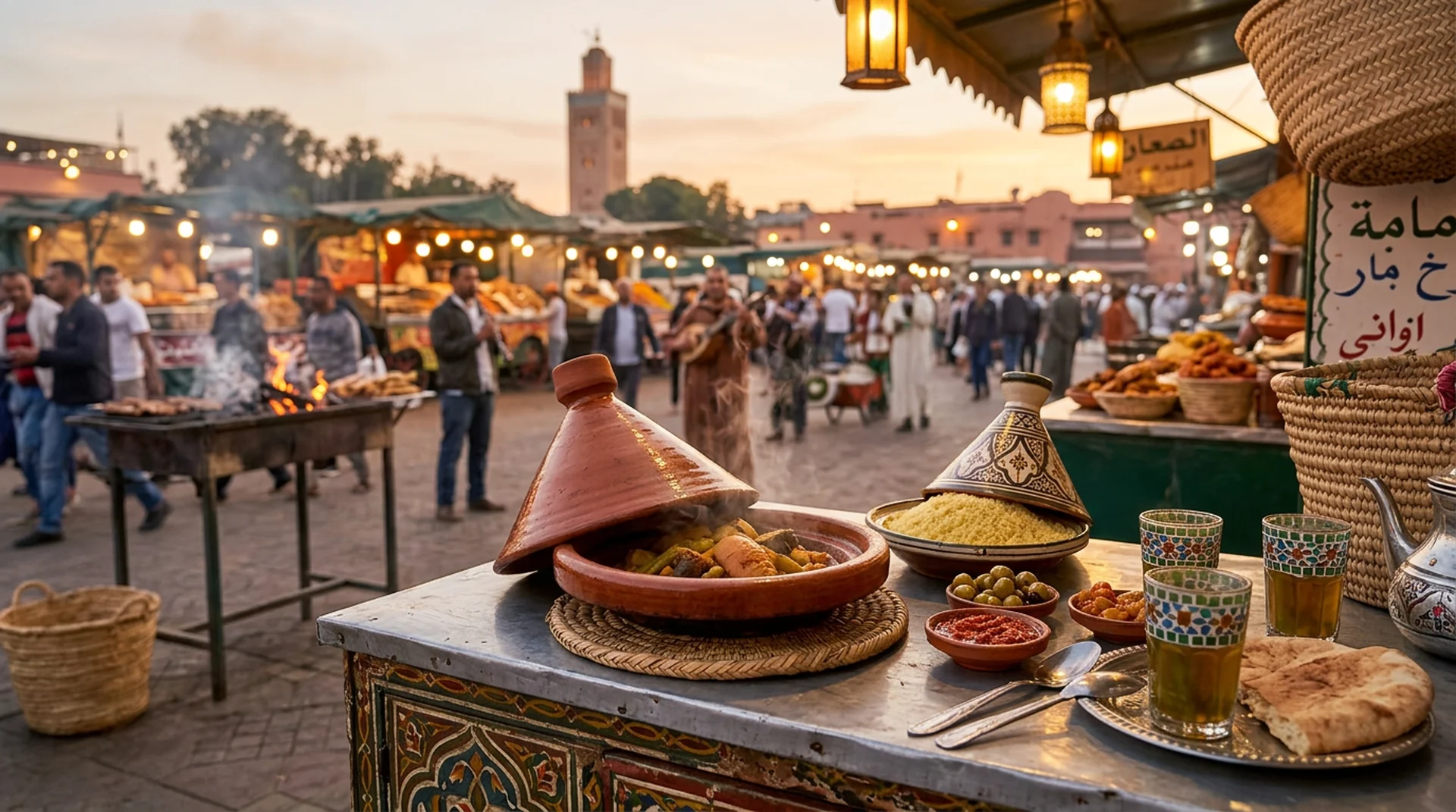
Tagine at Jemaa el-Fnaa Marrakech

What to Eat Before Kickoff

Marrakech's food scene runs from Jemaa el-Fnaa's legendary night stalls to elegant riad dining rooms. Here's how the city eats at every budget.

  • 🍲 Tagine - slow-cooked stew served in its namesake clay pot
  • 🐑 Mechoui - slow-roasted lamb, a Marrakech speciality
  • 🍜 Harira - tomato, lentil and chickpea soup to break the day's heat
  • 🍢 Jemaa el-Fnaa food stalls - grilled meats, snails and fresh orange juice after dark
  • ☕ Café culture - mint tea and pastries in Gueliz

Here's what to order at each budget, from Jemaa el-Fnaa's food stalls to riad tasting menus.

Street & Casual
15-40MAD
  • Harira: a bowl with bread and dates at a medina café, 15-20 MAD
  • Jemaa el-Fnaa stalls: grilled meats, merguez and snails after dark
  • Fresh orange juice: from the square's famous juice stands, 4-8 MAD
  • Msemmen: flaky flatbread from a street griddle
Fine Dining
500+MAD/person
  • Riad courtyard dining: elegant multi-course Moroccan menus in the Medina
  • Rooftop restaurants: Gueliz and Hivernage's trendiest tables, often with Atlas Mountain views
  • Palmeraie resort dining: upscale international and Moroccan fusion menus
  • Cooking classes: a popular way to learn tagine and pastry techniques firsthand

Cash is still widely used for tips, petit taxis and street stalls, though card payments are accepted at larger restaurants and international chains. For an authentic and affordable meal, look for small restaurants around the Medina rather than the busiest tourist-facing stalls on Jemaa el-Fnaa itself.

Atlas Mountains view from Marrakech clear sky

Before You Go

Weather, safety, language and money - the basics every fan should have sorted before landing in Marrakech.

  • 🌡️ Extremely hot, dry summers - plan around midday heat
  • 🛂 Visa-free for many nationalities for stays up to 90 days
  • 💵 $70-140/day comfortably covers hotel, food and transport
🌤

Weather

38-40°C in June-July, sometimes exceeding 44°C during heatwaves, with essentially no rain and cooler evenings once the sun sets. Pack sun protection and plan sightseeing for early morning or late afternoon.

🛡

Safety

Marrakech is generally safe and welcoming for tourists. The Medina's crowded alleys call for the usual awareness of belongings, and only official taxis should be used, especially at night.

🗣

Language

Darija (Moroccan Arabic) is the everyday language, alongside Amazigh (Berber) in surrounding areas. French is widely used in business, and English is common in hotels, restaurants and tourism-facing venues.

💳

Money

Moroccan Dirham (MAD). Cash is preferred in the souks and for petit taxis; cards are accepted at larger hotels, restaurants and international chains. ATMs are widely available.

As Morocco's most visited city, Marrakech has by far the widest hotel and riad stock of any host city, but rooms in the Medina still sell out quickly around confirmed match dates. For visa requirements and FIFA ticket ballot details that apply across Morocco, see the Morocco visa guide and match ticket guide.

FAQ

Marrakech Questions

Is the Grand Stade de Marrakech ready for the World Cup?
Not yet. The stadium closed in early 2026 for a major renovation, including removing its athletics track and lowering the pitch to bring fans closer to the action. Work is planned in phases through 2028, well ahead of the 2030 tournament.
What is the capacity of the Grand Stade de Marrakech?
Capacity is rising from roughly 41,000 to around 46,000 seats as part of the renovation, with the final figure potentially higher once the expanded lower-tier stands are finished.
Where is KAC Marrakech playing while the stadium is closed?
Kawkab Athletic Club Marrakech is playing its home matches at El Harti Stadium in the city until the Grand Stade de Marrakech renovation is complete and certified.
Why is the athletics track being removed from the Marrakech stadium?
Removing the track and lowering the pitch by several metres lets new stands be built much closer to the pitch, meeting FIFA's preference for football-specific venues with a more intense matchday atmosphere.
What does the Grand Stade de Marrakech look like?
Designed by the Italian firm Gregotti Associati International, the stadium's earthy brown tones echo Marrakech's terracotta walls, and four illuminated corner towers give it the look of a fortified citadel at night, an aesthetic being preserved through the renovation.
What is the best neighbourhood to stay in Marrakech for the World Cup?
The Medina puts you inside the historic walls near Jemaa el-Fnaa for full atmosphere, while Gueliz and Hivernage offer a more modern base with easier taxi access and nightlife. First-time visitors often split a stay between both.
Is Marrakech expensive compared to other World Cup 2030 host cities?
Marrakech offers some of Morocco's widest accommodation range, from hostel dorms around $15-25 a night to five-star riads and resorts well over $300. A comfortable mid-range daily budget runs roughly $70-140.
Should I stay near the stadium or in central Marrakech?
Stay in central Marrakech. The Grand Stade sits on the northern edge of the city, away from the main tourist districts, so a central base in the Medina, Gueliz or Hivernage keeps you close to restaurants, transport and attractions between matches.
What football club plays in Marrakech?
Kawkab Athletic Club Marrakech (KAC Marrakech), founded in 1947, is the city's main club. It plays in red and white and competes in the Botola Pro, Morocco's top league, after returning from the lower divisions in 2025.
Has KAC Marrakech won any major trophies?
Yes. KAC Marrakech has won the Botola Pro league twice (1957-58 and 1991-92) and the Moroccan Throne Cup six times. Its biggest continental success came in 1996, when it won the CAF Cup.
Is there a big football rivalry in Marrakech?
KAC Marrakech's most notable historic fixture is against RS Berkane, dating back to a 1986 Throne Cup meeting, though it isn't a fixed annual derby in the way Casablanca's Raja-Wydad rivalry is. Matches against other Botola clubs from Agadir and Fes also draw strong local followings.
What division does KAC Marrakech play in now?
KAC Marrakech returned to Botola Pro, Morocco's top flight, for the 2025-26 season after winning the Botola 2 title, following a period playing in the lower divisions after relegation in 2018-19.
What is the weather like in Marrakech in June and July?
Extremely hot and dry. Daytime highs regularly reach 38-40°C and can exceed 44°C during heatwaves, with cooler evenings once the sun sets. Plan sightseeing for early morning or late afternoon and rest indoors during peak midday heat.
What should I eat in Marrakech?
Try tagine (slow-cooked stew served in its namesake clay pot), mechoui (slow-roasted lamb), and harira soup to break the day's heat in the evening. Jemaa el-Fnaa's food stalls are the classic place for grilled meats, snails and fresh orange juice after dark.
Is Marrakech safe for tourists during the World Cup?
Yes, Marrakech is generally safe and welcoming for tourists, though the Medina's crowds and narrow alleys call for the usual awareness of belongings and only using official taxis, especially at night.
What language is spoken in Marrakech?
Darija (Moroccan Arabic) is the everyday language, alongside Amazigh (Berber) in surrounding areas. French is widely used in business and administration, and English is commonly understood in hotels, restaurants and other tourism-facing venues.

Continue Planning

See the full Morocco guide, covering all World Cup 2030 host cities across the country.

Back to Morocco Guide

Get Marrakech World Cup Updates

Hotel deal alerts near the Medina, FIFA ticket ballot dates, Grand Stade renovation updates and insider Marrakech tips - straight to your inbox.