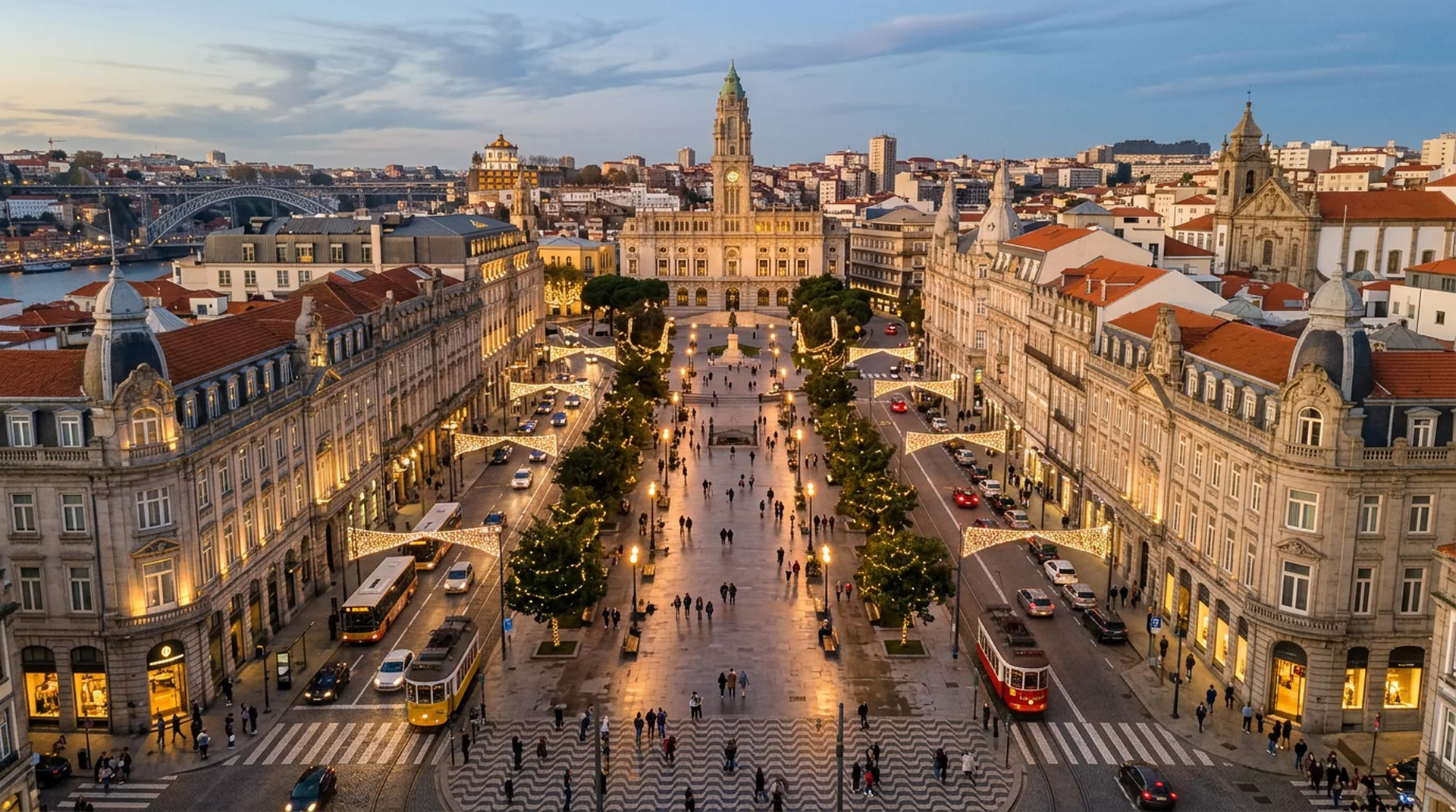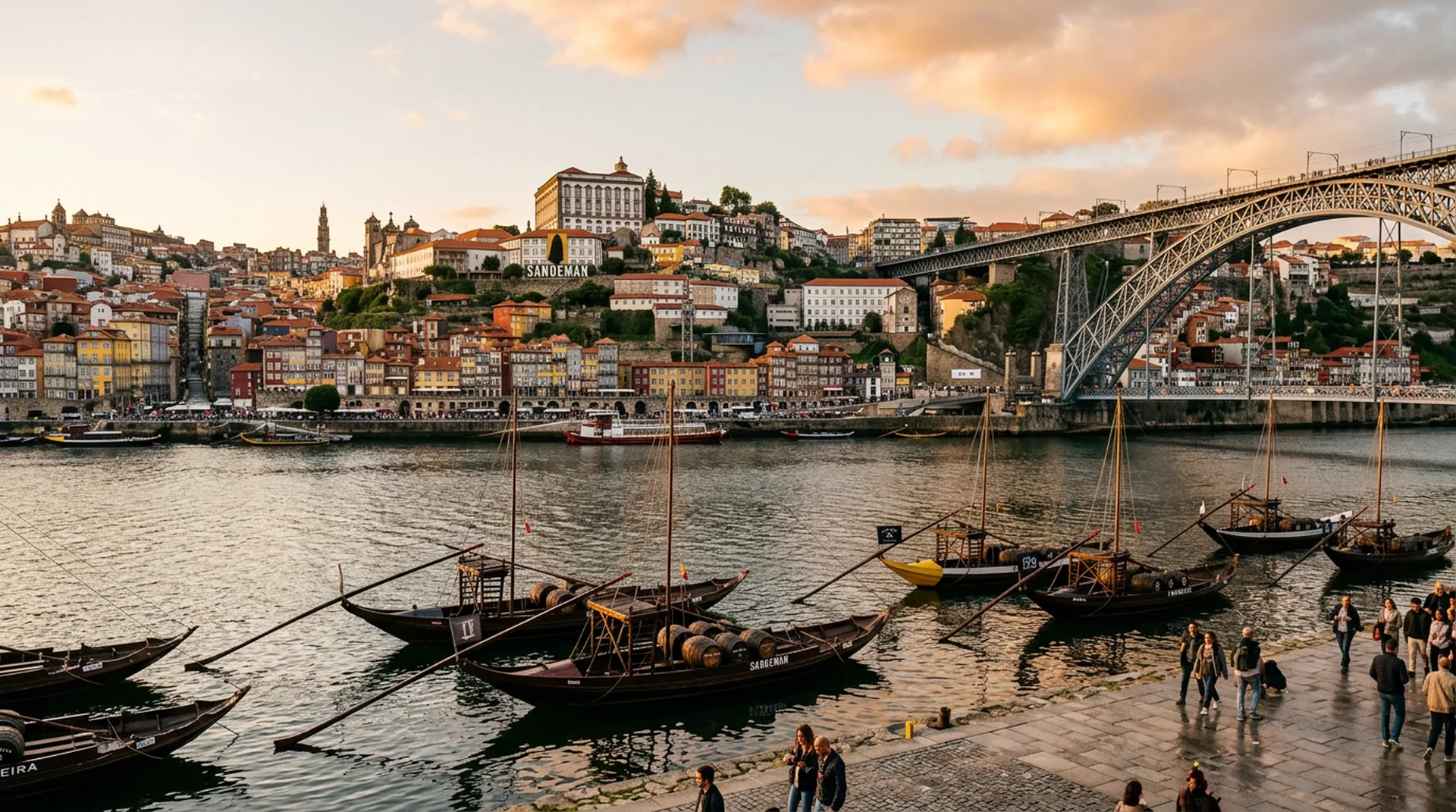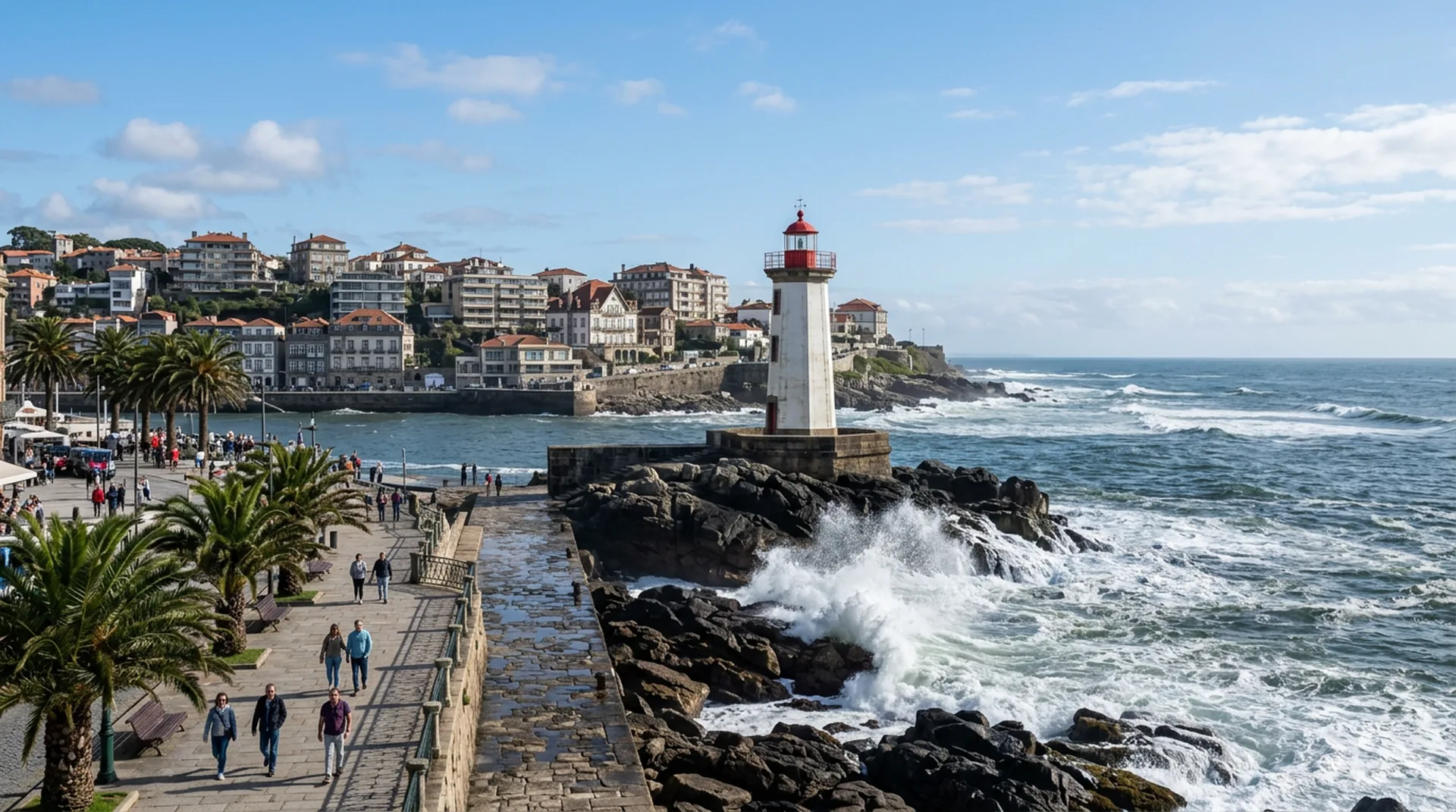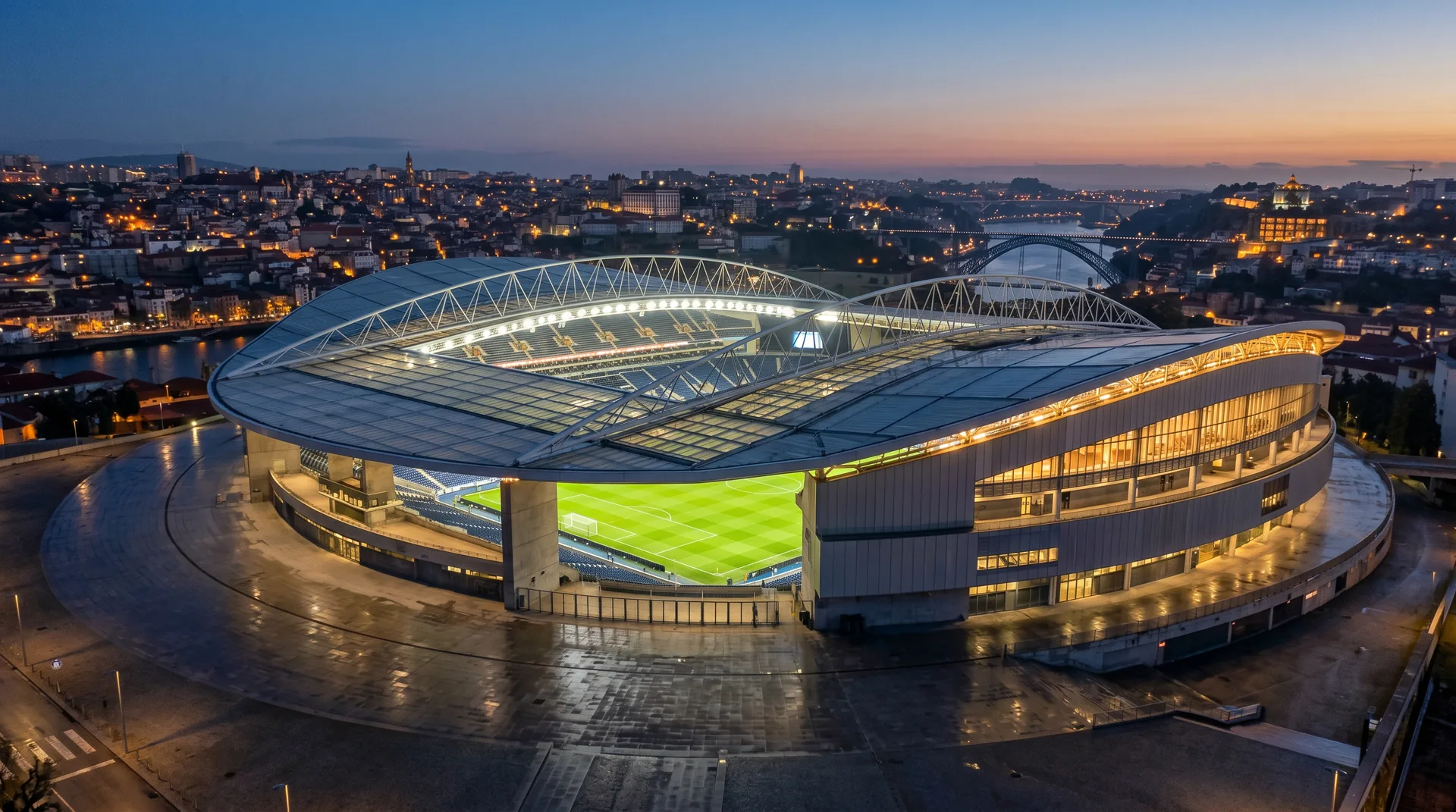
Portugal's second city hosts World Cup 2030 football at the Estádio do Dragão - home of FC Porto, opener of Euro 2004, and stage for a 2021 Champions League Final. UNESCO old town, port wine, and 15% cheaper than Lisbon.
Stadium
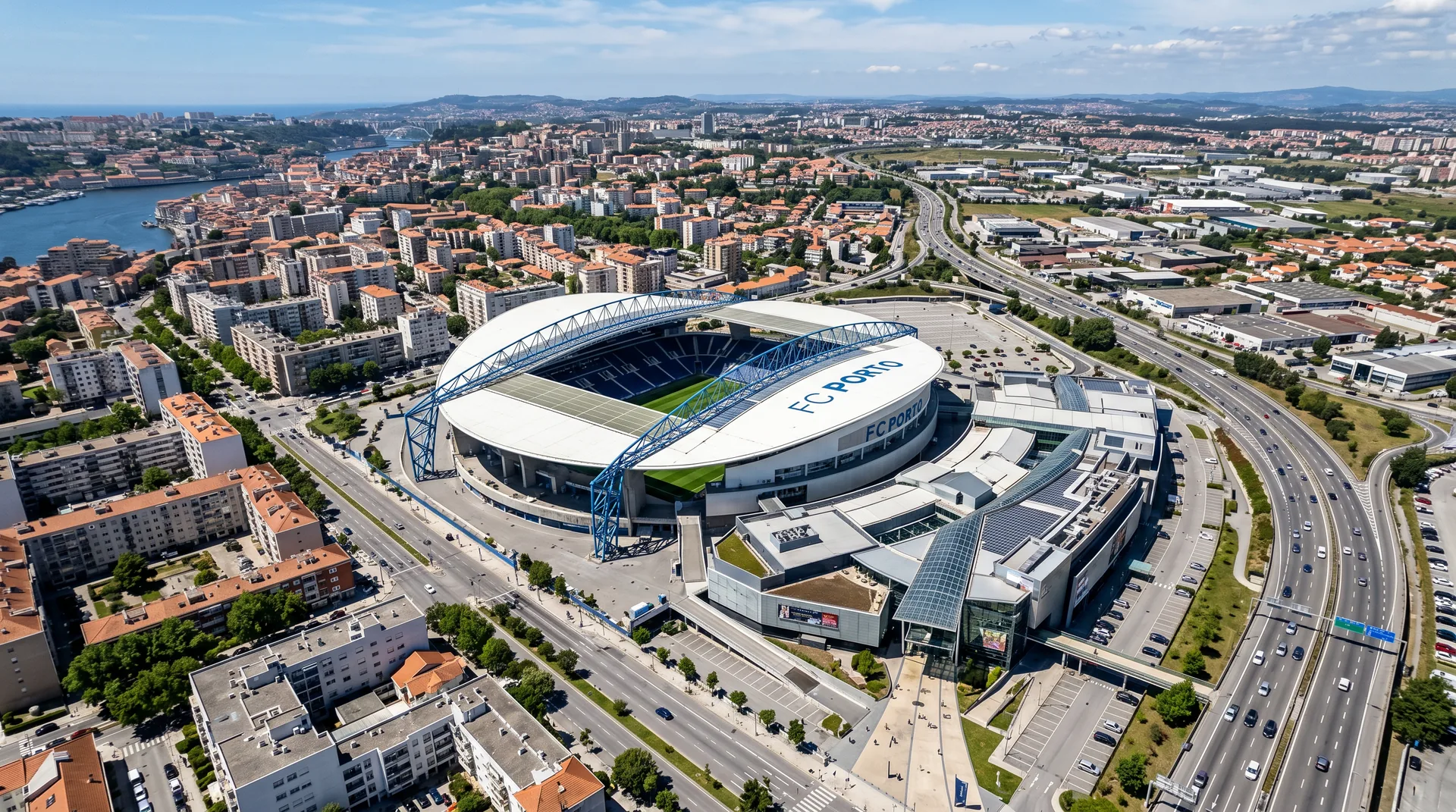
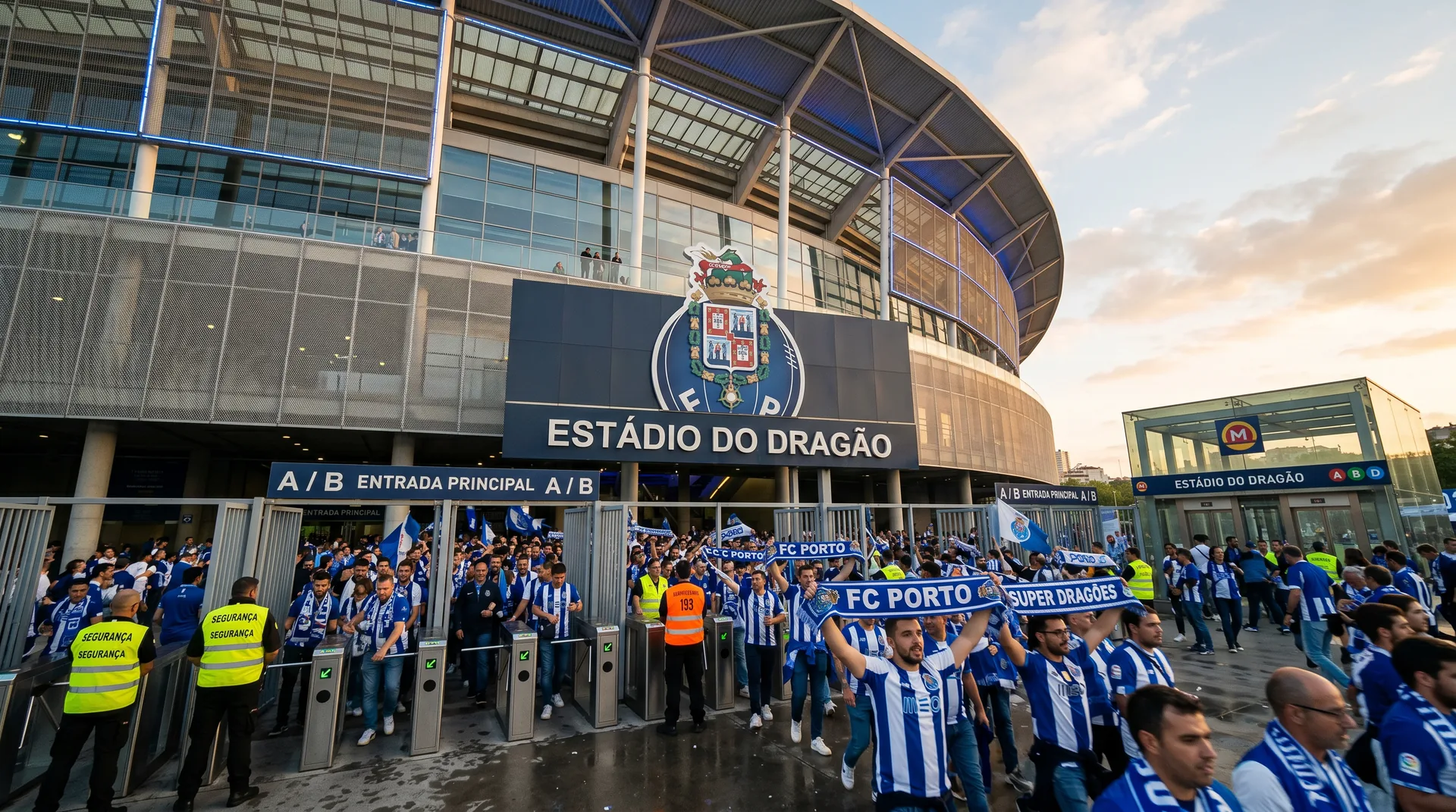
Unlike Lisbon's two grounds, Porto's World Cup 2030 football is concentrated entirely at Estádio do Dragão - home of FC Porto, on its own dedicated Metro station, and already a veteran of Euro 2004, a UEFA Nations League Final and a Champions League Final.
Football Culture
FC Porto was founded on 28 September 1893 by António Nicolau de Almeida, a local port wine merchant who fell in love with football on his trips to England. The club takes its nickname, Dragões (Dragons), from the mythical creature on its crest - a name so central to identity that when the club's new stadium opened in 2003, president Jorge Nuno Pinto da Costa rejected proposals to name it after club legends in favour of the dragon itself.
"There is no name that mythologically or ideologically conveys the will of new conquests like that of the Dragon."
- Jorge Nuno Pinto da Costa, Porto president, on naming Estádio do Dragão in May 2003
Supporters are portistas, the shirts blue-and-white stripes. Porto is Portugal's most successful club internationally: two European Cup/Champions League titles (1987 against Bayern Munich, 2004 against Monaco under a young José Mourinho, whose triumph launched him onto the world stage), two UEFA Cup/Europa League titles (2003, 2011), and two Intercontinental Cups. A record five consecutive Primeira Liga titles from 1994-95 to 1998-99 remains unmatched in Portuguese football.
Porto's defining rivalry is with Lisbon's Benfica - O Clássico, first contested as an exhibition match on 28 April 1912, which Benfica won 8-2. More than 250 official meetings have followed, intensifying sharply after Pinto da Costa took the Porto presidency in 1982 and turned north-versus-south rivalry into open confrontation. Remarkably, despite the two clubs holding 10 European trophies between them, Porto and Benfica have never once met in continental competition.
Porto's rivalry with Sporting CP runs almost exactly level - 221 meetings, Porto 80 wins to Sporting's 78, with 63 draws - while inside the city itself, Porto's derby with Boavista is called the Derbi da Invicta, after Porto's own nickname as "the unconquered city."
Estádio do Dragão opened in November 2003 specifically to host UEFA Euro 2004, and it drew the honour of staging the tournament's opening match - Portugal's shock 2-1 defeat to Greece on 12 June 2004, the same Greek side that would stun the hosts again in the final, played across the country at Estádio da Luz.
The stadium's hosting record has only grown since: the 2019 UEFA Nations League Final, won by Portugal, and the 2021 UEFA Champions League Final, played there after a late relocation from Istanbul. For World Cup 2030, Estádio do Dragão is currently positioned to host matches through the quarter-final stage - a strong venue, even if Estádio da Luz's two Champions League finals make it the stronger candidate for the Final itself.


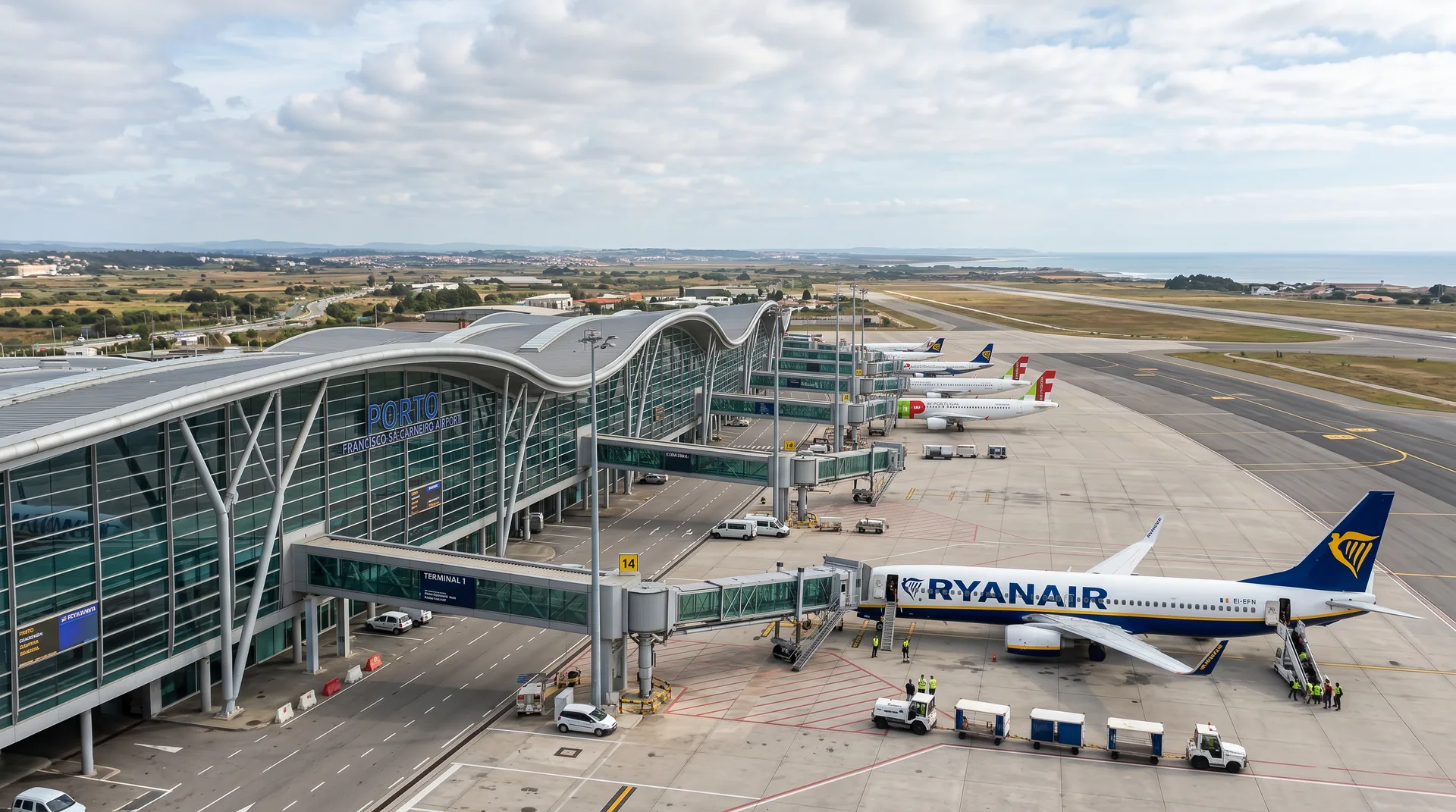
From Francisco Sá Carneiro Airport to the Stadium
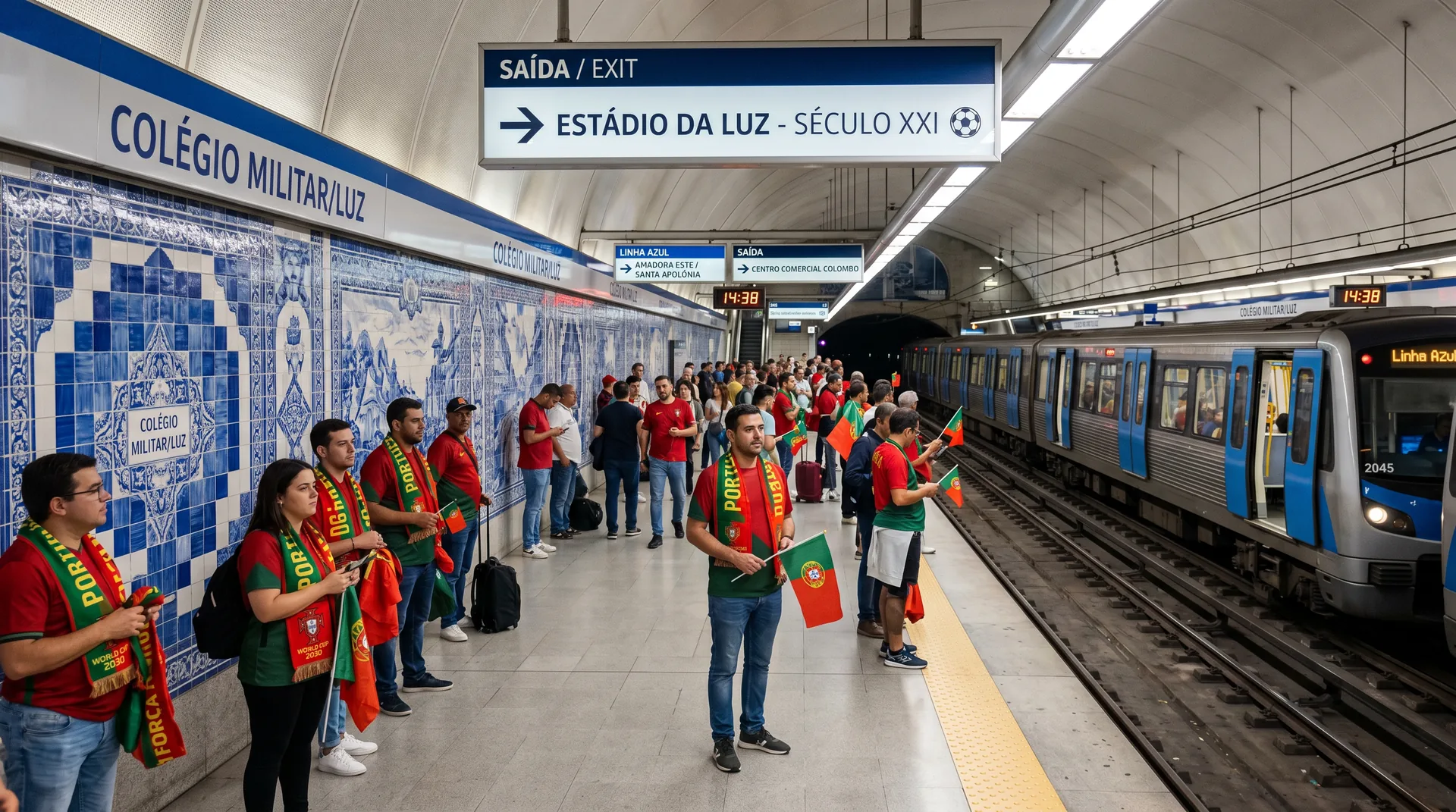
Airport to stadium: ~35-40 min total, no transfer, around €2 with an Andante card · Taxi/rideshare: 20-25 min outside rush hour, €20-25


Following matches in more than one city? The Alfa Pendular train connects Porto directly to Lisbon in about 3h15m, making a Porto-Lisbon split stay straightforward for fans covering both of Portugal's host cities across a single trip.
Between Matches
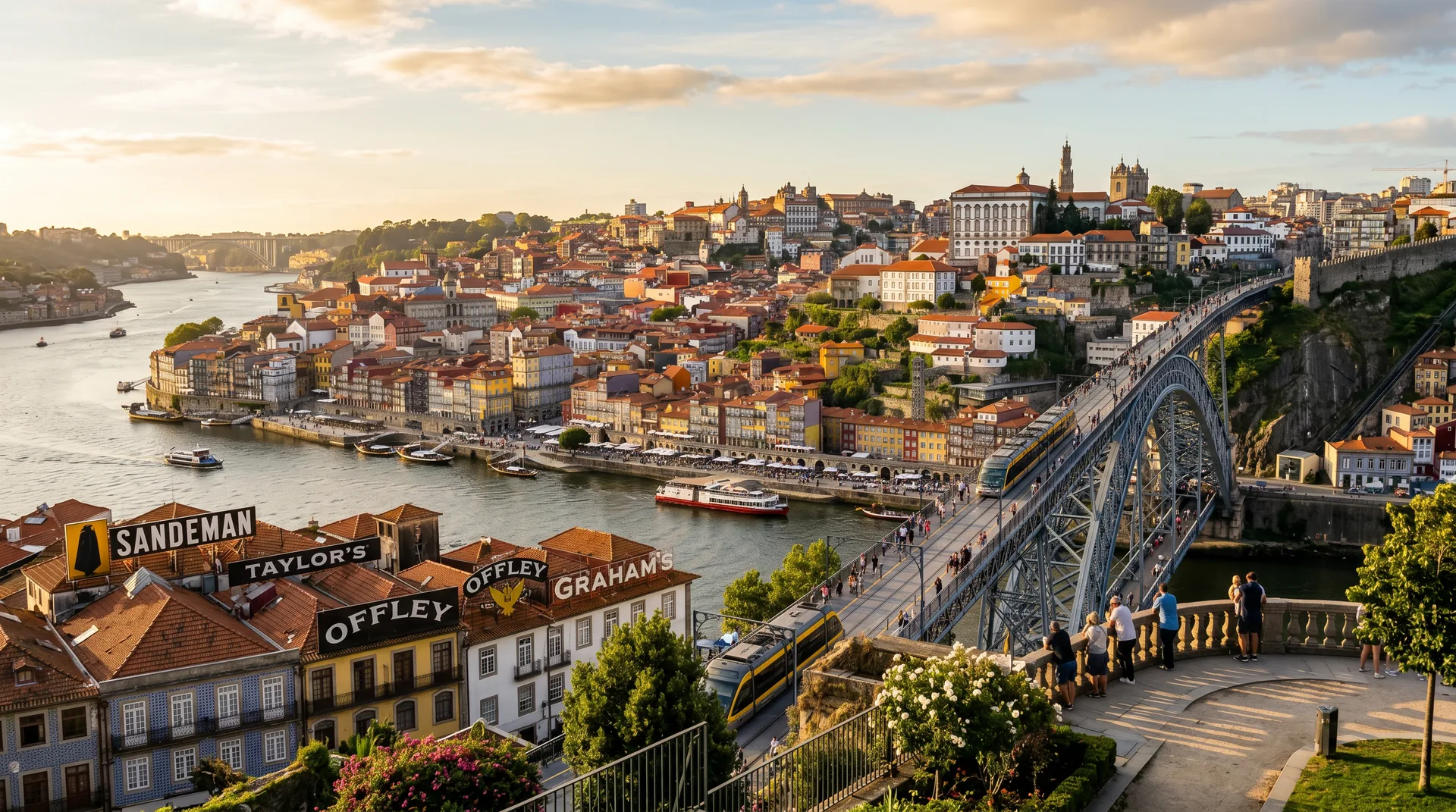
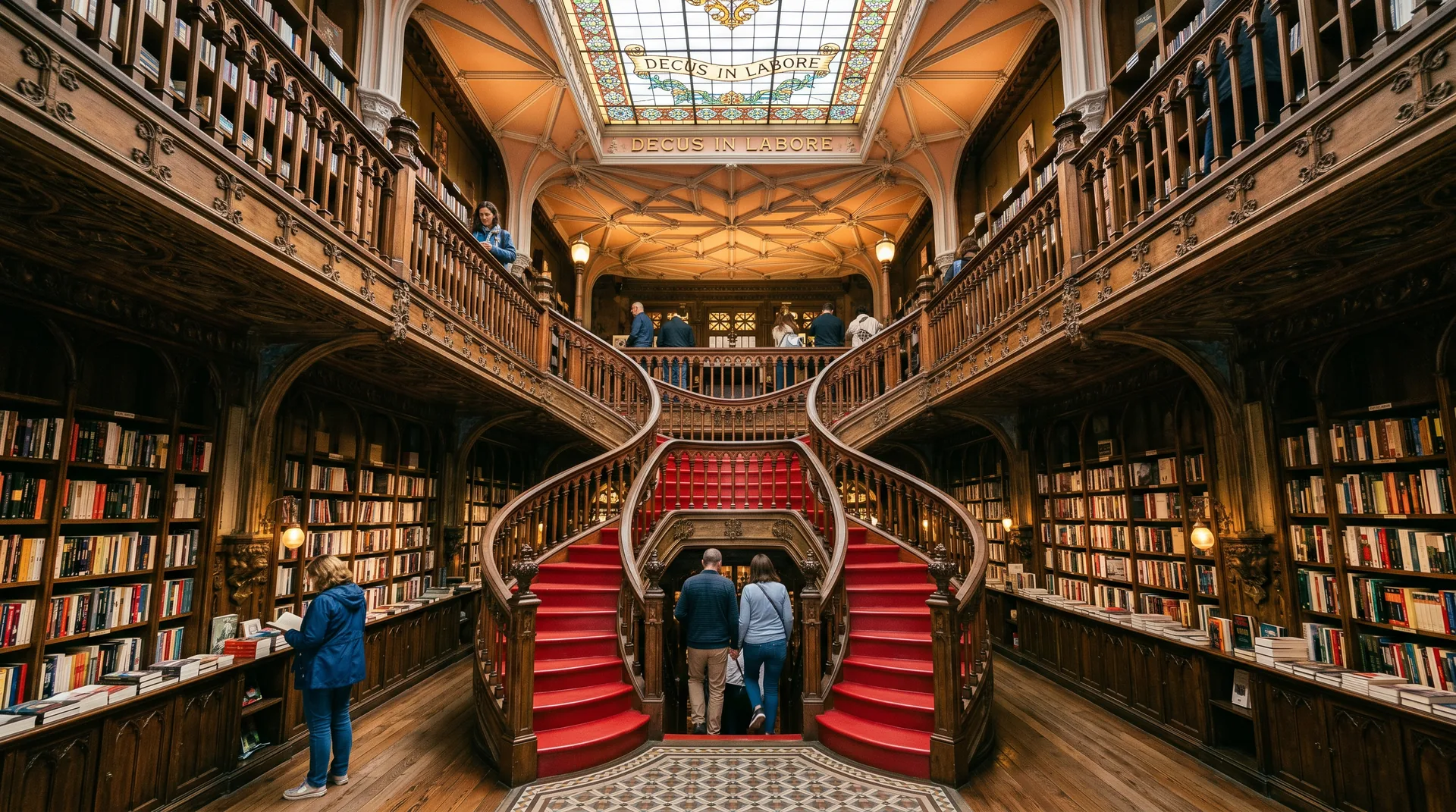
Porto rewards slow mornings and long lunches. Budget a full day for the Douro Valley rather than squeezing it in before a match - it's UNESCO wine country, not a quick photo stop.


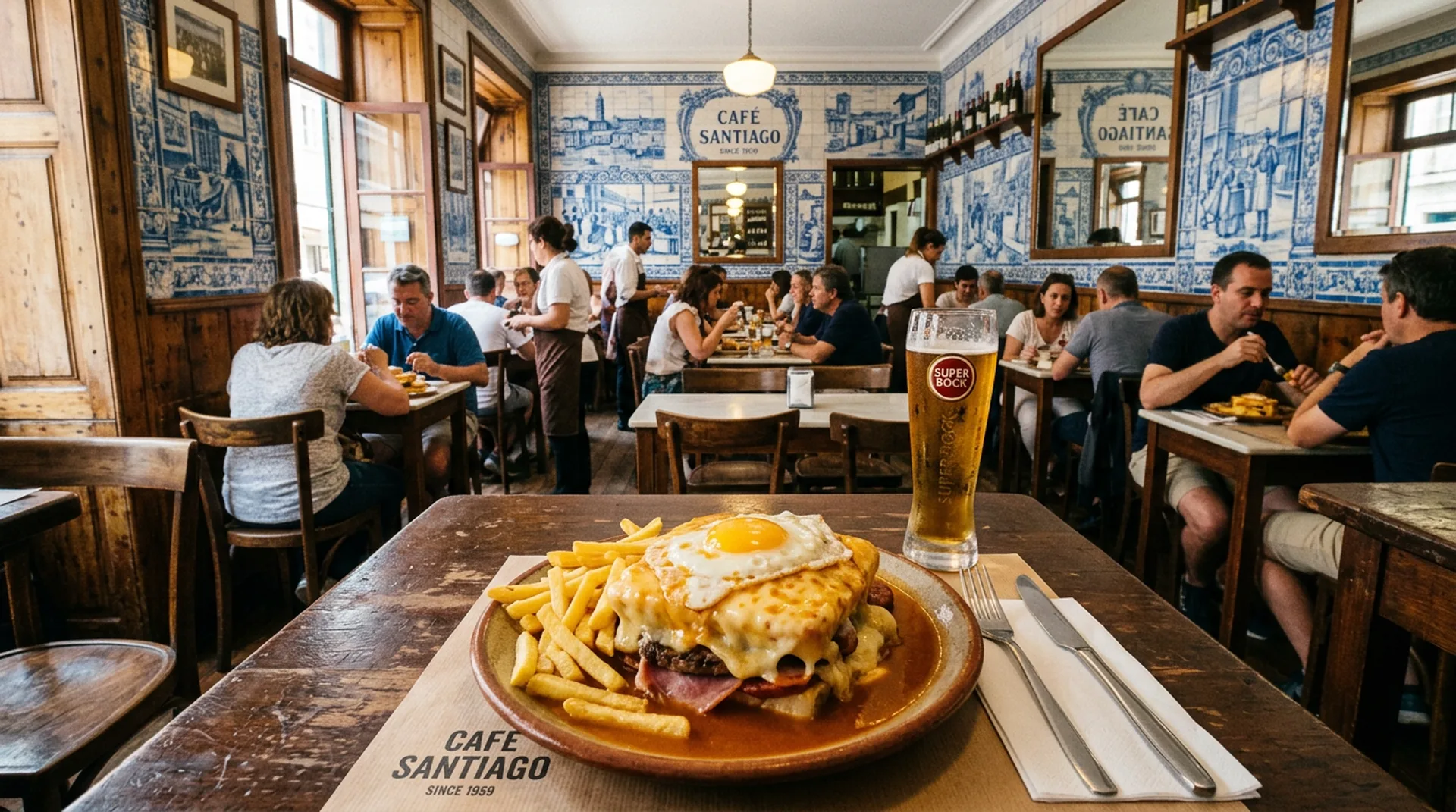
Here's what to order at each budget, from a quick pre-match bite to a proper sit-down meal with a glass of port.
Near the stadium specifically: cafés and grills around Estádio do Dragão station fill up 2-3 hours before kickoff on matchdays. Arrive early and eat like a local before you take your seat.
22-26°C in June-July, cooler and slightly wetter than Lisbon with occasional light rain, reflecting Porto's more northerly Atlantic position.
Portugal ranks top-5 globally on the Global Peace Index. Standard pickpocket precautions apply around Ribeira and São Bento station.
Portuguese is the official language; English is widely spoken in hotels, restaurants and transport across central Porto.
Euro (€). Cards accepted almost everywhere, including small tascas and Metro ticket machines. Multibanco ATMs widely available.
Hotel and flight prices in Porto typically climb 40-60% around confirmed match dates. Porto still runs roughly 15% cheaper than Lisbon overall. For visa requirements and FIFA ticket ballot details that apply across Portugal, see the Portugal visa guide and match ticket guide.
FAQ
Continue Planning
See the full Portugal guide, or compare with Lisbon - Portugal's capital and largest World Cup 2030 host city.
Stay Informed
Hotel deal alerts near Estádio do Dragão, FIFA ticket ballot dates, Metro service changes and insider Porto tips - straight to your inbox.