Newsletter
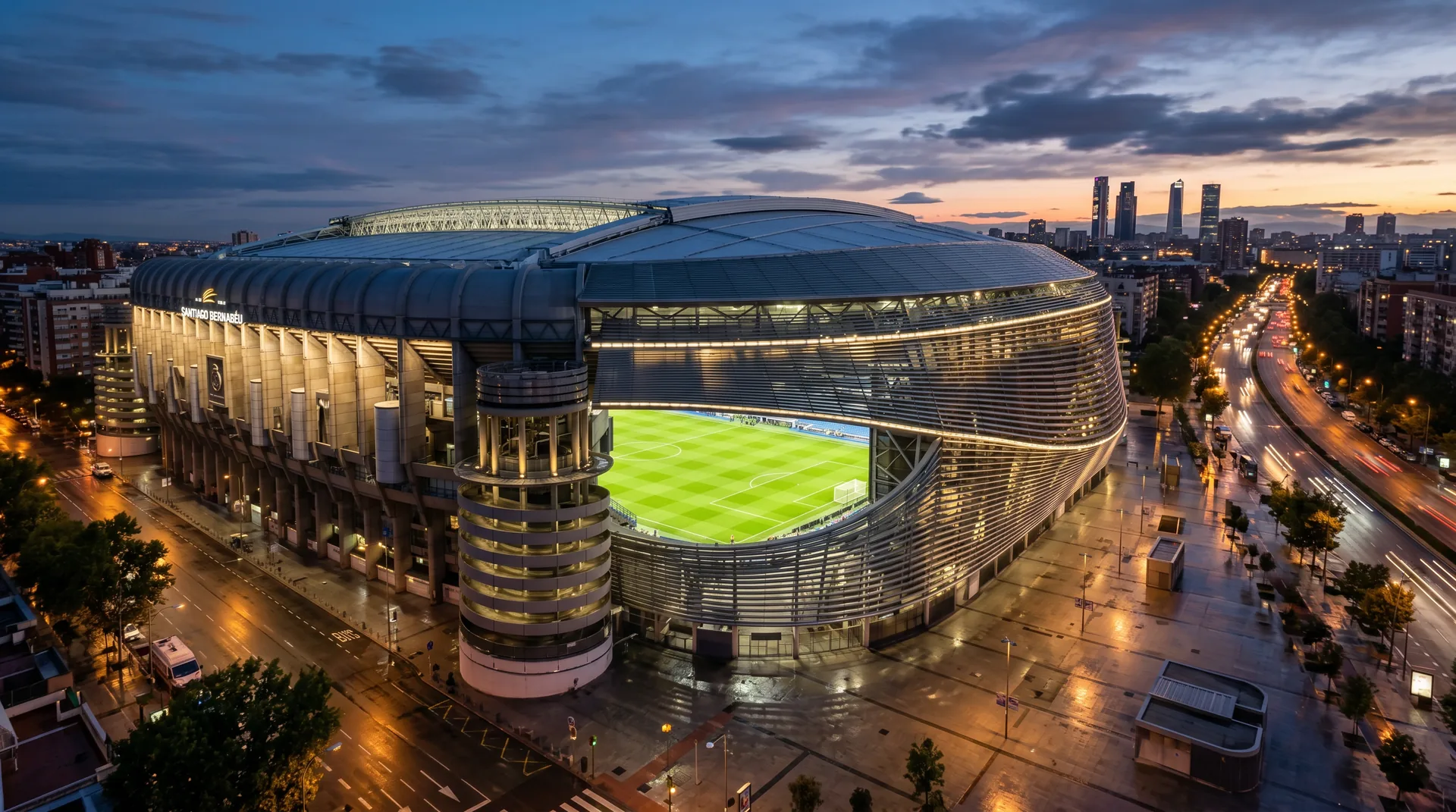
Santiago Bernabeu Madrid electric matchday atmosphere
Spain · World Cup 2030 Host City

Madrid

The Santiago Bernabéu already hosted a World Cup Final once, in 1982 - and reports say it's been selected to host the 2030 Final too. Madrid stages World Cup 2030 football at two stadiums built for the game's fiercest rivalries: Real Madrid's newly reborn Bernabéu and Atlético Madrid's Metropolitano.

2Stadiums
83,000Bernabéu Capacity
15Real Madrid CL Titles
30-35°CJune-July Avg
Until kickoff · 8 June 2030
000Days
:
00Hours
:
00Mins
:
00Secs
StadiumsFootball CultureMatchdayNeighbourhoods Getting AroundThings to DoFood & Drink Practical InfoFAQ
✈️Airport: MAD · Adolfo Suárez Madrid-Barajas
🚇Metro Line 10 direct to Bernabéu
👥Population: ~3.4M (city) · 6.8M (metro)
💵Euro (€)
🗣Spanish · English widely spoken in tourism

Two Stadiums, One Rivalry

Madrid hosts World Cup 2030 football at two grounds built for football's biggest club rivalries: the newly reborn Santiago Bernabéu, home of Real Madrid and reportedly selected to host the 2030 Final itself, and the Metropolitano, home of Atlético Madrid and a two-time UEFA Champions League Final venue in its own right.

Santiago Bernabeu Madrid
Reported 2030 Final Venue
Santiago Bernabéu
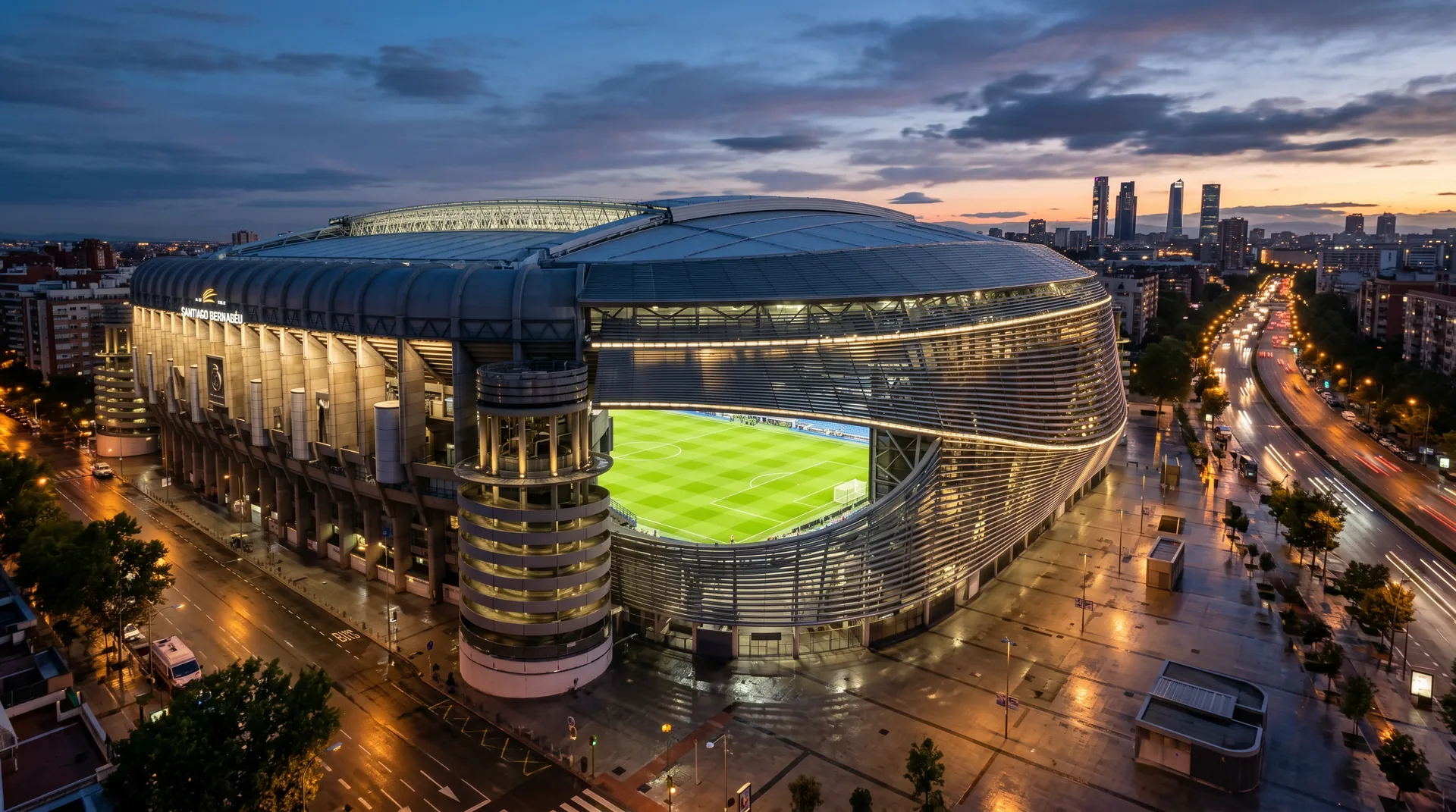
The only stadium in history to have hosted both a UEFA European Championship final (1964) and a FIFA World Cup Final (1982) - and reports say it will host the 2030 Final too. Capacity ~83,000 · Home of Real Madrid, record 15-time European champions. Reopened in 2024 after a €1 billion renovation adding a retractable roof and 360° screen. Metro Line 10 drops you right outside.
How to get there
Estadio Metropolitano Madrid
2019 & 2027 CL Final Host
Estadio Metropolitano
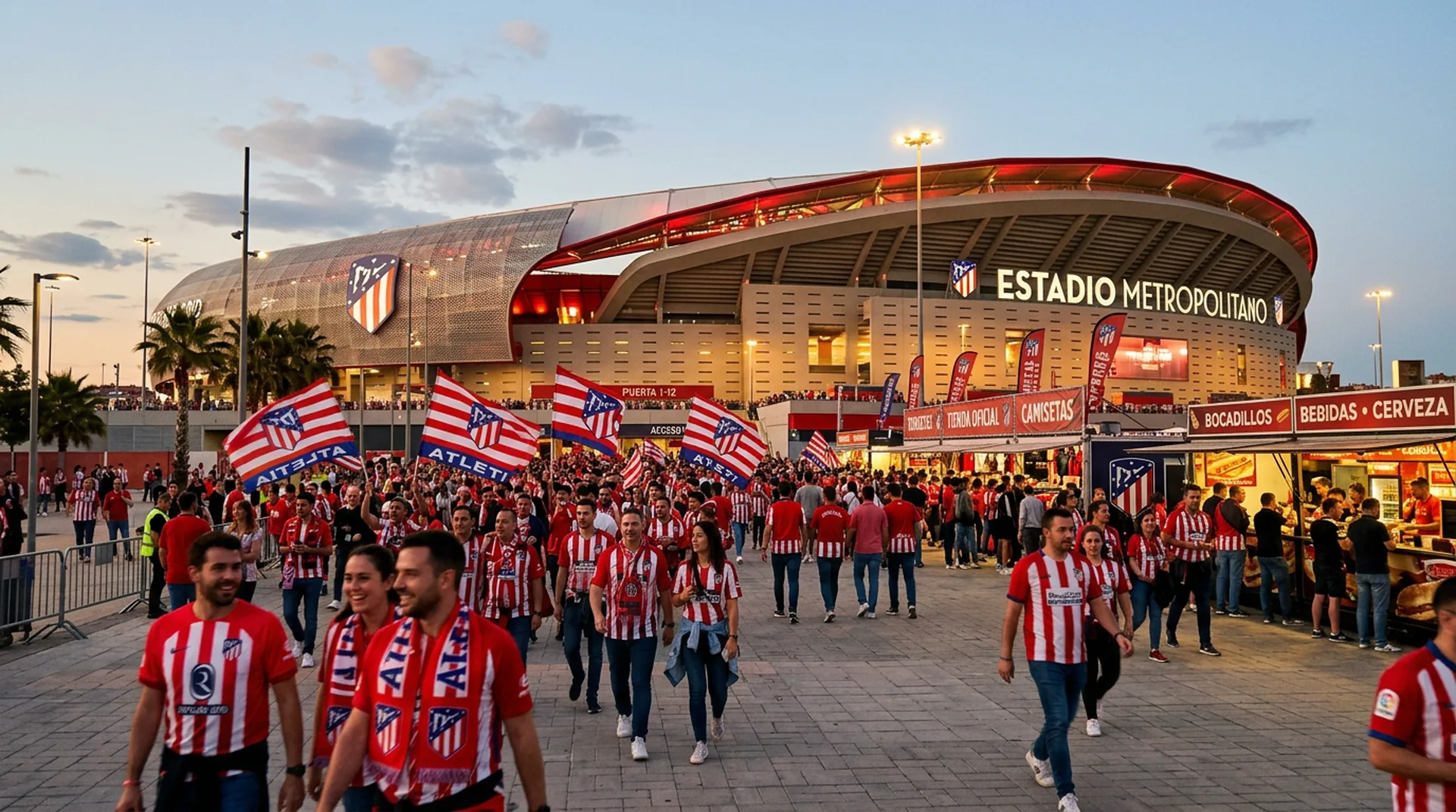
Capacity ~68,500 · Home of Atlético Madrid since 2017, one of UEFA's "Elite Stadium" category grounds. Hosted the 2019 Champions League Final and will host it again in 2027. Metro Line 7 runs directly to its own dedicated station in eastern Madrid.
How to get there

El Clásico, El Derbi

15 Champions League titles Founded 1902 2 CL finals vs Atlético 36 La Liga titles

👑 The Whites and the Mattress-Makers

Real Madrid, founded on 6 March 1902, is the most decorated club in world football: a record 15 European Cup/Champions League titles - including five in a row from 1956 to 1960 and three straight from 2016 to 2018 - and a record 36 La Liga titles. King Alfonso XIII granted the club its "Real" (Royal) title in 1920. Supporters are madridistas, the club "Los Blancos" for its all-white kit, chosen in tribute to English amateur side Corinthian.

Atlético Madrid has a stranger origin story than most: founded in 1903 as a branch club of Athletic Bilbao, initially named Athletic Club Sucursal de Madrid, only becoming fully independent in 1912. The "Atlético"/"Athletic" naming link to Bilbao survives to this day. Supporters are colchoneros ("mattress-makers"), a nickname dating to when the club's red-and-white stripes resembled the mattress fabric sold in Madrid markets a century ago.

"Not in a hundred years will there be a player like Alfredo Di Stéfano."

- widely attributed tribute to the Argentine forward who led Real Madrid to five straight European Cups from 1956

⚔️ El Derbi Madrileño

Real Madrid and Atlético Madrid have done something no other same-city pairing has managed: met twice in a European Cup/Champions League final. In 2014, Real won 4-1 after extra time, Sergio Ramos's 93rd-minute header dragging the match back from the brink - a result Spain still calls "La Décima," Real's tenth European title. In 2016, the sides met again in the final, this time settled on penalties in Real's favour after a 1-1 draw.

Beyond Europe's biggest stage, the rivalry is also a class story as old as Madrid football itself: Real historically the club of the establishment, Atlético the working-class team of the Manzanares riverside. Real's biggest rivalry, though, isn't local at all - it's El Clásico against FC Barcelona, 500km away, arguably football's single biggest club fixture anywhere in the world.

🏆 Hosting Football's Biggest Nights

The Santiago Bernabéu is the only stadium in history to have hosted both a UEFA European Championship final (1964) and a FIFA World Cup Final (1982), alongside four European Cup/Champions League finals and the 2018 Copa Libertadores Final - making it the only venue ever to stage finals of both South America's and Europe's premier club competitions.

The Metropolitano has its own credentials: the 2019 Champions League Final between Liverpool and Tottenham, and it has already been selected to host the final again in 2027. Combined with reports that the renovated Bernabéu has been chosen for the 2030 World Cup Final, Madrid's two stadiums may host football's two biggest club and international occasions within three years of each other.

Gran Via Madrid World Cup fans

Where Madrid Watches Football

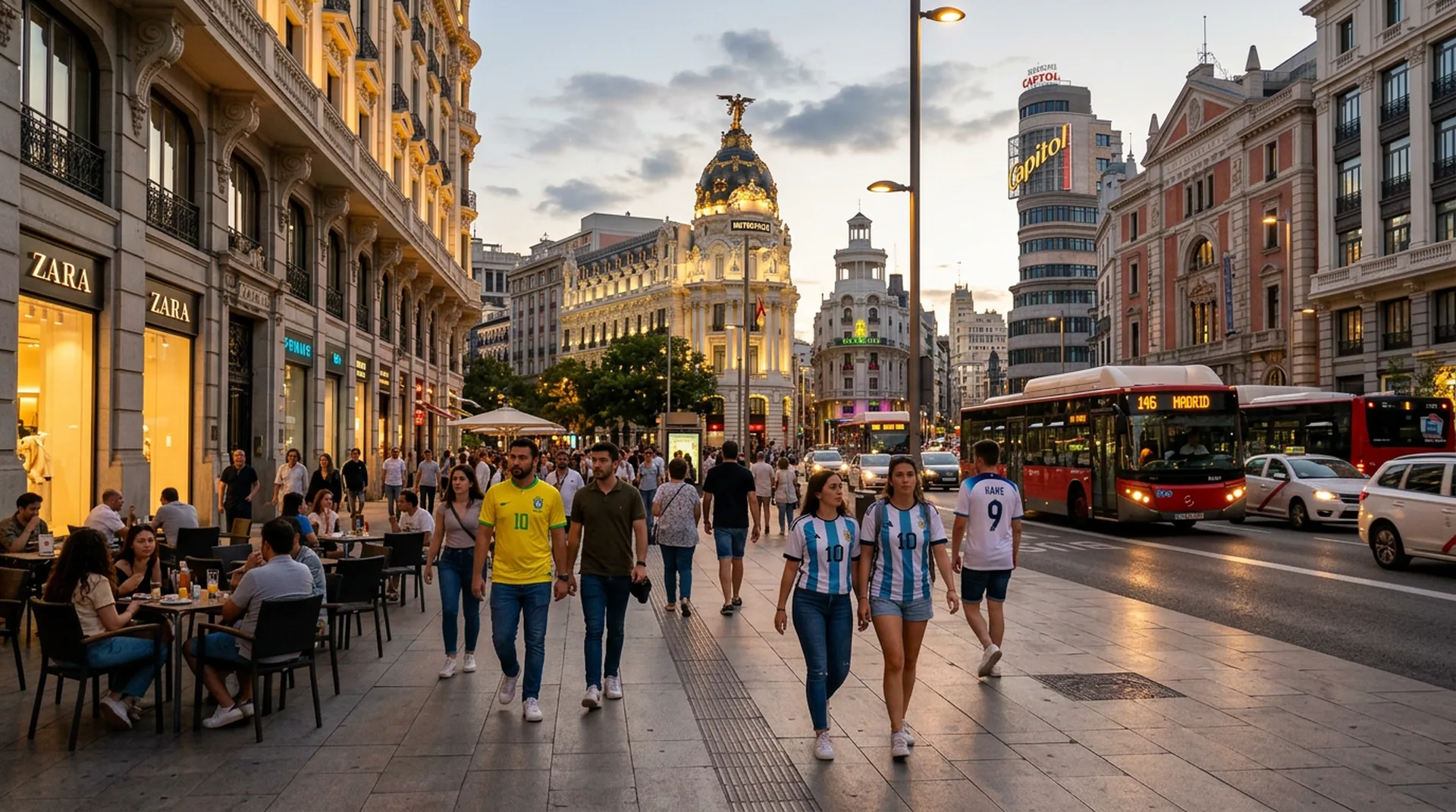
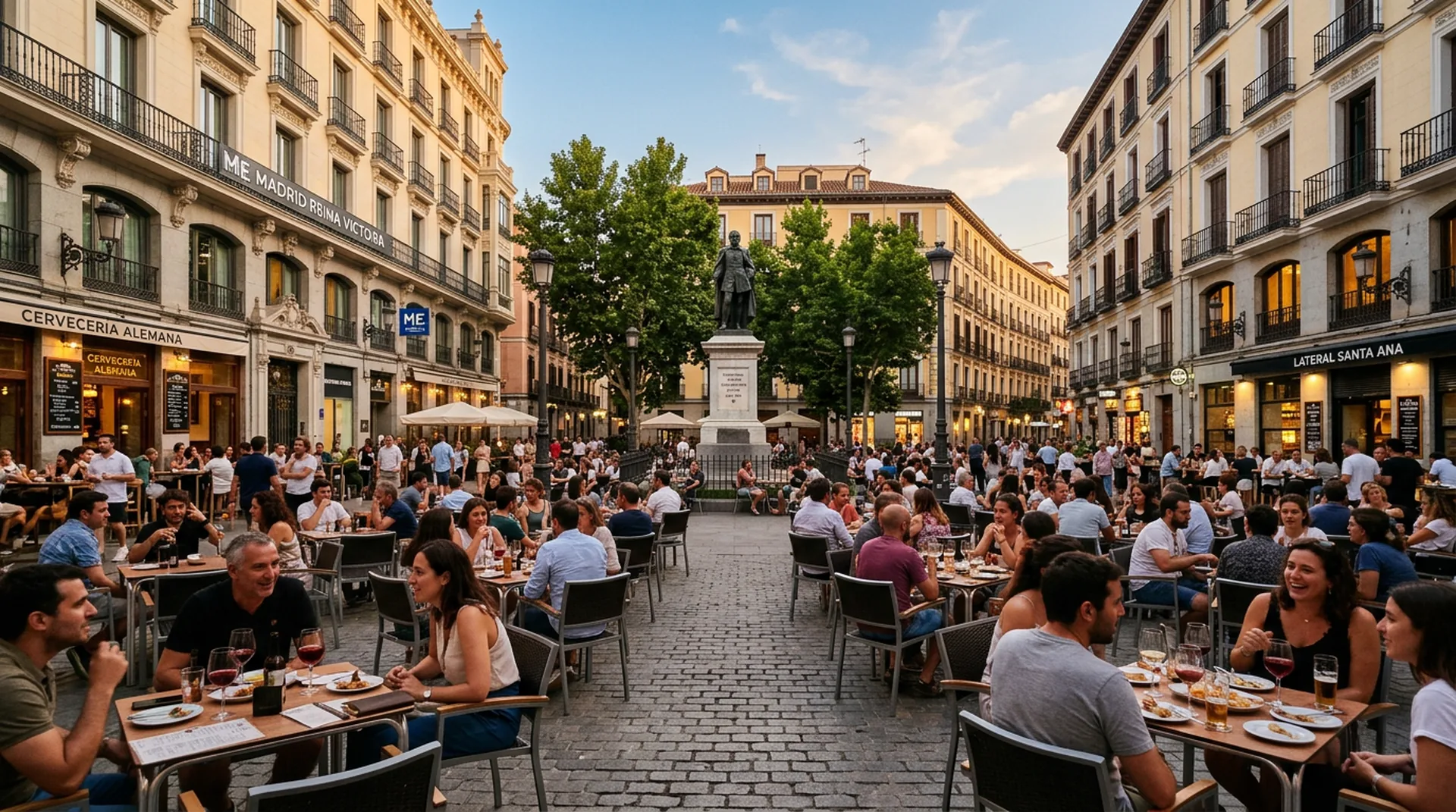
Malasaña, Chueca and the streets around Gran Vía fill up on matchdays, all well connected by Metro to both stadiums. Sports bars along Calle de la Montera and around Plaza del Callao show every match on big screens for fans without tickets. Expect the loudest nights when Real Madrid and Atlético share the same evening, one match feeding straight into the next.

  • 🚇 Metro Lines 10 & 7 - both stadiums under 30 min from the centre
  • 🎉 Plaza de Colón & Cibeles - Real Madrid's traditional trophy sites
  • ⚔️ El Derbi Madrileño - 2 Champions League finals between these clubs
✍️

From the Editor

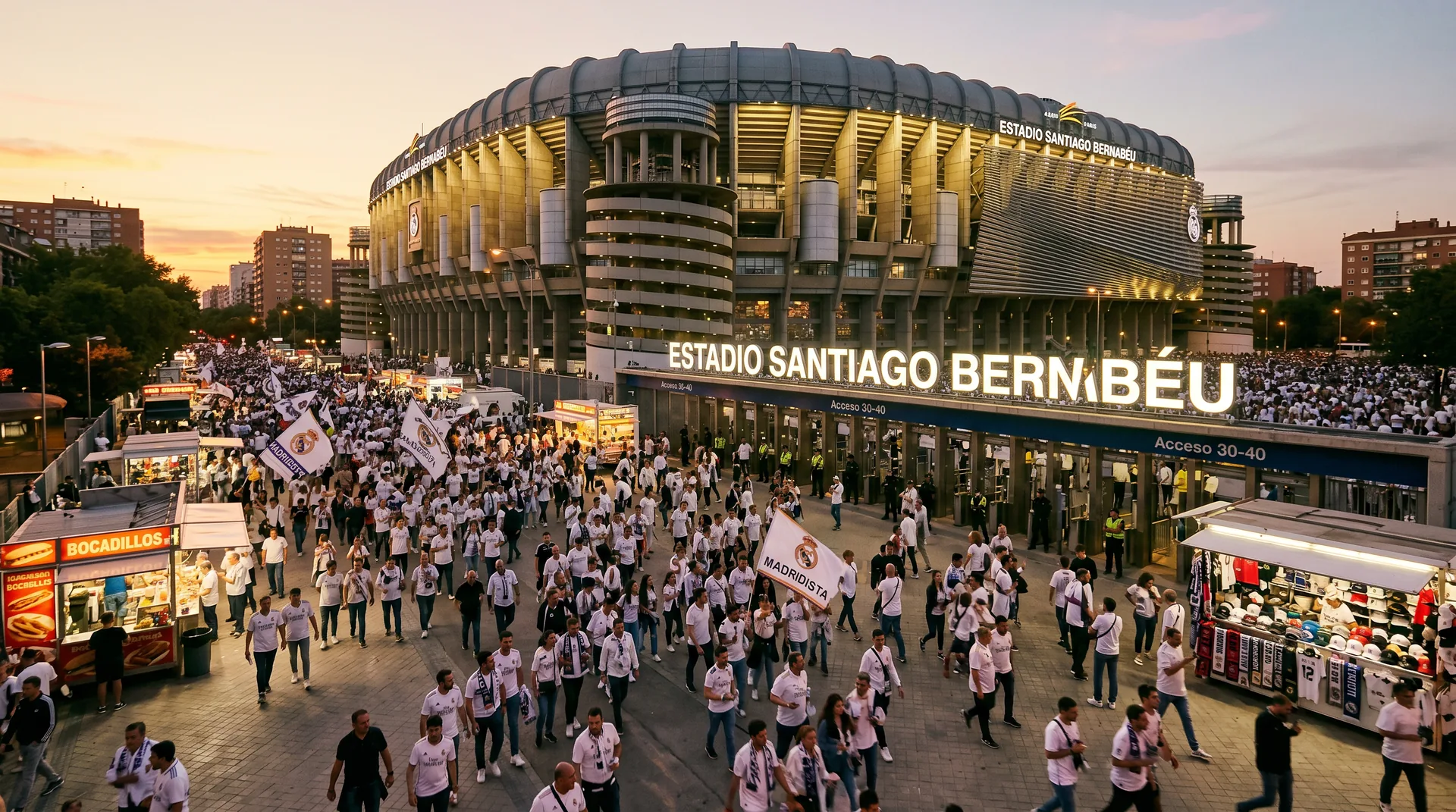
"Stalls selling merchandise and snacks lined the approach to the stadium - and the sausage I picked up before kickoff was, unexpectedly, one of the better pre-match bites I've had anywhere."

I attended an Atlético Madrid vs Real Madrid derby at the Metropolitano during the 2022-23 season, staying at a hotel near Gran Vía in central Madrid. Getting there was fast and simple - the Metro straight from the centre, no confusion about where to change or get off. Local fans were genuinely friendly, helping us find our way without being asked twice.

My one piece of advice for 2030: arrive well before kickoff. The walk from the Metro station to the gates took longer than expected once the crowd built up, and the queues at the merchandise stalls alone are worth the extra buffer. It's a long way to travel to miss the warm-up.

- Total Dribble, on attending El Derbi Madrileño

🍻
Pre-Match
Malasaña and Chueca fill with fans from early evening on matchdays. Around the Bernabéu specifically, bars along Paseo de la Castellana get busy 2-3 hours before kickoff.
📺
Public Viewing
Plaza de Colón and Cibeles Fountain - Real Madrid's traditional trophy-celebration site - are the likely gathering points for an official fan zone, to be confirmed by FIFA closer to 2030.
🚇
After the Final Whistle
Expect Metro Lines 10 and 7 to be extremely busy for 30-45 minutes after a match ends. Many fans wait it out at a nearby bar rather than join the crush straight away.
Madrid Gran Via skyline

Five Neighbourhoods, Five Different Trips

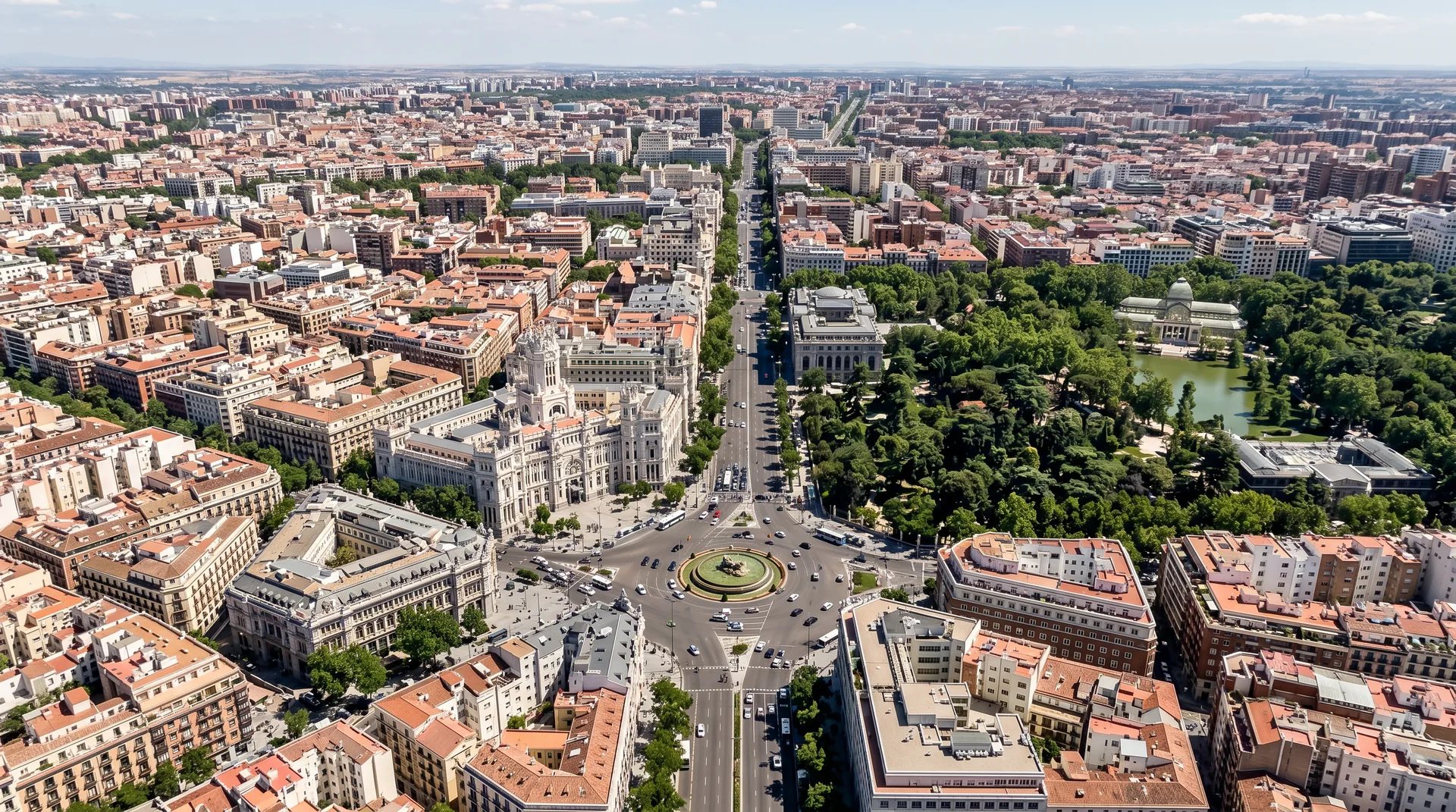
Salamanca and Chamberí give the best combination of central location and Bernabéu proximity. Here's how the other neighbourhoods compare.

  • 💎 Salamanca - upscale, walkable to the Bernabéu, Madrid's "Golden Mile"
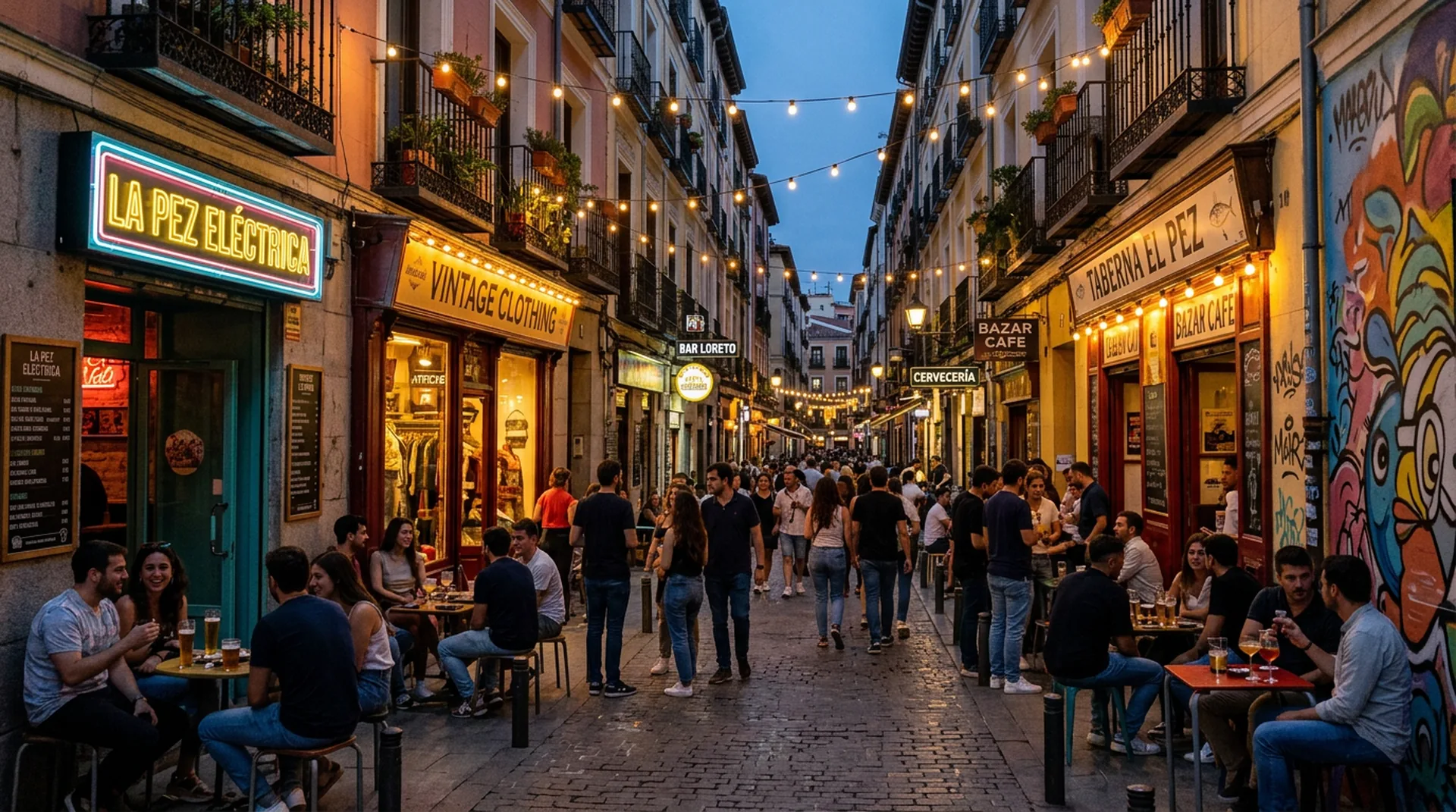
  • 🎨 Malasaña & Chueca - nightlife, independent bars, Metro to both stadiums
  • 📖 Las Letras & Sol - historic centre, equidistant from both grounds
  • 🍷 La Latina - traditional tapas bars, Cava Baja's classic taberna strip
  • 🏟 Chamberí - quiet, residential, closest walk to Santiago Bernabéu
Salamanca Madrid upscale shopping
💎
Salamanca - Upscale & Close to the Bernabéu
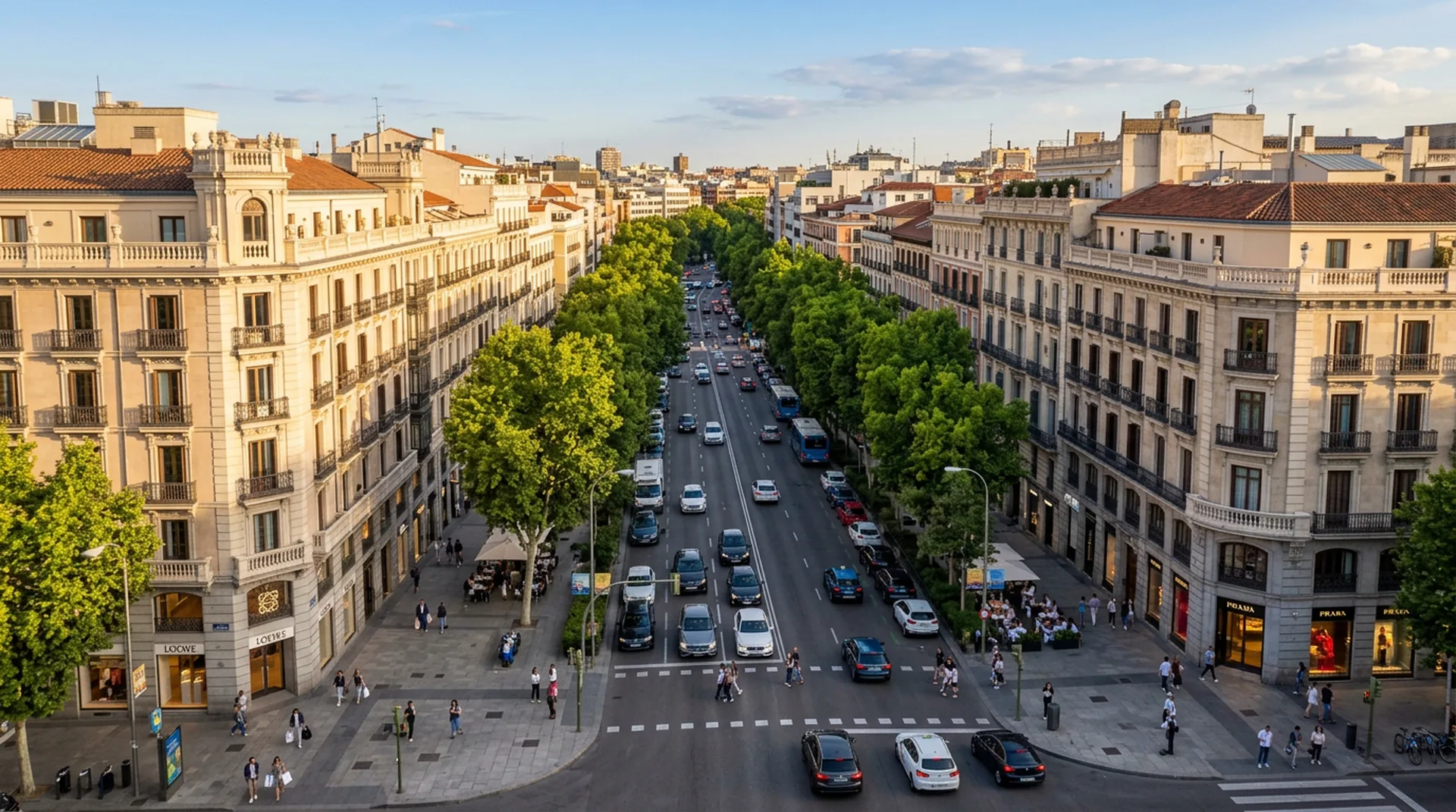
Madrid's smartest shopping district, the "Golden Mile," sits a short Metro ride from Santiago Bernabéu on Line 10. Elegant, expensive, and genuinely convenient for match days.
Malasana Madrid nightlife
🎨
Malasaña & Chueca - Nightlife & Character
Madrid's bohemian heart, packed with independent bars, vintage shops and the city's best nightlife. Central and well connected, though noisier late at night.
Las Letras Sol Madrid
📖
Las Letras & Sol - Historic Centre
The literary quarter and Puerta del Sol sit at Madrid's geographic and social centre, walkable to the Prado and equidistant from both stadiums by Metro. The default first-time-visitor pick.
La Latina Madrid tapas
🍷
La Latina - Traditional Tapas
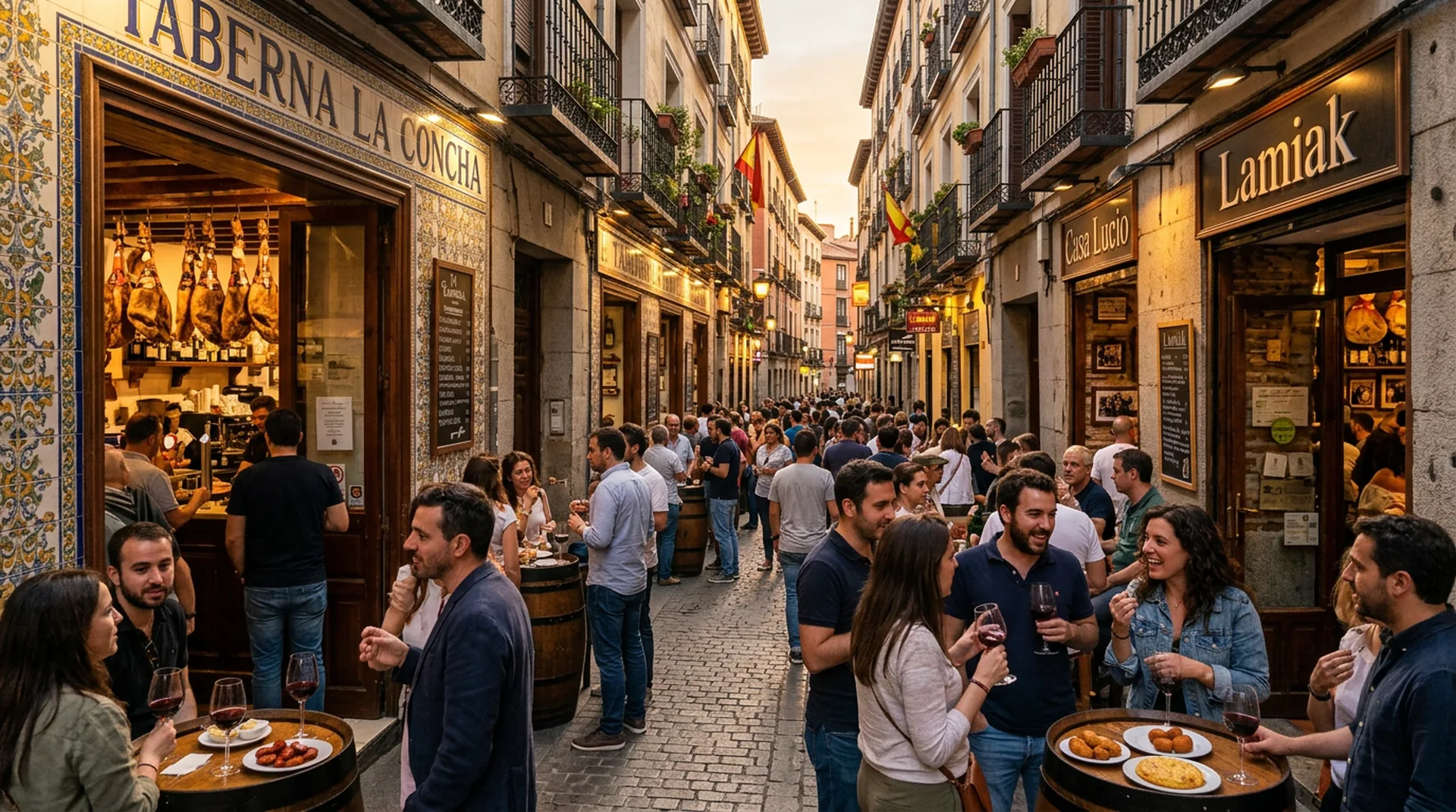
Madrid's most traditional tapas district, home to the Sunday El Rastro flea market. Authentic and atmospheric, a short Metro ride from the centre.
Chamberi near Bernabeu Madrid
🏟
Chamberí - Matchday Convenience
A genteel residential district immediately around Santiago Bernabéu. Limited hotel stock but ideal if you're attending several matches there and want to walk to kickoff.
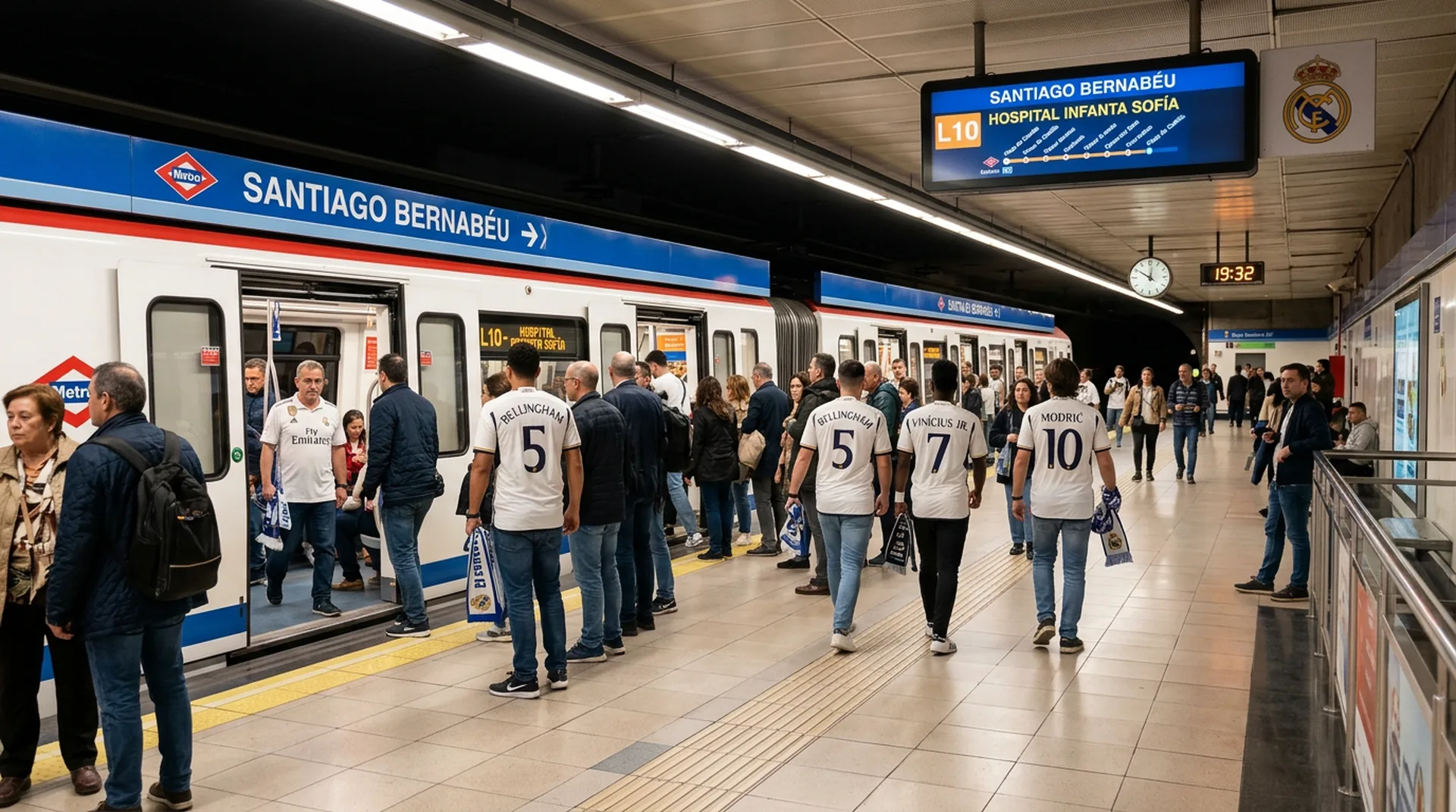
Madrid Metro Santiago Bernabeu station

The Metro Reaches Both Stadiums

Madrid's Metro - one of Europe's largest networks - is the only transport you need on match days. Line 10 runs direct to Santiago Bernabéu; Line 7 reaches the Metropolitano's own dedicated station. Trains run every 3-5 minutes, more frequently around kickoff.

From Adolfo Suárez Madrid-Barajas Airport to Each Stadium

Airport (MAD)
Line 8 start
~20 min
Nuevos Ministerios
Transfer point
~10 min
Bernabéu
Line 10 direct
~83,000
~30 min ↔
Metropolitano
Line 7 direct
~68,500

Airport to Bernabéu: ~35-40 min total, €4.50-5 with airport supplement · Taxi/rideshare: 20-25 min outside rush hour, €25-30 · Bernabéu ↔ Metropolitano by Metro: ~30 min with one change

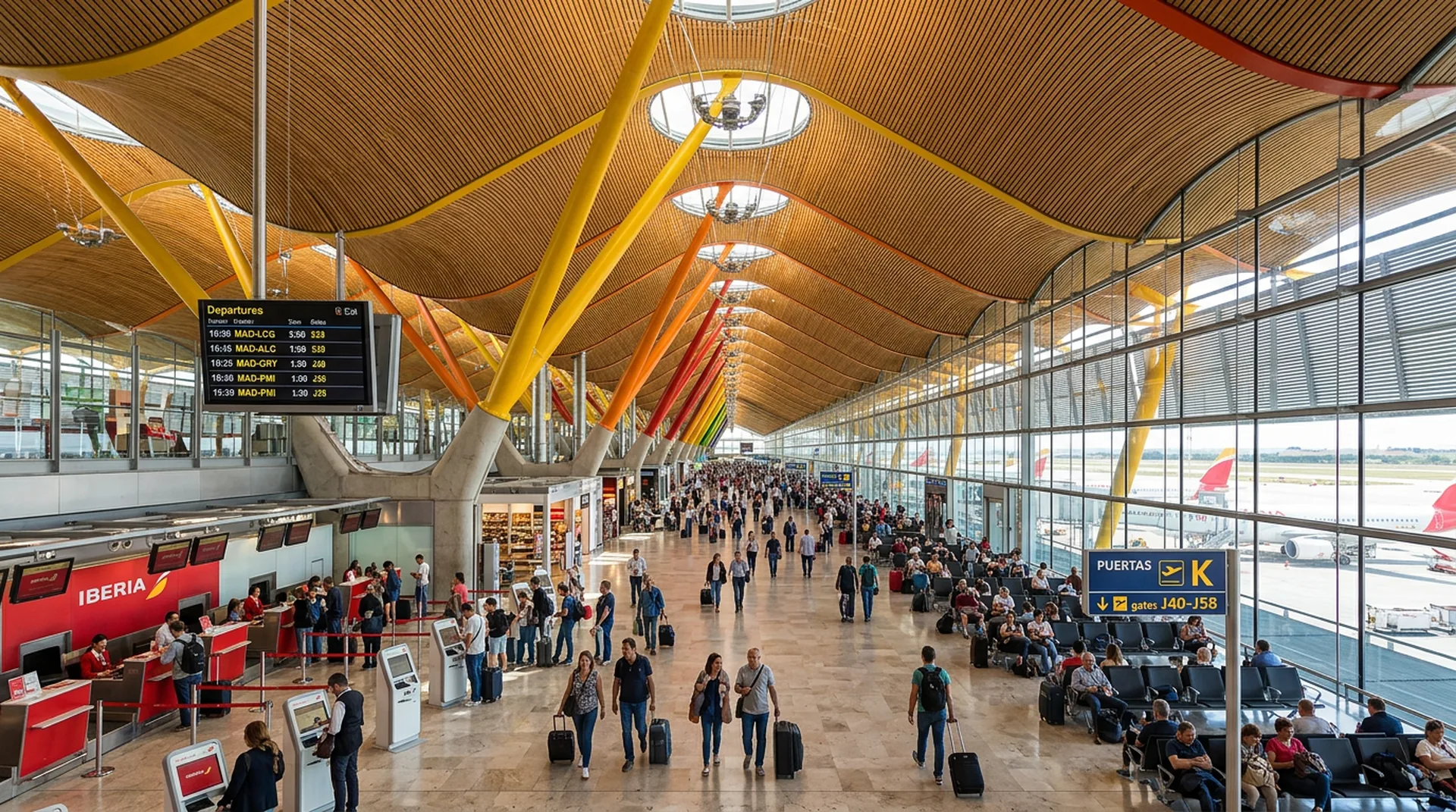
Madrid Barajas Airport
From the Airport
Adolfo Suárez Madrid-Barajas sits about 12km northeast of the centre. Metro Line 8 runs to Nuevos Ministerios, where you transfer to Line 10 for Santiago Bernabéu, or continue toward the centre for hotels in Salamanca or Sol.
Compare flights
Madrid Metro platform
Madrid Metro
13 lines cover the whole city, one of the largest networks in Europe. A single Multi ticket works across Metro and buses. Expect heavy crowds on Lines 10 and 7 in the two hours before kickoff on match days.
See both stadiums
Madrid taxis Gran Via
Taxis & Rideshares
Madrid's official taxis are white with a red diagonal stripe and use metered fares - reliable and reasonably priced by Western European standards. Uber and Cabify both operate widely across the city.
Where to stay

Following matches in more than one city? Spain's AVE high-speed rail connects Madrid to Barcelona in about 2h30m and Seville in under 2h30m. See the Spain transport guide for full AVE routes and booking windows across all host cities.

What to Do When There's No Match

Madrid rewards museum mornings and long, late lunches. Budget a full day for Toledo rather than squeezing it into a match-day morning - the old city deserves unhurried time.

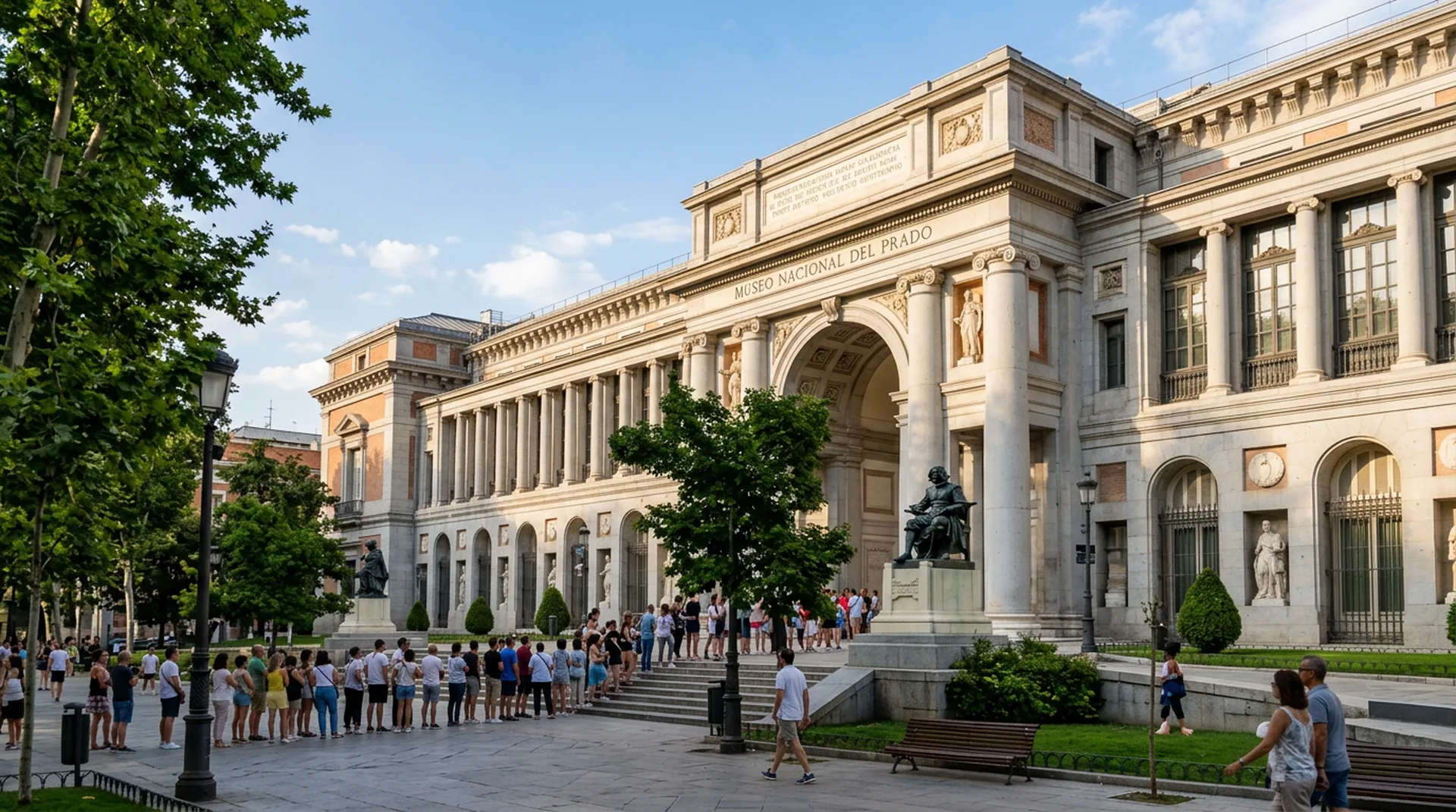
Prado Museum Madrid
🖼
Museo del Prado
One of the world's great art museums, home to Velázquez's Las Meninas and Goya's Black Paintings. Book timed entry online to skip the queue, and budget at least half a day.
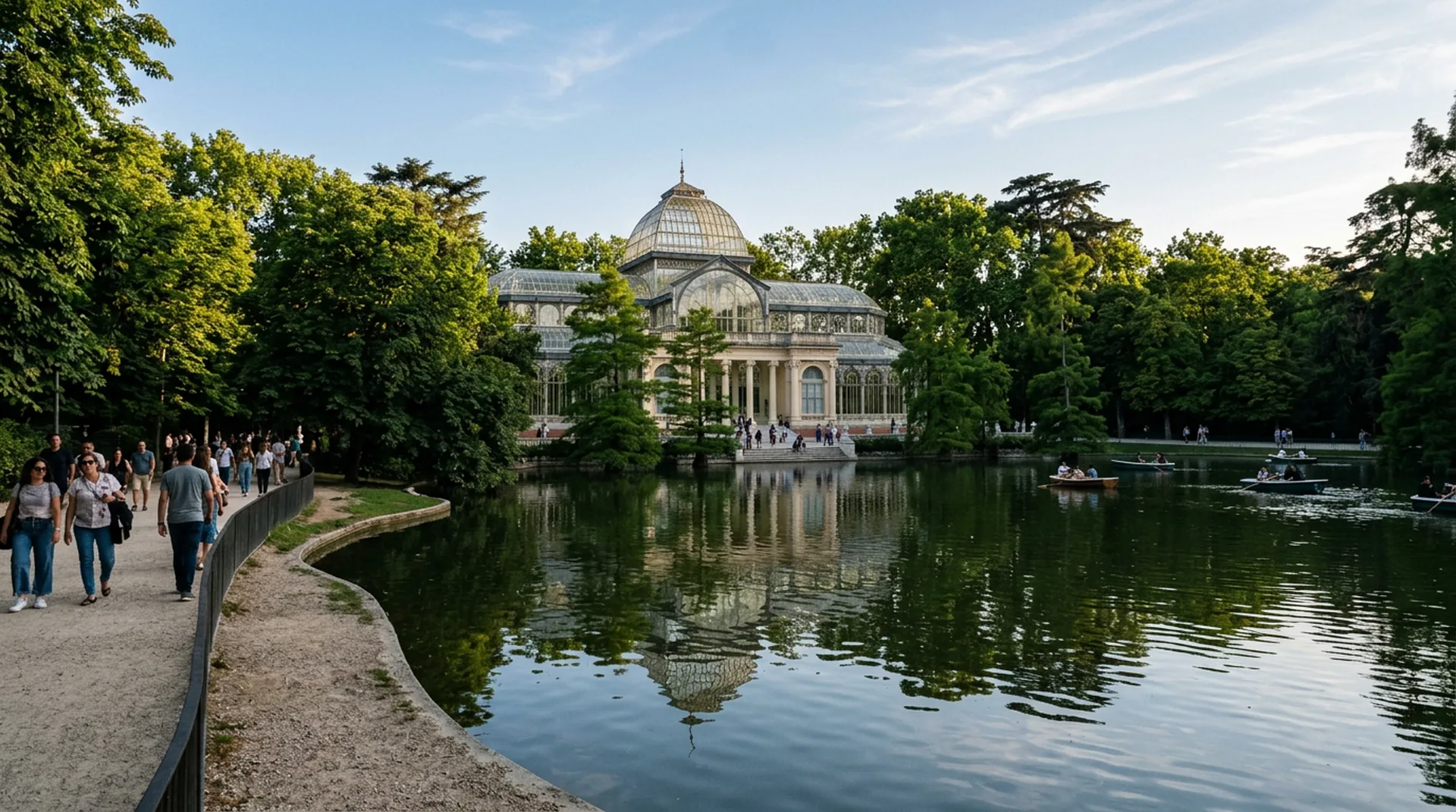
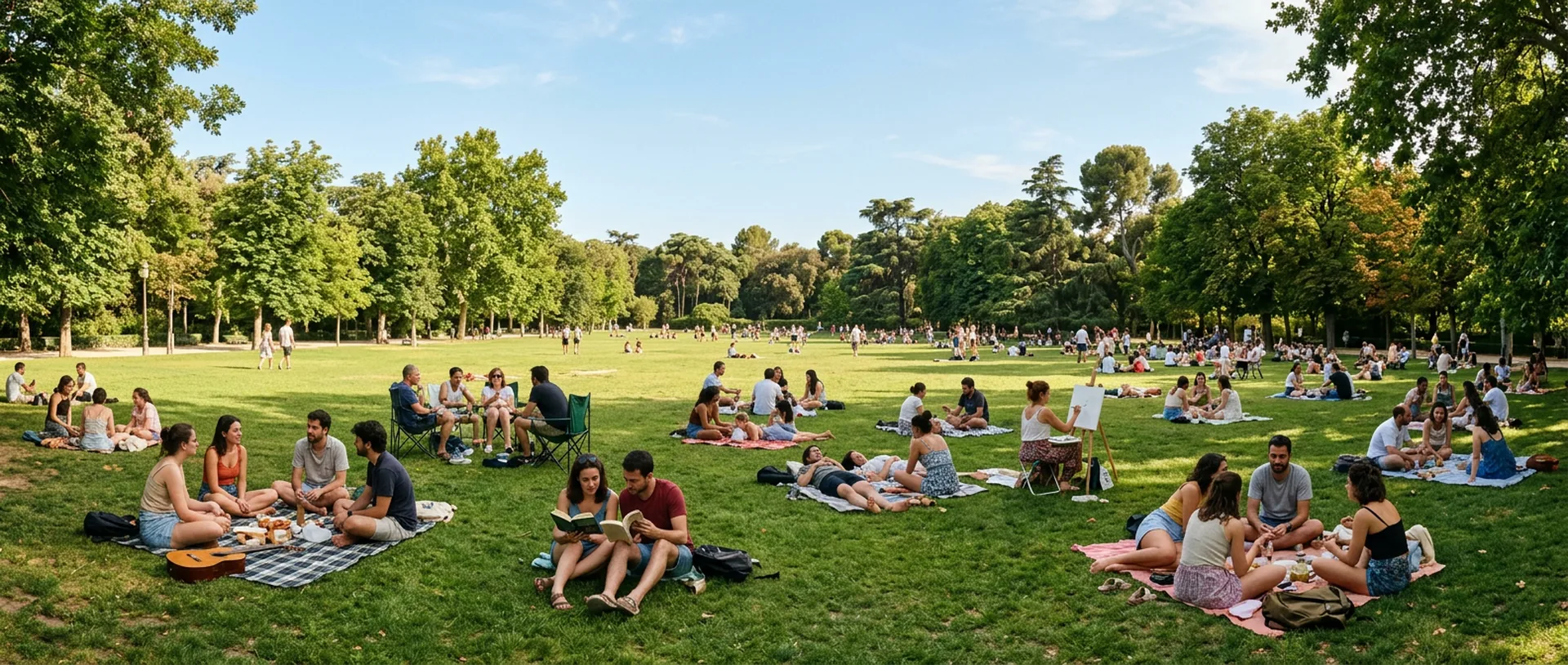
Retiro Park Madrid
🌳
Parque del Retiro
Madrid's grand 19th-century park, with a boating lake, the glass Palacio de Cristal and wide tree-lined avenues - the city's favourite spot to unwind between matches.
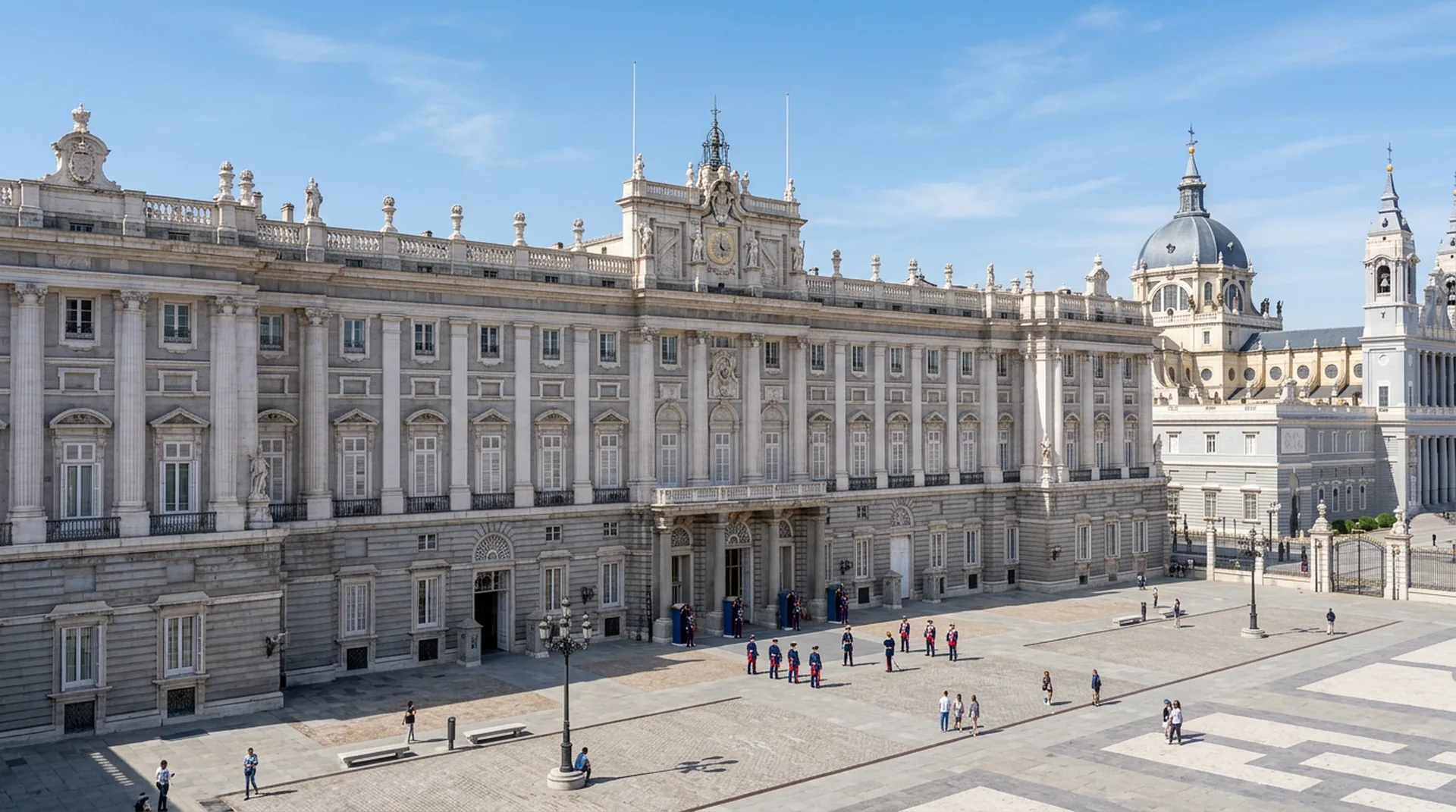
Palacio Real Madrid
👑
Palacio Real
Europe's largest royal palace by floor area, still used for state ceremonies. The armoury and royal apartments are open to visitors most days - arrive early to beat tour groups.
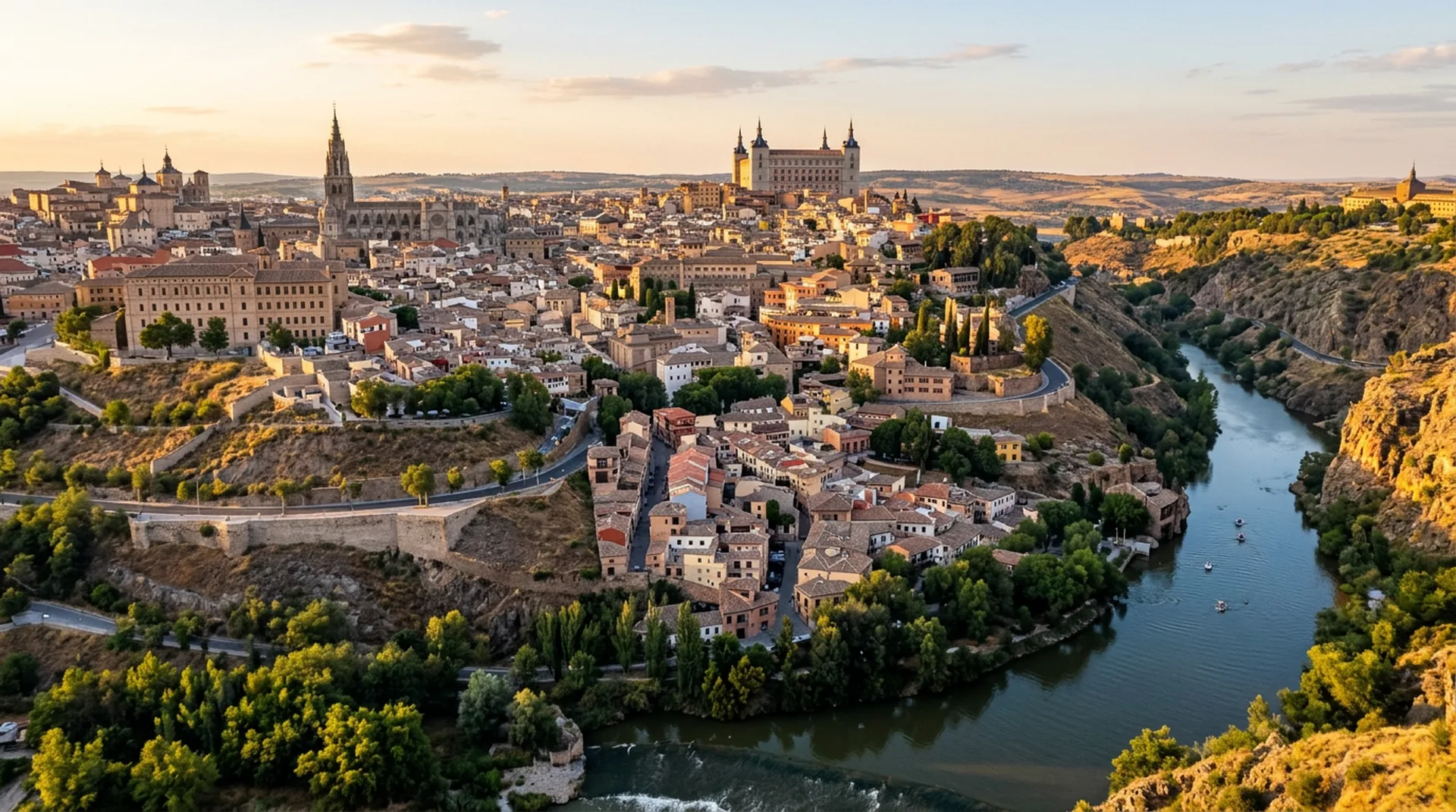
Toledo day trip from Madrid
🏰
Toledo
Spain's former capital, a walled hilltop city 30 minutes away by AVE high-speed train from Madrid Atocha. A genuine full-day trip - narrow medieval streets, a Gothic cathedral, and views across the Tagus gorge.
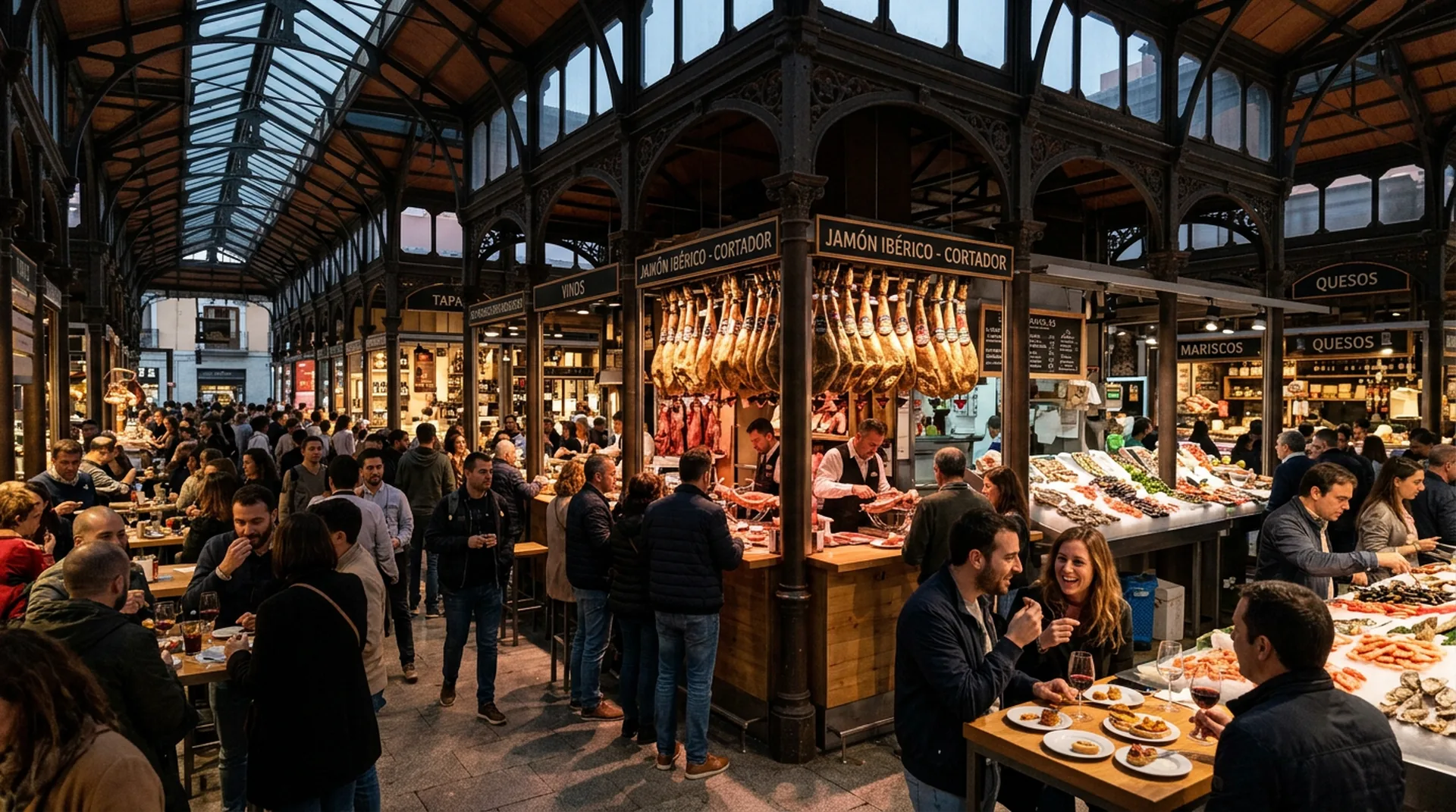
Mercado de San Miguel Madrid matchday

What to Eat Before Kickoff

A bocadillo de calamares near Plaza Mayor is as Madrid as it gets. The city's tapas culture means small plates and shared tables are the norm, even on a match day. Here's how Madrid eats at every budget, from a quick pre-match bite to a three-Michelin-star tasting menu.

  • 🦑 Bocadillo de calamares - the Madrid classic, from €4
  • 🍲 Cocido madrileño - hearty chickpea and meat stew
  • 🏛 Mercado de San Miguel - iron-and-glass market hall, central
  • 🍷 Caña & tapas - the standard order at any traditional bar
  • ⭐ DiverXO - Madrid's only 3-Michelin-star restaurant, near the Bernabéu

Here's what to order at each budget, from pre-match tapas to Madrid's most celebrated tasting menus.

Pre-Match & Casual
€3-10/dish
  • Bocadillo de calamares: fried squid sandwich, sold around Plaza Mayor, €4-6
  • Patatas bravas: at any traditional tapas bar, €4-8
  • Caña: small draft beer, the standard tapas-bar order, €2-3
  • Churros con chocolate: classic breakfast or late-night snack, €3-5
Fine Dining
€150+/person
  • DiverXO: Dabiz Muñoz, 3 Michelin stars, Madrid's only three-starred restaurant, in Chamartín near the Bernabéu
  • Coque: the Sandoval brothers, 2 Michelin stars, a multi-room tasting experience
  • Salamanca district restaurants: upscale dining near the Golden Mile
  • Rioja or Ribera del Duero red: pairs with most Madrid tasting menus

Near the stadiums specifically: bars along Paseo de la Castellana fill with pre-match crowds near the Bernabéu, while the streets around the Metropolitano's own Metro station see pop-up food stalls on Atlético matchdays. Arrive an hour early and eat like a local before you take your seat.

Retiro Park Madrid relaxing

Before You Go

Weather, safety, language and money - the basics every fan should have sorted before landing in Madrid.

  • 🌡️ Hot, dry summers - hotter than Spain's coastal host cities
  • 🛂 Schengen Area - visa-free for 60+ nationalities
  • 💶 €80-150/day comfortably covers hotel, food and transport
🌤

Weather

30-35°C in June-July, hot and dry given Madrid's inland, high-altitude setting. Evenings cool noticeably after sunset. Hotter than coastal host cities.

🛡

Safety

Madrid is one of Europe's safer major capitals. Standard pickpocket precautions apply around Sol, Gran Vía and the Metro during rush hour.

🗣

Language

Spanish is the official language; English is widely spoken in hotels, restaurants and tourism-facing venues across central Madrid.

💳

Money

Euro (€). Cards accepted almost everywhere, including tapas bars and Metro ticket machines. ATMs widely available.

Hotel and flight prices in Madrid typically climb sharply around confirmed match dates, and rooms near the Bernabéu are likely to sell out furthest in advance of any Spanish venue given reports it will host the Final. For visa requirements and FIFA ticket ballot details that apply across Spain, see the Spain visa guide and match ticket guide.

FAQ

Madrid Questions

How do I get from Madrid Airport to Santiago Bernabéu?
Take Metro Line 8 from Adolfo Suárez Madrid-Barajas Airport to Nuevos Ministerios, then transfer to Line 10 towards Santiago Bernabéu station, which sits right outside the stadium. Budget around 35-40 minutes and about €4.50-5 including the airport supplement.
Which is easier to reach, Santiago Bernabéu or the Metropolitano?
Santiago Bernabéu is more central and easier - Metro Line 10 stops directly outside on Paseo de la Castellana, about 15 minutes from the city centre. The Metropolitano sits further out in eastern Madrid; Metro Line 7 reaches its own dedicated station, but the journey from the centre takes closer to 25-30 minutes.
How many World Cup 2030 matches will Madrid host?
Exact fixtures depend on FIFA's official match schedule, expected in 2028, but Madrid's two stadiums - Santiago Bernabéu and the Metropolitano - give it more combined capacity than almost any other 2030 host city, and Madrid is expected to stage a heavy share of matches including, reportedly, the Final itself.
Will Santiago Bernabéu host the 2030 World Cup Final?
Multiple reports indicate the newly renovated Santiago Bernabéu has been selected to host the 2030 FIFA World Cup Final, though official confirmation from FIFA is still pending as of the tournament's 2028 schedule announcement. The stadium's €1 billion renovation, completed in 2024, expanded capacity to roughly 83,000 and added a retractable roof specifically to support bids for events of this scale.
Is the Madrid Metro reliable for match days?
Yes. Madrid's Metro is one of Europe's largest and most efficient networks, with trains every 3-5 minutes on core lines. Expect heavy crowds on Line 10 toward Santiago Bernabéu and Line 7 toward the Metropolitano in the two hours before kickoff.
What is the best neighbourhood to stay in Madrid for the World Cup?
Salamanca and Chamberí offer the best combination of central location and proximity to Santiago Bernabéu, both on Paseo de la Castellana. Malasaña and Chueca suit travellers who want nightlife and character over stadium proximity. Las Letras/Sol puts you in the historic heart of the city, equidistant from both stadiums by Metro.
Should I stay near the Bernabéu or the Metropolitano?
Stay near the Bernabéu, or better, stay centrally. The area around the Metropolitano is a modern, largely residential district with limited hotel stock and nightlife, whereas central Madrid reaches both stadiums by Metro in well under 30 minutes.
Can I day-trip from Madrid during the World Cup?
Yes. Toledo is 30 minutes away by high-speed AVE train, and Segovia is under 30 minutes by AVE, both easy half-day trips. El Escorial, the royal monastery, is about an hour by regional train. Avoid scheduling any of these on a Madrid match day given kickoff-time crowds.
What is El Clásico?
El Clásico is the name given to matches between Real Madrid and FC Barcelona, widely considered football's biggest club rivalry. It reflects a rivalry that extends beyond sport into Spanish regional identity and politics. Real Madrid, with a record 15 UEFA Champions League titles and 36 La Liga titles, and Barcelona have dominated Spanish football for generations.
What is El Derbi Madrileño?
El Derbi Madrileño is the Madrid derby between Real Madrid and Atlético Madrid. The two clubs have met twice in UEFA Champions League finals - 2014, when Real won 4-1 after Sergio Ramos's 93rd-minute equaliser, and 2016, when Real won on penalties after a 1-1 draw - the only two times in history that two clubs from the same city have contested a European Cup final.
How many Champions League titles has Real Madrid won?
A record 15 European Cup/UEFA Champions League titles, including five in a row from 1956 to 1960 and three consecutive titles from 2016 to 2018. Their most recent title came in 2024 against Borussia Dortmund. No other club has come close to this total.
Is Atlético Madrid connected to Athletic Bilbao?
Historically, yes. Atlético Madrid was founded in 1903 as a branch club of Athletic Bilbao, initially called Athletic Club Sucursal de Madrid, before becoming fully independent in 1912. The clubs share the Anglicised "Athletic"/"Atlético" naming convention as a result, though they have no formal relationship today.
What is the weather like in Madrid in June and July?
Hot and dry. Madrid's inland, high-altitude location means June and July afternoons regularly reach 30-35°C with very low humidity, though evenings cool noticeably after sunset. It is significantly hotter than coastal host cities like Bilbao or Lisbon - plan for shade and hydration during the day.
Is Madrid expensive compared to other World Cup 2030 host cities?
Madrid is mid-to-upper range for Spain - pricier than Seville or Bilbao, broadly comparable to Barcelona, and more expensive than Portugal's host cities. Budget hotel rooms outside the tournament premium run €80-120/night, with tapas and set lunches remaining reasonably affordable relative to the rest of Western Europe.
What should I eat in Madrid?
Start with a bocadillo de calamares (fried squid sandwich), a Madrid classic sold around Plaza Mayor. Try cocido madrileño, a hearty chickpea and meat stew, and patatas bravas at any traditional tapas bar. Mercado de San Miguel offers a one-stop sampling of Madrid's food culture under one iron-and-glass roof.
Is Madrid safe for tourists during the World Cup?
Yes, Madrid is considered one of Europe's safer major capitals, though as with any large city, standard precautions around pickpocketing apply in busy tourist areas like Sol, Gran Vía and the Metro during rush hour.

Continue Planning

See the full Spain guide, covering all World Cup 2030 host cities across the country.

Back to Spain Guide

Get Madrid World Cup Updates

Hotel deal alerts near the Bernabéu and Metropolitano, FIFA ticket ballot dates, Metro service changes and insider Madrid tips - straight to your inbox.