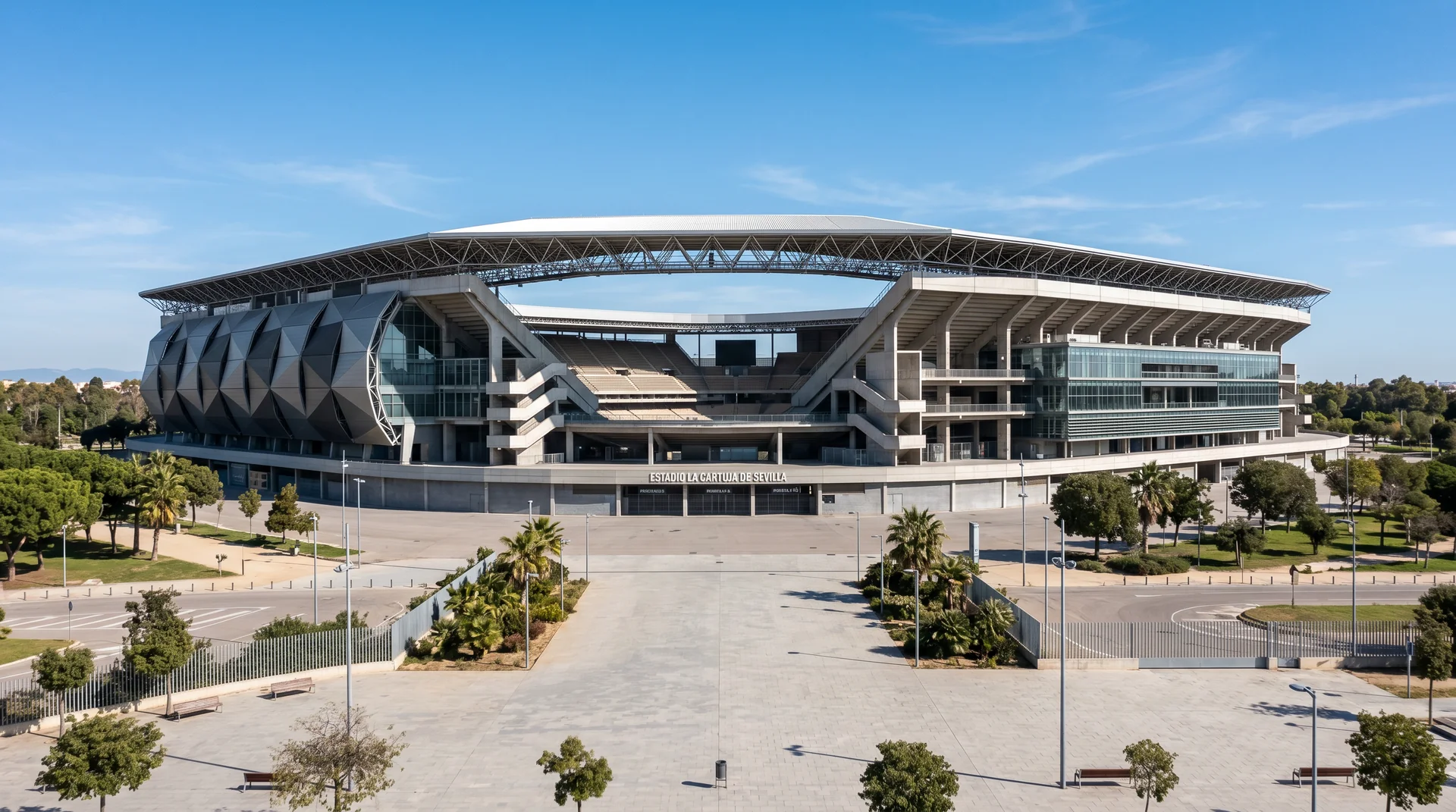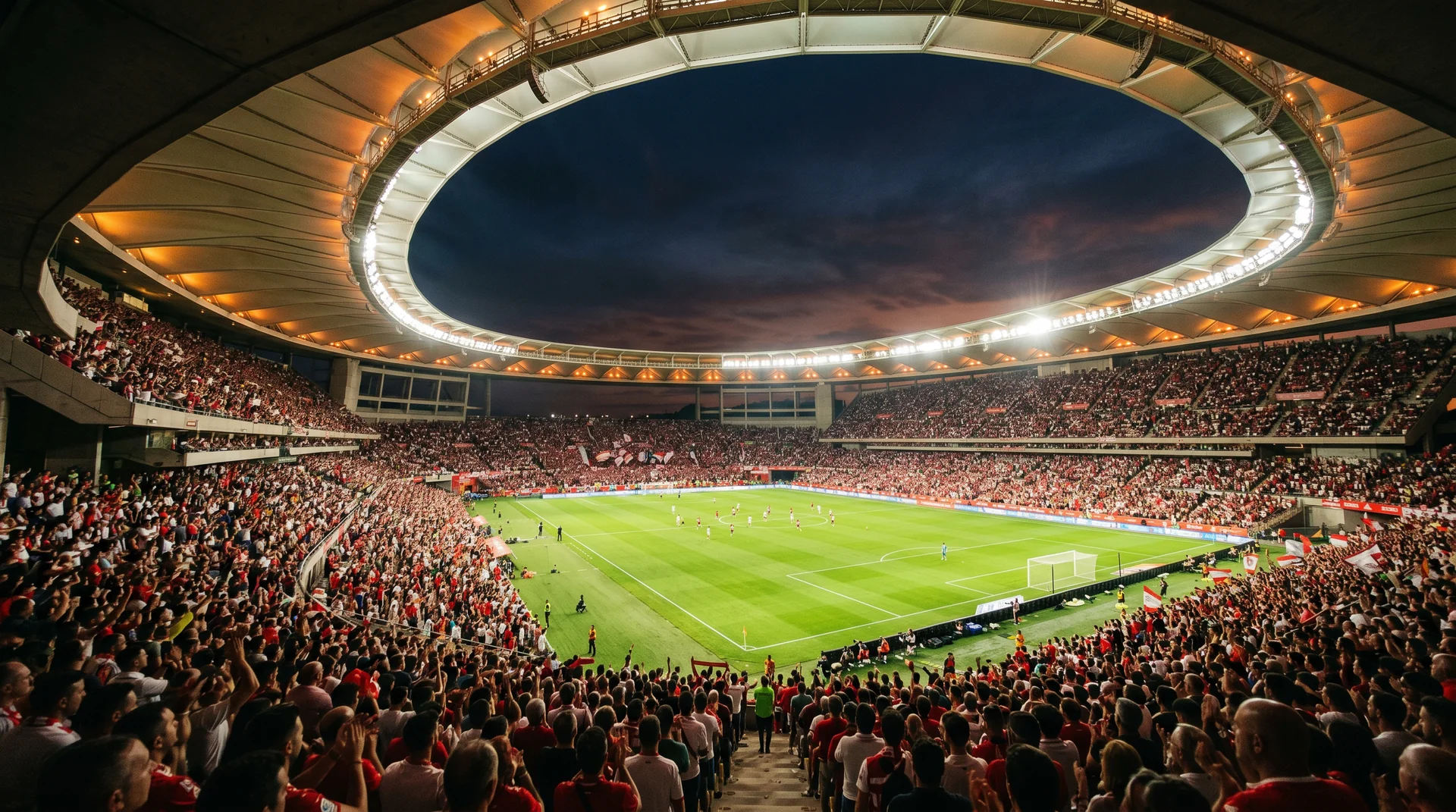
La Cartuja, freshly expanded to 70,000 seats, hosts World Cup 2030 football in a city divided down the middle by football - and united by flamenco, tapas, and heat. Seville's mayor believes the stadium is in line for a semifinal or the Final itself.
Stadium
Unlike Madrid, Barcelona or Lisbon, Seville brings a single stadium to 2030 - and it belongs to neither of the city's two fiercely divided clubs. La Cartuja, freshly expanded to 70,000 seats, is Seville's neutral ground, and its mayor believes it's in line for one of the tournament's biggest nights.

Football Culture
Seville is unusual even by Spanish standards: with around 687,000 residents, this is a city with room for exactly two football allegiances. You're either sevillista or bético - there's no neutral option, and no third club to escape into. Sevilla FC, founded in 1890, are based in the wealthier Nervión district; Real Betis, formed in 1907 after a split from Sevilla FC partly over accusations of elitism, are based in working-class Heliópolis and carry a more populist identity.
Sevilla FC has translated that identity into extraordinary European success: a record seven UEFA Cup/Europa League titles, including three in a row from 2014 to 2016, making them the most decorated club in that competition's history. Real Betis's honours list is thinner - a single La Liga title in 1935 and Copa del Rey wins in 2005 and 2022 - but their fans' devotion is, if anything, louder for it.
"You're either sevillano or bético. There's no in-between."
- how locals commonly describe Seville's football divide
First played in 1915, El Gran Derbi is widely considered one of Spanish football's most passionate rivalries, and by some measures its most intense. The sides have met around 145 times across all competitions, with Sevilla FC holding the overall edge, though Real Betis has produced some of the fixture's most memorable results - including a 5-3 win at the Sánchez-Pizjuán in January 2018, the highest-scoring Gran Derbi in La Liga history.
Unlike the Basque derby, this rivalry carries a harder edge - a 2007 incident saw a Sevilla manager struck by a bottle thrown from the Betis end, an episode still remembered as "el botellazo." Both clubs' stadiums, the Ramón Sánchez-Pizjuán and the Benito Villamarín, sit within the city, but neither will host World Cup football - both are being renovated on their own separate timelines, unconnected to 2030.
La Cartuja was built for the 1999 World Athletics Championships and originally intended as a shared home for both Sevilla FC and Real Betis - an idea both fan bases rejected outright. It sat relatively underused for two decades, hosting occasional Copa del Rey finals, Euro 2020 matches and the 2003 UEFA Cup Final, before its 2025 expansion to 70,000 seats gave it a genuine second life as Seville's World Cup 2030 venue.
Matchday in Seville
"You're either sevillano or bético. There's no in-between."
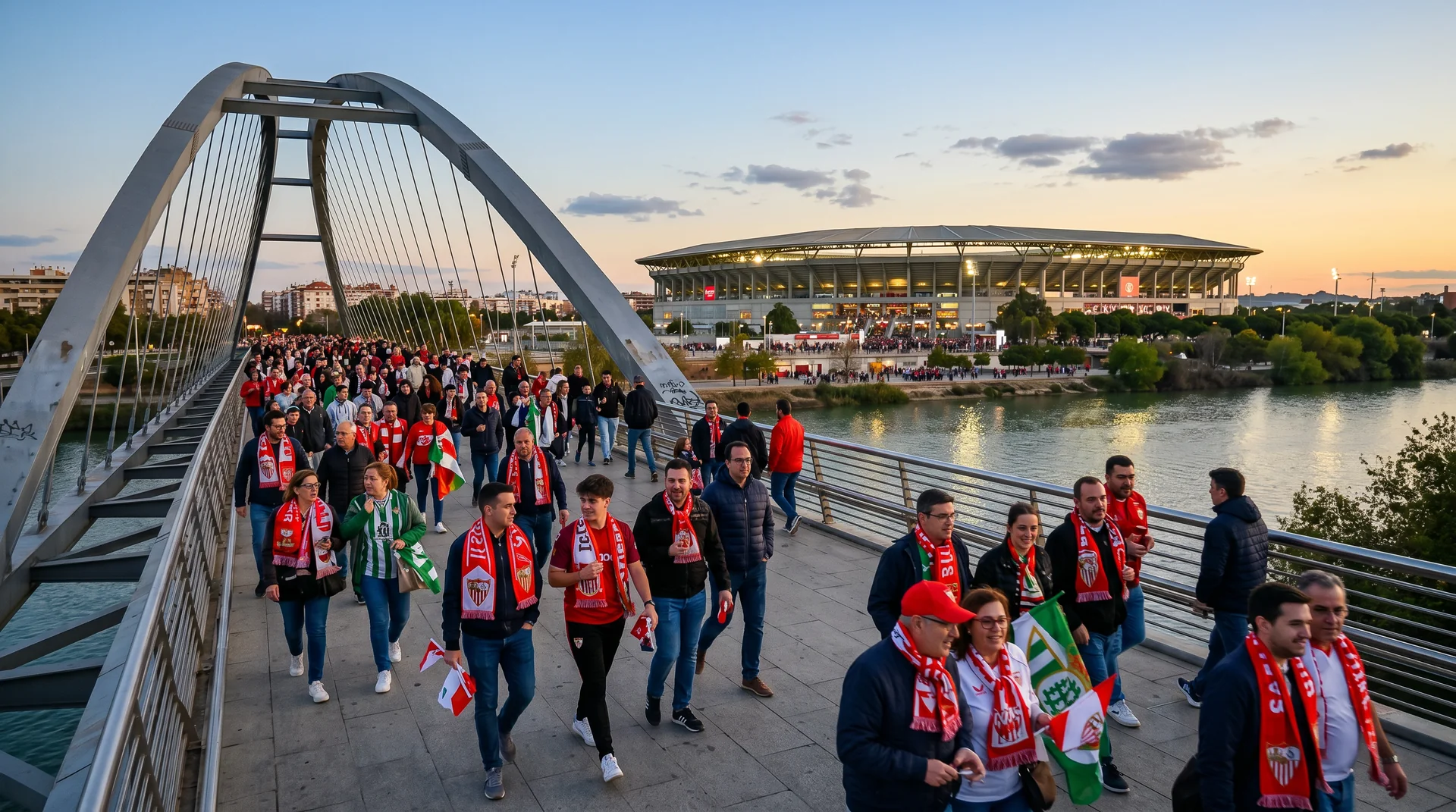
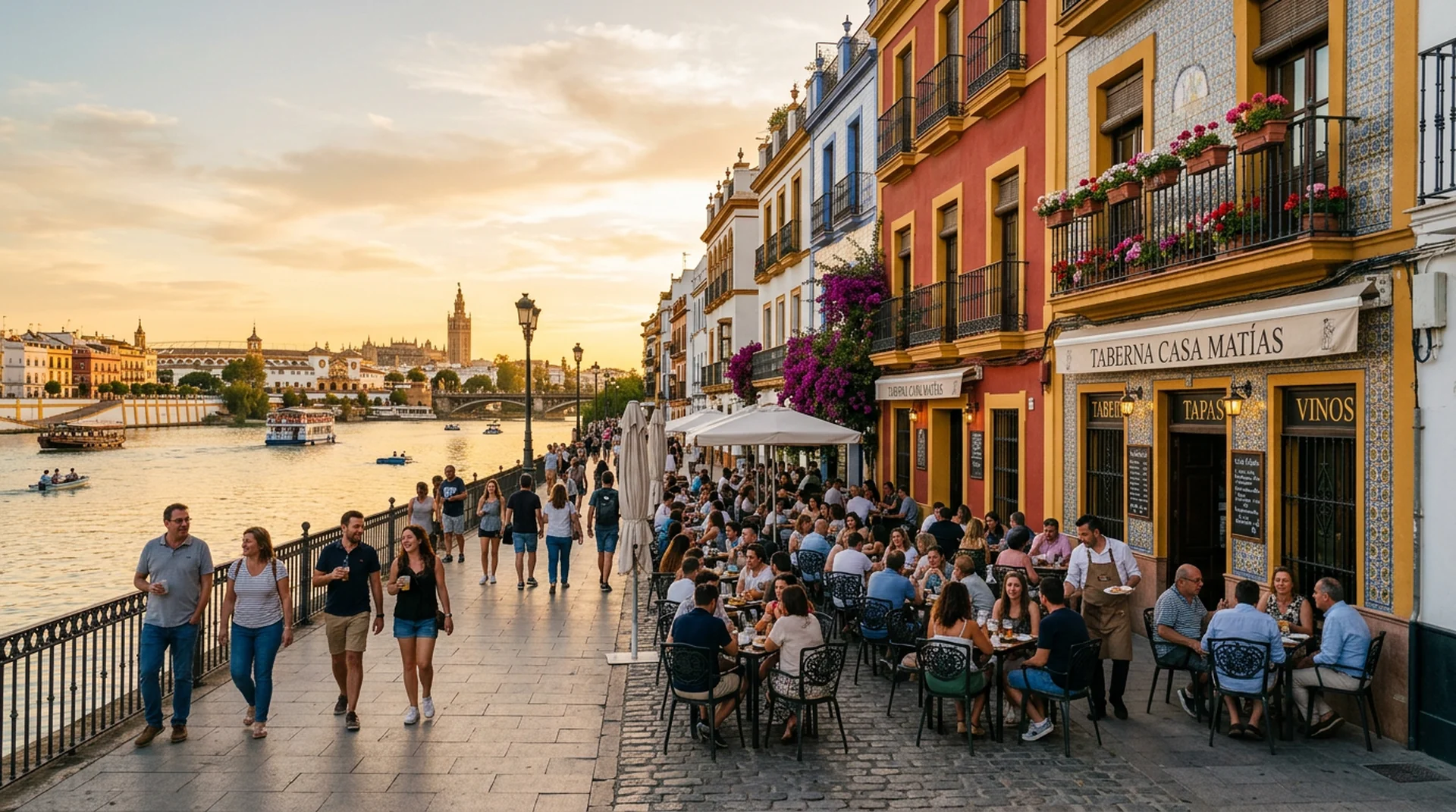
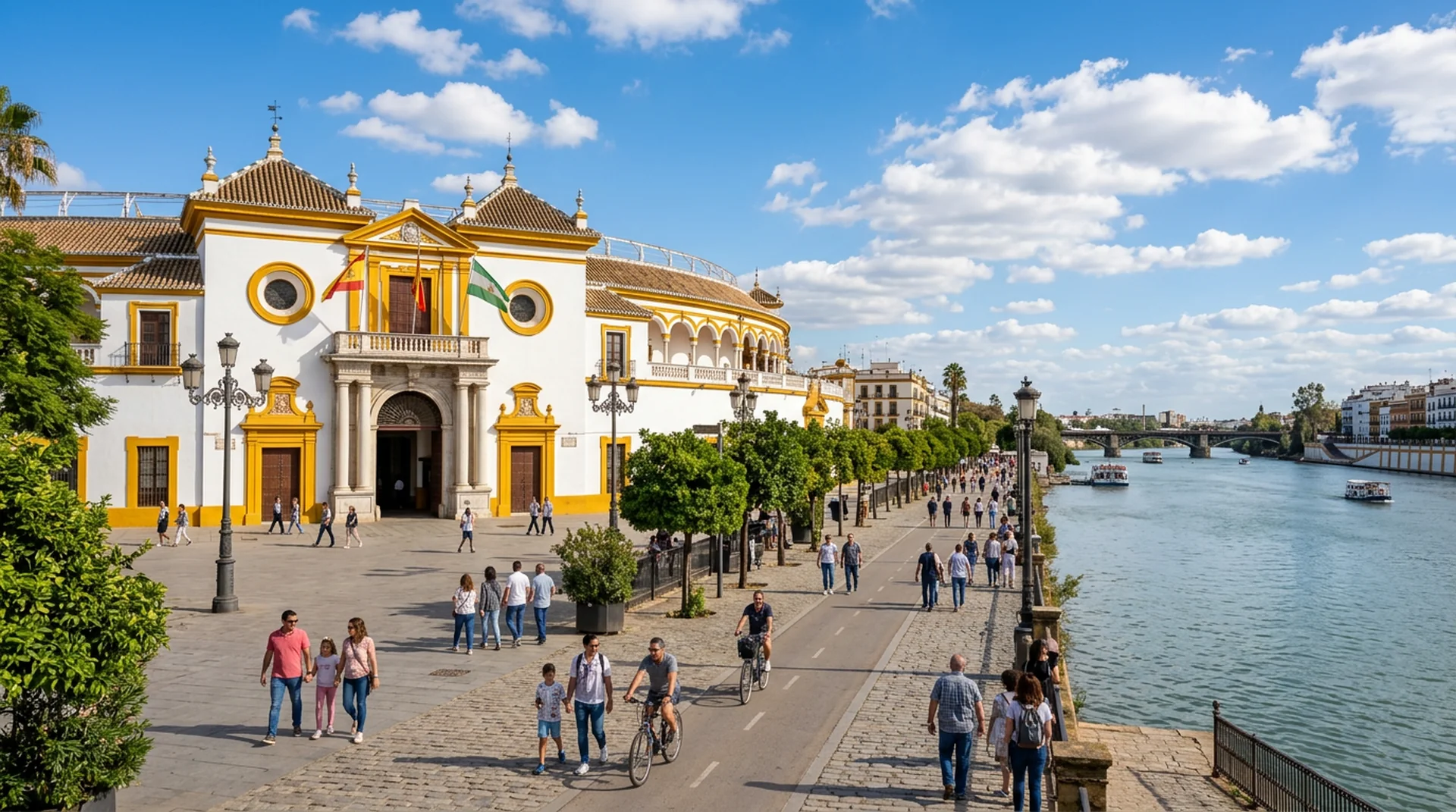
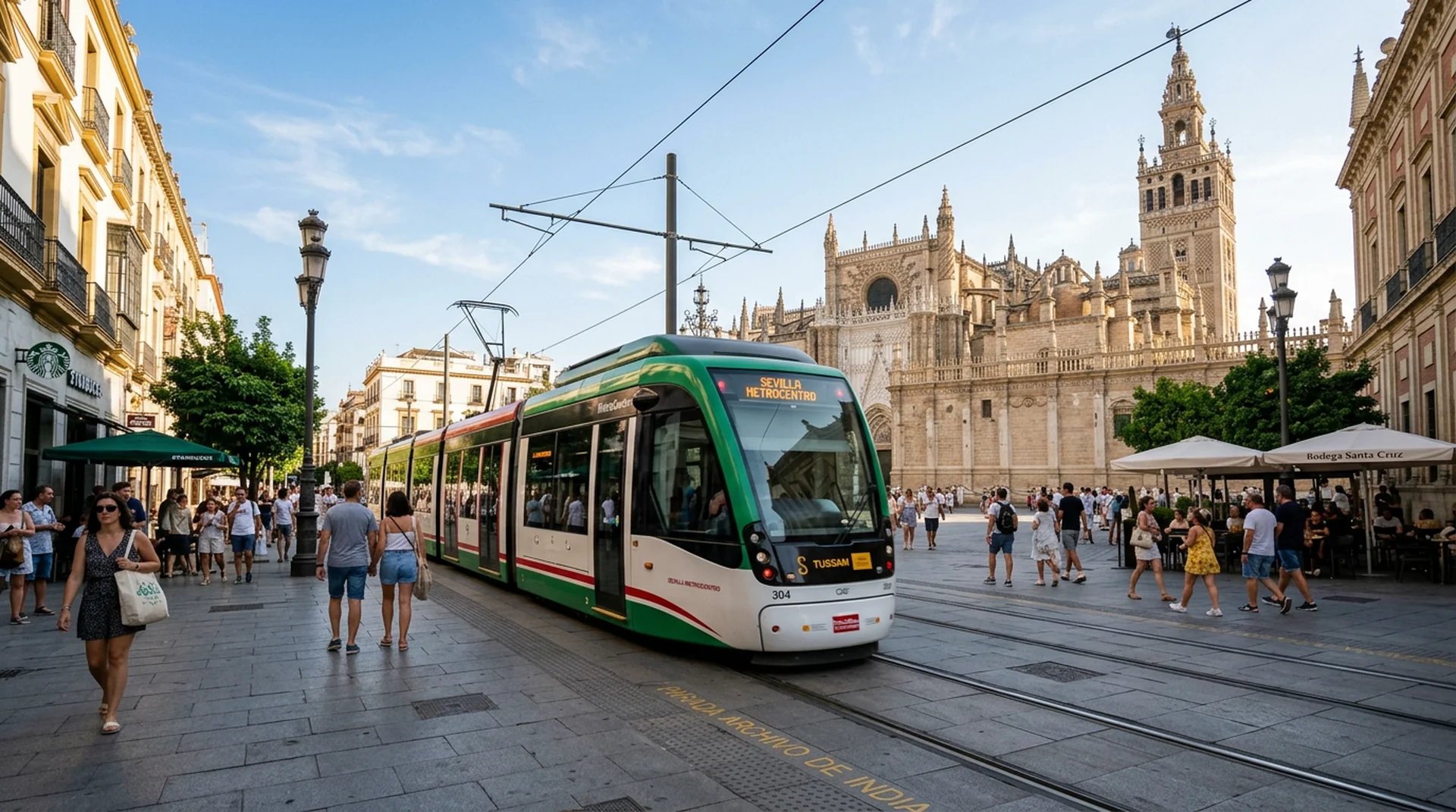
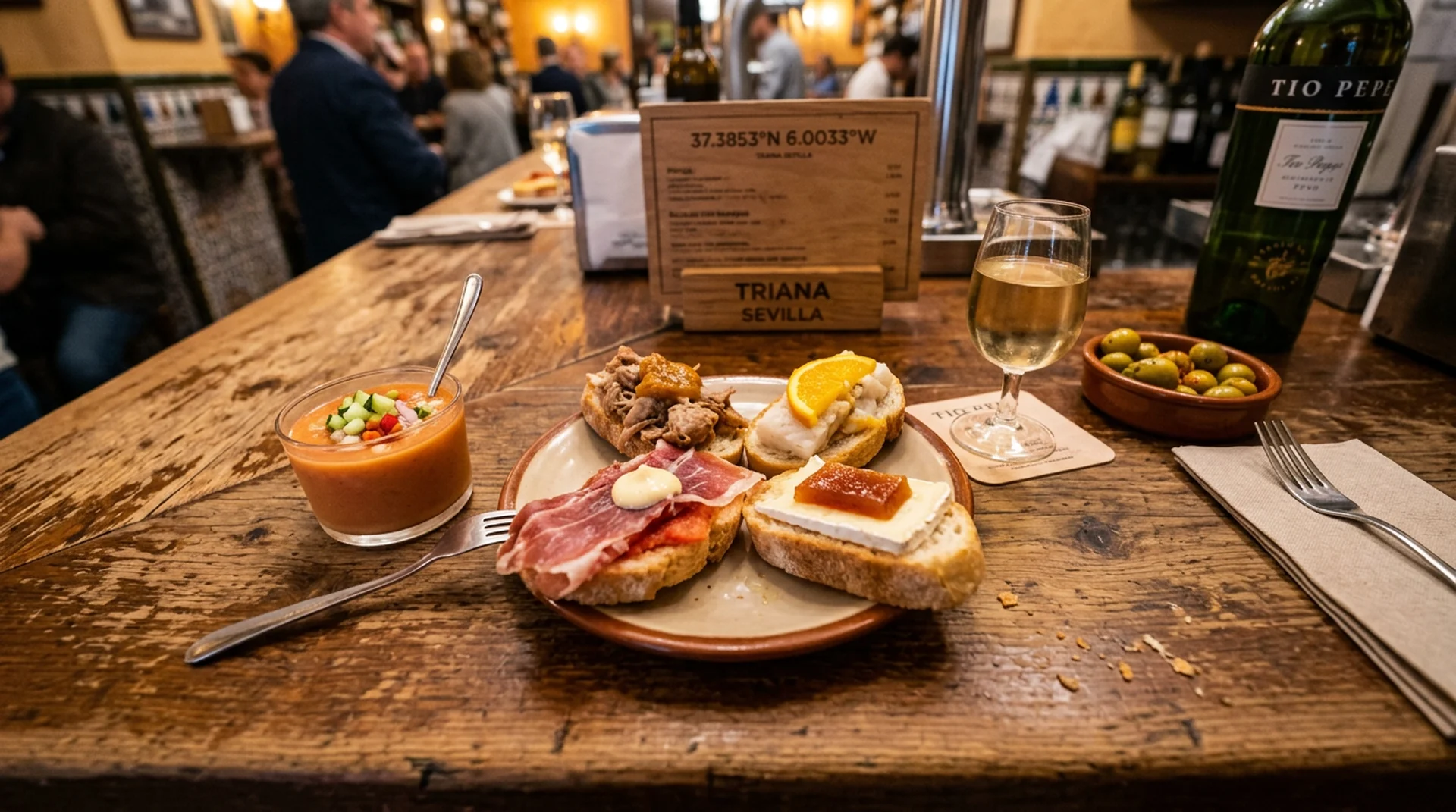
La Cartuja sits on an island in the Guadalquivir, a genuine break from the city's usual club rivalries since neither Sevilla FC nor Real Betis calls it home. Expect the build-up to concentrate in Santa Cruz and Triana, where tapas bars fill early, before fans make their way north by shuttle bus or on foot across one of the river bridges.
Given Seville's summer heat, matchday timing matters more here than in most host cities - expect kickoffs scheduled around the worst of the afternoon sun, and plan your pre-match hours accordingly.


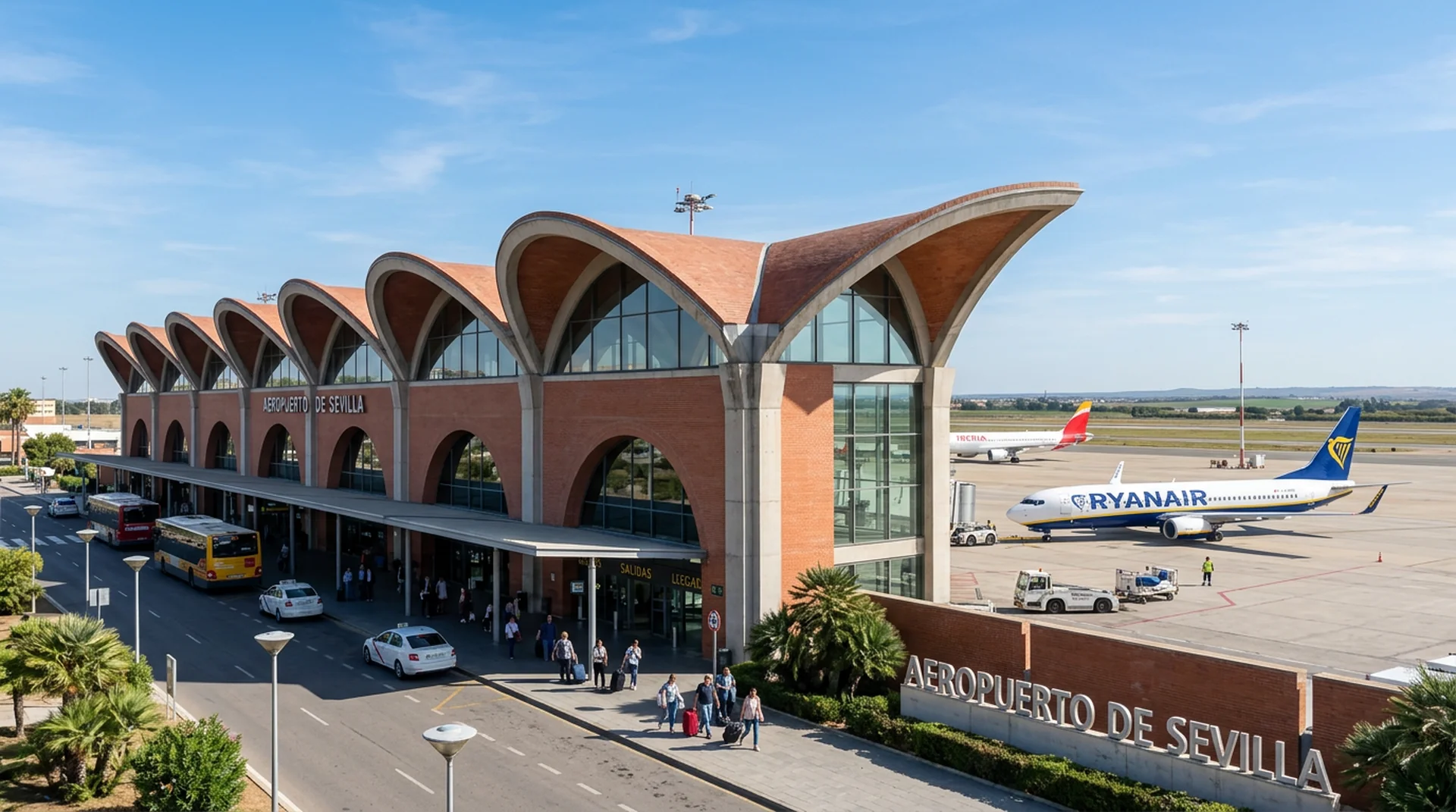
From Seville Airport to La Cartuja
Airport to centre: ~35 min, €4 by EA bus · Taxi: ~15-20 min, €25-30 · Córdoba by AVE: ~40 min · Madrid by AVE: ~2h30


Following matches in more than one city? Seville sits on Spain's AVE high-speed rail network, reaching Madrid in about 2h30 and Córdoba in just 40 minutes. See the Spain transport guide for full routes across all host cities.
Between Matches
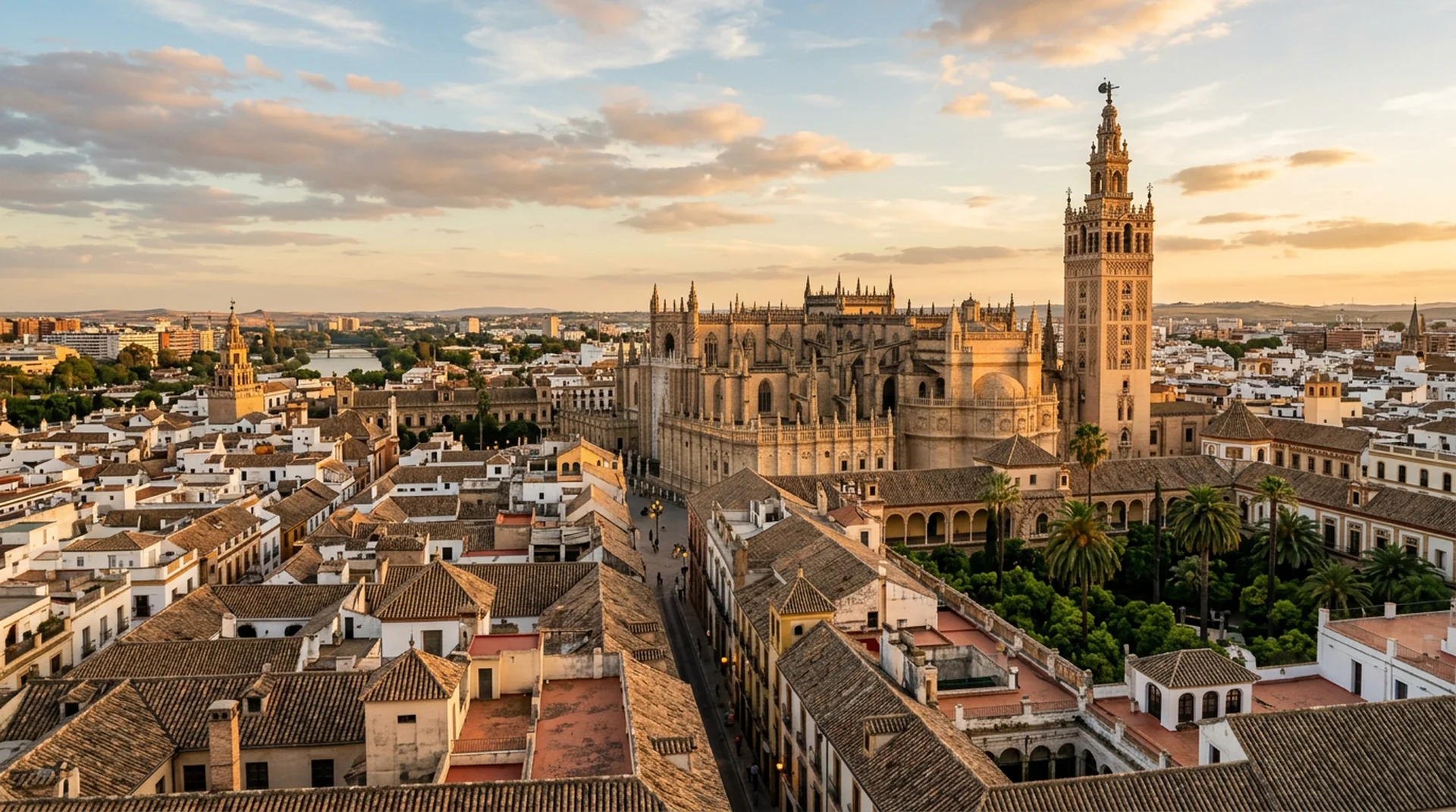
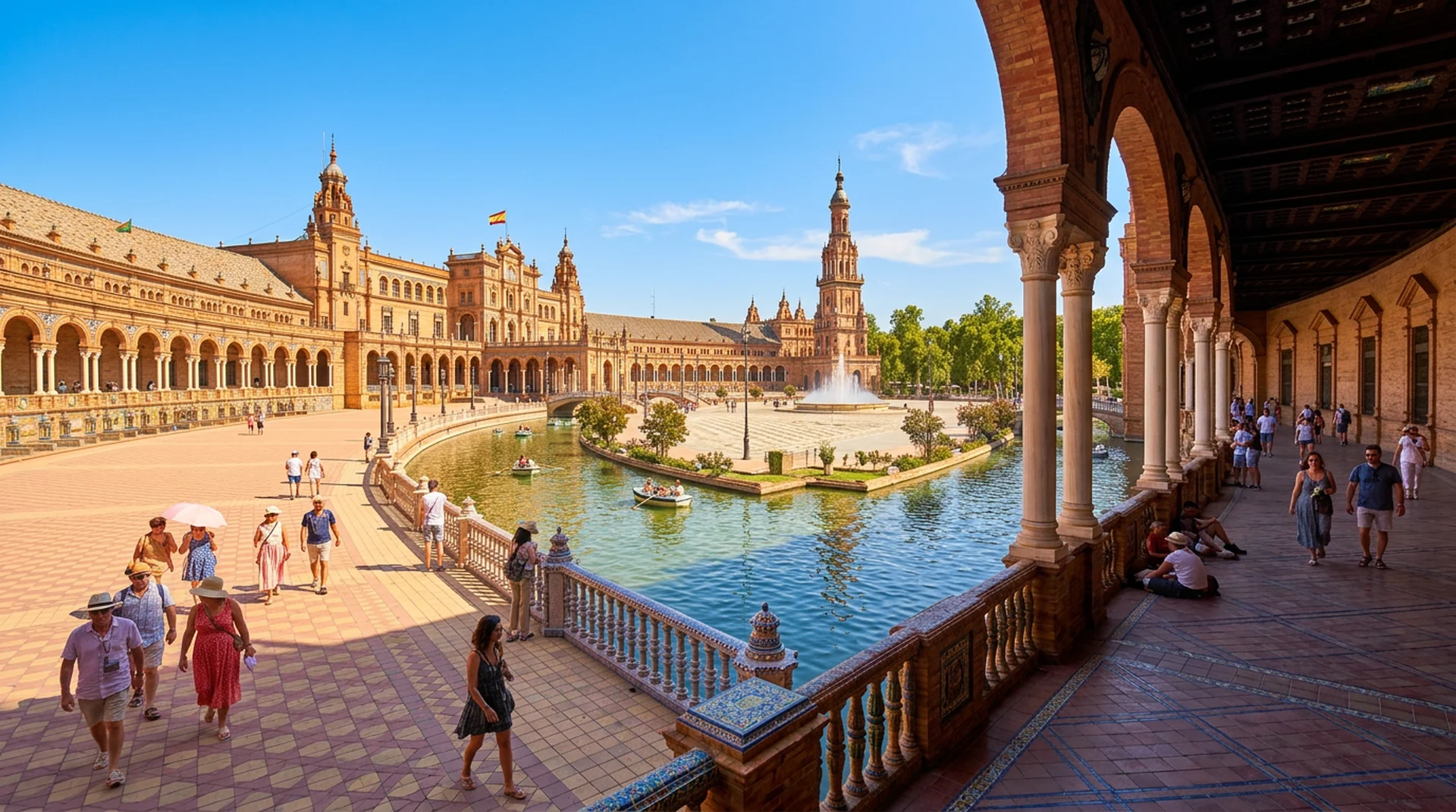
Seville rewards early mornings before the heat sets in and long, late evenings once it breaks. Plan indoor time or shaded courtyards for the middle of the day.


Here's what to order at each budget, from a quick tapeo crawl to Seville's most celebrated bodegas.
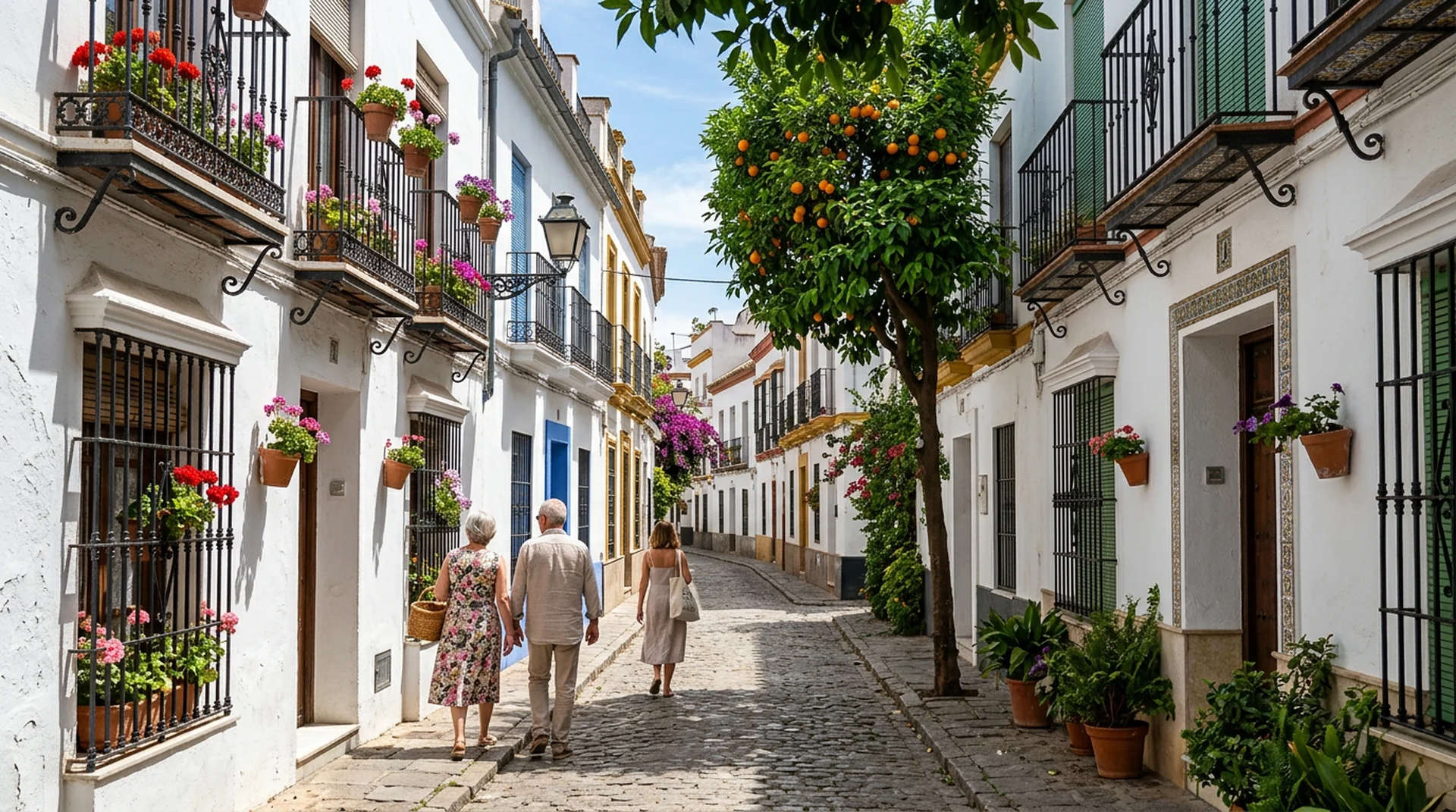
La Cartuja itself has limited food options beyond stadium concessions, so eat before you go. Triana and Santa Cruz are both a bus ride from the stadium and offer Seville's most authentic tapeo experience - arrive hungry and order a little at each stop rather than a full meal at one.
35-40°C in June-July, among the hottest of any World Cup 2030 host city. Plan for shade in the early afternoon and expect matches scheduled around the heat.
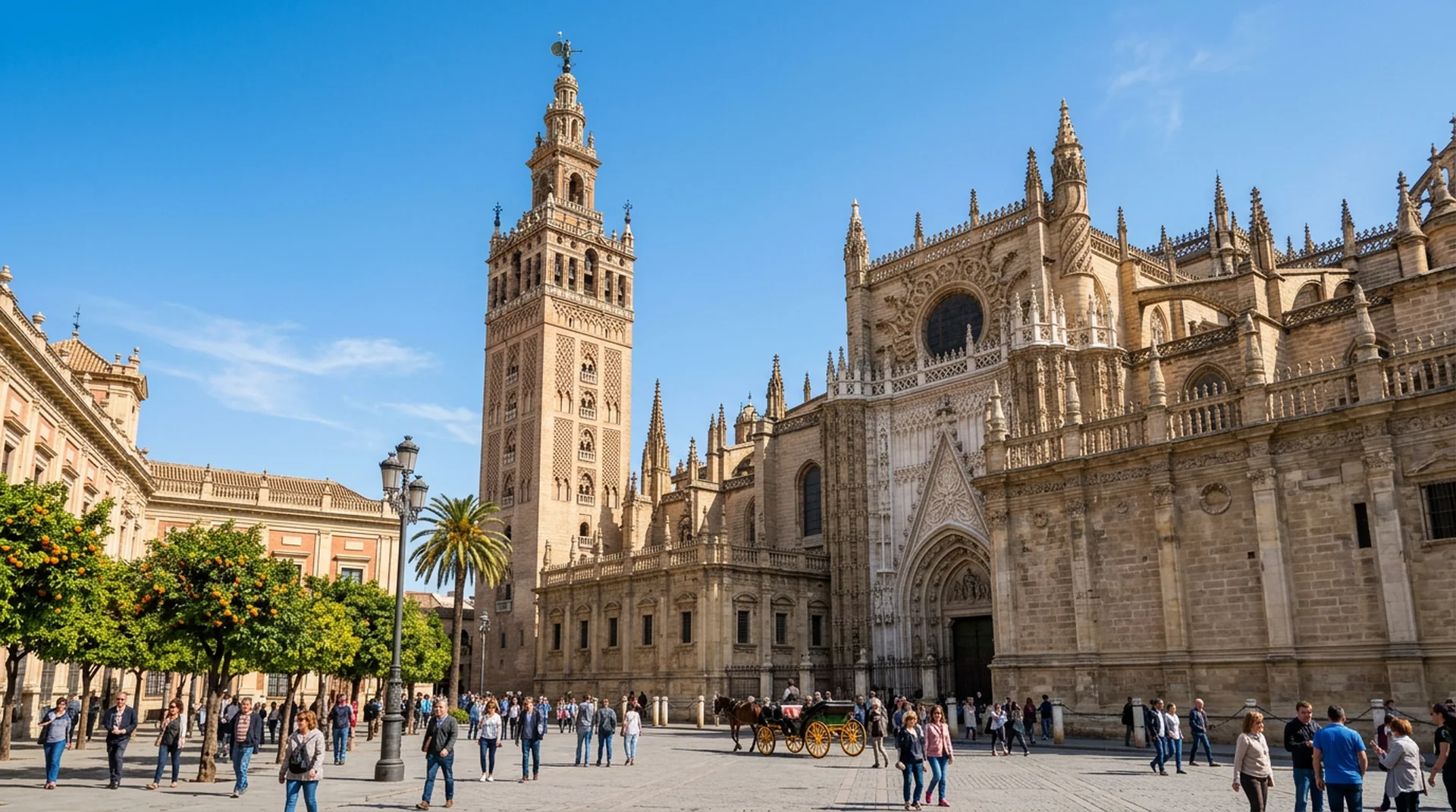
Seville is considered a safe city for tourists. Standard pickpocket precautions apply in Santa Cruz and around the Cathedral, especially in peak summer crowds.
Spanish is the official language; English is widely spoken in hotels, restaurants and tourism-facing venues across central Seville.
Euro (€). Cards accepted almost everywhere, including tapas bars and Metro ticket machines. ATMs widely available.
Book air-conditioned accommodation - Seville's summer heat is intense and not every budget hotel has reliable cooling. For visa requirements and FIFA ticket ballot details that apply across Spain, see the Spain visa guide and match ticket guide.
FAQ
Continue Planning
See the full Spain guide, covering all World Cup 2030 host cities across the country.
Stay Informed
Hotel deal alerts near La Cartuja, FIFA ticket ballot dates, and insider Seville tips - straight to your inbox.