Newsletter
Estadio Gran Canaria Las Palmas electric matchday atmosphere
Spain · World Cup 2030 Host City

Las Palmas

Estadio Gran Canaria is Spain's only World Cup 2030 venue on an island - roughly 1,800km from the mainland in the Atlantic. "La Nube," a spoke-wheel roof redevelopment inspired by traditional Canarian pintadera patterns, is expanding it toward ~44,000 seats while UD Las Palmas continues playing there.

1Stadium
~44,000Target Capacity
1,800kmFrom Mainland Spain
24-27°CJune-July Avg
Until kickoff · 8 June 2030
000Days
:
00Hours
:
00Mins
:
00Secs
StadiumFootball CultureMatchdayNeighbourhoods Getting AroundThings to DoFood & Drink Practical InfoFAQ
✈️Airport: LPA · Gran Canaria Airport
🚌Guaguas bus to the stadium
👥Population: ~380K (city) · 850K (island)
💵Euro (€)
🗣Spanish · English widely spoken in tourism

One Stadium, An Island Apart

Las Palmas brings World Cup 2030's only island venue, roughly 1,800km from mainland Spain in the Atlantic. Estadio Gran Canaria is being transformed by "La Nube," a spoke-wheel roof redevelopment that expands capacity while UD Las Palmas keeps playing there through construction.

Estadio Gran Canaria Las Palmas
Under Expansion
Estadio Gran Canaria
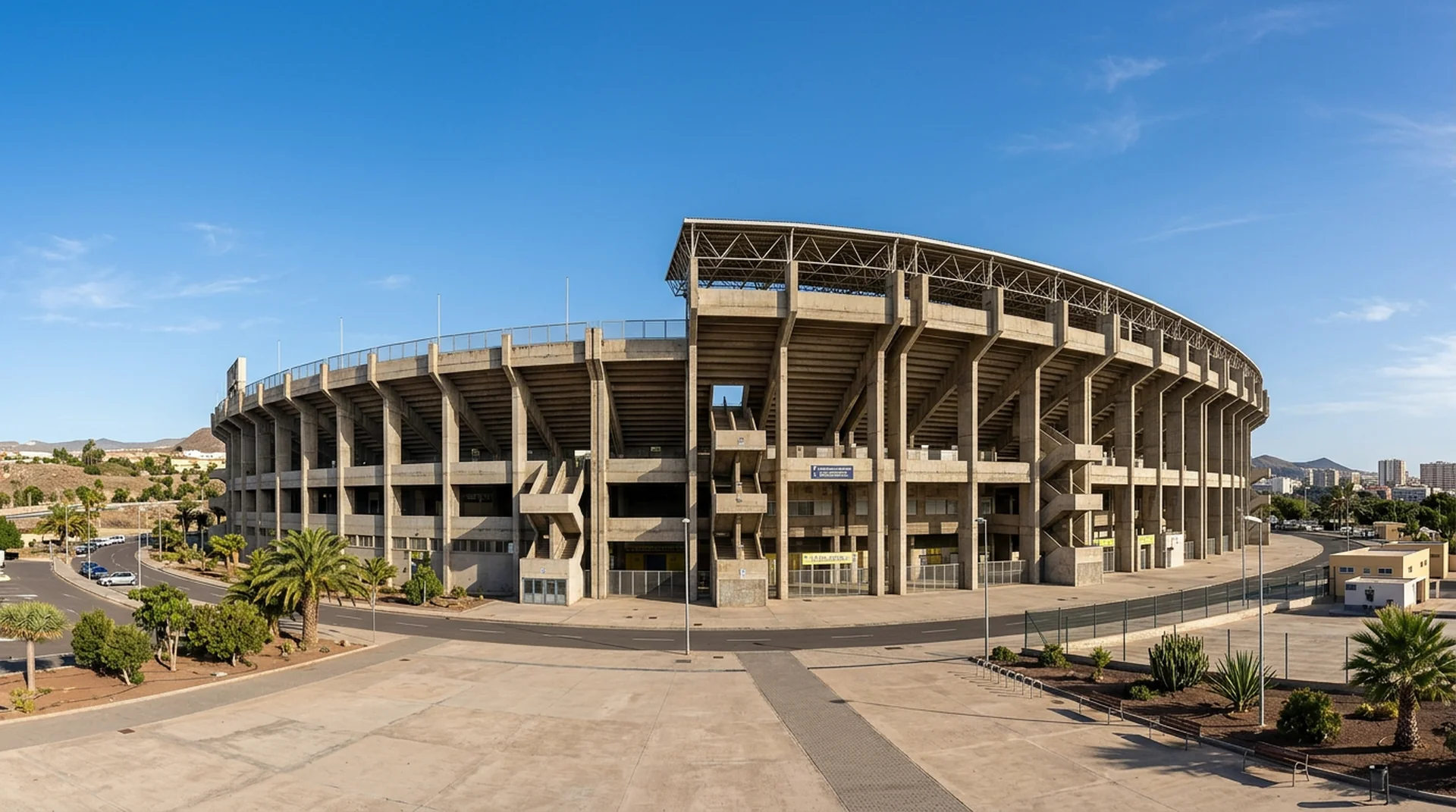
Capacity 32,400, expanding toward ~44,000 · Opened 2003, currently the largest stadium in the Canary Islands. The "La Nube" redevelopment, designed by L35 Architects, adds a full roof and a facade inspired by traditional Canarian pintadera patterns. Renovation runs 2025 through around 2027-2029, with UD Las Palmas continuing home matches throughout.
How to get there

Los Amarillos, Island Pride

Founded 1949 Returned to La Liga 2023-24 Derbi Canario vs Tenerife ~1,800km from mainland Spain

🟡 UD Las Palmas, Los Amarillos

Founded in 1949, UD Las Palmas has never won a major national trophy, but the club commands deep, near-universal loyalty across Gran Canaria - there's no significant local rival to divide the island's football allegiance. Known for a technical, possession-based playing style over the decades, the club returned to La Liga in the 2023-24 season, a promotion that coincided almost exactly with the push to expand Estadio Gran Canaria for World Cup consideration.

Supporters are known as amarillos (yellows), after the club's canary-yellow home kit - a nickname that plays neatly on both the team's colours and the island's famous connection to the canary bird, which is native to the archipelago and gives the islands their name.

A stadium façade patterned after the pintadera - a pre-Hispanic Canarian stamping tool.

- the design detail chosen for the Estadio Gran Canaria's redevelopment to root it in island identity

⚔️ The Derbi Canario

UD Las Palmas's natural rivalry is with CD Tenerife, based on the neighbouring island roughly 100km away across open Atlantic water - a genuinely unusual setup for a Spanish football derby, since the two fan bases are separated by a ferry crossing or a short flight rather than a city street. The Derbi Canario carries real weight as the two islands' biggest clubs and a symbol of good-natured inter-island rivalry within the Canarian archipelago.

Because both clubs have spent stretches of recent history in different divisions, the derby doesn't happen every season - which if anything sharpens the occasion whenever the fixture returns.

☁️ La Nube

The stadium's redevelopment, nicknamed "La Nube" (The Cloud), is built around a spoke-wheel roof structure with two tension rings and an outer compression ring supported by 44 columns - engineering chosen for both sustainability and a distinctive silhouette. The project is designed to make Estadio Gran Canaria a genuine multi-use venue beyond football, with plans for a sports innovation hub, a museum, and event spaces alongside the pitch itself.

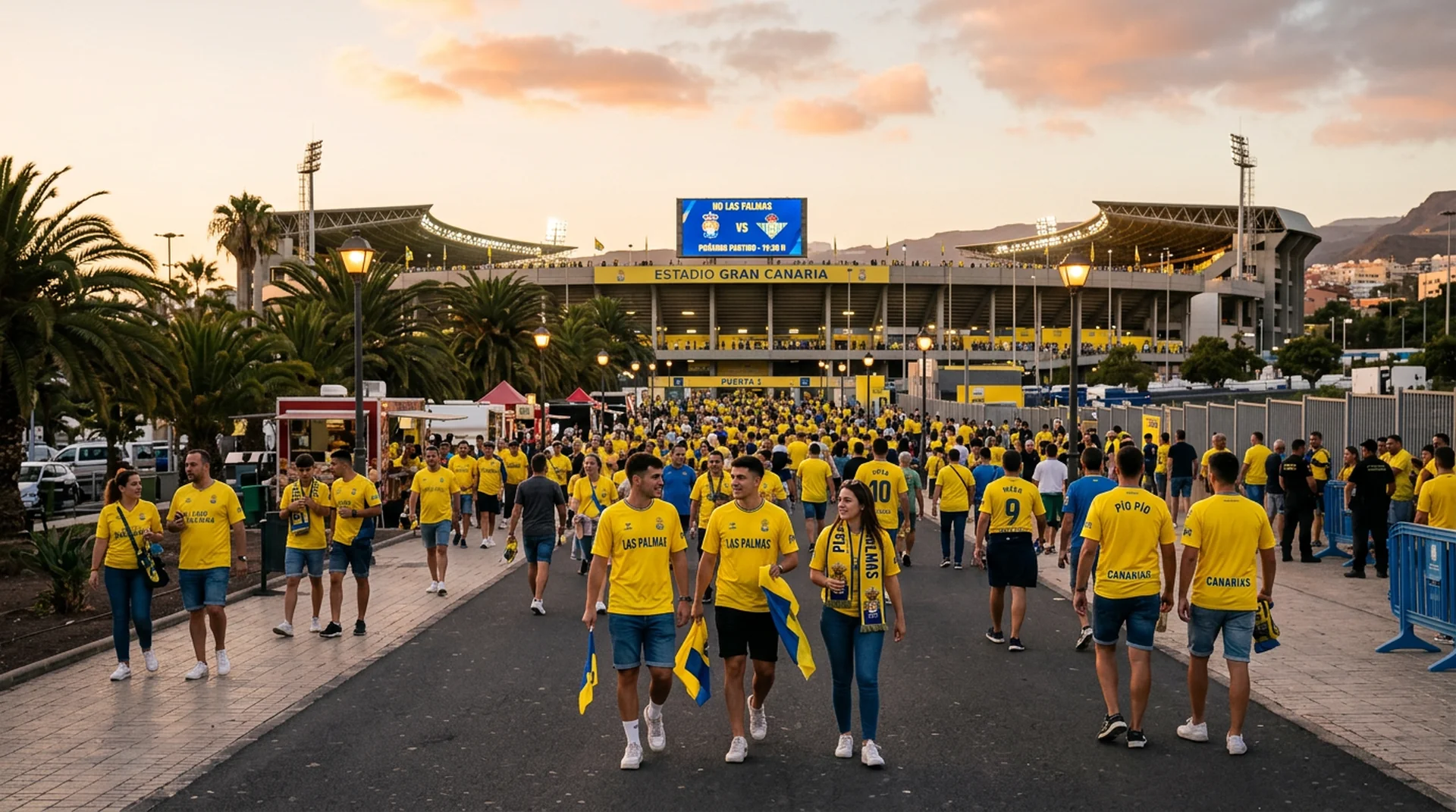
Las Palmas World Cup fans matchday atmosphere

Where Las Palmas Watches Football

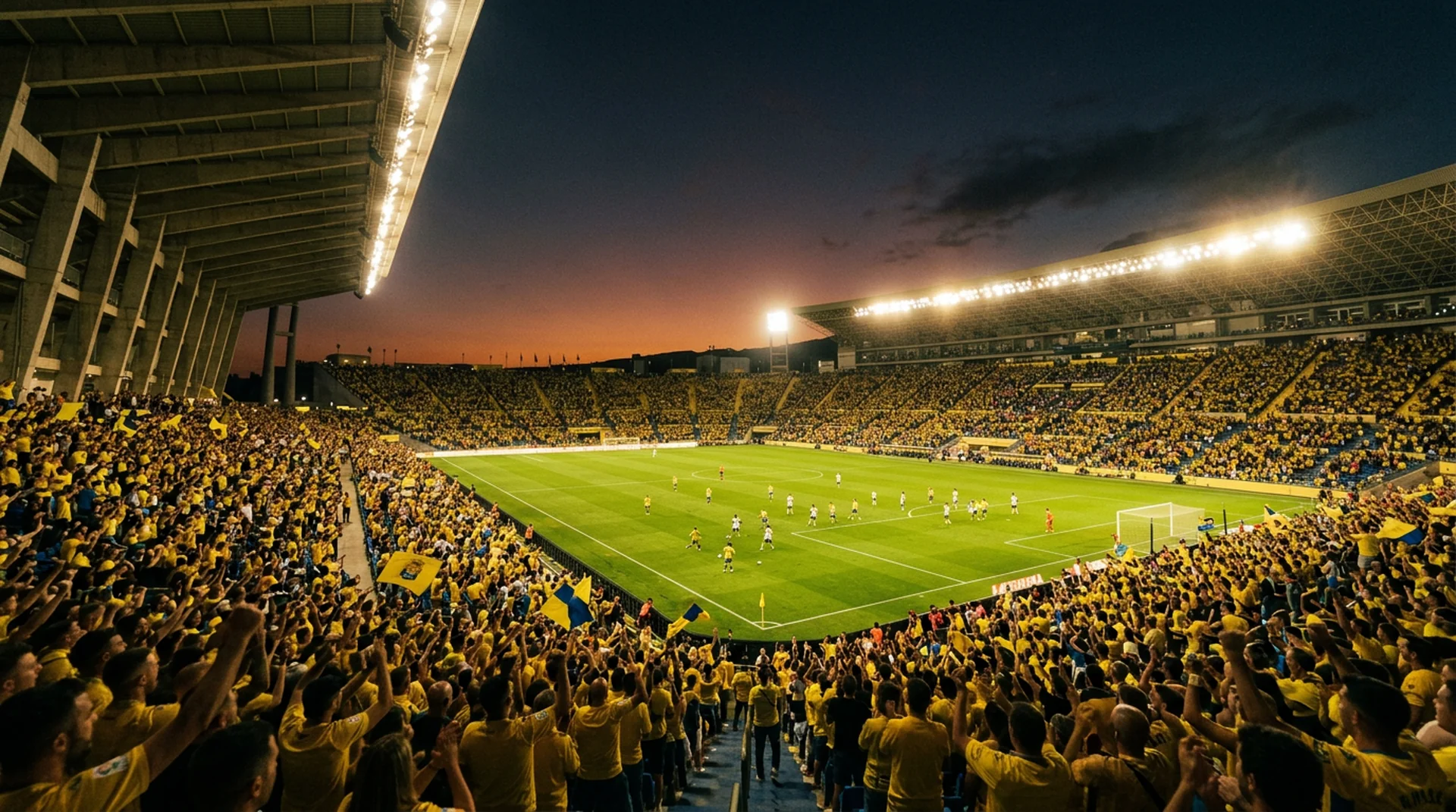
Las Canteras beachfront bars show every match for fans without tickets, and the streets around Estadio Gran Canaria fill with yellow shirts on matchday. As a one-club island, expect a shared, communal atmosphere with none of the divided energy found in mainland football cities.

  • 🚌 Guaguas bus - the stadium under 20 min from the centre
  • 🎉 Las Canteras beachfront - Las Palmas's natural gathering point
  • ⚔️ The Derbi Canario - a rivalry that crosses open ocean
🟡

Matchday in Las Palmas

"There's no rival across town here - just an island united behind Los Amarillos."

Las Palmas's mild, stable climate means matchday atmosphere builds outdoors more easily than in Spain's hotter mainland cities. Expect fans to gather along Las Canteras beachfront and in the city centre before making their way to Siete Palmas by bus.

Visitors arriving specifically for a Derbi Canario fixture against Tenerife should book travel and hotels well in advance - inter-island demand for this match tends to sell out ferries and flights alike.

🍻
Pre-Match
Las Canteras beachfront bars and restaurants fill from midday on matchdays, a relaxed, open-air alternative to a city-centre crawl.
📺
Public Viewing
Parque Santa Catalina and the Las Canteras promenade are Las Palmas's natural gathering points, likely candidates for an official fan zone, to be confirmed by FIFA closer to 2030.
🚌
After the Final Whistle
Expect buses near the stadium to be busy for 20-30 minutes after a match. Many fans head back to the beachfront to continue the evening.
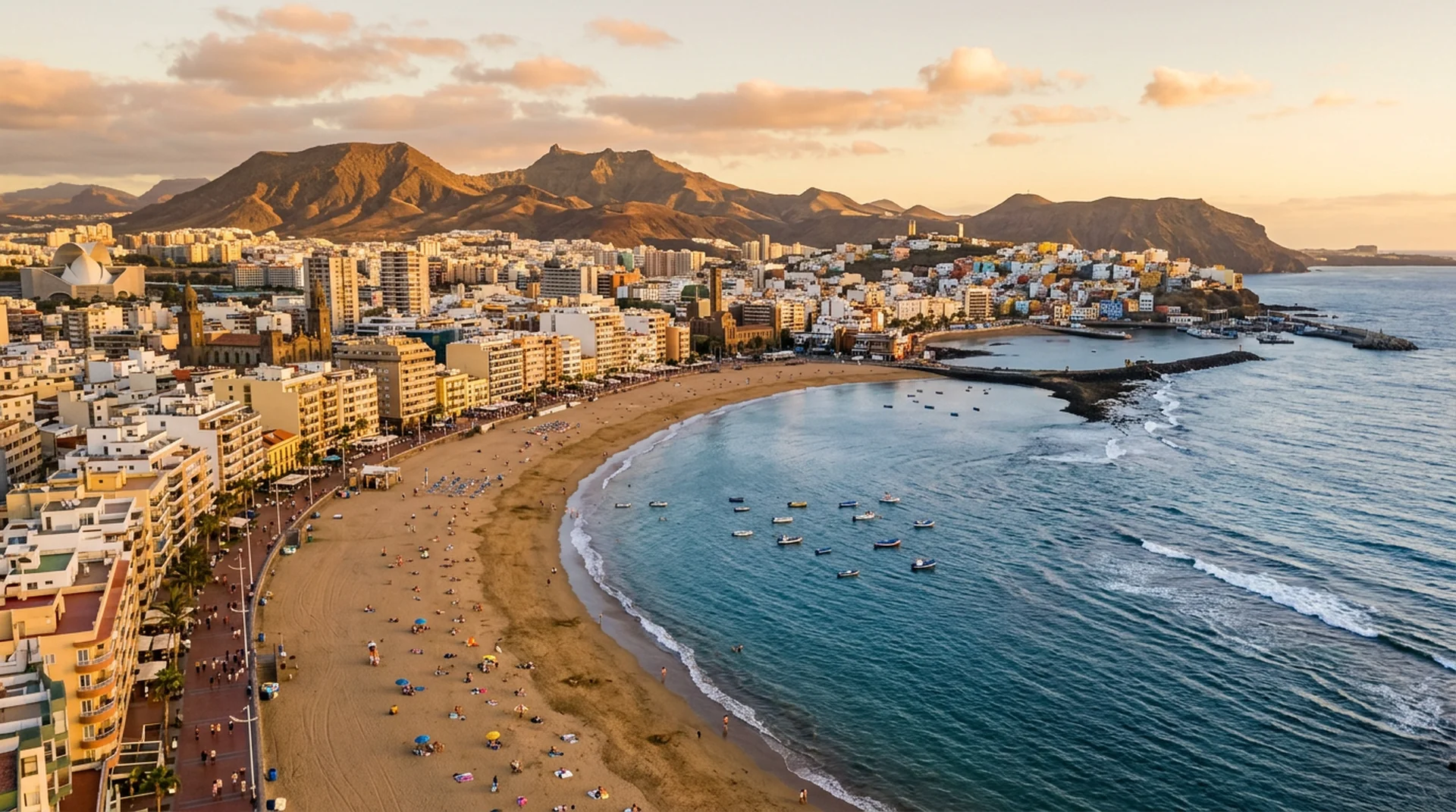
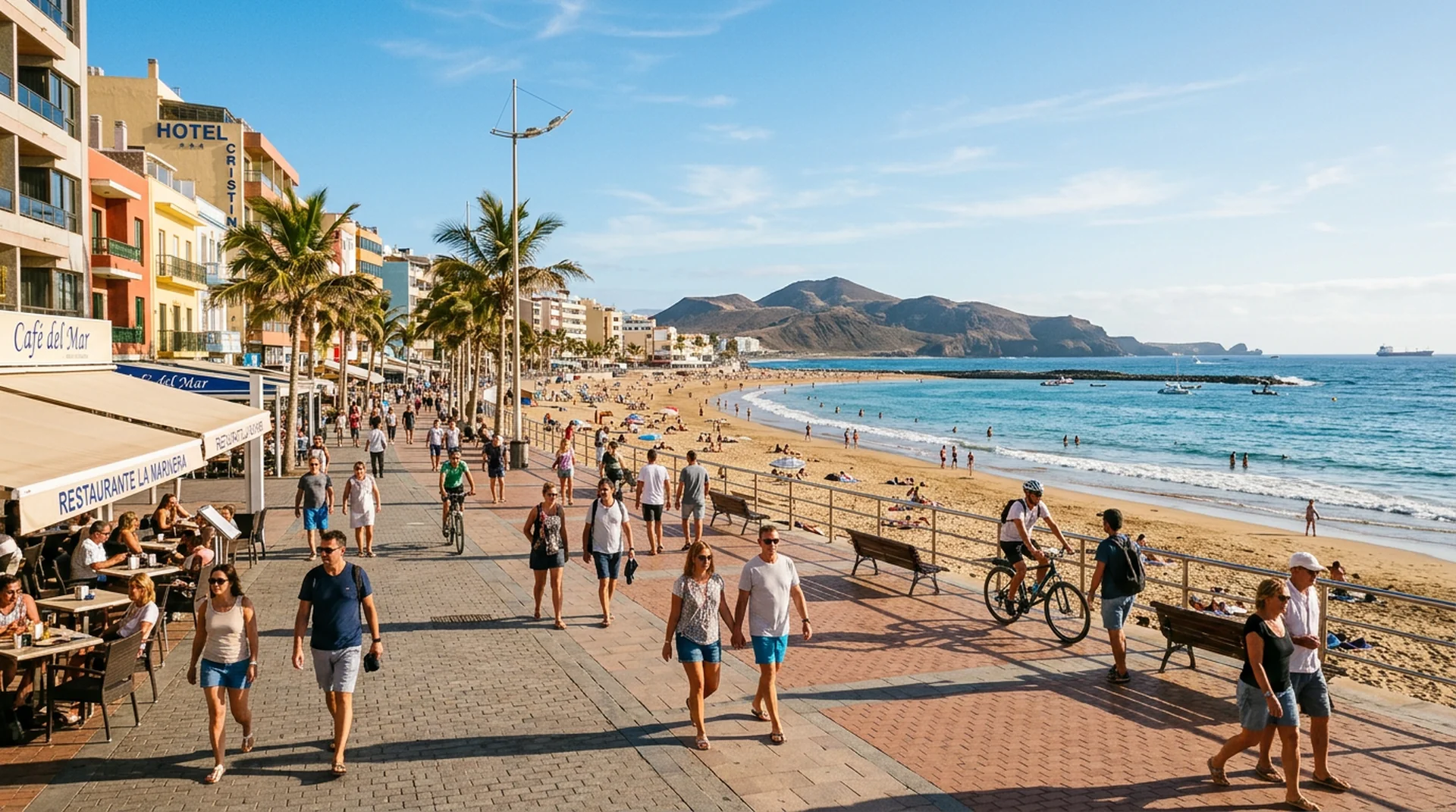
Las Palmas Las Canteras beach skyline

Three Neighbourhoods, One Island City

Las Palmas stretches along the coast, so location matters more than in Spain's compact mainland cities. Here's how the main areas compare.

  • 🏖 Las Canteras - beachfront, restaurants, the default first choice
  • 🏛 Vegueta - historic old town, colonial architecture, museums
  • ⚽ Siete Palmas - the stadium's own district, modern, limited hotels
Las Canteras beach Las Palmas
🏖
Las Canteras - Beachfront & Central
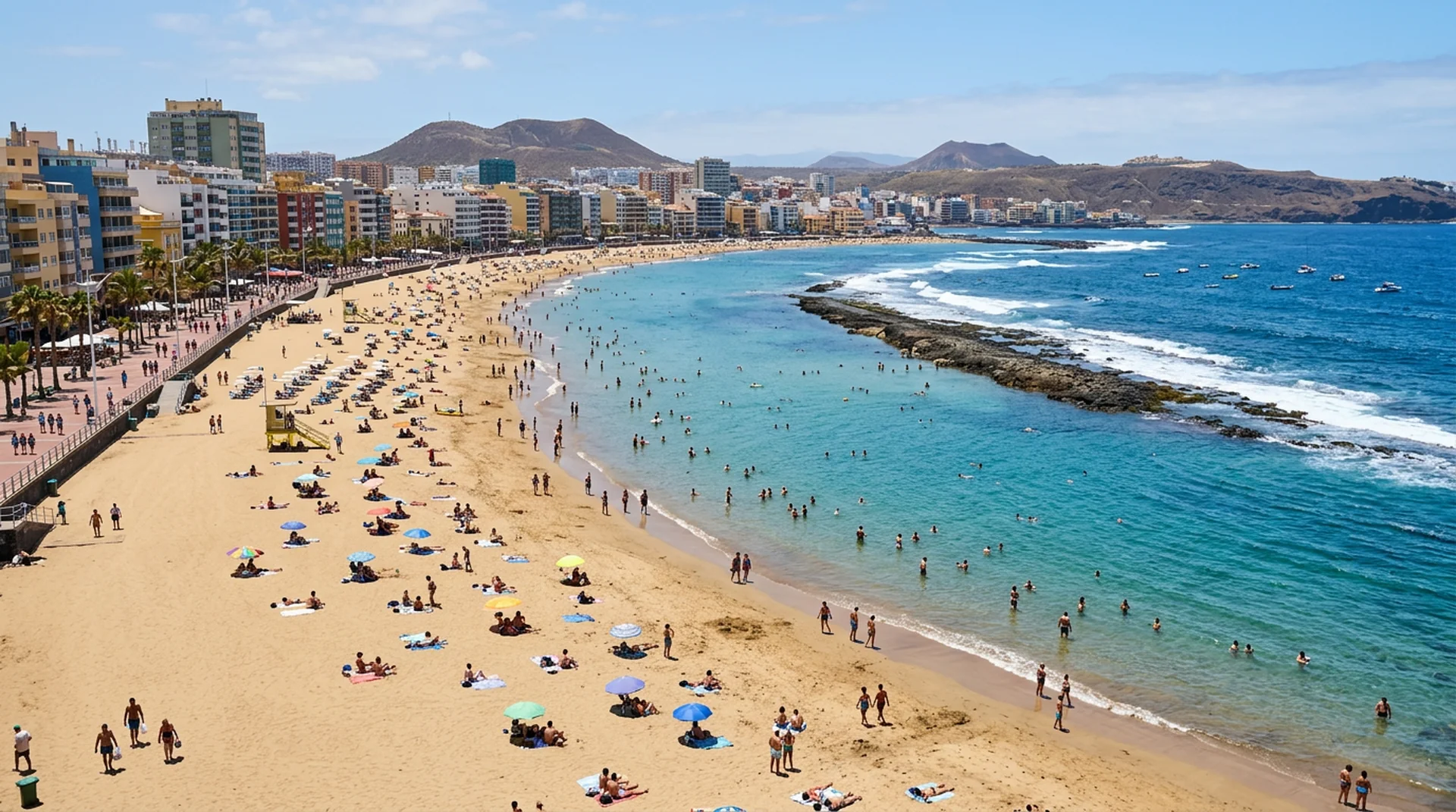
A three-kilometre urban beach lined with restaurants and hotels, often ranked among Europe's best city beaches. The most convenient, atmospheric base for most visitors.
Vegueta old town Las Palmas
🏛
Vegueta - Historic Old Town
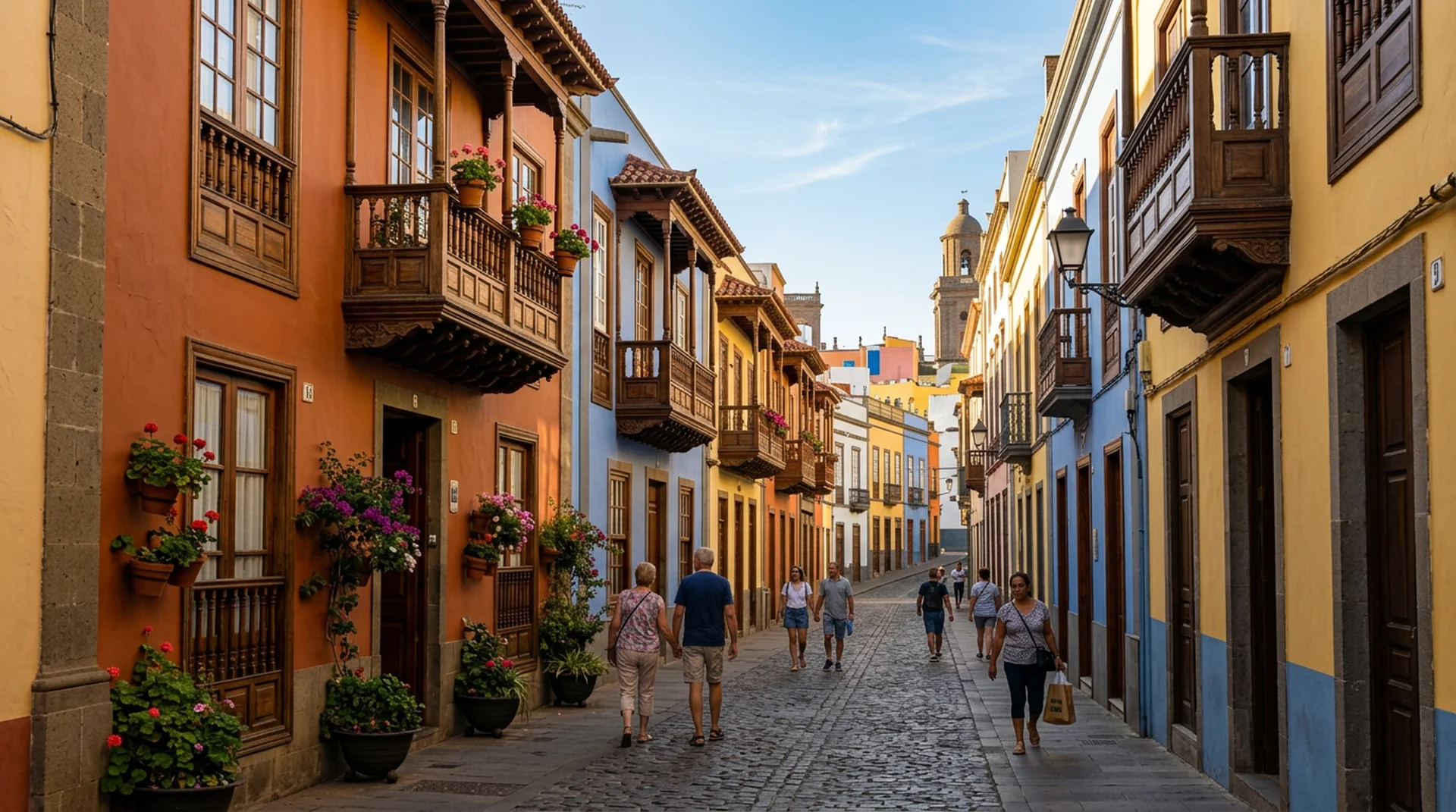
The original colonial-era settlement, with cobbled streets, the Casa de Colón museum and Canarian architecture. Quieter, more historic, a short bus ride from the beach.
Siete Palmas district Las Palmas
Siete Palmas - Matchday Convenience
The modern district around Estadio Gran Canaria, home to shopping centres and newer residential blocks. Limited hotel stock but a genuine option for match-focused visitors.
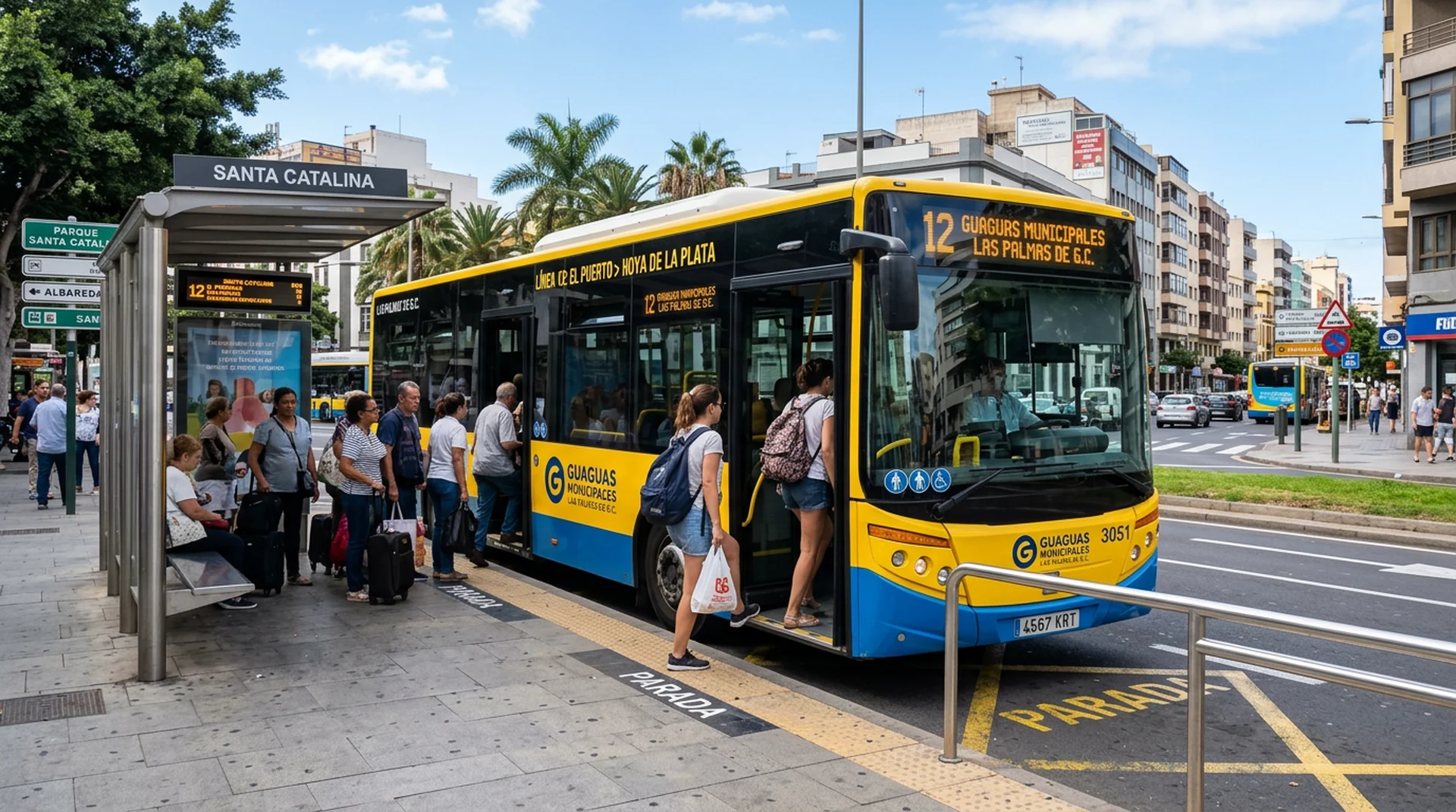
Las Palmas Guaguas bus

Buses, Ferries, and a Flight to the Mainland

Las Palmas has no train network - Guaguas Municipales buses cover the city, while ferries and short flights link Gran Canaria to the other Canary Islands and mainland Spain.

From Gran Canaria Airport to the Stadium

Airport (LPA)
Global bus 60
~35-40 min
City centre
Parque Santa Catalina
~15-20 min
Estadio Gran Canaria
Guaguas bus
~44,000 seats (target)

Airport to centre: ~35-40 min, €3-4 by bus · Taxi: ~25-30 min · Madrid or Barcelona by air: ~2.5-3h

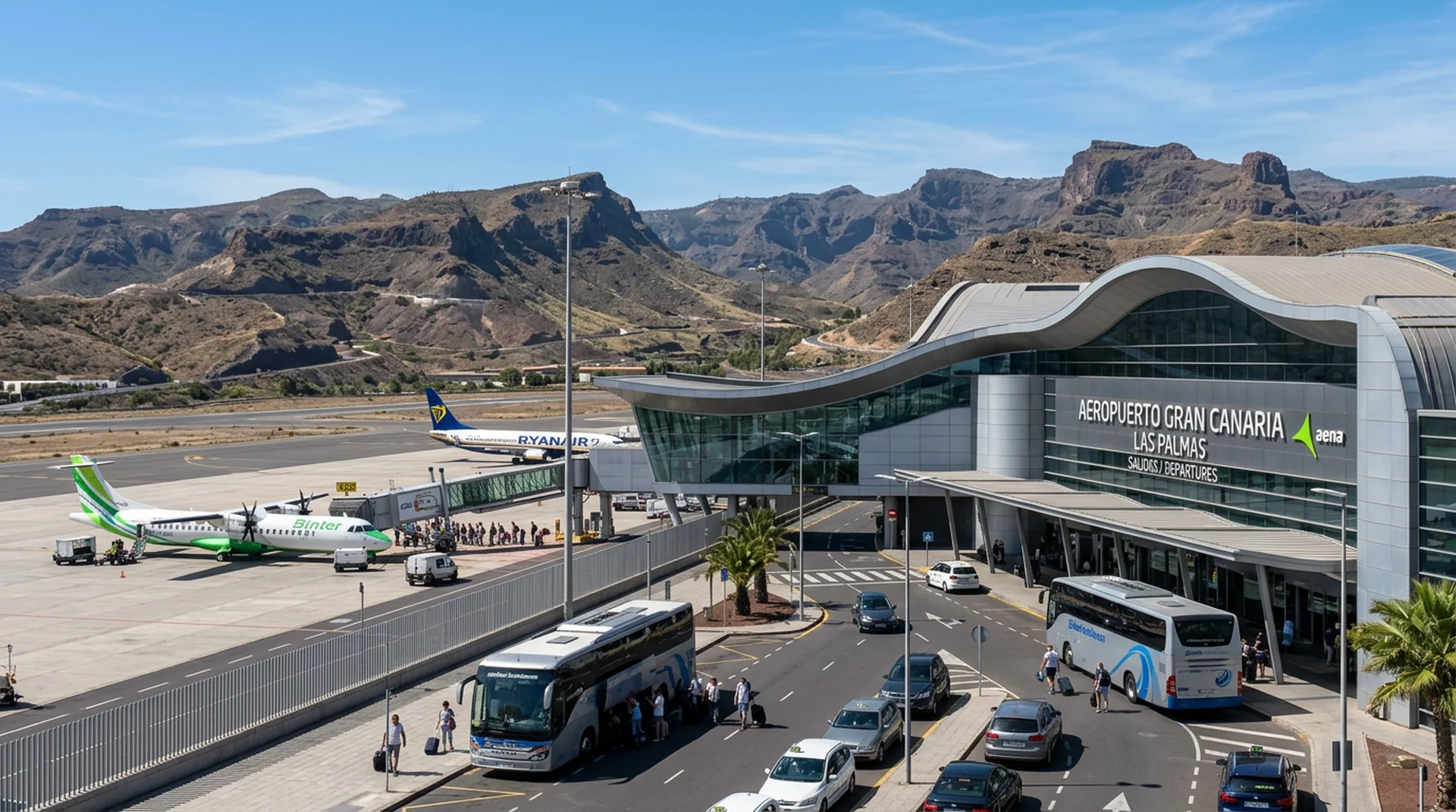
Gran Canaria Airport
From the Airport
Gran Canaria Airport (LPA) sits about 18km south of the centre. Global bus lines 60 and 66 run to Parque Santa Catalina in around 35-40 minutes, or take a taxi directly in about 25-30 minutes.
Compare flights
Las Palmas bus network
Guaguas Municipales
Las Palmas's city bus network covers the whole coastal stretch from Las Canteras to Vegueta and out to Siete Palmas. No train or tram - buses are the main way to get around.
See the stadium
Las Palmas ferry port
Ferries to Other Islands
Regular ferries connect Las Palmas to Tenerife, Fuerteventura and Lanzarote, useful for a Derbi Canario trip or exploring the wider archipelago between matches.
Where to stay

Following matches in more than one city? Las Palmas has no rail or road link to mainland Spain - all onward travel is by air or sea. See the Spain transport guide for full routes across all host cities.

What to Do When There's No Match

Las Palmas rewards long beach mornings and slow evenings in Vegueta. Its mild, stable climate makes almost any time of day pleasant to explore outdoors.

Las Canteras beach Las Palmas
🏖
Las Canteras Beach
A three-kilometre golden-sand beach protected by a natural volcanic reef, often ranked among the best urban beaches in the world. Ideal for a morning swim before a match.
Vegueta old town Las Palmas
🏛
Vegueta
Las Palmas's historic core, founded in 1478, with colonial architecture and the Casa de Colón, said to have hosted Columbus before his voyage to the Americas.
Muelle Deportivo Las Palmas port
Puerto de la Luz
One of the busiest ports in Spain and a key historic stopover point for transatlantic shipping. A working harbour worth a wander, especially at sunset.
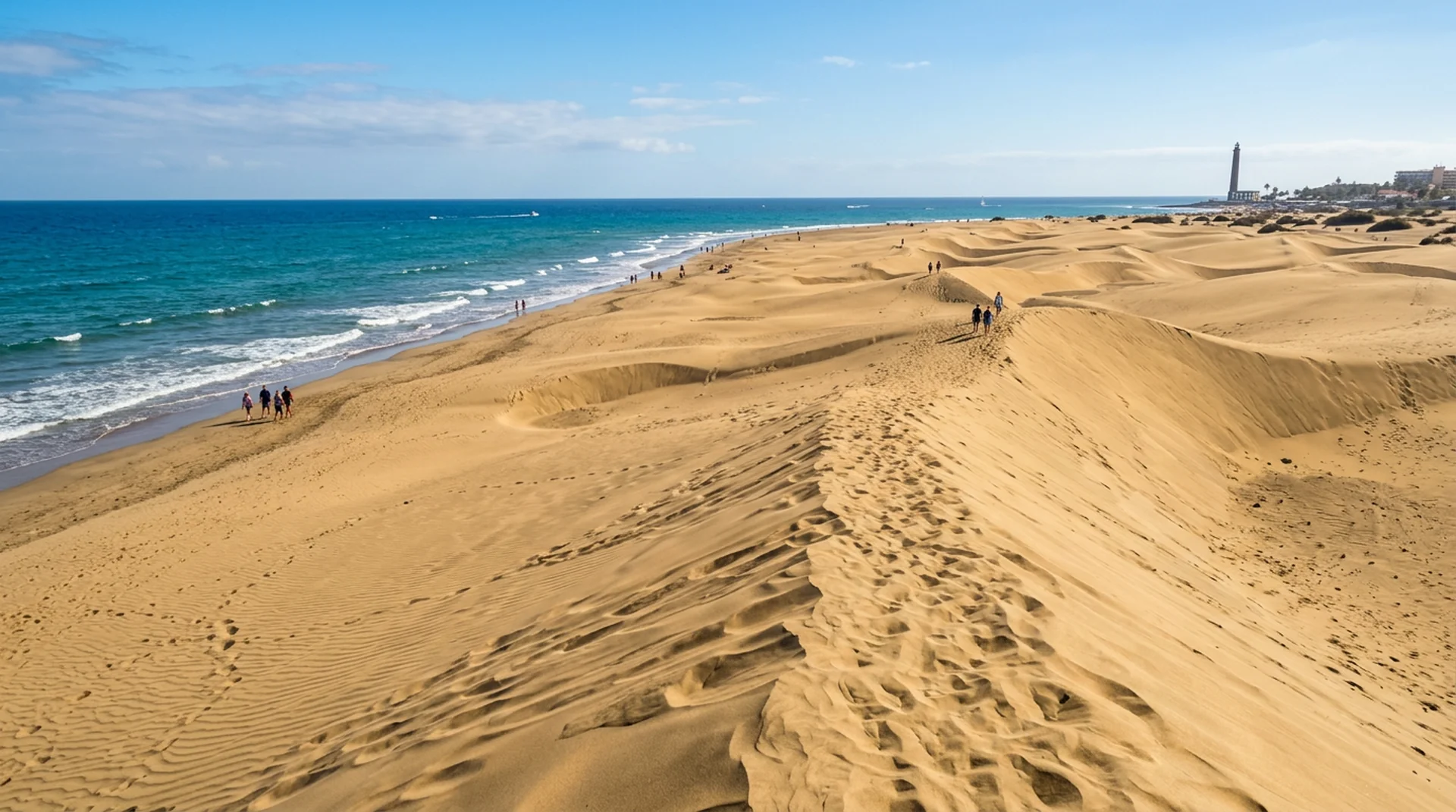
Maspalomas dunes Gran Canaria
🏜
Maspalomas Dunes
A striking desert-like dune system and beach in the island's south, about an hour away by car or bus - a genuine change of scenery from the capital.
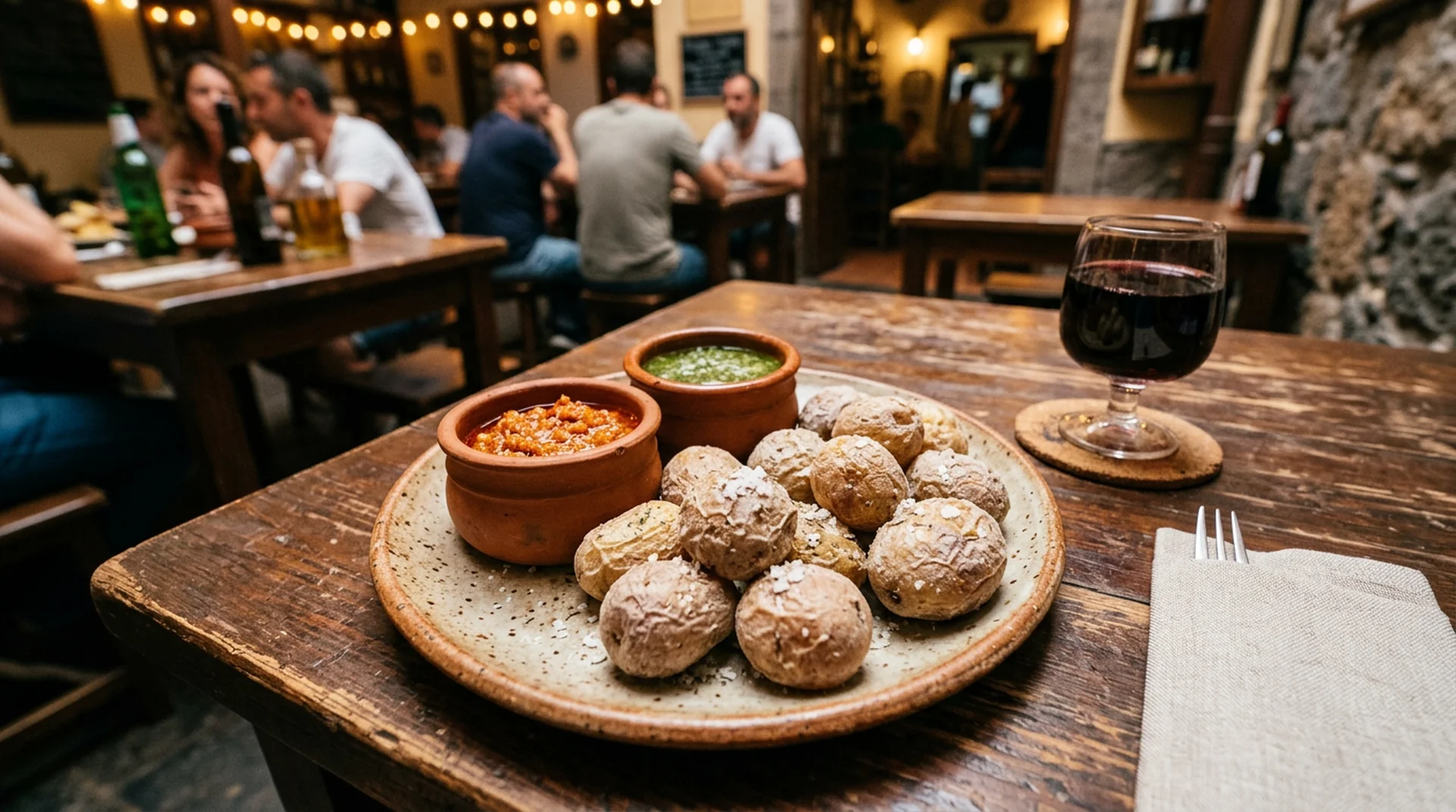
Canarian food Las Palmas matchday

What to Eat Before Kickoff

Canarian cuisine reflects the island's Atlantic setting and unique agricultural history - simple, distinctive dishes built around potatoes, mojo sauces, gofio and abundant fresh seafood.

  • 🥔 Papas arrugadas - wrinkled potatoes with mojo sauce
  • 🌶 Mojo picón & mojo verde - spicy red and herby green sauces
  • 🌾 Gofio - toasted grain flour used across many local dishes
  • 🐟 Fresh Atlantic seafood - abundant given the island setting
  • 🏖 Las Canteras beachfront - dozens of casual restaurants and bars

Here's what to order at each budget, from a quick beachfront bite to Canarian seafood specialities.

Casual & Beachfront
€8-15/dish
  • Papas arrugadas con mojo: the essential Canarian starter, at nearly any local restaurant
  • Bocadillo de queso: local Canarian cheese sandwich
  • Tropical Dorada beer: the local Canarian lager
  • Beachfront chiringuitos: casual bars along Las Canteras
Fine Dining
€50-90/person
  • Modern Canarian restaurants: reinterpreting mojo and gofio with contemporary technique
  • Fresh seafood tasting menus: in Vegueta or along Las Canteras
  • Local malvasía wine: a distinctive Canarian volcanic-soil white
  • Sea-view dining: widely available given the coastal setting

Near the stadium specifically, Siete Palmas has shopping-centre dining options, though Las Canteras offers a far more atmospheric setting for a pre-match meal. Seafood is generally excellent and fairly priced given the island's fishing tradition.

Las Canteras beach Las Palmas relaxing

Before You Go

Weather, safety, language and money - the basics every fan should have sorted before landing in Las Palmas.

  • 🌡️ Mild, remarkably stable subtropical climate year-round
  • 🛂 Schengen Area - visa-free for 60+ nationalities
  • 💶 €60-110/day comfortably covers hotel, food and transport
🌤

Weather

24-27°C in June-July, mild and stable thanks to trade winds and the subtropical oceanic climate. Noticeably cooler than mainland host cities like Seville or Madrid in summer.

🛡

Safety

Las Palmas is a safe city with low rates of violent crime. Standard pickpocket precautions apply around Las Canteras and Vegueta in busy periods.

🗣

Language

Spanish is the official language; English is spoken in hotels and tourism-facing venues, especially around Las Canteras given the island's established tourism industry.

💳

Money

Euro (€), though the Canary Islands have a distinct lower VAT rate (IGIC), making some goods slightly cheaper than mainland Spain. Cards accepted almost everywhere.

Book flights early - as an island destination, Las Palmas has less flight capacity than mainland cities, and prices can rise sharply around confirmed match dates. For visa requirements and FIFA ticket ballot details that apply across Spain, see the Spain visa guide and match ticket guide.

FAQ

Las Palmas Questions

Is Estadio Gran Canaria finished being expanded?
Not yet as of mid-2026. The stadium is undergoing a major renovation, nicknamed "La Nube" (The Cloud), that will raise capacity from around 32,400 to roughly 41,850-44,000 seats. Work runs from 2025 to around 2027-2029, with UD Las Palmas continuing to play there throughout construction.
What is 'La Nube' at Estadio Gran Canaria?
La Nube (The Cloud) is the nickname for the stadium's redevelopment project, designed by L35 Architects with Estudio 0710. It features a spoke-wheel roof structure and a facade incorporating traditional Canarian pintadera patterns, aiming to make the stadium a sustainable, multi-use landmark beyond football.
How do I get to Estadio Gran Canaria?
The stadium sits in the Siete Palmas district. Local city buses (Guaguas Municipales) connect it to the centre and Las Canteras beach area in around 15-20 minutes.
How many World Cup 2030 matches will Las Palmas host?
Exact fixtures depend on FIFA's official match schedule, expected around 2027-2028. As a single-stadium city with one of the smaller capacities among Spain's venues, Las Palmas is expected to host a limited number of group-stage matches.
Is Las Palmas the only World Cup 2030 host city on an island?
Among Spain's venues, yes - Las Palmas de Gran Canaria is the only host city located in the Canary Islands, roughly 1,800km from mainland Spain in the Atlantic Ocean off the coast of Africa.
What is the best neighbourhood to stay in Las Palmas for the World Cup?
The area around Las Canteras beach offers the best combination of atmosphere, restaurants and proximity to the city centre. Vegueta, the historic old town, suits travellers who want colonial architecture and museums over beach access.
Should I stay near the stadium or near the beach?
Stay near Las Canteras beach or in the city centre. The Siete Palmas stadium district is a modern, mostly residential and commercial area with limited tourist appeal, while central Las Palmas reaches it by bus in about 15-20 minutes.
Is Las Palmas expensive compared to other World Cup 2030 host cities?
Las Palmas is moderately priced by Spanish standards, though flights can add cost given the island's distance from the mainland. Budget hotel rooms outside the tournament premium typically run €60-110/night.
What is UD Las Palmas's football history?
UD Las Palmas, founded in 1949, has never won a major national trophy but is a well-supported, historic Spanish club known for producing technical players. The club returned to La Liga in 2023-24 after a spell in the second tier, coinciding with the push to expand its stadium for World Cup consideration.
Is there local rivalry in Canarian football?
UD Las Palmas is by far the dominant club on Gran Canaria, with no significant local rival in the way Madrid, Barcelona or Seville have. Its natural sporting rivalry is with CD Tenerife, based on the neighbouring island, a fixture known as the Derbi Canario.
What is the Derbi Canario?
The Derbi Canario is the rivalry between UD Las Palmas and CD Tenerife, representing the Canary Islands' two largest cities on separate islands. Because the clubs are based nearly 100km apart across open water, it's one of Spanish football's most unusual derbies logistically.
What is the weather like in Las Palmas in June and July?
Mild and remarkably stable, typically 24-27°C thanks to Gran Canaria's subtropical oceanic climate and trade winds. It's notably cooler than mainland Spanish host cities like Seville or Madrid in summer.
What should I eat in Las Palmas?
Try papas arrugadas, small wrinkled potatoes served with mojo sauce (a spicy red mojo picón or a green mojo verde), and gofio, a toasted grain flour used in various traditional Canarian dishes. Fresh seafood is abundant given the island setting.
Is Las Palmas safe for tourists during the World Cup?
Yes, Las Palmas is considered a safe city with low rates of violent crime. Standard pickpocket precautions apply in busy tourist areas like Las Canteras beach and Vegueta.
How do I get to Las Palmas from mainland Spain?
Gran Canaria Airport (LPA) has regular flights from Madrid and Barcelona, typically 2.5-3 hours. There is no train connection since the Canary Islands are not connected to mainland Spain's rail network; flying is the only practical option for most visitors.
Can I island-hop from Las Palmas during the World Cup?
Yes. Ferries and short flights connect Gran Canaria to Tenerife, Fuerteventura, Lanzarote and other Canary Islands, making a multi-island itinerary realistic for fans with time between matches.

Continue Planning

See the full Spain guide, covering all World Cup 2030 host cities across the country.

Back to Spain Guide

Get Las Palmas World Cup Updates

Hotel deal alerts near Estadio Gran Canaria, FIFA ticket ballot dates, and insider Las Palmas tips - straight to your inbox.