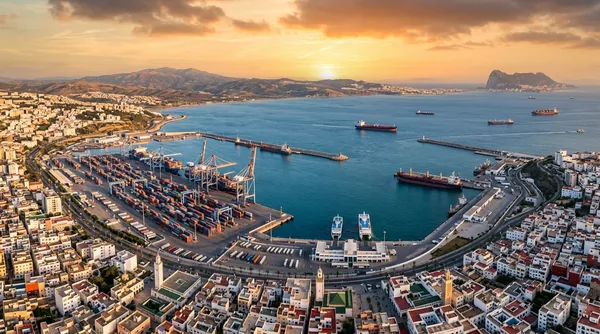
Morocco's gateway to Europe sits just 14km from Spain across the Strait of Gibraltar, and its newly-expanded Ibn Batouta Stadium reopened in November 2025 at 75,500 seats, already Morocco's largest completed World Cup venue. Off the field, Tangier pairs a UNESCO-adjacent Kasbah and Medina with a genuinely unique fan trick: catch a match in Spain, then cross the strait by ferry to watch one in Africa the next day.
Stadium
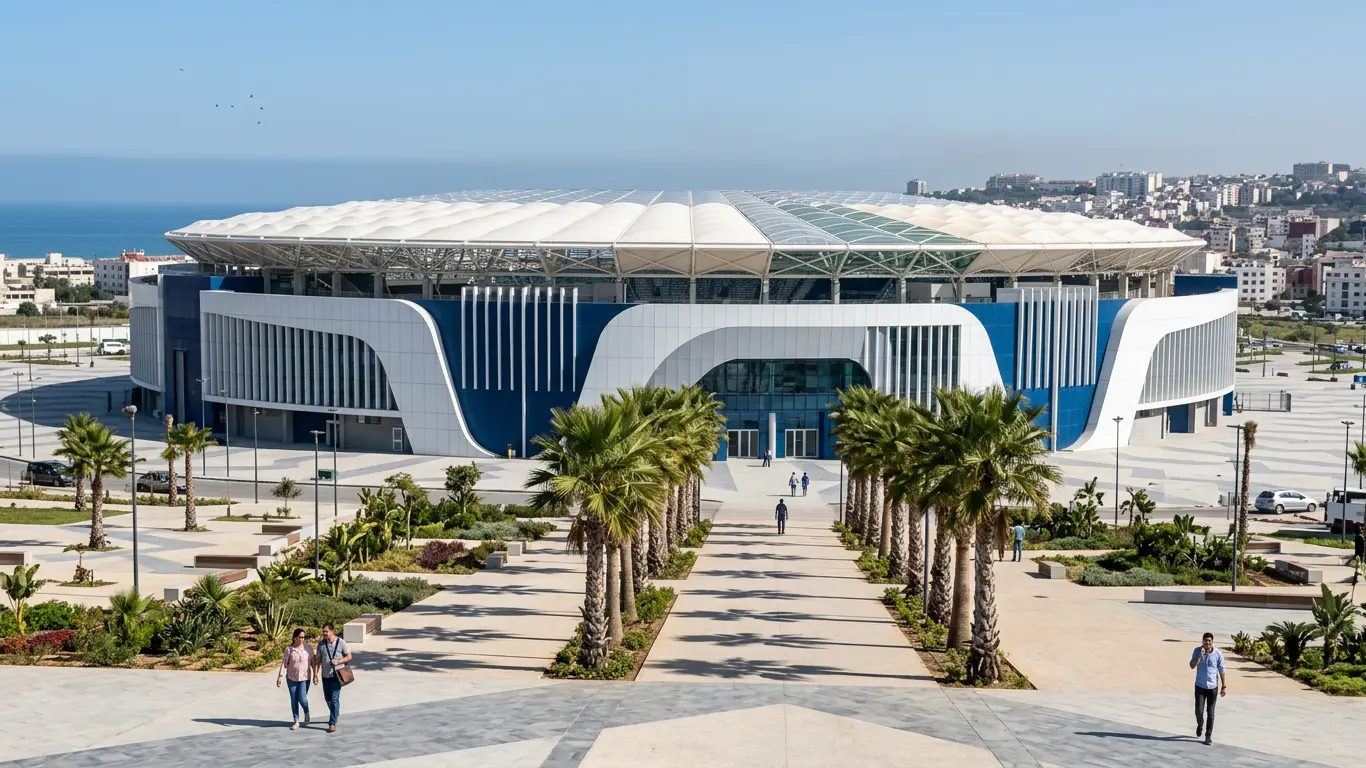
Tangier is putting forward a single World Cup venue, and it's the furthest along of any Moroccan host stadium. The Ibn Batouta Stadium's second renovation phase wrapped in November 2025, arriving fully FIFA-compliant years ahead of kickoff.

Football Culture
IR Tanger, often shortened to IRT, was officially founded in 1957 as Union Deportiva de Tanger, then reformed in 1983 when several local clubs merged to form Ittihad Riadi Tanger as it exists today. The club carries deep support across the Tanger-Tetouan-Al Hoceima region and plays in blue and white, colours representing the city's coastal, northern identity.
IR Tanger has never lifted a major domestic trophy, coming closest as league runners-up in 1989-90 and reaching a Moroccan Throne Cup semi-final in 2005-06. A stronger recent chapter came after promotion back to the Botola Pro in 2015-16, when the club finished third in its return season and qualified for the 2017 CAF Confederation Cup, its first continental campaign.
A three-year strategic partnership between Eagle Football Group and Ittihad Riadi de Tanger.
- announced by Olympique Lyonnais, part of the same ownership group, on 10 November 2025
IR Tanger's fiercest rivalry is with Moghreb Athletic Tetouan (MAT) from neighbouring Tetouan, a fixture rooted in the historic rivalry between Morocco's two main northern cities. The club's ultras group, Ultras Hercules, formed in 2007, replacing an earlier group called Ultras Tanger that was founded in 2003.
The club has previously signed partnership agreements with Spanish sides Espanyol and Leganes, reflecting Tangier's close cross-strait ties to Spanish football. The November 2025 Eagle Football Group tie-up, alongside sister clubs Lyon, Botafogo and Crystal Palace, marks the most significant investment in the club's modern history, arriving as the Ibn Batouta Stadium reopened at its full World Cup capacity.
The Ibn Batouta Stadium's second renovation phase, launched in 2023, delivered a complete transformation: full roof coverage, three rebuilt tiers, 142 skyboxes and a hybrid pitch, reopening on 14 November 2025 with a Morocco-Mozambique friendly just weeks before hosting AFCON 2025 matches.
Matchday in Tangier
A city built around a port and a strait turns matchday into a genuinely cross-continental event.
The Ibn Batouta Stadium sits within its own Sports City on the southern edge of town, away from the Medina and Ville Nouvelle, so most fans gather centrally before taking a taxi out to the ground. The Grand Socco and Petit Socco fill with fans and their cafes before kickoff, and Cafe Hafa's terrace has hosted generations of Tangier's football conversations over mint tea.
Given the ferry connection to Spain, expect a genuinely international matchday crowd here, with fans crossing over from Andalusia to take in a Morocco fixture the day after a Spain match.


From Ibn Battouta Airport to the City Centre
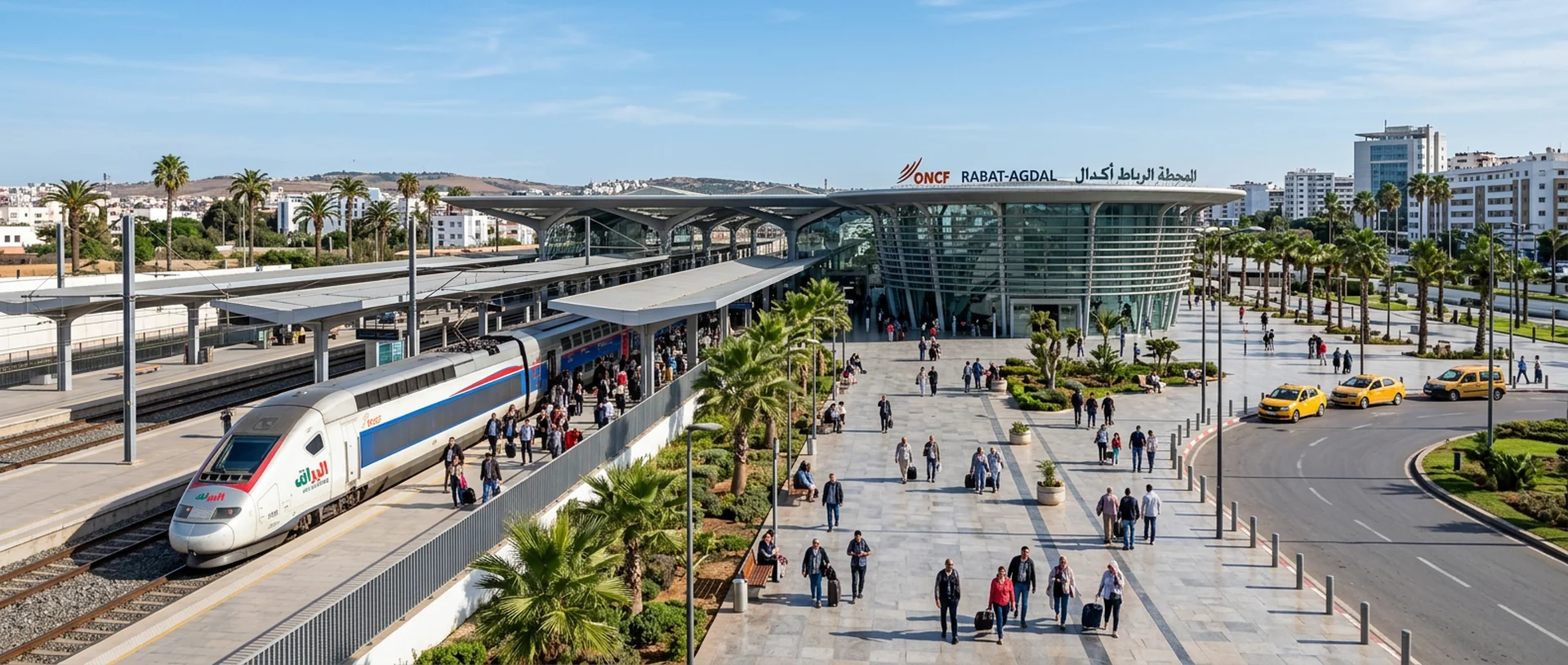
Airport to city centre: ~15-20 min by taxi · City centre to stadium: taxi, roughly 15-20 min · Tangier to Casablanca by Al Boraq: ~2h10 · Tangier to Rabat: ~1h15 · Ferry to Tarifa, Spain: ~35-40 min


Following matches in more than one country? Tangier is the only Moroccan host city with a direct sea link to Spain, book ferry crossings well in advance during the tournament as demand will be high. See the Morocco transport guide for full routes across all host cities.
Between Matches
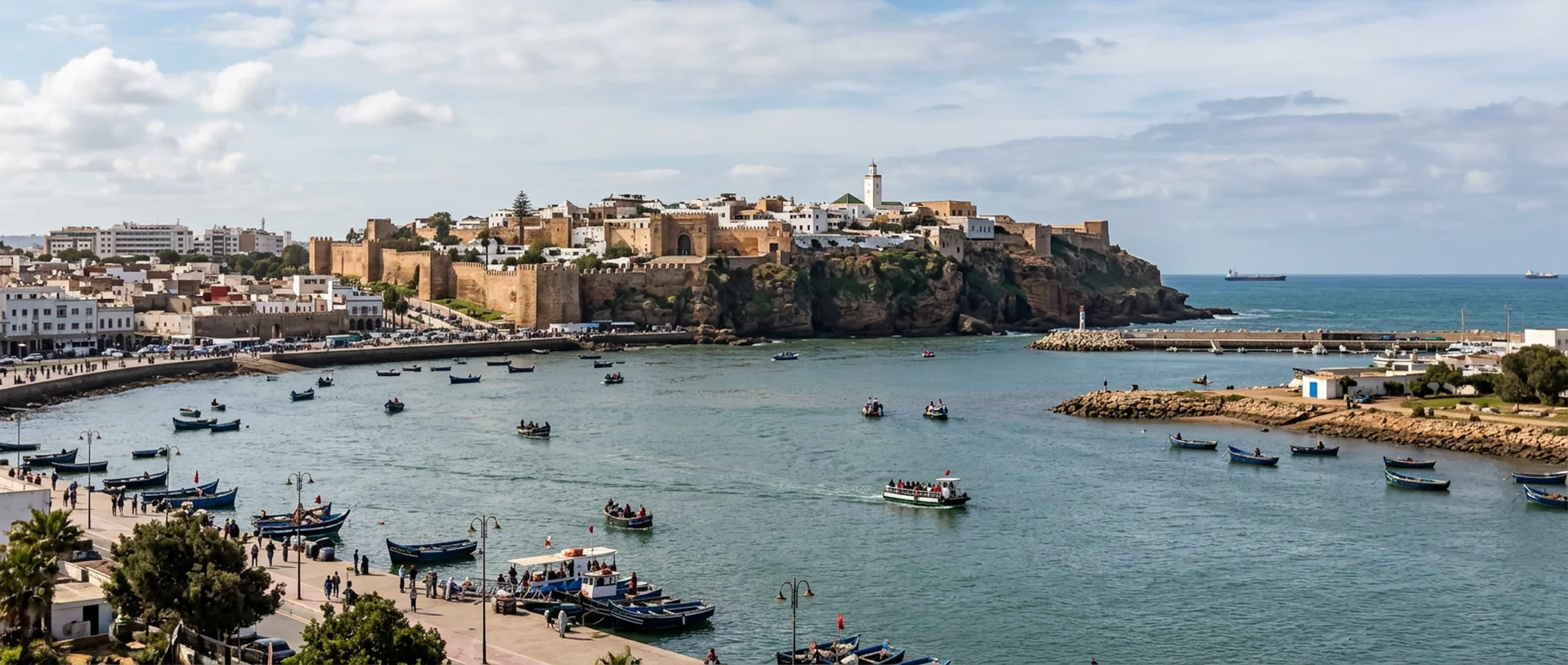
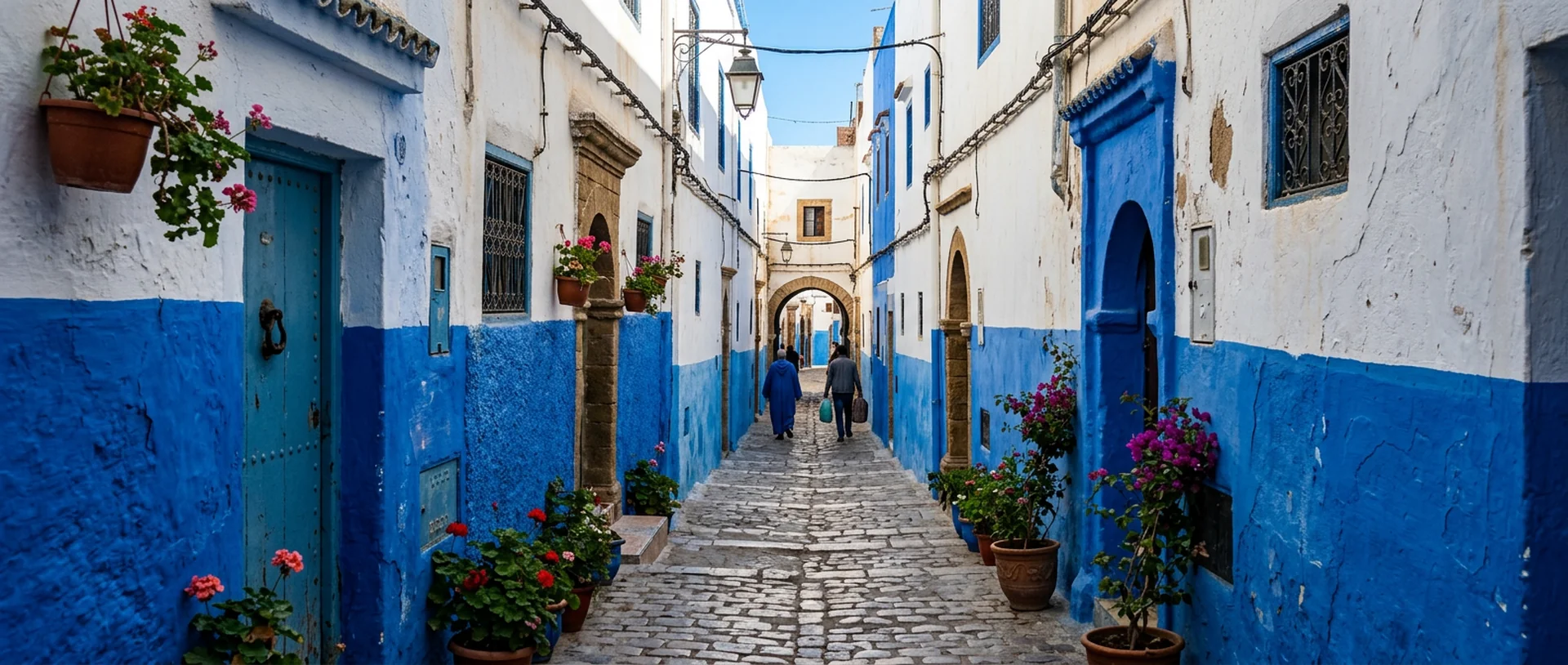
Tangier has drawn writers, artists and travellers for over a century. Give the Kasbah and Medina a proper afternoon, then head out to the coast for the caves and the cape.


Here's what to order at each budget, from port-side fish stalls to riad courtyard dining in the Kasbah.
Cash is still preferred for tips, petit taxis and Medina stalls, though card payments are widely accepted at larger restaurants given Tangier's tourism infrastructure. For an authentic, affordable meal, look for small fish restaurants near the port rather than the more tourist-facing spots directly on the Grand Socco.
26-28C in June-July, mild by Moroccan standards thanks to Tangier's position on the Strait of Gibraltar. Evenings are cool, mornings can be breezy, and rain is rare in summer despite the region being Morocco's wettest overall.
Tangier is generally safe and has been the focus of major royal investment in tourism infrastructure. As with any port city, stay alert around the port, ferry terminals and busy Medina alleys.
Darija (Moroccan Arabic) is the everyday language. French is widely used in business, and Spanish is understood more here than almost anywhere else in Morocco, alongside growing English use in tourism.
Moroccan Dirham (MAD). Cash is preferred in the souks and for petit taxis; cards are accepted at larger hotels, restaurants and near the port. ATMs are plentiful in Ville Nouvelle and around the Medina gates.
Tangier's hotel stock has grown significantly with recent tourism investment, but demand from both World Cup fans and ferry travellers connecting to Spain will be high, so book early around confirmed match dates. For visa requirements and FIFA ticket ballot details that apply across Morocco, see the Morocco visa guide and match ticket guide.
FAQ
Continue Planning
See the full Morocco guide, covering all World Cup 2030 host cities across the country.
Stay Informed
Hotel deal alerts near the Kasbah, FIFA ticket ballot dates, ferry booking windows and insider Tangier tips - straight to your inbox.