Newsletter
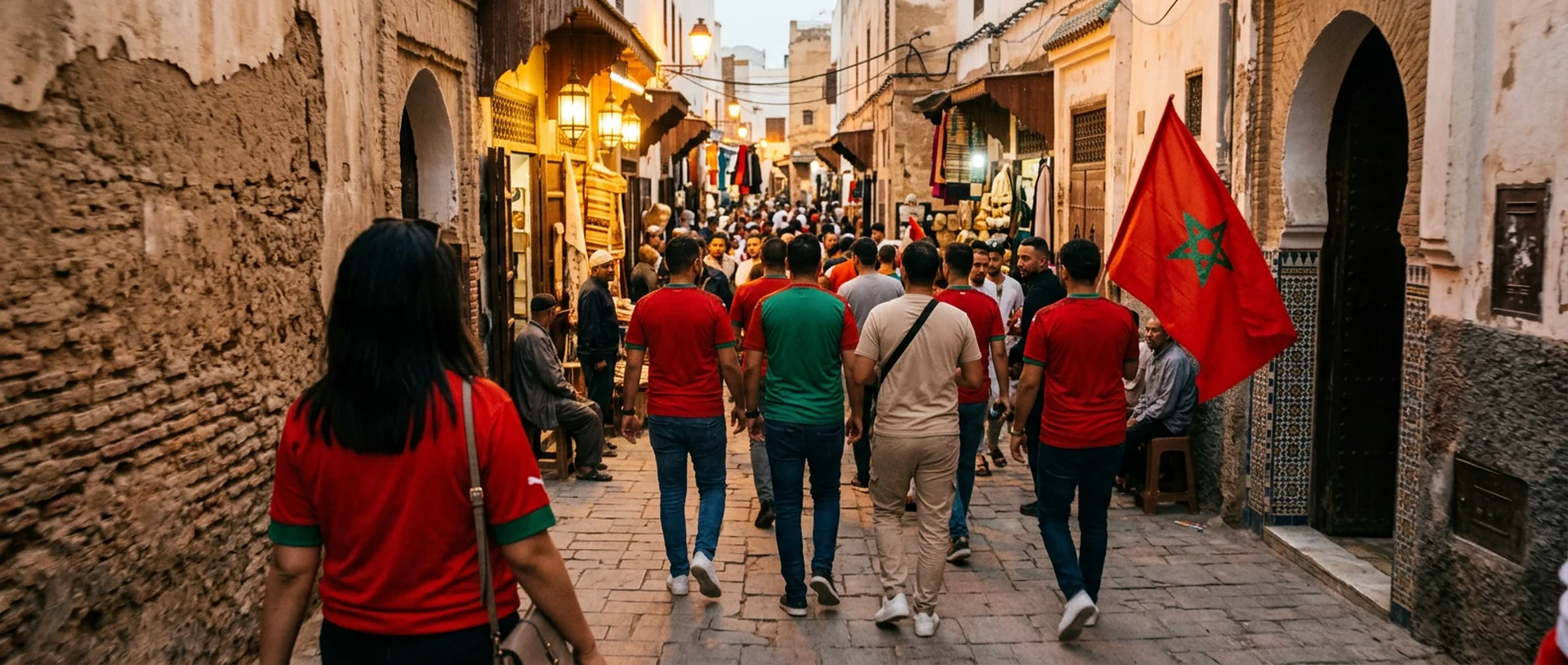
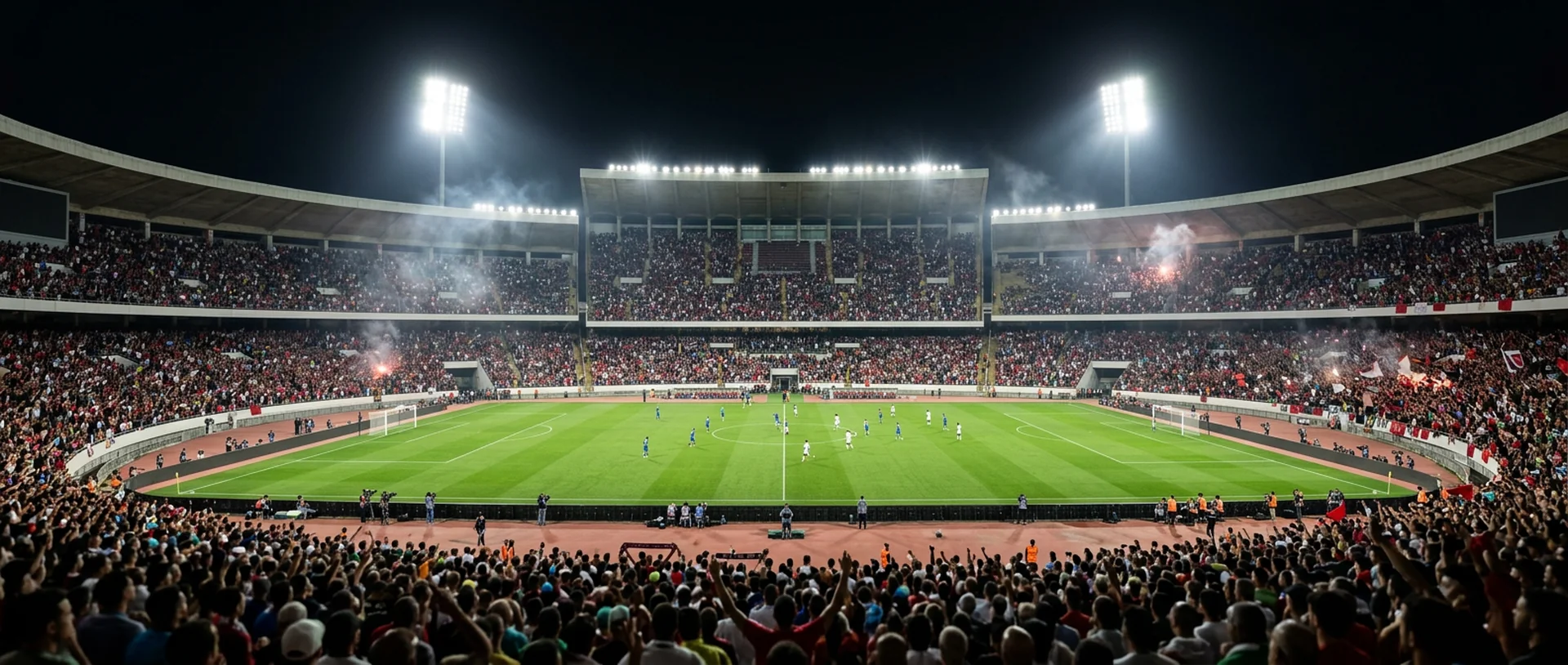
Prince Moulay Abdellah Stadium electric matchday atmosphere
Morocco · World Cup 2030 Host City

Rabat

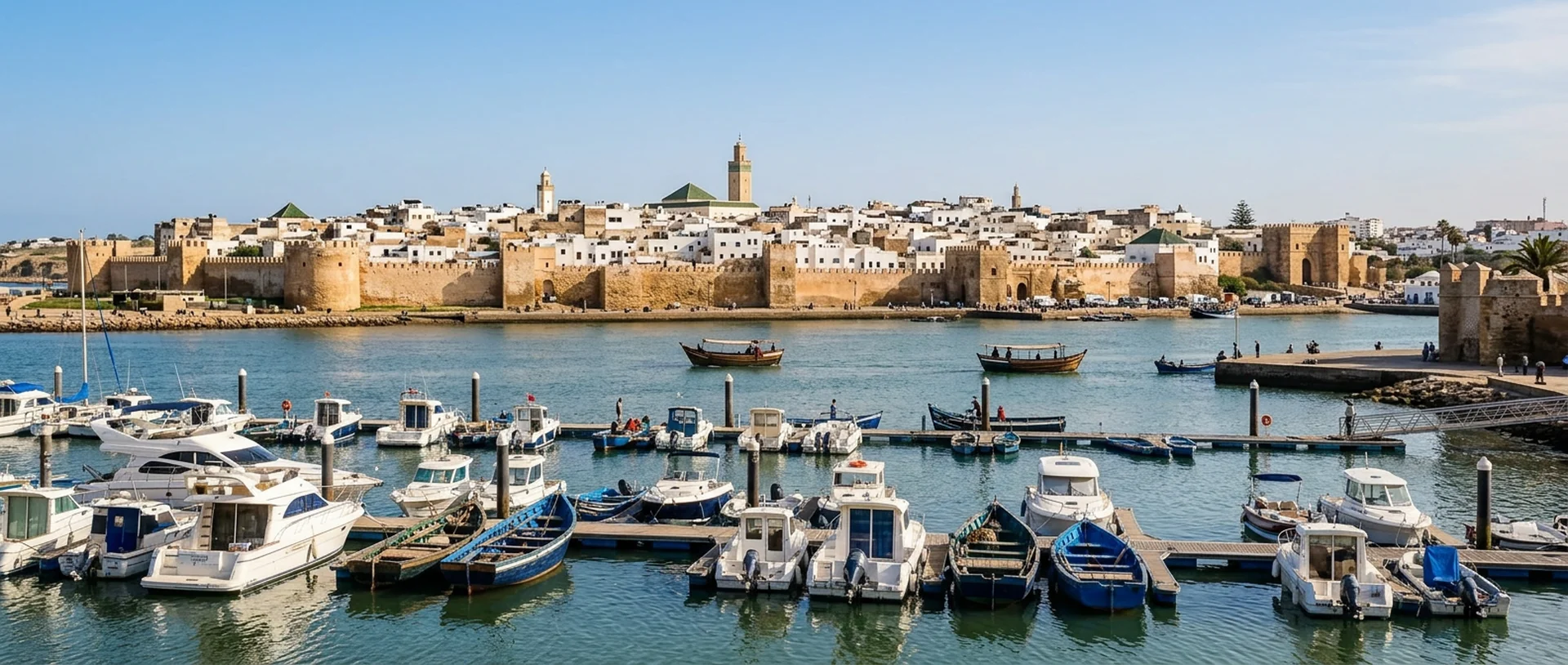
Morocco's capital brings a rare advantage to the World Cup: its stadium is already finished. The Prince Moulay Abdellah Stadium opened in September 2025 and hosted the opening match and final of AFCON 2025, giving Rabat a proven, FIFA-ready venue years ahead of most other host cities. Off the field, expect the Kasbah des Oudaias, the Medina and a genuinely capital-city calm to set Rabat apart.

1Stadium
68,700Stadium Capacity
2025Stadium Completed
24-27°CJune-July Avg High
Until kickoff · 8 June 2030
000Days
:
00Hours
:
00Mins
:
00Secs
StadiumFootball CultureMatchdayNeighbourhoods Getting AroundThings to DoFood & Drink Practical InfoFAQ
✈️Airport: RBA · Rabat-Salé
🚊Tram Line 1/2 to Madinat Al Irfane
👥Population: ~580K (city) · 1.9M+ (metro)
💵Moroccan Dirham (MAD)
🗣Darija Arabic & French · English increasingly spoken

One Stadium, Already Built

Rabat is putting forward a single World Cup venue, and unlike several other Moroccan host cities, it's already finished. The Prince Moulay Abdellah Stadium opened in September 2025 and has already proven itself hosting AFCON 2025.

Prince Moulay Abdellah Stadium exterior
Completed & Operational
Prince Moulay Abdellah Stadium
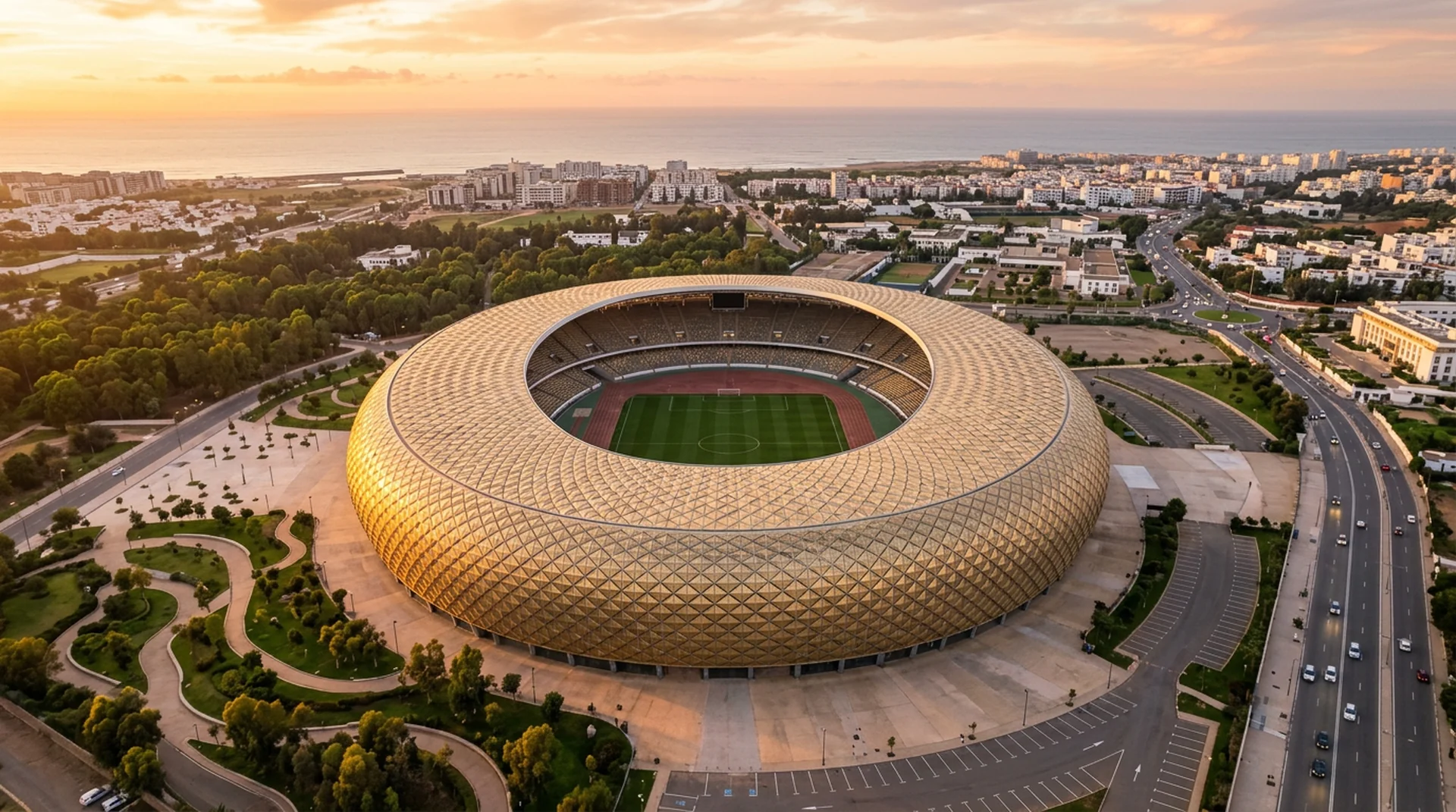
Capacity 68,700, expandable toward 75,000 · Designed by Populous with a parametric, palm-leaf inspired facade drawing on Morocco's traditional "Point de Fez" embroidery. Located in Madinat Al Irfane, about 7km from central Rabat. Opened September 2025 and hosted the opening match and final of AFCON 2025. Home to AS FAR, and built to FIFA specifications to host matches up to the semi-final stage of the 2030 World Cup.
How to get there

AS FAR, The Capital's Club

Founded 1958 13 Botola titles Never relegated 1985 African champions

⚫ Forces Armées Royales

AS FAR, whose name stands for Forces Armées Royales, has represented Rabat since 1958, three years after Moroccan independence. Traditionally playing in black, the club is one of only three founding members of the Botola, alongside Wydad AC and Raja CA, never to have been relegated from Morocco's top division. It has won 13 Botola Pro league titles and numerous Throne Cups across its history.

The club's biggest continental achievement came in 1985, when it won the African Cup of Champions Clubs, the forerunner to today's CAF Champions League, becoming the first Moroccan club to lift an international trophy. After a lean spell through the 2010s, AS FAR ended a 15-year league drought by winning the Botola Pro title again in 2023.

"One of only three clubs never relegated since Botola began in 1956, alongside Wydad AC and Raja CA."

- a measure of AS FAR's remarkable consistency across nearly seven decades

⚔️ Two Rivalries, One Capital

AS FAR's most storied rivalry is the "Classico" against Wydad AC of Casablanca, which began after a disputed 1959-60 title decision that AS FAR won in a play-off. The rivalry peaked in the 1980s, when AS FAR were crowned African champions in 1985 and Wydad in 1989, and it has produced some of Botola's most memorable title deciders since.

Closer to home, AS FAR also contests the "Capital Derby" against FUS Rabat, the city's other Botola Pro club. It carries real local bragging rights even though it draws less international attention than Casablanca's Raja-Wydad rivalry.

🏟️ A Stadium Already Proven

The rebuilt Prince Moulay Abdellah Stadium opened in September 2025, replacing the 1983 original on the same site, and immediately hosted the opening match and final of AFCON 2025. Unlike several other Moroccan World Cup venues still under construction or renovation, Rabat's stadium has already proven itself under tournament conditions well ahead of 2030.

Rabat World Cup fans matchday atmosphere

Where Rabat Watches Football

Rabat's matchday atmosphere is calmer and more organised than Casablanca's or Marrakech's, befitting a capital city with government and diplomatic neighbourhoods. The tram makes the stadium trip straightforward, and the Medina and Agdal fill with fans before and after matches.

  • 🚊 Tram Line 1/2 direct to Madinat Al Irfane stadium stop
  • 🎉 Agdal & the Medina - Rabat's natural gathering points
  • ⚔️ The Capital Derby - AS FAR vs FUS Rabat, plus the Classico vs Wydad AC

Matchday in Rabat

"Rabat already proved it can handle a major tournament, hosting the opening match and final of AFCON 2025."

The Prince Moulay Abdellah Stadium sits about 7km from the Medina and Hassan districts in Madinat Al Irfane, connected directly by tram. Most fans will gather centrally beforehand, then ride the tram out to the stadium together, a smoother logistical setup than several other Moroccan host cities offer.

Rabat's mild Atlantic climate, noticeably cooler than Marrakech or Fes in June and July, means matchday energy isn't as heat-constrained here, with a comfortable atmosphere at most kickoff times.

Pre-Match
Agdal's cafés and restaurants fill from mid-afternoon, while the Medina offers a calmer, more traditional pre-match option near the Kasbah.
📺
Public Viewing
Rabat's open squares and riverside areas along the Bouregreg are plausible candidates for an official fan zone, to be confirmed by FIFA closer to 2030.
🚊
After the Final Whistle
Expect the Madinat Al Irfane tram stop to be busy immediately after matches. The tram's direct city-centre connection makes it the most reliable way back.
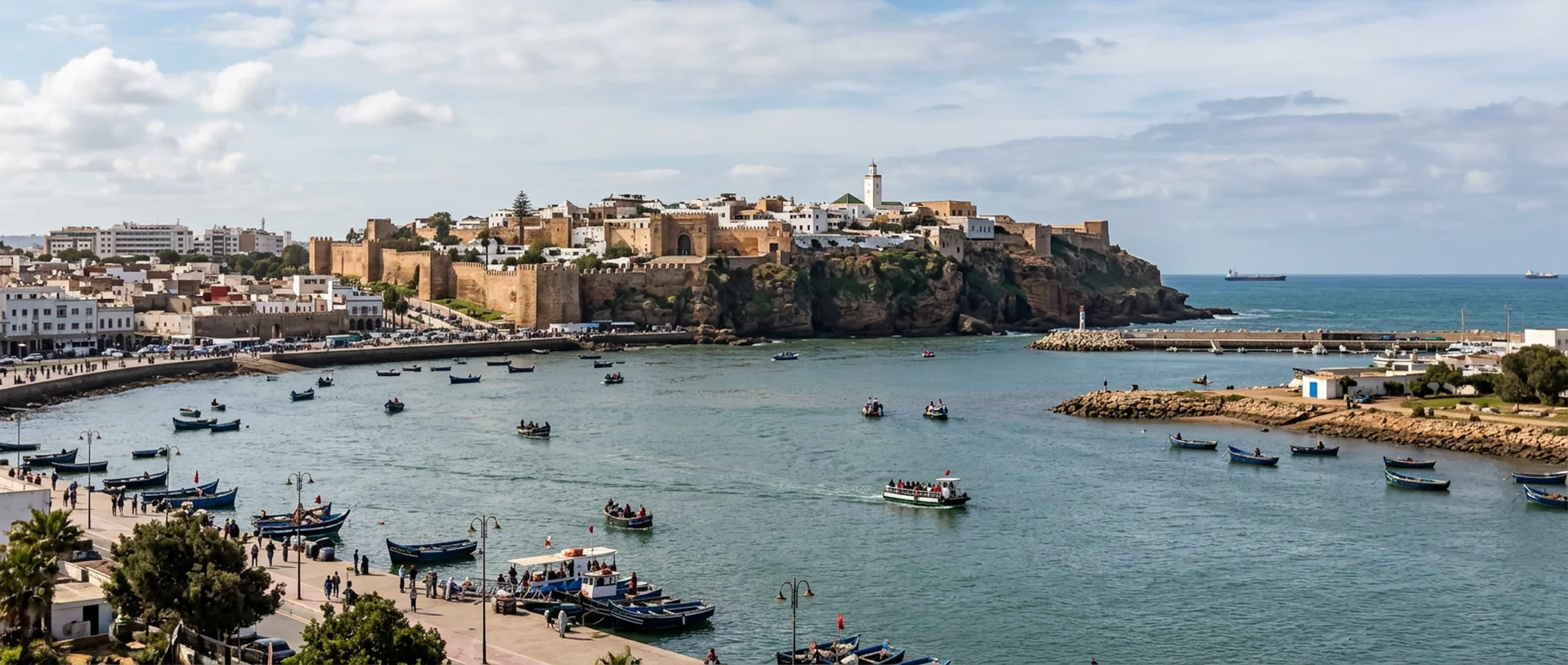
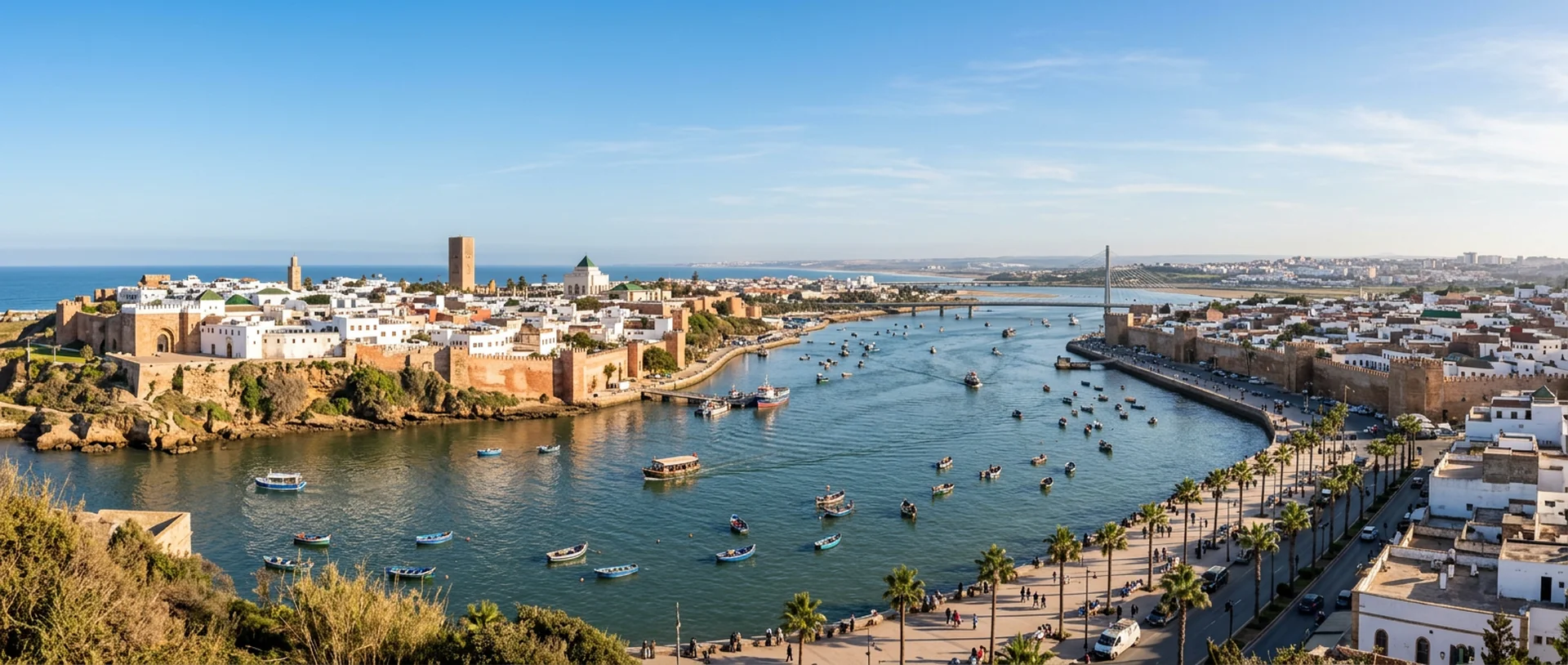
Rabat Kasbah des Oudaias and Bouregreg river

Four Neighbourhoods, A Calm Capital

The Prince Moulay Abdellah Stadium sits in Madinat Al Irfane, away from every tourist district, so where you stay comes down to atmosphere and tram access rather than stadium proximity. Here's how the main districts compare.

  • 🕌 The Medina - historic riads, Kasbah des Oudaias, full immersion
  • 🏛 Hassan - central, monuments, organised streets
  • 🏙 Agdal - modern, lively cafés and restaurants, good tram links
  • 🌳 Souissi & Hay Riad - upscale villas, embassies, quiet green streets
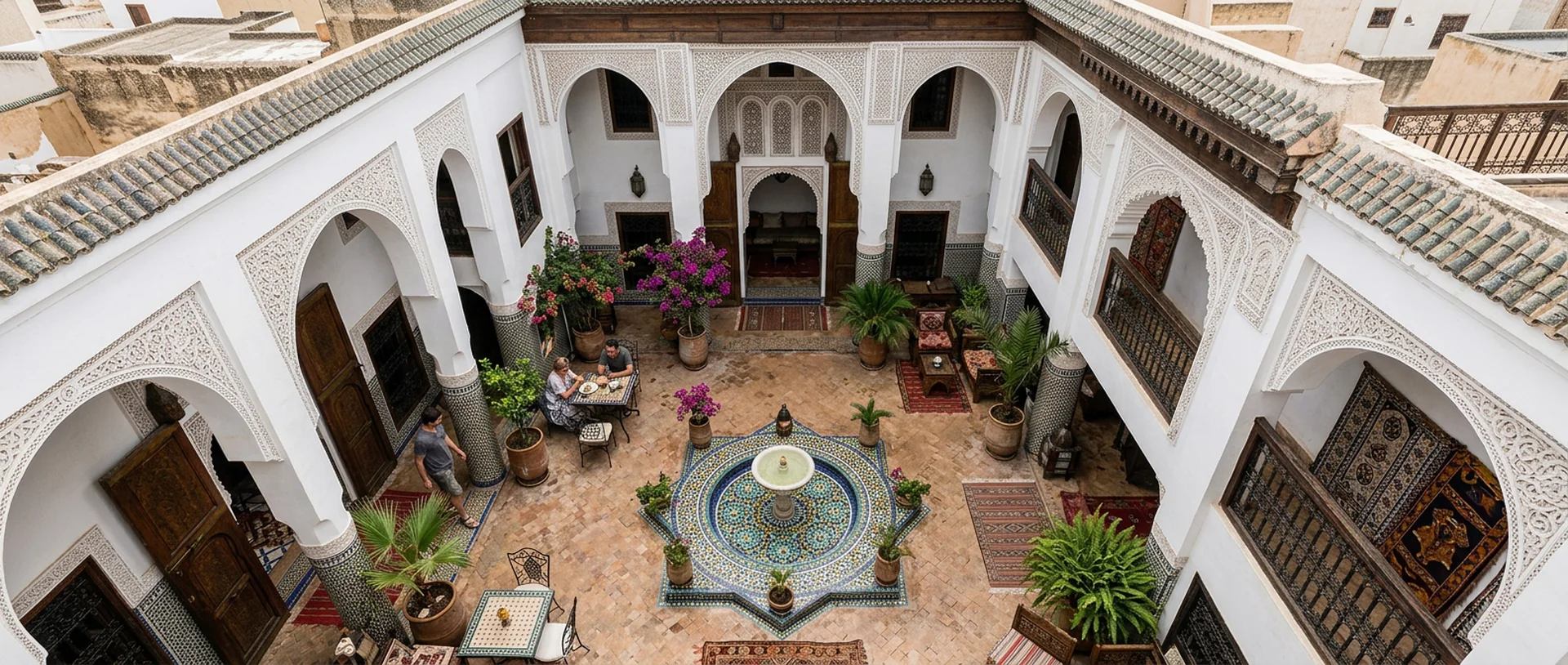
Medina riad courtyard Rabat
🕌
The Medina - Historic Immersion
Rabat's compact walled old town, close to the Kasbah des Oudaias and Rue des Consuls. Calmer and smaller than Marrakech's or Fes's medinas, with riads and traditional dars.
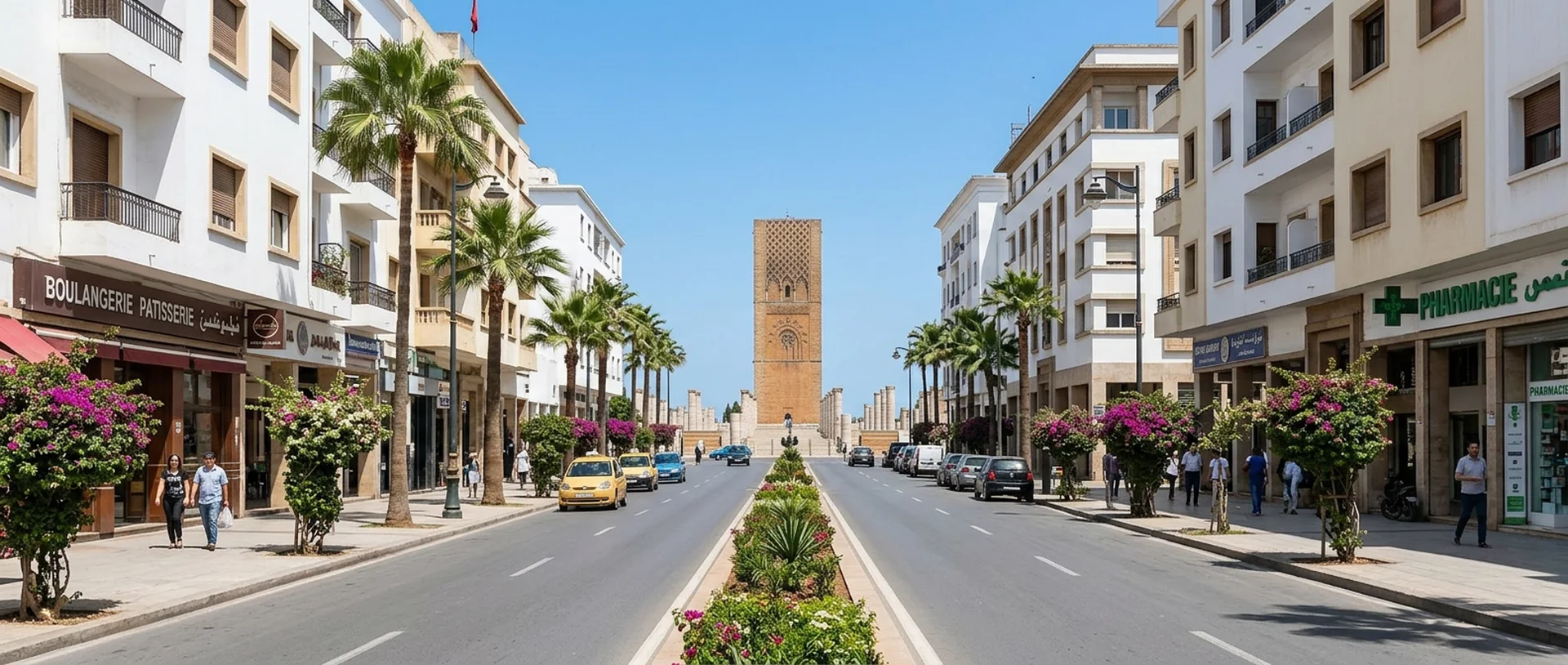
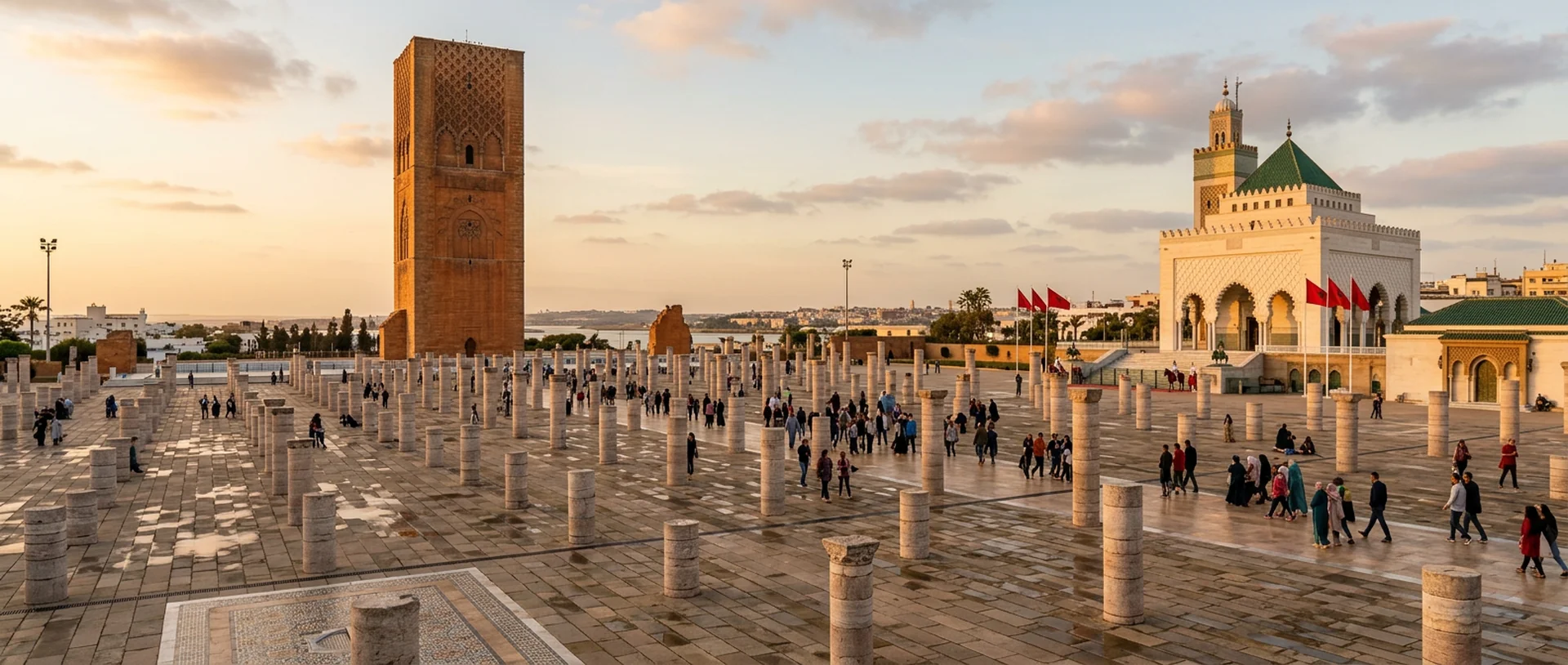
Hassan Tower district Rabat
🏛
Hassan - Central & Organised
Home to the Hassan Tower and Mohammed V Mausoleum, this district offers structured streets, easy movement and proximity to both the Medina and modern Rabat.
Agdal district cafes Rabat
🏙
Agdal - Modern & Lively
Rabat's contemporary district, packed with cafés, restaurants and shops, and close to Rabat-Agdal train station for onward travel. Good tram connections to the stadium.
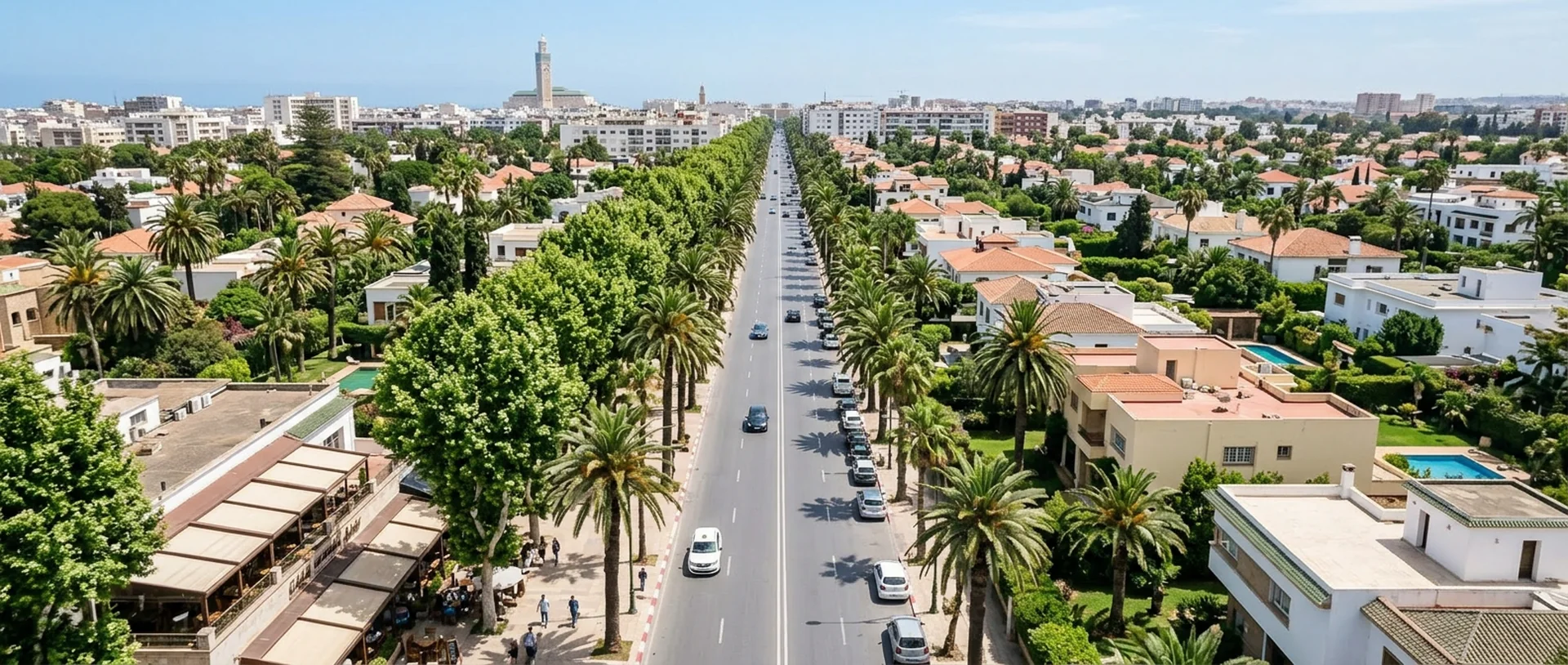
Souissi villas green boulevard Rabat
🌳
Souissi & Hay Riad - Upscale Quiet
Spacious, green, and home to embassies and diplomatic residences. Best for travellers prioritising comfort and quiet over walkable nightlife.
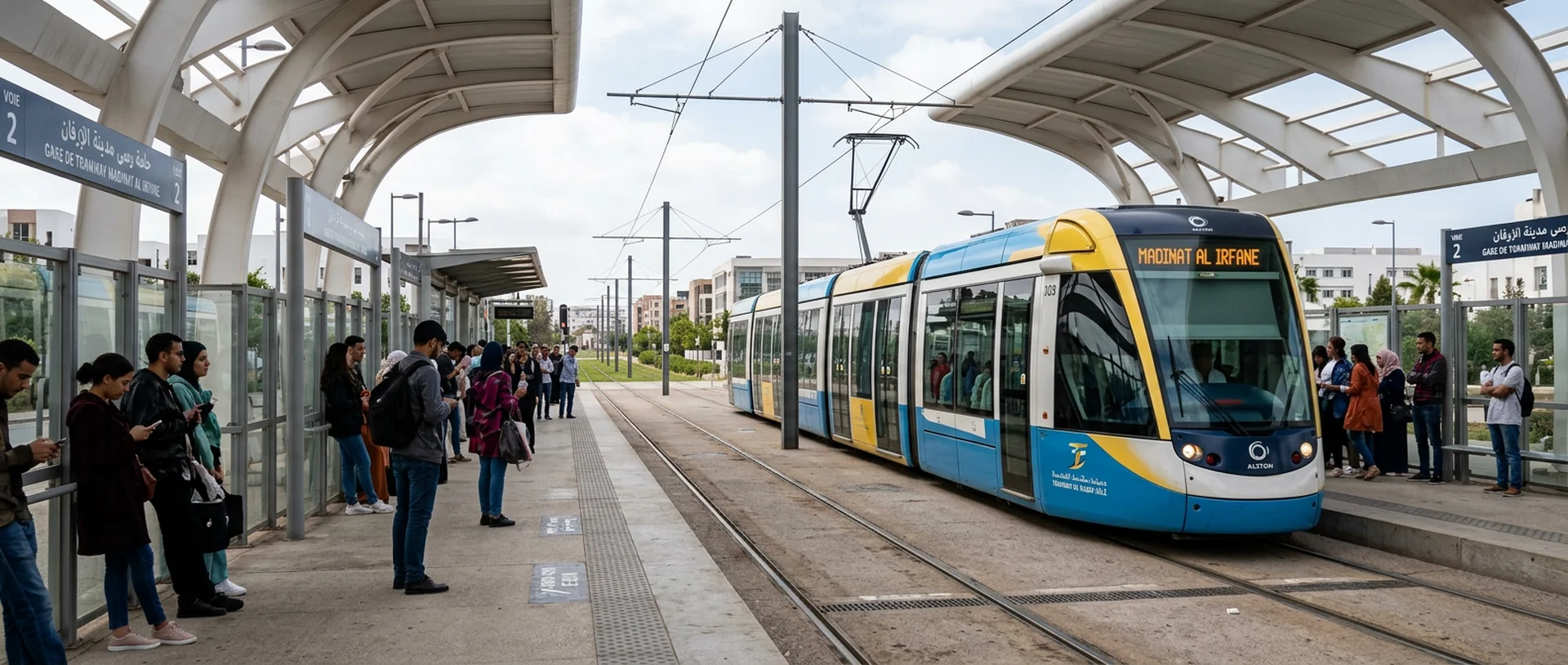
Rabat tram at Madinat Al Irfane station

A Tram Ride Straight to the Stadium

Rabat's tram network directly connects the city centre to the Prince Moulay Abdellah Stadium, one of the most straightforward stadium commutes of any 2030 host city. Rabat-Salé Airport and the Al Boraq high-speed line add fast connections beyond the city too.

From Rabat City Centre to the Prince Moulay Abdellah Stadium

Airport (RBA)
Taxi or ALSA bus
~20 min
City Centre
Medina / Hassan / Agdal
Tram Line 1/2
Prince Moulay Abdellah Stadium
Madinat Al Irfane
68,700 seats

Airport to city centre: ~20 min by taxi or ~40 min by ALSA bus · City centre to stadium: tram to Madinat Al Irfane, then a short walk · Al Boraq high-speed rail to Casablanca: under an hour, to Tangier: around 80 minutes

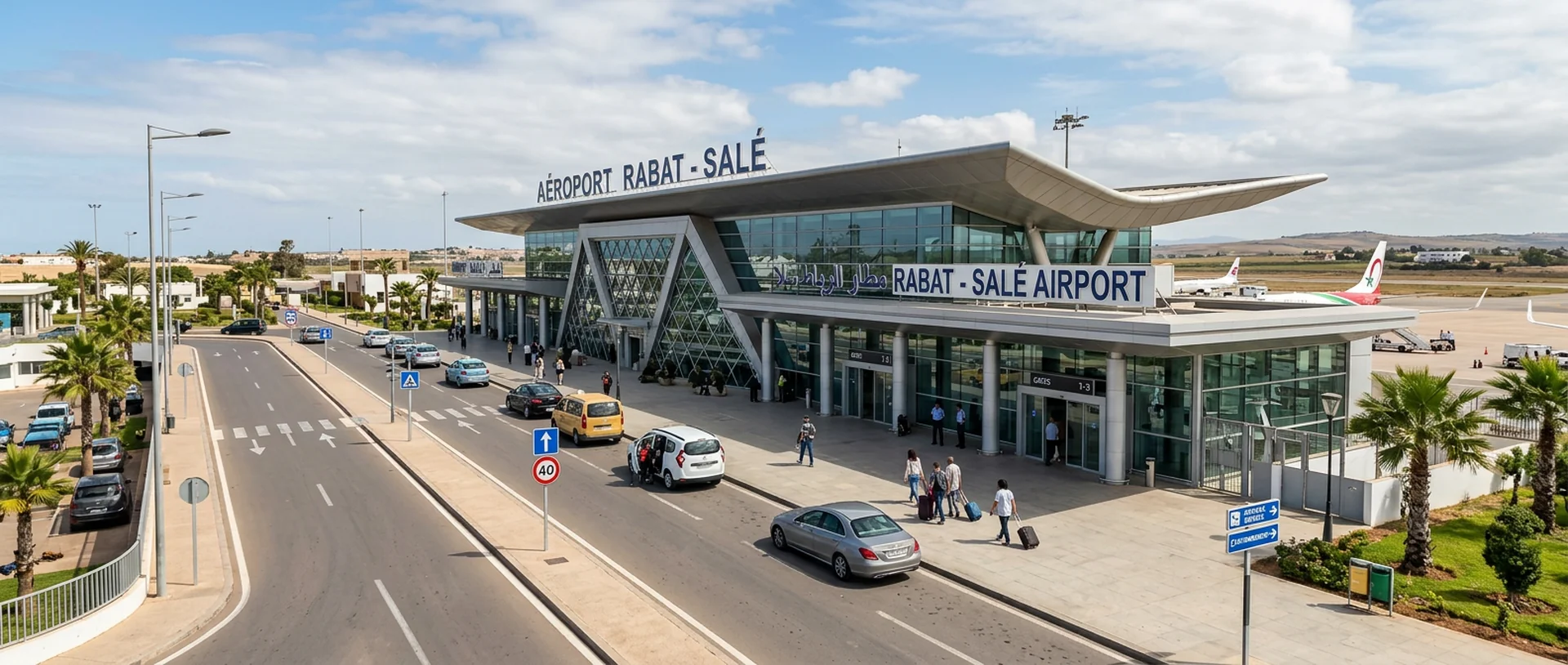
Rabat-Sale Airport terminal
From the Airport
Rabat-Salé Airport (RBA) is a hub for European budget carriers and domestic flights. A taxi to the centre takes around 20 minutes, and the ALSA bus to Rabat Ville runs in about 40 minutes.
Compare flights
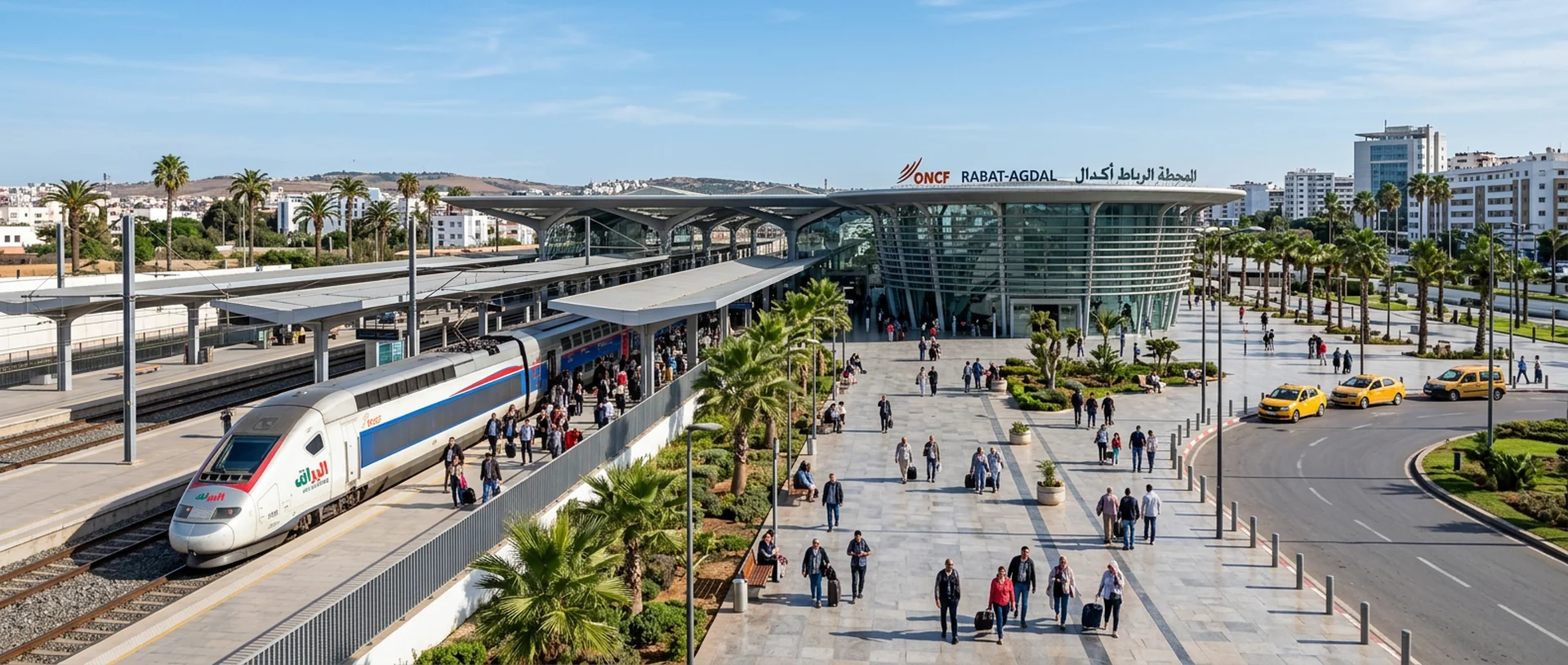
Rabat Agdal train station
Al Boraq High-Speed Rail
The Al Boraq high-speed line connects Rabat-Agdal station to Casablanca in under an hour and to Tangier in around 80 minutes, making Rabat one of the best-connected 2030 host cities for multi-city trips.
See the stadium
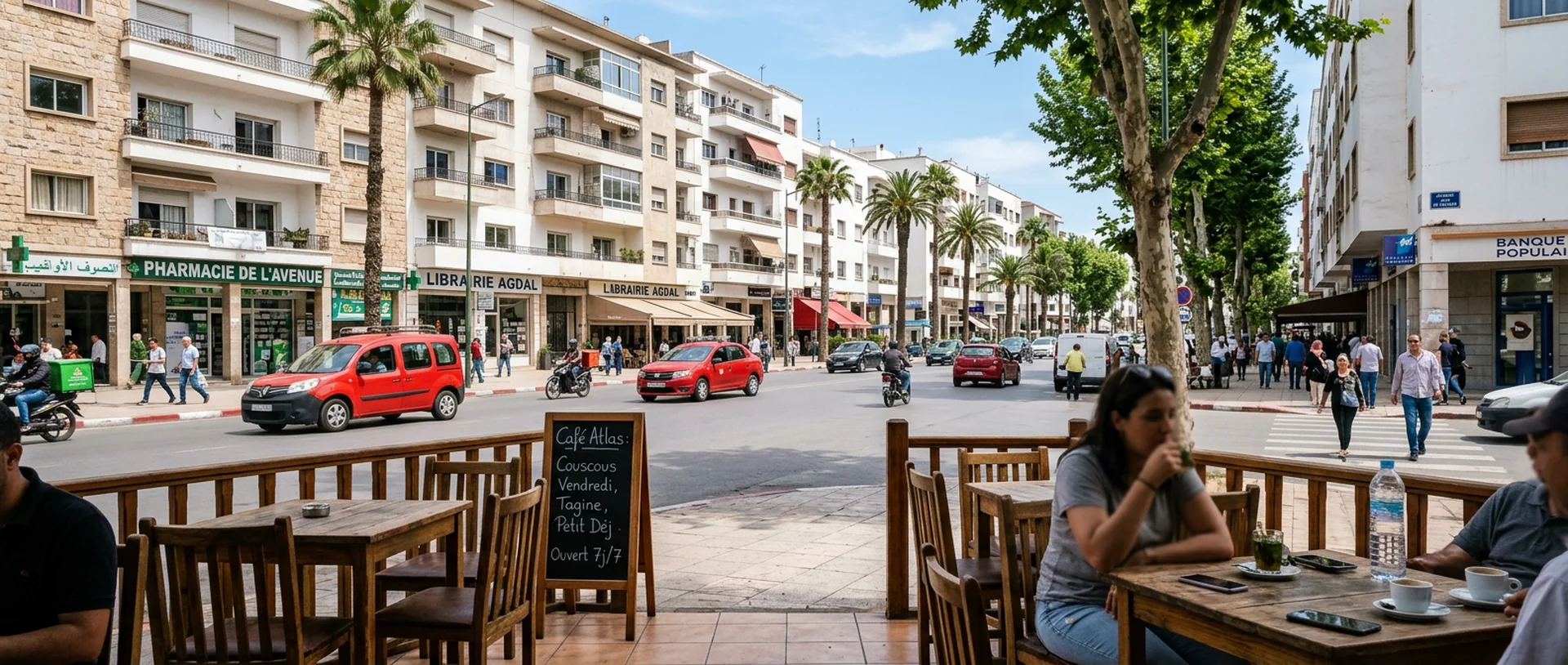
Rabat tram and streets
Tram & Taxis
Rabat's tramway links the city centre directly to Salé and to Madinat Al Irfane, the stadium district. Petit taxis handle short trips cheaply within the city.
Where to stay

Following matches in more than one city? The Al Boraq high-speed line makes Rabat a strong base for day trips, with Casablanca under an hour away and Tangier about 80 minutes. See the Morocco transport guide for full routes across all host cities.

What to Do When There's No Match

Rabat rewards a slower pace than Marrakech or Casablanca. Give the Kasbah des Oudaias a relaxed morning, and don't rush the Mausoleum, Rabat's monuments are built for quiet contemplation, not a checklist.

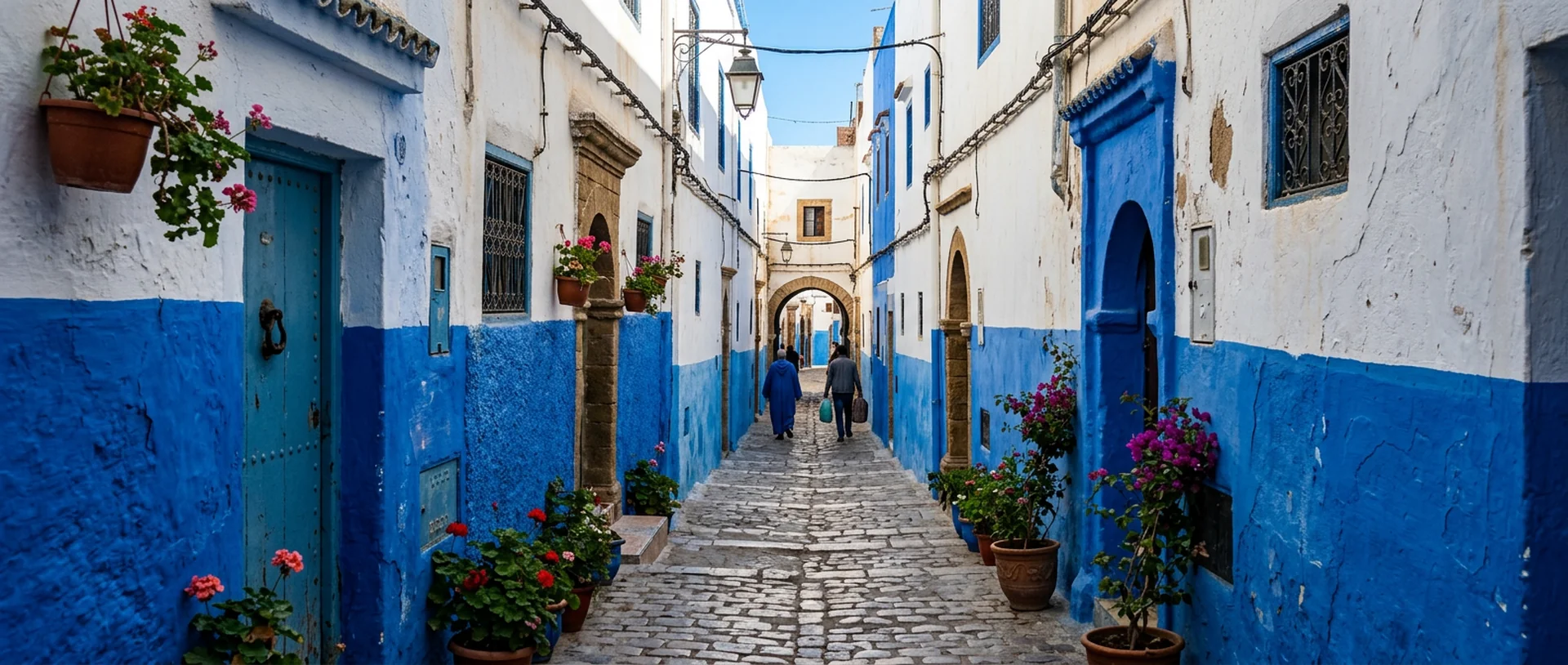
Kasbah des Oudaias Rabat
🏰
Kasbah des Oudaias
A 12th-century clifftop fortress overlooking the river and ocean, with blue-and-white alleyways, the Andalusian Gardens, and Café des Oudayas for mint tea with a view.
Hassan Tower and Mohammed V Mausoleum Rabat
🕌
Hassan Tower & Mohammed V Mausoleum
The unfinished 12th-century minaret of the Hassan Mosque stands beside the ornate mausoleum of Morocco's royal family, one of Rabat's most photographed sites.
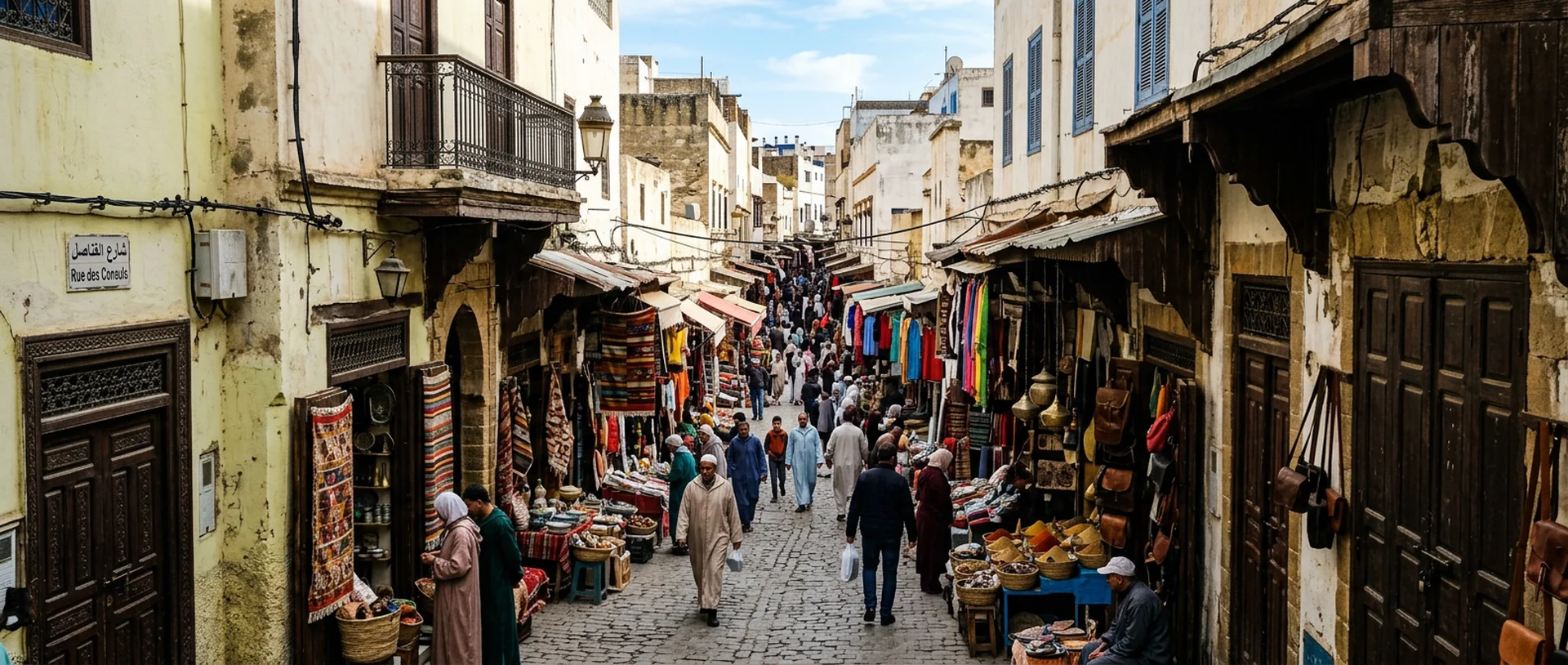
Rabat Medina souk street scene
🛍
Rabat Medina
Smaller and calmer than Marrakech's or Fes's medinas, with Rue des Consuls a good spot for carpets and craftwork, and a genuine local market atmosphere.
Bouregreg Marina Sale Rabat
Bouregreg Marina & Salé
Cross the river to Salé's own quieter medina, or stay on the Rabat side for the modern marina, restaurants and riverside walks along the Bouregreg.
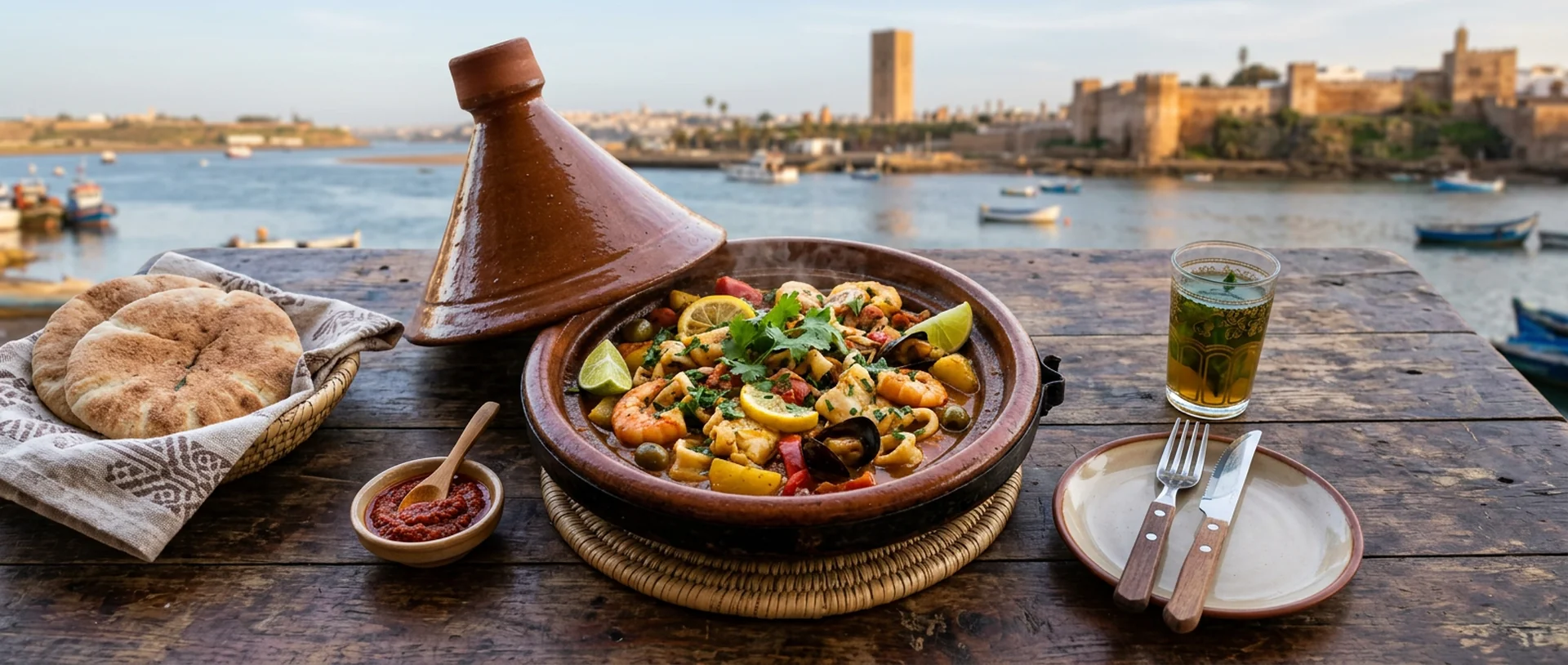
Seafood tagine by the Bouregreg Rabat

What to Eat Before Kickoff

As the capital, Rabat's dining scene is unusually international, from French bistros to Middle Eastern and Spanish-influenced restaurants, alongside classic Moroccan cuisine and fresh Atlantic seafood.

  • 🐟 Fresh seafood - along the Bouregreg River and coast
  • 🍲 Tagine & couscous - classic Medina restaurant staples
  • 🫓 Msemen - flaky flatbread with honey for breakfast
  • 🍽 International dining - French, Middle Eastern and Spanish-influenced spots, especially in Souissi

Here's what to order at each budget, from Medina street food to Rabat's international fine-dining scene.

Street & Casual
15-40MAD
  • Msemen with honey: a common Medina breakfast, 10-15 MAD
  • Harira: a bowl with bread and dates, 15-20 MAD
  • Fresh orange juice: from street vendors near the Medina
  • Grilled sardines: a coastal staple at simple stalls
Fine Dining
500+MAD/person
  • Riad dining in the Medina: elegant multi-course Moroccan menus
  • International restaurants in Souissi: French, Spanish and Middle Eastern kitchens
  • Seaside fine dining: upscale restaurants along the Atlantic coast
  • Hotel dining: Rabat's luxury hotels offer some of the city's most polished tables

Cash is widely used for tips, petit taxis and Medina stalls, though cards are accepted at larger restaurants and international chains. For an authentic and affordable meal, look for small restaurants around the Medina rather than the most touristic spots near the Kasbah.

Bouregreg river Rabat mild afternoon

Before You Go

Weather, safety, language and money - the basics every fan should have sorted before landing in Rabat.

  • 🌡️ Mild, Atlantic-cooled summers - the coolest of Morocco's host cities
  • 🛂 Visa-free for many nationalities for stays up to 90 days
  • 💵 $70-140/day comfortably covers hotel, food and transport
🌤

Weather

24-27°C in June-July, mild and pleasant thanks to Rabat's Atlantic coastal location. Noticeably cooler than Marrakech or Fes at the same time of year, with little rainfall and comfortable evenings.

🛡

Safety

As Morocco's capital and seat of government, Rabat is considered one of the country's safest and most organised cities. Standard precautions around belongings apply in busy areas like the Medina.

🗣

Language

Darija (Moroccan Arabic) is the everyday language. French is widely used in government, business and education, and English is increasingly common in hotels, restaurants and tourism-facing venues.

💳

Money

Moroccan Dirham (MAD). Cash is preferred in the Medina and for petit taxis; cards are accepted at larger hotels, restaurants and international chains. ATMs are widely available.

As Morocco's capital, Rabat combines a proven, already-completed World Cup stadium with a calmer pace than Casablanca or Marrakech, though it has a smaller hotel stock than either, so rooms are worth booking early around confirmed match dates. For visa requirements and FIFA ticket ballot details that apply across Morocco, see the Morocco visa guide and match ticket guide.

FAQ

Rabat Questions

Is the Prince Moulay Abdellah Stadium ready for the World Cup?
Yes. The rebuilt stadium opened in September 2025 and hosted the opening match and final of AFCON 2025, making it one of the few 2030 host venues that is already fully complete rather than under construction or renovation.
What is the capacity of the Prince Moulay Abdellah Stadium?
68,700 seats in its current configuration, with some reporting suggesting it could expand toward 75,000 ahead of the World Cup. It is Morocco's second-largest stadium after the Grand Stadium of Tangier.
Where is the Prince Moulay Abdellah Stadium located?
In the Madinat Al Irfane district, about 7km from central Rabat. It sits within a larger sports complex that also includes an athletics stadium, a 10,000-seat indoor arena, and an Olympic swimming pool.
Could the Prince Moulay Abdellah Stadium host a World Cup semi-final?
It was designed and built specifically to FIFA specifications to host matches up to the semi-final stage of the 2030 World Cup, according to its architects, Populous. FIFA's official match allocations are expected closer to the tournament.
What does the Prince Moulay Abdellah Stadium look like?
Its facade uses a parametric, palm-leaf inspired design that also draws on Morocco's traditional 'Point de Fez' embroidery patterns. The bowl places stands close to the pitch specifically to amplify crowd noise, and it includes a 360-degree wind-shielding roof.
What is the best neighbourhood to stay in Rabat for the World Cup?
The Medina puts you closest to Rabat's historic sites and the Kasbah des Oudaias, while Hassan is central and organised with easy access to major landmarks. Agdal suits travellers who want a modern, restaurant-heavy base.
Is Rabat expensive compared to other World Cup 2030 host cities?
Rabat is generally moderate in price, cheaper than Marrakech's luxury end but with fewer budget riads than Marrakech or Fes. A comfortable mid-range daily budget runs roughly $70-140.
Should I stay near the stadium or in central Rabat?
Stay in central Rabat. The Prince Moulay Abdellah Stadium sits in Madinat Al Irfane, about 7km from the Medina and Hassan districts, so a central base keeps you close to restaurants, transport and attractions while the tram handles the stadium trip on matchday.
What football club plays at the Prince Moulay Abdellah Stadium?
AS FAR (Forces Armées Royales), founded in 1958, is the stadium's regular tenant. The club has traditionally worn black and is one of only three clubs, alongside Wydad AC and Raja CA, never to have been relegated from Morocco's top division.
Has AS FAR won any major trophies?
Yes. AS FAR has won 13 Botola Pro league titles and multiple Moroccan Throne Cups, most recently the 2023 league title after a 15-year wait and the 2020 Throne Cup. The club also won the 1985 African Cup of Champions Clubs, the forerunner to today's CAF Champions League.
Is there a big football rivalry in Rabat?
Yes, two. AS FAR's biggest domestic rivalry is the 'Classico' against Wydad AC of Casablanca, dating back to a disputed 1959-60 title decision. Locally, AS FAR also contests the 'Capital Derby' against fellow Rabat-based club FUS Rabat.
What is the Capital Derby?
The Capital Derby is the local rivalry between AS FAR and FUS Rabat, Rabat's two Botola Pro clubs. It carries genuine local bragging rights, even if it draws less international attention than the Casablanca Derby.
What is the weather like in Rabat in June and July?
Mild and pleasant thanks to Rabat's Atlantic coastal location, with June-July afternoons typically reaching 24-27°C and cooled by sea breezes. It is noticeably cooler than Marrakech or Fes at the same time of year, with little rainfall.
What should I eat in Rabat?
Try fresh seafood along the Bouregreg River and coast, tagine and couscous at Medina restaurants, and msemen flatbread with honey for breakfast. Rabat's dining scene also includes an unusually international mix, from French bistros to Middle Eastern and Spanish-influenced spots in Souissi.
Is Rabat safe for tourists during the World Cup?
Yes. As Morocco's capital and seat of government, Rabat is considered one of the country's safest and most organised cities, with standard precautions around belongings sufficient in busy areas like the Medina.
What language is spoken in Rabat?
Darija (Moroccan Arabic) is the everyday language. French is widely used in government, business and education, and English is increasingly common in hotels, restaurants and tourism-facing venues.

Continue Planning

See the full Morocco guide, covering all World Cup 2030 host cities across the country.

Back to Morocco Guide

Get Rabat World Cup Updates

Hotel deal alerts near the Medina, FIFA ticket ballot dates, tram service updates and insider Rabat tips - straight to your inbox.