Newsletter
Grand Stade Hassan II Casablanca electric matchday atmosphere
Morocco · World Cup 2030 Host City

Casablanca

Morocco's economic capital is building the tournament's most audacious venue: the 115,000-seat Grand Stade Hassan II, designed to become the largest football stadium on Earth. It's also home to the Casablanca derby, one of world football's fiercest rivalries between Raja CA and Wydad AC.

1Stadium
115,000Grand Stade Capacity
2028Target Completion
24-28°CJune-July Avg
Until kickoff · 8 June 2030
000Days
:
00Hours
:
00Mins
:
00Secs
StadiumFootball CultureMatchdayNeighbourhoods Getting AroundThings to DoFood & Drink Practical InfoFAQ
✈️Airport: CMN · Mohammed V Intl
🚆ONCF train & shuttle to Benslimane
👥Population: ~3.7M (city) · 4.3M+ (metro)
💵Moroccan Dirham (MAD)
🗣Darija Arabic & French · English widely spoken

One Stadium, The Biggest of Them All

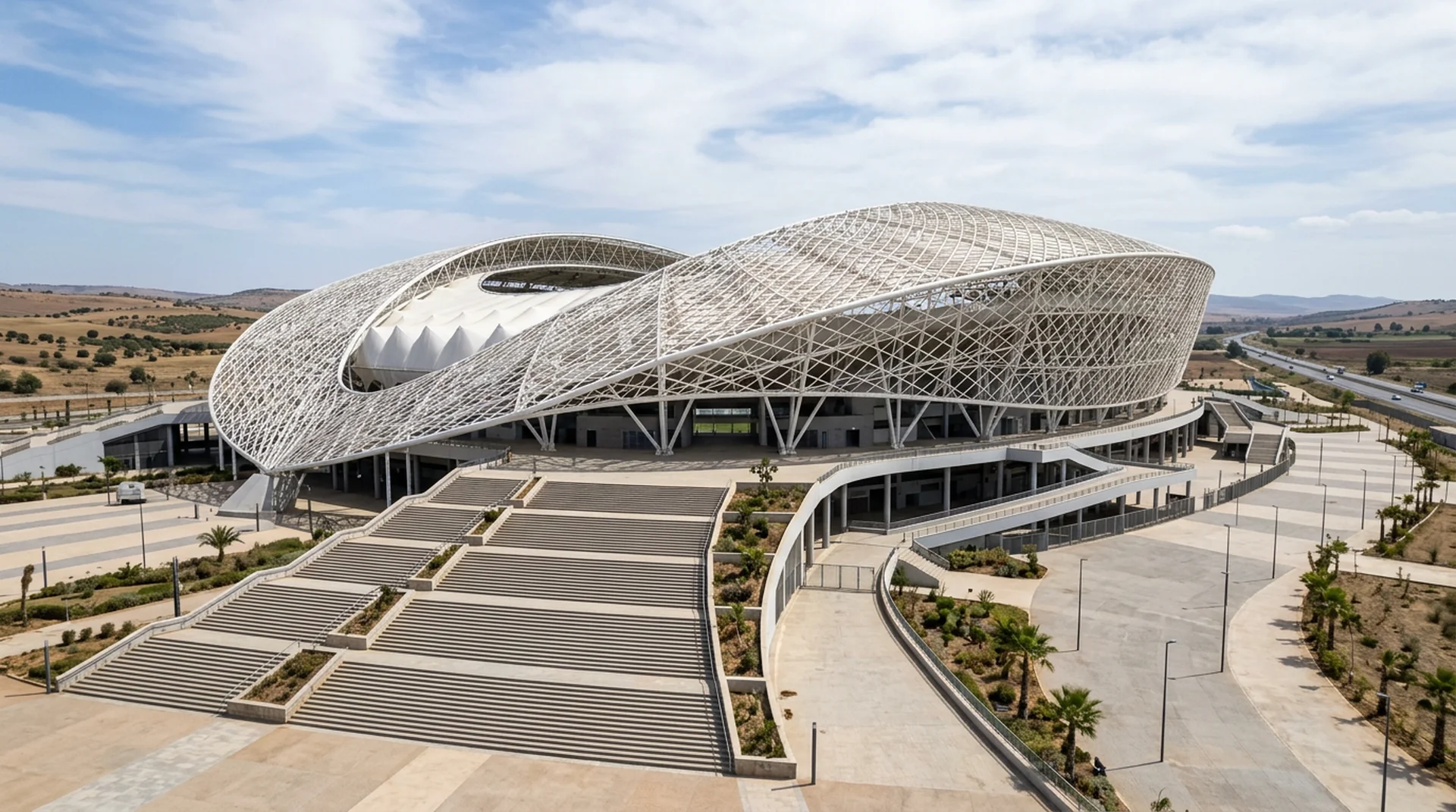
Casablanca is putting forward a single World Cup venue, but it's the boldest of the entire tournament: the Grand Stade Hassan II, still under construction in Benslimane, is designed to overtake every existing stadium on the planet in size the moment it opens.

Grand Stade Hassan II Casablanca render
Under Construction
Grand Stade Hassan II
Capacity 115,000 · Designed by Populous with Oualalou + Choi, inspired by the moussem, a traditional Moroccan tented gathering. Rising on a 100-hectare site in Benslimane, roughly 38-40km north of Casablanca. Targeted for completion late 2027 to end of 2028. Will become the shared home of Raja CA and Wydad AC after the tournament.
How to get there

Raja, Wydad, One Fierce City

Raja founded 1949 Neither club ever relegated 135+ derbies played 115,000-seat World Cup venue

⚔️ The Casablanca Derby

Raja Club Athletic and Wydad Athletic Club have shared Casablanca, and split it in half, since the 1950s. The Casablanca Derby is widely considered one of the fiercest rivalries anywhere in football, marked by deafening tifos, near-constant flares and chanting, and a fan intensity that regularly overshadows the football itself. Neither club has ever been relegated since Morocco's Botola league began, and the two have met well over 135 times.

The rivalry carries a social dimension dating back decades: Wydad, founded in 1937, was long associated with Casablanca's establishment and the monarchy, while Raja, founded in 1949 by leftist trade unionists, became known as the people's club. Those class lines have faded, but the identities stuck, and both clubs draw fans from across the entire city today.

"One of the top ten derbies globally, and the fiercest in Africa and the Arab world."

- widely cited ranking of the Casablanca Derby's global reputation

🏟️ From Mohammed V to Hassan II

Every derby to date has been played at Stade Mohammed V, a 47,000-seat multi-sport venue in central Casablanca that has reportedly squeezed in over 100,000 fans for the biggest fixtures. It's also hosted CAF Champions League finals and international friendlies, including Morocco's celebrated 2004 meeting with Argentina.

The Grand Stade Hassan II, still under construction 38-40km north of the city in Benslimane, is intended to become the new shared home for both Raja and Wydad once the World Cup is over, a stadium built for 115,000, more than double their current ground's official capacity.

🏆 A Stadium Built to Be the Biggest

Designed by Populous and Oualalou + Choi and inspired by the moussem, a traditional Moroccan communal gathering, the Grand Stade Hassan II is intended as a national symbol as much as a football venue. Whether it ultimately hosts the World Cup final is still undecided by FIFA, but its scale alone makes Casablanca one of the tournament's most-watched construction stories through 2028.

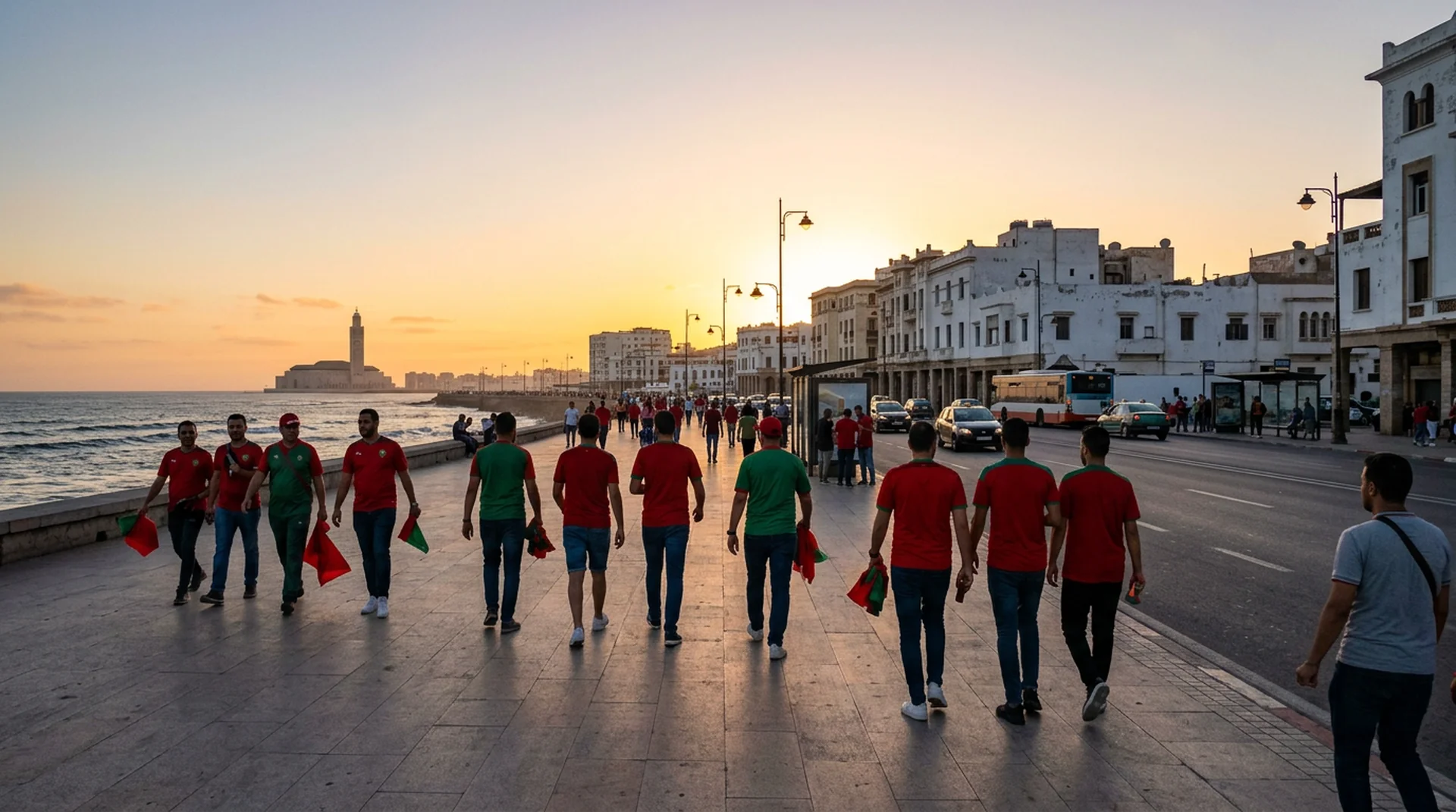
Casablanca World Cup fans matchday atmosphere

Where Casablanca Watches Football

Since the Grand Stade sits well outside the city, matchday energy in Casablanca itself concentrates around the Corniche and central cafés rather than a single stadium-adjacent strip. Expect the loudest night of the tournament if the Casablanca Derby ever crosses paths with World Cup fixtures at Stade Mohammed V.

  • 🚆 ONCF train & dedicated shuttles - the main route north to Benslimane
  • 🎉 The Corniche & central cafés - Casablanca's natural gathering points
  • ⚔️ The Casablanca Derby - 135+ meetings between Raja CA and Wydad AC
⚔️

Matchday in Casablanca

"Ranked number one in Africa and the Arab world, and considered one of the top ten derbies globally."

Because the Grand Stade sits roughly 38-40km outside central Casablanca, the World Cup here won't feel like a typical stadium-district matchday. Instead, expect the city's cafés, the Corniche promenade and downtown squares to fill with fans well before kickoff, watching pre-match build-up and travelling north together by shuttle or train.

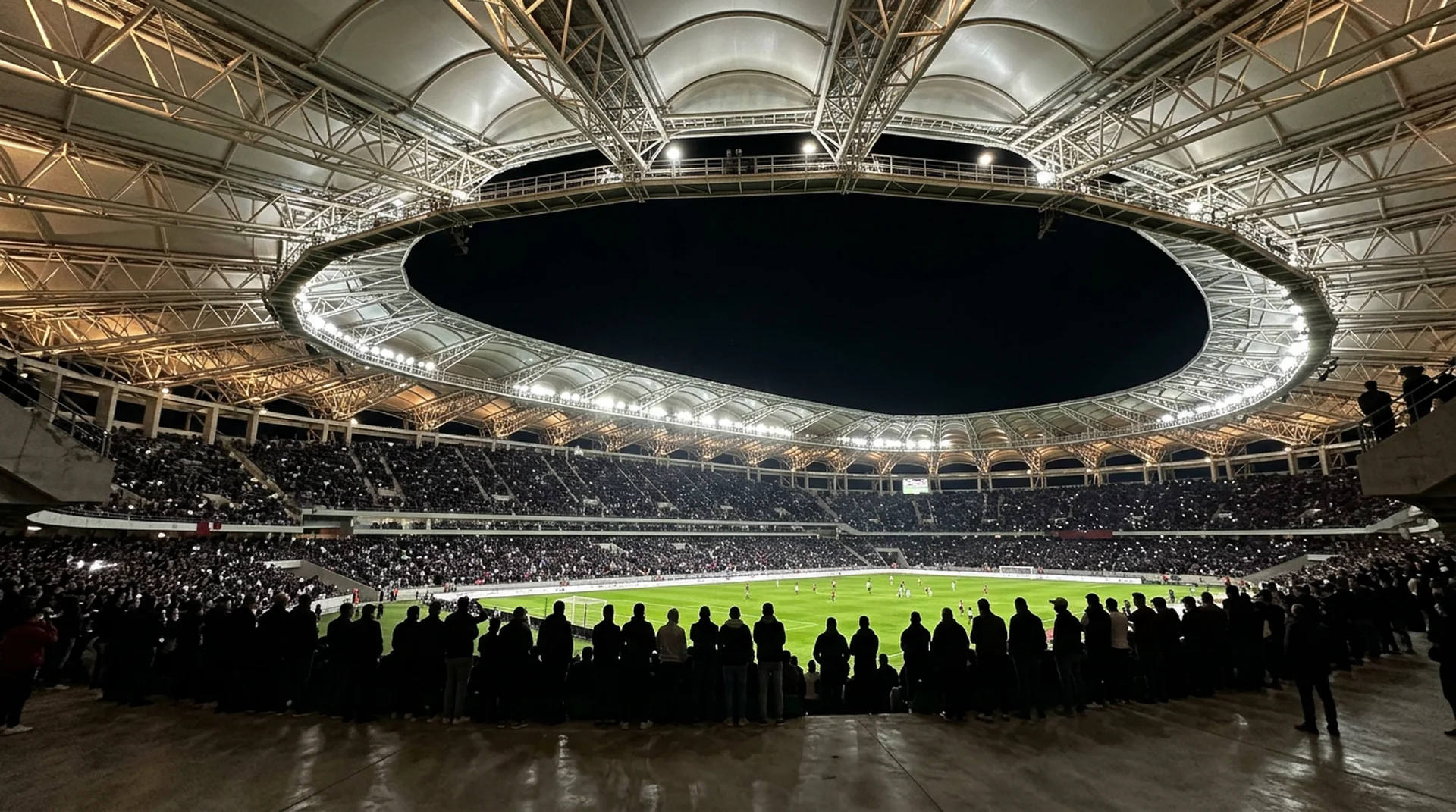
For an actual Raja-Wydad derby, expect an atmosphere unlike almost anything else in world football: constant chanting, elaborate tifos, and flares that have repeatedly halted play for several minutes at a time.

🍵
Pre-Match
The Corniche's beach clubs and cafés fill from early afternoon on big match days, with Habous Quarter cafés offering a calmer pre-match option.
📺
Public Viewing
United Nations Square and the Corniche are Casablanca's natural gathering points, likely candidates for an official fan zone, to be confirmed by FIFA closer to 2030.
🚆
After the Final Whistle
Expect the shuttle and train routes back from Benslimane to be busy for well over an hour after a match given the distance. Plan return transport before you travel out.
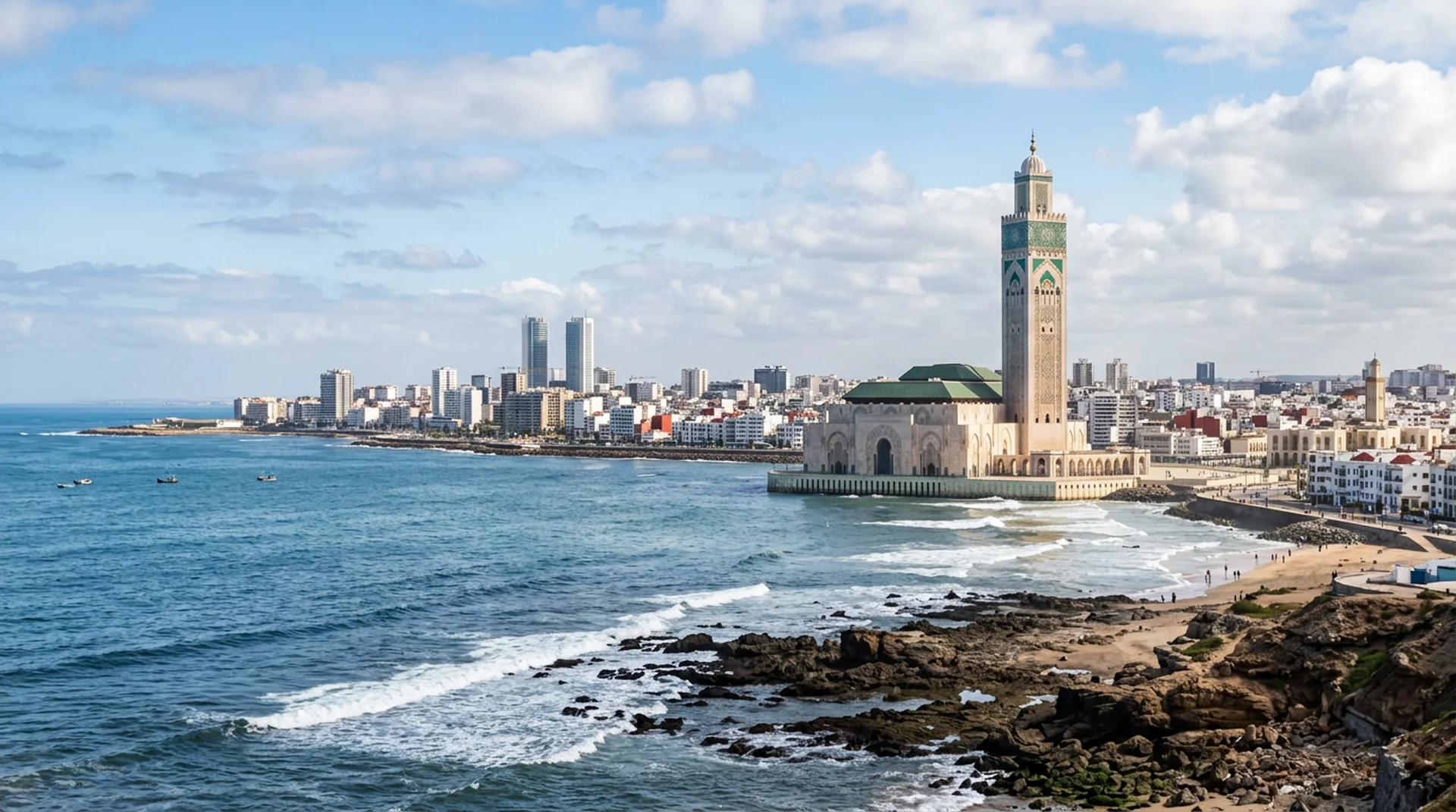
Casablanca skyline and Atlantic coast

Four Neighbourhoods, One Sprawling City

Casablanca is Morocco's largest city, and since no neighbourhood is genuinely close to the Grand Stade, choosing where to stay comes down to atmosphere and transport links rather than stadium proximity. Here's how the main districts compare.

  • 🌊 Ain Diab & Corniche - beachfront, luxury hotels, resort feel
  • 🏙 Maarif & Gauthier - modern, walkable, restaurants and nightlife
  • 🕌 City Centre & Habous - old-town charm, train connections
  • 🚉 Near Casa Voyageurs - best for onward rail travel to other host cities
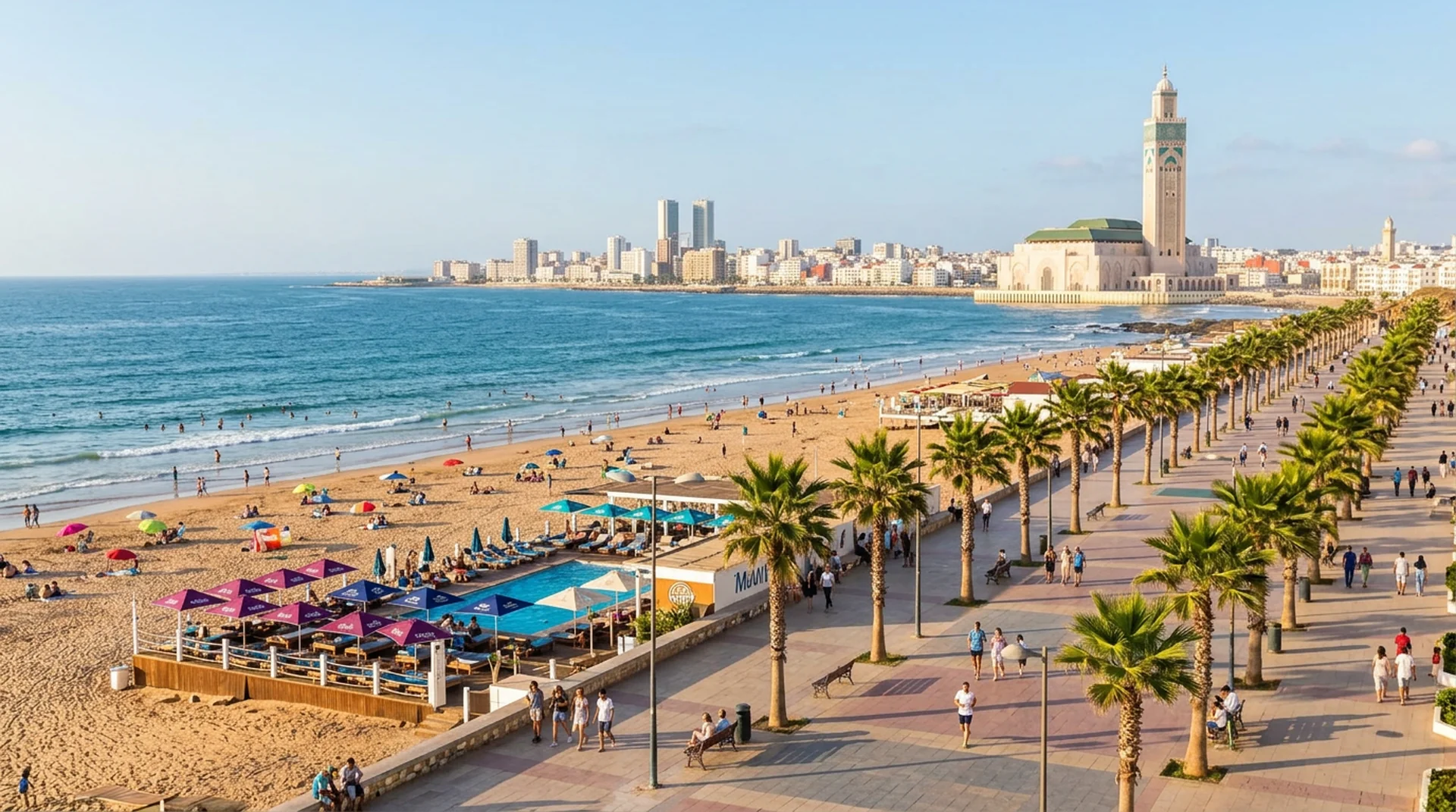
Ain Diab Corniche beach Casablanca
🌊
Ain Diab & Corniche - Beachfront Luxury
Casablanca's resort strip, with the city's best hotels, beach clubs and ocean-view dining along Boulevard de la Corniche. Furthest from the train stations, but the most relaxed base.
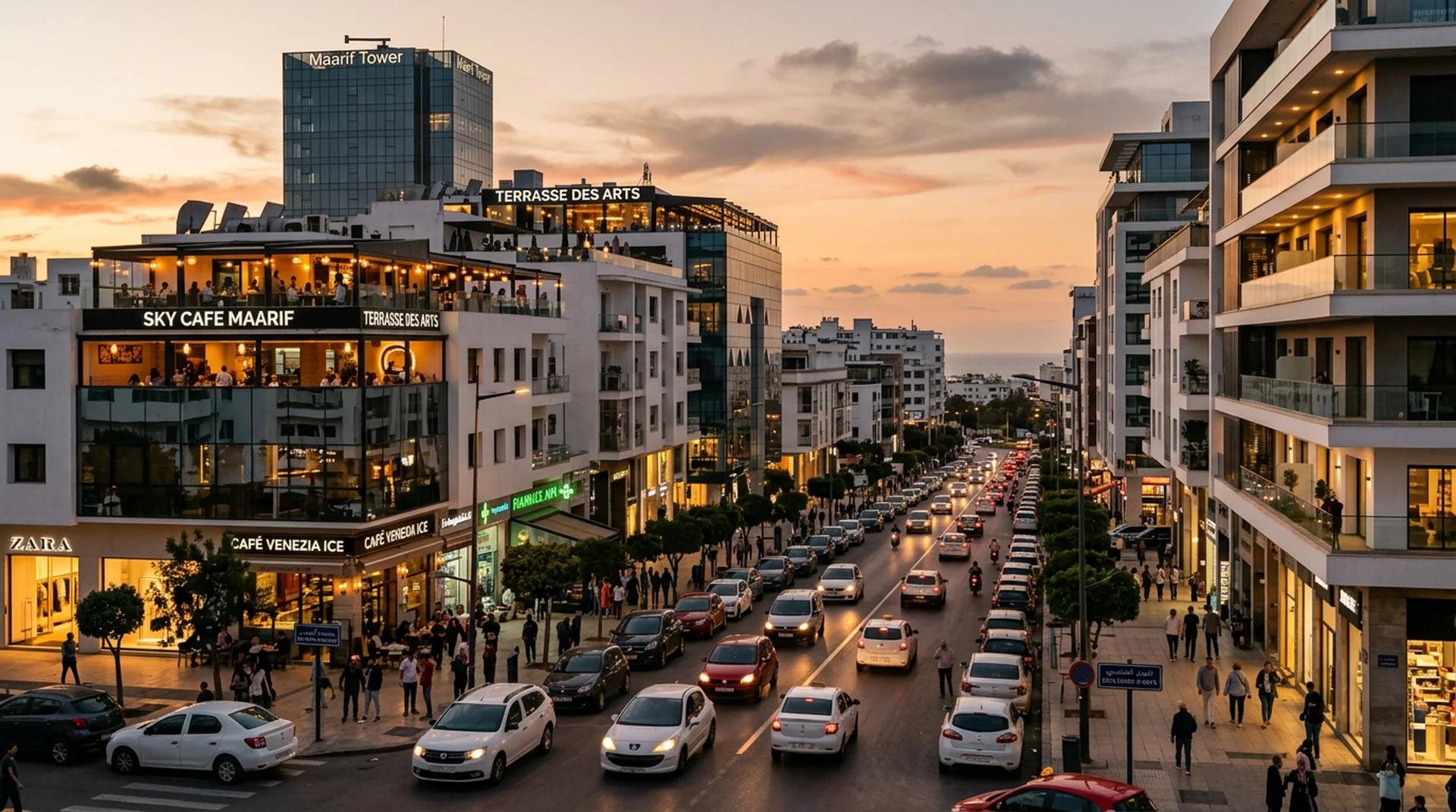
Maarif Gauthier district Casablanca
🏙
Maarif & Gauthier - Modern & Walkable
Casablanca's main business and shopping district, now packed with rooftop bars and restaurants. Good value, central, and well connected by tram.
Habous Quarter souk Casablanca
🕌
City Centre & Habous
The historic core near the Old Medina and the French-built Habous Quarter, close to Casa Port train station and the Art Deco downtown.
Casa Voyageurs train station Casablanca
🚉
Near Casa Voyageurs
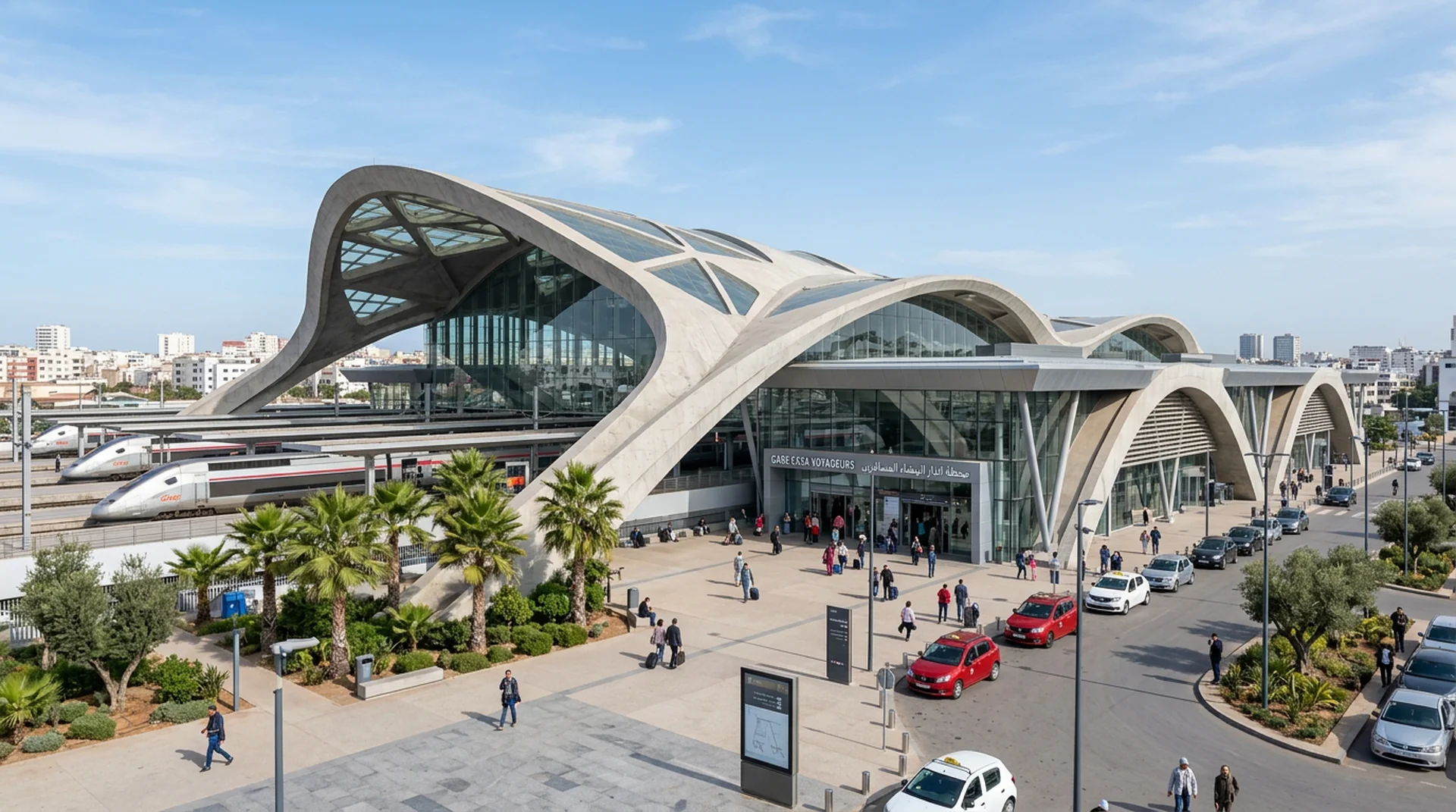
The best base for fans following matches across multiple host cities, with direct rail connections to Rabat, Tangier and Marrakech alongside the airport line.
Casablanca tram public transport

A Big City, A Stadium Apart

Casablanca's tram and bus network cover the city itself well, but the Grand Stade sits well outside town in Benslimane, so matchday travel means a dedicated train or shuttle connection rather than a short hop.

From Casablanca City Centre to the Grand Stade Hassan II

Airport (CMN)
ONCF airport train
~30-45 min
Casa Voyageurs
City centre rail hub
~40-50 min
Grand Stade Hassan II
Benslimane
115,000 seats

Airport to city centre: ~30-45 min by train, 60-70 MAD · City centre to stadium: matchday shuttle or taxi, exact routes TBC by FIFA · Taxi from airport: ~45 min, 250-300 MAD

Mohammed V Airport terminal Casablanca
From the Airport
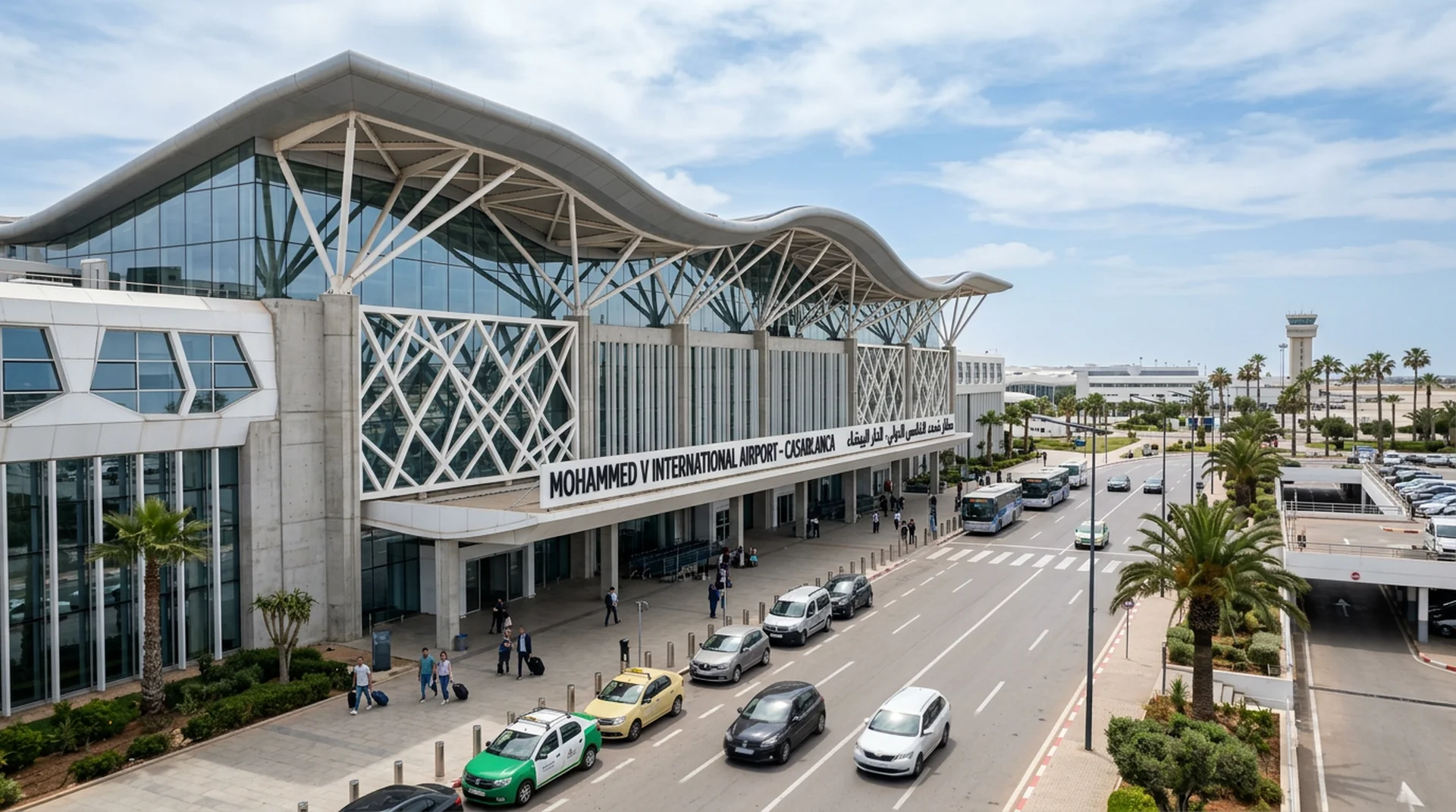
Mohammed V International (CMN) has its own ONCF train station in Terminal 1, with hourly departures to Casa Port, Casa Voyageurs and L'Oasis, taking 30-45 minutes. Taxis to the centre run 250-300 MAD by day.
Compare flights
Casablanca tram platform
CasaTramway & CasaBusway
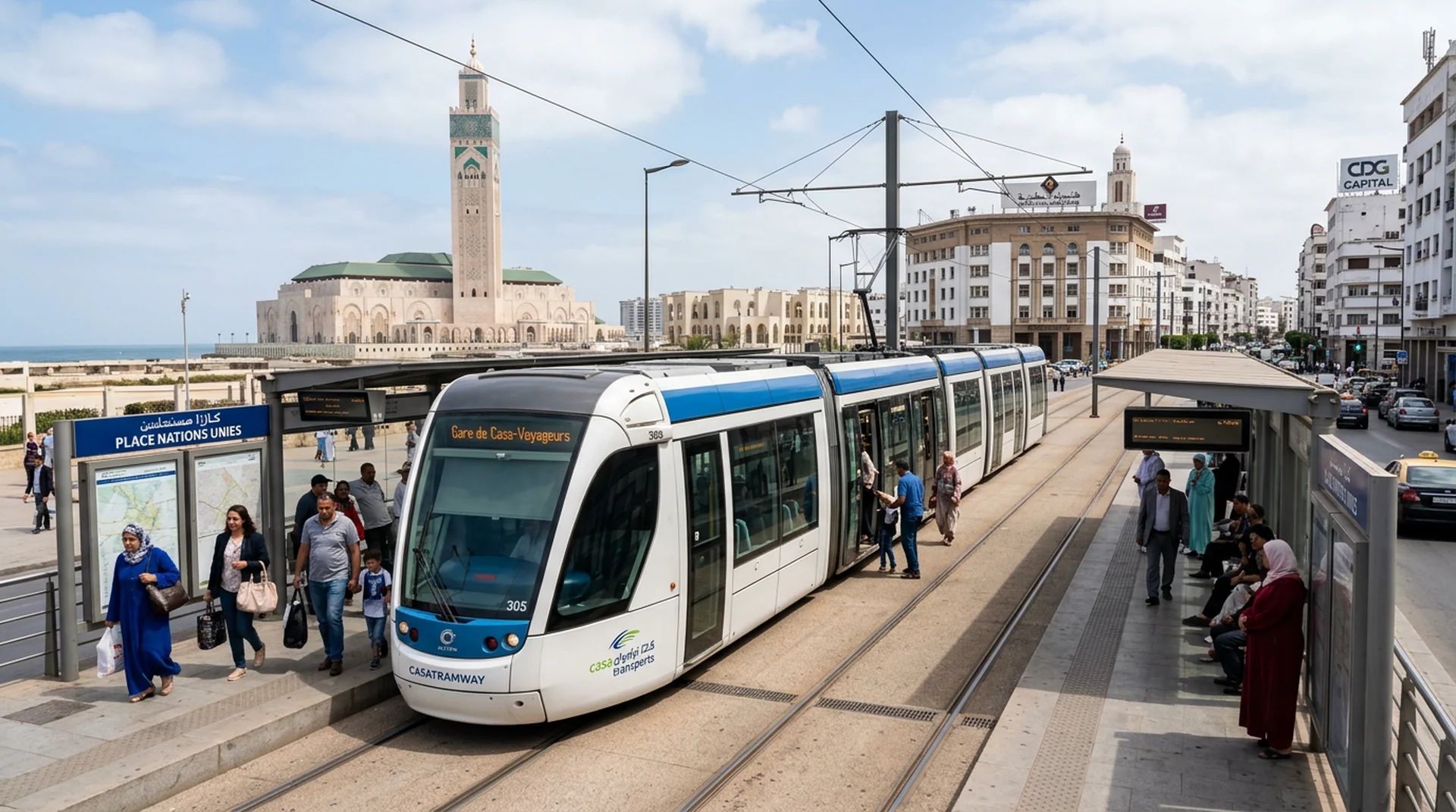
Two tram lines and a growing busway network cover Casablanca itself cheaply, from 5-8 MAD a ride. Neither currently reaches Benslimane, so stadium travel will rely on dedicated World Cup shuttles or trains.
See the stadium
Casablanca taxis and streets
Taxis & Grand Taxis
Petit taxis handle short in-city trips, while grand taxis (larger shared vehicles) cover longer or intercity routes, including the run out toward Benslimane. Agree fares upfront or insist on the meter.
Where to stay

Following matches in more than one city? Casa Voyageurs connects directly to Rabat (under an hour) and, via the Al-Boraq high-speed line, to Tangier in about 2 hours 10 minutes. See the Morocco transport guide for full routes across all host cities.

What to Do When There's No Match

Casablanca rewards unhurried mornings along the Corniche and slow afternoons wandering the Habous Quarter. Give the Hassan II Mosque its own half-day rather than squeezing it around a match schedule.

Hassan II Mosque Casablanca
🕌
Hassan II Mosque
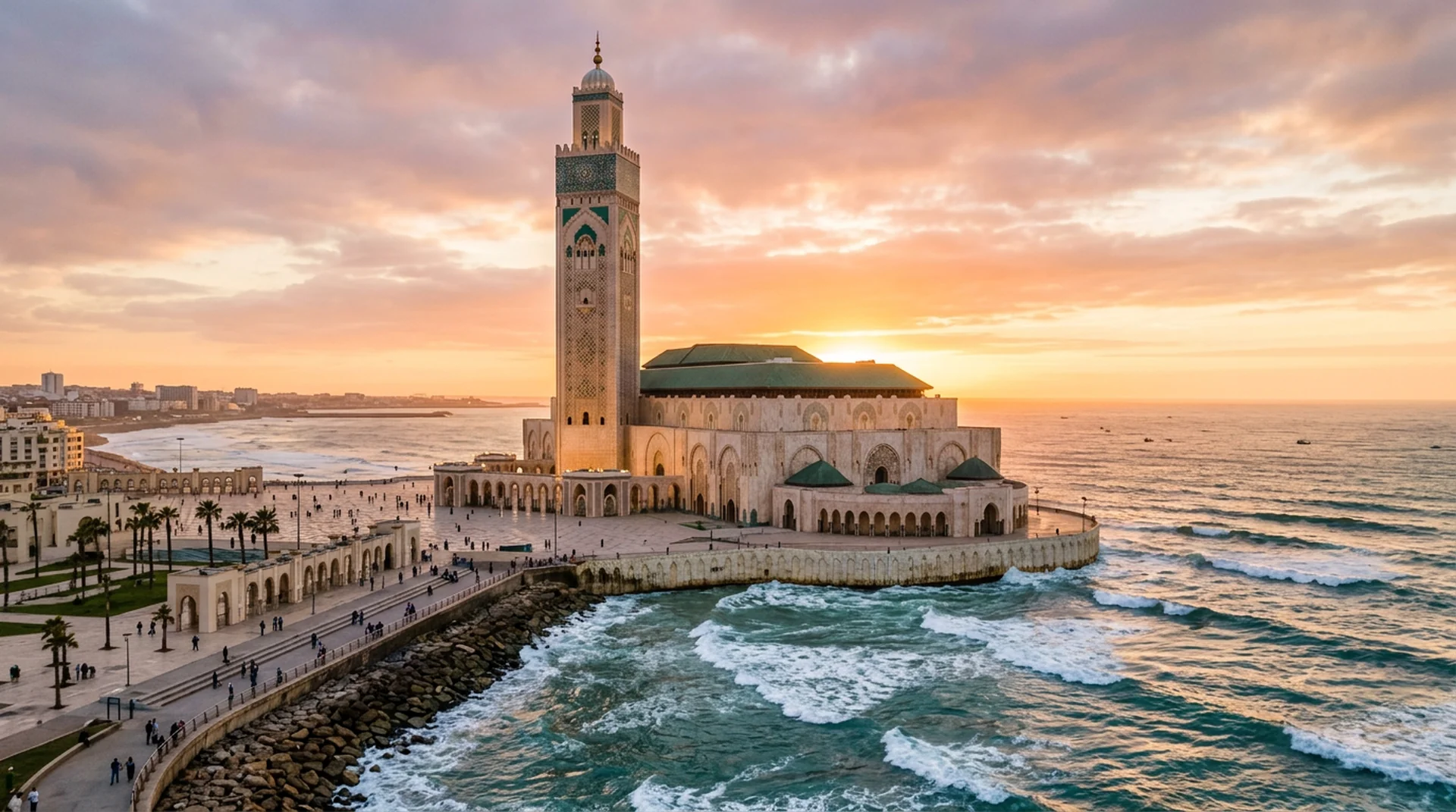
One of the largest mosques in the world, built directly over the Atlantic with a 210-metre minaret. Non-Muslim visitors can join a guided interior tour, one of the few mosques in Morocco to allow this.
Habous Quarter souk Casablanca
🛍
Habous Quarter
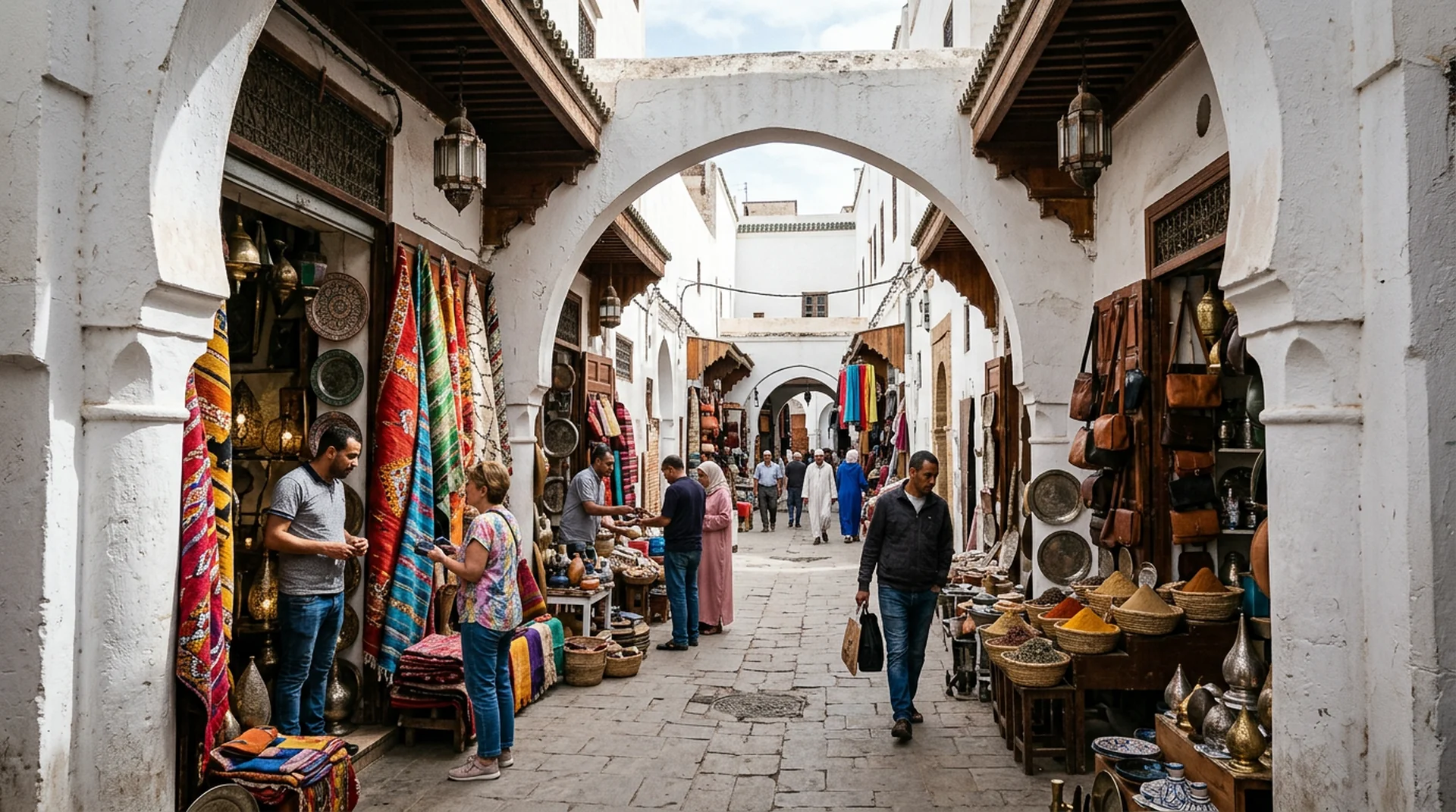
Built by the French in the 1930s to resemble a traditional medina but with wider, organised streets. Known for pastry shops, olive markets and artisan leatherwork and ceramics.
Corniche Ain Diab sunset Casablanca
🌅
The Corniche
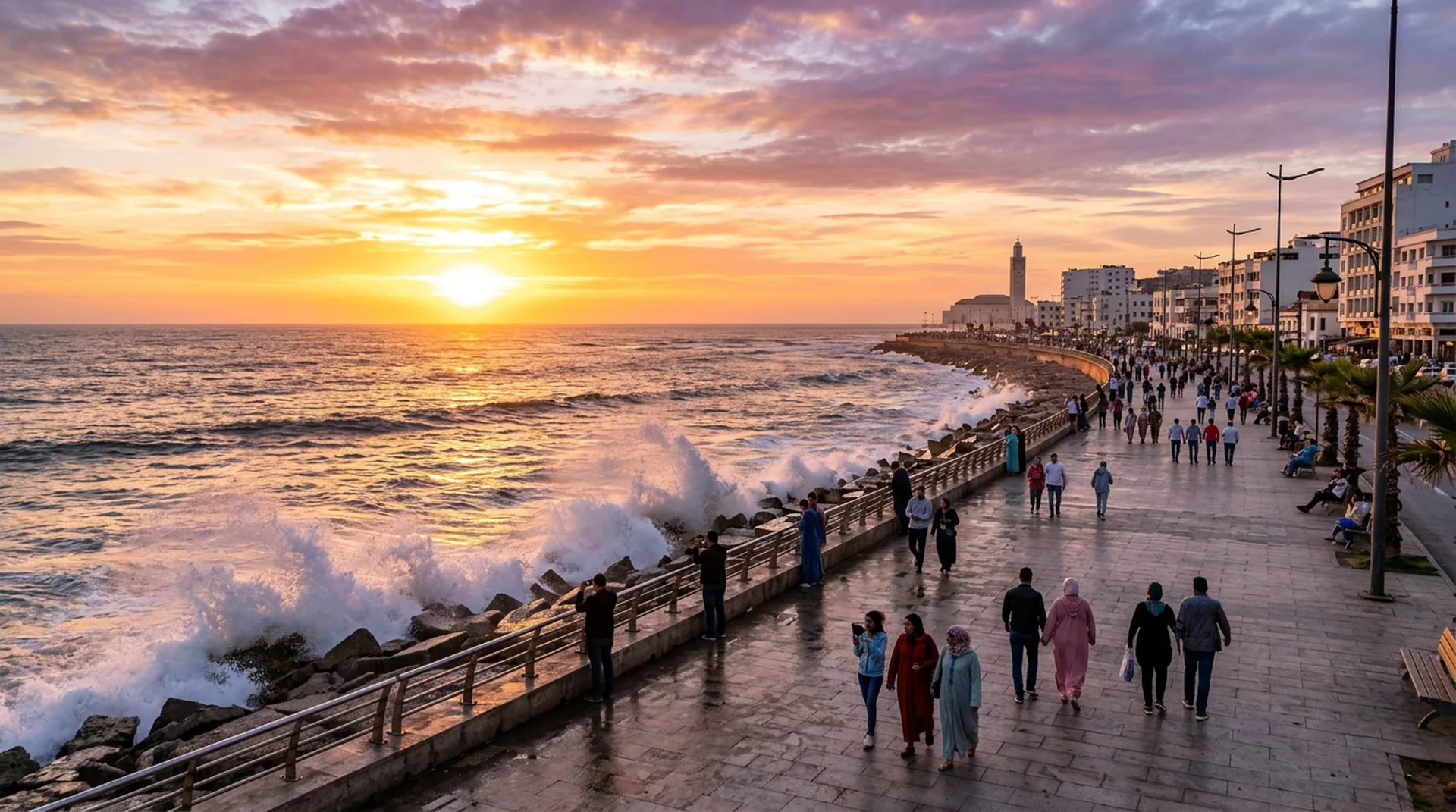
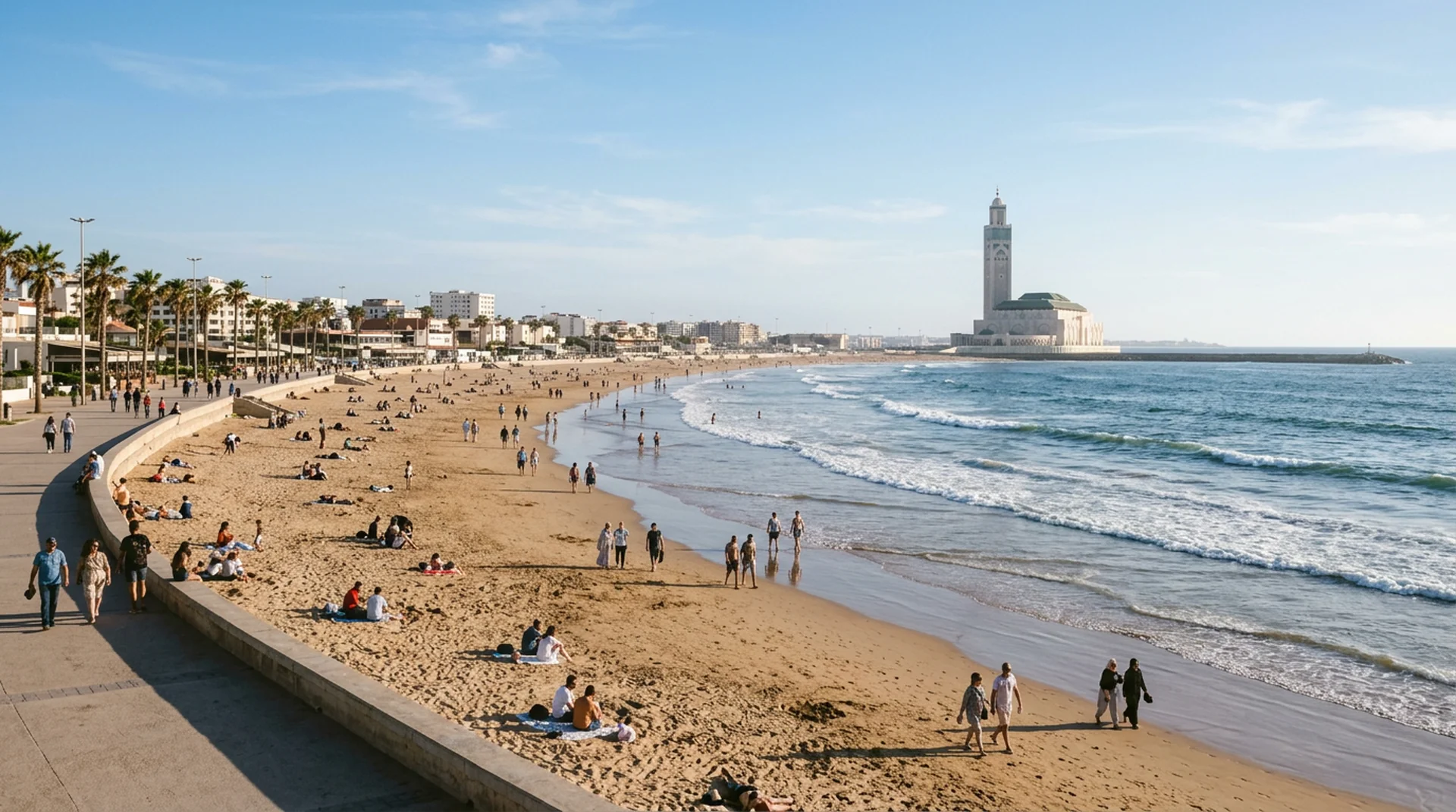
A palm-lined Atlantic promenade through Ain Diab, packed with beach clubs, cafés and restaurants. Best at golden hour, with the Hassan II Mosque's minaret glowing in the distance.
Old Medina Central Market Casablanca
🏛
Old Medina & Central Market
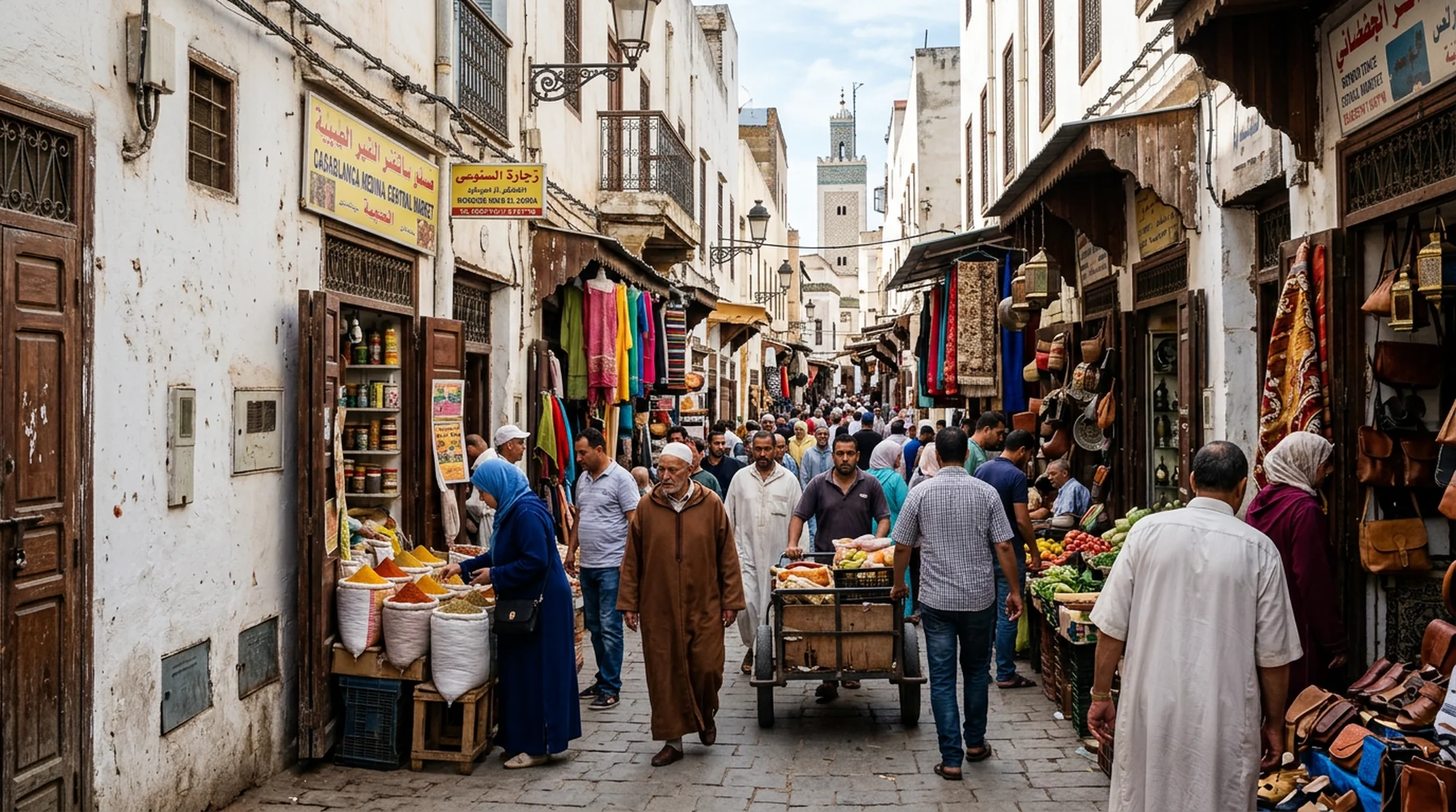
A smaller, more local medina than Fes or Marrakech, plus Casablanca's Art Deco downtown around Mohammed V Square, a distinctive Mauresque architectural blend unique to the city.
Seafood tagine Casablanca matchday

What to Eat Before Kickoff

Casablanca's Atlantic location gives it some of Morocco's best seafood, alongside the pastries and street food of the Habous Quarter and Central Market. Here's how the city eats at every budget.

  • 🍲 Harira - tomato, lentil and chickpea soup, a Casablanca breakfast staple
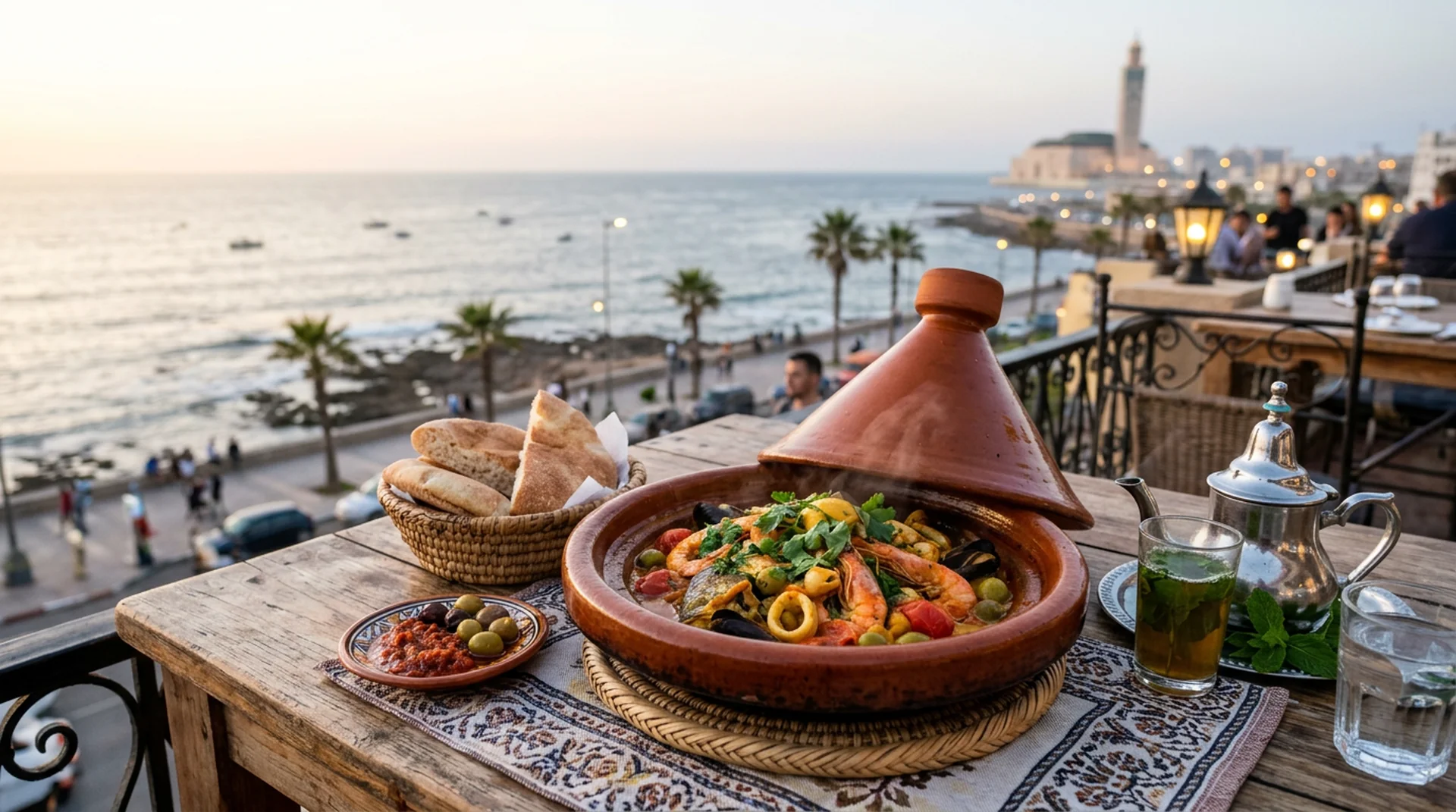
  • 🐟 Grilled fish & seafood tagine - along the Corniche and Ain Diab
  • 🥐 Kaab el ghzal - almond-filled "gazelle horn" pastries from Habous
  • 🫓 Msemmen - flaky flatbread from street griddles
  • ☕ Café culture - French-inspired pastries and strong coffee downtown

Here's what to order at each budget, from street-side harira to beachfront seafood dining.

Street & Casual
15-30MAD
  • Harira: a bowl with bread and dates at a Habous or medina café, 15-20 MAD
  • Msemmen: flaky flatbread from a street griddle, a common breakfast
  • Fresh juice: orange or avocado juice from a street vendor in the Old Medina
  • Olives & preserved lemons: by weight at the Habous market
Fine Dining
600+MAD/person
  • Rick's Café: Casablanca's famous film-inspired restaurant, book well ahead
  • Corniche fine dining: upscale seafood and international menus with sea views
  • Hotel rooftop restaurants: Gauthier and Maarif's trendiest tables
  • Cooking classes: a mother-daughter-led home cooking experience is a popular local favourite

Cash is still widely used for tips, petits taxis and street stalls, though card payments are accepted at larger restaurants and international chains. For an authentic and affordable meal, look for small restaurants in the Habous Quarter or around the Central Market rather than tourist-facing venues.

Ain Diab beach sunny afternoon Casablanca

Before You Go

Weather, safety, language and money - the basics every fan should have sorted before landing in Casablanca.

  • 🌡️ Warm, dry summers - almost no rain in July
  • 🛂 Visa-free for many nationalities for stays up to 90 days
  • 💵 $80-150/day comfortably covers hotel, food and transport
🌤

Weather

24-28°C in June-July, warm and dry thanks to Casablanca's Atlantic coastal climate. July sees essentially no rainfall, though mornings can bring a light coastal fog that usually clears by mid-morning.

🛡

Safety

Casablanca has a low crime rate and is considered safe and welcoming for tourists. Standard precautions around valuables apply, as in any major city, and only official metered taxis should be used.

🗣

Language

Darija (Moroccan Arabic) is the everyday language. French is widely used in business and administration, and English is commonly spoken in hotels, restaurants and tourism-facing venues.

💳

Money

Moroccan Dirham (MAD). Cash is still preferred for tips, petits taxis and street stalls; cards are accepted at larger hotels, restaurants and international chains. ATMs are widely available.

As the host of Morocco's largest and most ambitious World Cup venue, Casablanca's hotel stock is extensive but likely to sell out early around confirmed match dates given the stadium's distance from the city. For visa requirements and FIFA ticket ballot details that apply across Morocco, see the Morocco visa guide and match ticket guide.

FAQ

Casablanca Questions

How do I get from Casablanca Mohammed V Airport to the Grand Stade Hassan II?
The Grand Stade sits in Benslimane, roughly 38-40km north of Casablanca and a similar distance from the airport, so most fans will connect via central Casablanca rather than travelling direct. Take the ONCF airport train (around 30-45 minutes) into Casa Voyageurs or Casa Port, then a dedicated shuttle or taxi north to the stadium on matchday; exact shuttle routes will be confirmed closer to 2030.
What is the capacity of the Grand Stade Hassan II?
115,000 seats, which would make it the largest football stadium in the world upon completion, more than double the 65,000 capacity of Tangier's Ibn Batouta Stadium, Morocco's current largest venue.
Is the Grand Stade Hassan II finished yet?
No, it is still under construction. The project broke ground in 2024 on a 100-hectare site in Benslimane, with completion targeted for late 2027 or end of 2028, comfortably ahead of the 2030 tournament and with time reserved for test events.
Who designed the Grand Stade Hassan II?
Global stadium specialists Populous, working with Paris-based Moroccan architect Tarik Oualalou of Oualalou + Choi. The design draws on the moussem, a traditional Moroccan gathering, with a tented aluminium lattice canopy and grand stairways doubling as garden walkways.
Could the World Cup final be played in Casablanca?
It was floated early on as a contender given its record-breaking size, but recent reporting suggests FIFA favours Real Madrid's Santiago Bernabéu for the final. Nothing is officially confirmed until FIFA's venue announcement, expected closer to the tournament.
What is the best neighbourhood to stay in Casablanca for the World Cup?
Ain Diab and the Corniche offer the city's best hotels with beachfront access, while Gauthier and Maarif suit travellers who want a modern, walkable base near restaurants and nightlife. The city centre near Casa Port and Habous puts you closest to the old town and train connections.
Should I stay near the stadium or in central Casablanca?
Stay in central Casablanca. The Grand Stade sits well outside the city in Benslimane, so no neighbourhood offers a genuine walking distance advantage. A central base near Casa Voyageurs, Maarif or the Corniche keeps you close to transport links, restaurants and the rest of the city for non-matchdays.
Is Casablanca expensive compared to other World Cup 2030 host cities?
Casablanca is generally affordable by international standards, with a mid-range daily budget of roughly $80-150 USD covering accommodation, food and activities. Luxury Corniche hotels and beach resorts push well above that range.
What is the Casablanca derby?
The Casablanca Derby is the rivalry between Raja Club Athletic and Wydad Athletic Club, traditionally played at Stade Mohammed V and considered one of the fiercest derbies in world football. Neither club has ever been relegated since Morocco's Botola league began, and the fixture is famous for deafening tifos and flares from both sets of fans.
Who plays Raja and Wydad's home games right now?
Both clubs currently share Stade Mohammed V in central Casablanca, a 47,000-seat multi-sport venue that has hosted more than 100,000 fans for the derby despite its official capacity. Once complete, the Grand Stade Hassan II is intended to become their new shared home.
Are Raja CA and Wydad AC associated with different social classes?
Historically, yes, though the lines have faded. Wydad was long seen as closer to Casablanca's establishment and monarchy, while Raja, founded by union workers and leftist activists in 1949, earned its reputation as the people's club. Today both draw support from every part of the city.
Who is the Casablanca derby's all-time top scorer?
Said Ghandi, with 7 goals in the fixture, followed by Mohsine Moutouali and Mouhcine Iajour with six each. The derby dates back to 1957 and the two clubs have now met well over 135 times.
What is the weather like in Casablanca in June and July?
Warm and reliably dry, with June-July afternoons typically reaching 24-28°C and cooled by an Atlantic breeze. July sees almost no rainfall, and mornings can bring a light coastal fog that usually burns off by mid-morning.
What should I eat in Casablanca?
Casablanca's Atlantic location means excellent seafood, grilled fish, calamari and seafood tagines along the Corniche. Try harira soup with bread and dates as a local breakfast, msemmen flatbread from street griddles, and pastries from the Habous Quarter like kaab el ghzal (almond-filled "gazelle horns").
Is Casablanca safe for tourists during the World Cup?
Yes, Casablanca has a low crime rate and is considered safe and welcoming for international visitors, with the same common-sense precautions around valuables and unlicensed taxis that apply in any major city.
What language is spoken in Casablanca?
Darija (Moroccan Arabic) is the everyday language. French is widely used in business and administration, and English is commonly understood in hotels, restaurants and other tourism-facing venues.

Continue Planning

See the full Morocco guide, covering all World Cup 2030 host cities across the country.

Back to Morocco Guide

Get Casablanca World Cup Updates

Hotel deal alerts near the Corniche, FIFA ticket ballot dates, Grand Stade construction updates and insider Casablanca tips - straight to your inbox.